Precision Brain Mapping Unveils Promising New Avenue for Post-Traumatic Stress Disorder Recovery with Unprecedented Efficacy.

The landscape of mental health treatment has been significantly reshaped with the recent Food and Drug Administration (FDA) clearance of a novel therapeutic system designed to address post-traumatic stress disorder (PTSD). Developed through a synergistic collaboration between Wave Neuroscience, a California-based innovator, and researchers at the Texas A&M Health Institute of Biosciences and Technology, this groundbreaking technology offers a personalized approach for individuals who have found conventional therapies insufficient in alleviating their symptoms. At its core, the system leverages sophisticated brain activity measurements to precisely guide targeted magnetic stimulation, marking a pivotal advancement in the management of this debilitating condition.
Initial findings from a pivotal clinical trial have yielded remarkably encouraging results, signaling a potential paradigm shift in PTSD care. Wave Neuroscience has reported that participants in their study experienced an average reduction of 52% in PTSD symptom severity. Even more compelling, an impressive 68% of individuals achieved remission, indicating a substantial and sustained recovery from the disorder. While the comprehensive details of these findings are slated for a forthcoming public release, the early indicators strongly suggest that this innovative technology could dramatically expand treatment horizons for the millions worldwide grappling with PTSD.
The imperative for more effective PTSD interventions is starkly underscored by current statistics. In the United States alone, the profound impact of mental health challenges on veterans is highlighted by the daily statistic of approximately 17.5 veterans succumbing to suicide, a tragic testament to the enduring consequences of trauma. Annually, an estimated 7% of veterans receive a formal PTSD diagnosis, underscoring the widespread need for accessible and effective care within this population.
Post-traumatic stress disorder can emerge as a complex psychological response following profoundly distressing or life-threatening events. These can encompass a wide spectrum, including the intense pressures of military combat, the chaos of severe accidents, the overwhelming impact of natural disasters, or the violation of personal safety through acts of violence. On a broader scale, epidemiological data suggests that roughly 6% of the general American population will encounter PTSD at some point in their lives. Notably, research indicates higher prevalence rates among women and veterans, pointing to specific demographic vulnerabilities and the unique stressors faced by these groups.
The limitations of existing PTSD treatment modalities have long been a subject of clinical concern. Since its formal recognition as a distinct diagnostic entity in 1980, therapeutic approaches have primarily revolved around two main pillars: psychotherapy and pharmacotherapy, particularly selective serotonin reuptake inhibitors (SSRIs) such as sertraline and fluoxetine. While these established methods have provided relief for many, a significant portion of patients continue to struggle with persistent symptoms, even after engaging with these treatments.
A comprehensive 2020 review examining the efficacy of PTSD medications revealed that while patients often reported some level of symptom improvement, with gains ranging from 6.8 to 10.1 points on standardized symptom assessments, the rates of complete remission remained relatively low, reaching a maximum of only 10.9%. This gap in achieving full recovery highlights the persistent need for therapeutic options that can offer more profound and lasting benefits.
In stark contrast to these findings, Wave Neuroscience’s preliminary trial results demonstrate substantially stronger outcomes. Dr. Erik Won, the company’s Chief Medical Officer, characterized these early findings as a significant leap forward compared to previously documented medication efficacy. He elaborated, stating that the FDA trial reported a 52% reduction in symptoms, representing more than a four-fold increase in efficacy when compared to the aforementioned study. More importantly, the trial achieved a 68% remission rate, which Dr. Won described as a "quantum change, an inflection point in what we can offer to patients," emphasizing its profound clinical significance. It is important to note that these promising figures stem from different studies and should not be interpreted as a direct head-to-head comparison of treatment effectiveness, but rather as indicators of potential.
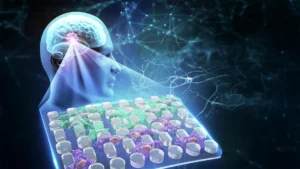
The core innovation of this newly cleared system lies in its proprietary Magnetic e-Resonance Therapy (MeRT) technology, which synergistically integrates detailed brain activity mapping with precisely targeted magnetic stimulation. The process commences with an electroencephalogram (EEG), a non-invasive technique used to record the brain’s electrical signals. This comprehensive data then informs the development of a highly personalized treatment regimen utilizing transcranial magnetic stimulation (TMS).
During a TMS session, a specialized coil is positioned against the patient’s scalp, delivering controlled magnetic pulses designed to stimulate specific regions of the brain. TMS itself is not a new modality; it has already received FDA clearance for the treatment of other psychiatric conditions, most notably treatment-resistant depression. However, what elevates MeRT beyond conventional TMS is its sophisticated application of an Artificial Intelligence (AI)-assisted algorithm. This advanced system analyzes each patient’s unique brain activity patterns, enabling the customization of stimulation protocols rather than relying on a standardized, one-size-fits-all approach.
Dr. Won further explained the significance of this personalized approach, noting that while TMS had previously been cleared for treatment-resistant depression, the integration of an "augmented AI derived multivariate algorithm" has allowed for the development of personalized protocols specifically cleared for PTSD. This breakthrough is anticipated to open market access to an estimated 13 million individuals who may be contending with the challenges of PTSD.
Guiding the research was Dr. Kenneth S. Ramos, a distinguished physician-scientist at Texas A&M Health with extensive expertise in the field of precision medicine. Dr. Ramos’s work is fundamentally rooted in the principle of tailoring medical interventions to the unique biological and physiological characteristics of individual patients, rather than assuming a uniform response to any given treatment. He commented that the current landscape of PTSD treatments often yields suboptimal results, underscoring the profound impact that identifying and implementing more effective interventions could have on enhancing the quality of life for those affected by the disorder. Fred Walke, CEO of Wave Neuroscience, identified Dr. Ramos’s profound expertise in personalized medicine as a natural and invaluable asset to the project.
The fundamental distinction of MeRT lies in its ability to move beyond the generally less individualized treatment protocols characteristic of conventional TMS. By building upon the same underlying technological foundation, MeRT meticulously adjusts the stimulation parameters based on each patient’s specific and dynamic brain activity. Dr. Ramos emphasized that even minute biological variations among individuals can have substantial implications for therapeutic outcomes. He pointed out that while humans share approximately 99.9% of their genetic makeup, the remaining 0.1% accounts for variations that can significantly influence how individuals respond to medical interventions. By actively accounting for these nuanced differences and tailoring the magnetic stimulation to each person’s unique neural architecture, researchers observed significant reductions in the severity of PTSD symptoms.
To illustrate this critical distinction, Dr. Ramos employed an analogy: addressing a leaking roof. He likened conventional TMS to simply covering a leak with a tarp, which might temporarily manage the symptoms but doesn’t resolve the underlying issue. In contrast, MeRT aims for a more precise and targeted solution, akin to identifying and replacing the specific damaged shingles that are the root cause of the leak. The overarching objective is to transition away from a model of treating patients with standardized protocols toward interventions that are directly guided by objective, measurable biological information.
The journey toward this significant advancement included a crucial regulatory milestone in 2024 when MeRT received the FDA’s Breakthrough Device designation. Dr. Rick Silva, Executive Director of Clinical Trials at the Texas A&M Health Institute of Biosciences and Technology, explained that this designation is instrumental in accelerating the review process for promising technologies, facilitating their path to market. He clarified that this designation does not, however, circumvent the rigorous scientific and medical requirements necessary for FDA clearance; rather, it streamlines communication and mitigates administrative delays while upholding the stringent standards of the regulatory body.
Dr. Silva further highlighted the remarkable speed of this project’s progress, particularly given that its inception coincided with the COVID-19 pandemic. Typically, the development and clinical evaluation of medical devices can span approximately a decade before achieving clearance. This particular initiative, however, successfully navigated the relevant processes in just over two years. He attributed this accelerated timeline to the extensive experience and unwavering dedication of the Wave Neuroscience team. Reflecting on his extensive career, Dr. Silva conveyed the profound professional and personal gratification derived from seeing a project culminate in a tangible benefit for patients, especially considering the high failure rates and arduous nature of medical research.
This FDA clearance ushers in a significant new drug-free therapeutic option for individuals suffering from PTSD. Dr. Israel Liberzon, a distinguished Professor of Psychiatry and Behavioral Sciences at the Texas A&M Naresh K. Vashisht College of Medicine and the study’s lead psychiatrist and PTSD specialist, views this development as a crucial expansion of available treatment modalities. He anticipates that once it becomes widely available to patients, MeRT will stand as the sole FDA-cleared non-medication treatment specifically indicated for PTSD. Currently, while numerous medications are used off-label, only two SSRIs have received explicit FDA approval for PTSD. Dr. Liberzon emphasized that this marks the first instance of a non-medication option being introduced alongside pharmaceutical interventions. He also acknowledged the role of psychotherapy, but noted its demanding nature, often requiring significant patient effort and leading to high dropout rates due to the anxiety it can provoke. Therefore, MeRT presents a unique and potentially more accessible alternative.
During the clinical trial, participants underwent five treatment sessions weekly over a period of five to six weeks. Researchers observed that the improvements in symptoms appeared to persist even after the active treatment sessions concluded, suggesting that the therapeutic benefits may extend well beyond the duration of the intervention itself. For individuals who experience adverse side effects from medications or find the demands of psychotherapy challenging to meet, a treatment based on personalized brain stimulation offers a vital new avenue for care.
Dr. Won articulated the profound impact this could have, stating that individuals living with PTSD have often been subjected to a "trial-and-error" approach, relying on medications with potential side effects and experiencing limited outcomes, even with dedicated clinical care. He asserted that Wave’s FDA clearance signifies a fundamental shift towards a future where PTSD can be objectively assessed, precisely treated, and meaningfully addressed. Furthermore, Dr. Won expressed his belief that this technology holds the potential for adaptation to other psychiatric conditions, including depression and anxiety.
From a broader perspective, the FDA clearance of the MeRT System is seen by Dr. Leslie S. Prichep, Chief Scientific Officer at Wave Neuroscience, as a pivotal step towards a future where treatment decisions are informed by objective measurements of brain function. She stated that the clearance validates decades of scientific research employing electrophysiological biomarkers to identify aberrant brain activity profiles and guide personalized intervention strategies. Dr. Prichep articulated her conviction that this represents a significant advancement toward a more objective, data-driven model of mental healthcare.
Fred Walke expressed optimism that providing patients with clearer insights into their brain activity could also contribute to a positive shift in public perceptions surrounding mental illness. He drew a parallel to the treatment of a broken bone, where a cast provides a visible and understandable representation of the injury and its healing process. By making mental health conditions more comprehensible through measurable biological data, the company hopes to reduce stigma and empower patients with a better understanding of their experiences. Walke elaborated that a core mission of the company is to establish a platform for mental healthcare that utilizes objective imagery to help patients comprehend the underlying reasons for their lived experiences, suggesting that this insight, combined with proven technologies and personalization, promises exceptionally high efficacy.
A critical next step involves ensuring that this innovative treatment becomes accessible to patients. Wave Neuroscience and Texas A&M Health are actively engaged with various stakeholders to expand availability and advocate for insurance coverage to make the therapy more affordable. Dr. Won conveyed the hope that this research and technology will serve as a catalyst for broader development and innovation of more effective, personalized, and precision-guided treatments, asserting that this work is definitive proof that population-scale personalized medicine is not merely an aspirational goal but an achievable reality today.
This ambitious project represents the culmination of years of dedicated work spanning medicine, neuroscience, clinical research, and technological innovation, all unified by the overarching goal of improving the lives of individuals affected by PTSD. For Dr. Ramos, the opportunity to contribute to the well-being of veterans carries particular significance, given Texas A&M University’s long-standing commitment to military and veteran initiatives. He highlighted Texas A&M’s rich history of prioritizing military and veteran affairs, making faculty involvement in an initiative aimed at providing positive solutions to a significant problem a "no-brainer." He emphasized that any contribution that can alleviate the burden of PTSD will profoundly impact not only the individuals suffering but also their loved ones, expressing gratitude for Texas A&M’s meaningful involvement in this transformative project.
Related posts:

Related News