Cognitive Evolution: The Aging Brain’s Strategic Shift from Detailed Recall to Profound Understanding.
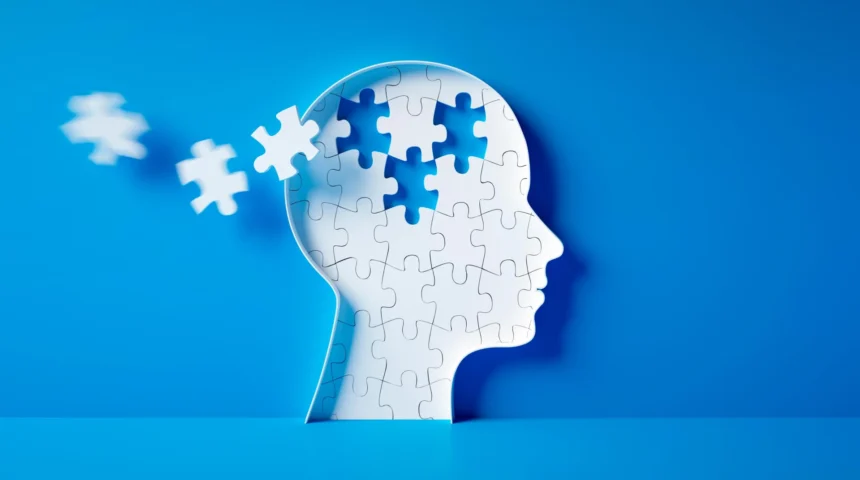
The trajectory of human cognitive development is often characterized by a perceived decline in memory and processing speed as individuals enter their later years. However, a groundbreaking perspective from researchers at the University of Arizona challenges this simplistic narrative, proposing that the aging brain undergoes a profound and adaptive transformation, prioritizing the distillation of wisdom and accumulated experience over the meticulous retention of every ephemeral detail. This paradigm shift, rooted in molecular biology and advanced brain imaging techniques, re-frames cognitive aging not as an inevitable march toward incapacitation, but as a sophisticated evolutionary adaptation designed to leverage a lifetime of learning.
At the heart of this re-evaluation lies the "adaptive aging hypothesis," a theoretical framework suggesting that the brain recalibrates its operational priorities as individuals mature. This recalibration, according to the hypothesis, enhances the brain’s capacity for transmitting accumulated expertise, fostering deeper social connections, and contributing to intergenerational knowledge transfer. The research, detailed in the esteemed journal Perspectives on Psychological Science, posits that focusing solely on memory deficits overlooks a critical aspect of human development: the optimization of cognitive functions for distinct life stages.
"Viewing normative aging as a narrative of pure decline is a significant misinterpretation," asserts Fabian-Xosé Fernandez, an associate professor of cognition and neural systems at the University of Arizona and a co-author of the study. "The mature brain is engineered for different purposes than its younger counterpart, with a pronounced emphasis on the dissemination of stored knowledge and the cultivation of social bonds." This perspective suggests a biological imperative to shift cognitive resources, moving away from the broad acquisition of new information towards the nuanced application of existing understanding.
A crucial element in this proposed cognitive transition involves the interplay between two key brain regions: the hippocampus and the frontal cortex. The hippocampus is integral to the formation and retrieval of episodic memories, those vivid recollections of specific events, complete with their temporal and spatial context. In contrast, the frontal cortex is more closely associated with higher-order cognitive functions, including pattern recognition, abstract reasoning, and the extraction of the overarching "gist" or central meaning from experiences.
The adaptive aging hypothesis posits that a dynamic equilibrium between these two systems undergoes a significant alteration in healthy aging. As individuals advance in age, there is a discernible tendency for hippocampal activity to become less dominant, while the frontal cortex assumes a more prominent role. This neurological redistribution facilitates a cognitive strategy that prioritizes interpreting incoming information through the lens of pre-existing knowledge and experience, rather than meticulously cataloging each new sensory input. This allows for a more efficient and meaningful engagement with the world, drawing upon a vast internal library of learned information.
The widespread observation of similar cognitive shifts across diverse human populations and even within animal models suggests a compelling evolutionary impetus. Fernandez elaborates that this developmental progression is intricately linked to the brain’s evolving needs throughout an organism’s lifespan. In early life, when an individual possesses a nascent understanding of the world, the hippocampus is highly active, serving as a crucial engine for absorbing and archiving declarative memories with exceptional fidelity and detail. This intense period of information acquisition is fundamental to constructing the foundational knowledge base required for navigating complex environments.
However, as individuals transition into adulthood and beyond, their internal archives are already replete with a rich tapestry of memories, concepts, and learned experiences. In this phase, the cognitive advantage shifts from retaining every discrete piece of data to forging connections between new information and established knowledge frameworks. The brain’s efficiency is enhanced by its ability to integrate novel stimuli within existing mental schemas, making meaning and understanding more readily accessible. This shift underscores a fundamental change in how the brain processes reality, moving from a data-gathering mode to one focused on synthesis, interpretation, and the application of acquired wisdom.
The evolutionary rationale for this shift becomes particularly apparent when considering the crucial role of knowledge transfer across generations. The adaptive aging hypothesis suggests that the brain’s changes are designed to facilitate the preservation and dissemination of a lifetime’s worth of acquired expertise. The ability to draw upon decades of lived experience becomes an invaluable asset for making sound judgments, offering guidance, and transmitting vital information to younger cohorts. Older adults, therefore, are hypothesized to occupy a unique and essential niche in society, serving as mentors, educators, and storytellers who bridge the gap between past and future.
"When the objective is to impart wisdom and guidance, an obsessive focus on minute details becomes counterproductive," Fernandez explains. "The primary goal shifts to safeguarding and effectively utilizing the vast repository of knowledge that has been accumulated. Evolution may have instilled biological mechanisms that bolster and protect semantic and autobiographical memories, recognizing the imperative of transmitting this hard-won understanding when an individual reaches a certain stage of life." From this viewpoint, observed alterations in memory and cognition are not indicators of neurological failure but rather represent a strategic realignment of cognitive priorities, emphasizing the preservation of meaningful knowledge and its application in novel contexts.
This adaptive aging hypothesis also offers a valuable new lens through which to differentiate between the natural processes of cognitive aging and the pathological transformations characteristic of neurodegenerative diseases such as Alzheimer’s. Fernandez is emphatic in distinguishing Alzheimer’s from a mere exacerbation of typical aging. The underlying biological mechanisms, he stresses, are fundamentally distinct.
"During my doctoral studies, there was a prevailing notion that Alzheimer’s was simply an extreme manifestation of cognitive aging, but current understanding reveals this to be inaccurate," Fernandez states. "These are entirely separate phenomena." While normal aging typically involves a gradual de-emphasis on the hippocampus and a corresponding increase in frontal cortex engagement, typically occurring between the fifth and seventh decades of life, Alzheimer’s disease is characterized by aberrant protein accumulation, particularly amyloid and tau, which actively disrupt these delicate transitions.
A critical differentiator lies in hippocampal activity. While healthy aging is associated with a reduction in its prominence, Alzheimer’s can manifest with abnormally heightened hippocampal activity. Rather than facilitating a smooth developmental progression, disease-related processes can destabilize the neural networks responsible for memory formation and comprehension. "In normative aging, a decreased reliance on the hippocampus is observed, which is a natural and expected adaptation for an individual in their seventies. However, in numerous Alzheimer’s cases, the hippocampus exhibits hyperactivity," he notes. "This elegant developmental transition is utterly subverted in Alzheimer’s disease by pathological processes that corrupt episodic memory and disrupt the neural circuits essential for self-reflection, vocabulary, and conceptual understanding."
These disruptions can severely impair an individual’s capacity to recall personal experiences and access their stored lexicon and knowledge base. A clearer understanding of how these pathological changes diverge from the adaptive mechanisms of healthy aging could significantly advance scientific comprehension of both normal brain development and the complexities of neurodegenerative disorders.
The researchers advocate for a societal recalibration of what constitutes successful cognitive aging. Insisting that older adults process information identically to their younger counterparts may not always align with their brain’s evolved priorities. Fernandez suggests that placing undue emphasis on the recall of precise details can be counterproductive to the brain’s natural adaptive tendencies. "For a considerable number of individuals, the cognitive processing strategy should ideally shift away from being excessively hippocampal-centric by the sixth or seventh decade of life."
Instead of evaluating older adults primarily through the lens of cognitive functions that tend to diminish with age, the researchers champion a greater appreciation for the capabilities that may, in fact, be amplified in later life. Fostering environments that encourage robust social interaction could be instrumental in nurturing these emergent strengths. The intergenerational exchange of experiences and expertise holds particular promise, serving as a vital mechanism for preserving knowledge that might otherwise be lost to time.
"Society often perceives older individuals as being less capable than younger ones across numerous metrics," Fernandez observes. "My perspective is that we are engaging with individuals whose brains have been actively functioning for decades, accumulating a wealth of experience. There is immense inherent value in this, a value that we are currently failing to effectively unlock." The central tenet of the adaptive aging hypothesis is that the process of growing older is far more nuanced than a simple decrement in cognitive faculties. While certain mental aptitudes may wane, the brain simultaneously undergoes a sophisticated adaptation, enhancing its ability to harness the profound reservoir of knowledge and experience accumulated throughout a lifetime. Recognizing and valuing these evolved strengths has the potential to fundamentally transform societal perceptions of aging and the invaluable contributions older adults can offer.

Related News