Daily Movement: A 10-Minute Standing Exercise Protocol for Senior Muscular Vitality and Independence.
As individuals advance in age, maintaining physical strength and functional independence becomes a progressively critical aspect of overall well-being. A natural physiological phenomenon known as sarcopenia, characterized by the progressive and generalized loss of skeletal muscle mass and strength, poses a significant challenge, particularly for those over 65. This age-related decline can profoundly impact daily life, increasing the risk of falls, limiting mobility, and ultimately diminishing quality of life. However, expert insights suggest that this trajectory is not inevitable; a remarkably brief and accessible daily exercise regimen holds the potential to counteract these effects, fostering renewed muscular health and sustained autonomy.
Sarcopenia typically commences around the age of 30, with muscle mass gradually decreasing by approximately 3-8% per decade. This rate accelerates significantly after the age of 60, often leading to substantial reductions in strength and physical performance. The underlying mechanisms are complex, involving a combination of factors such as reduced physical activity, hormonal changes (e.g., decreased testosterone and growth hormone), chronic inflammation, and altered protein synthesis pathways. The consequences extend beyond mere weakness; sarcopenia is a major contributor to frailty, metabolic disorders like insulin resistance, and a diminished capacity to perform routine activities such as walking, climbing stairs, or even standing from a seated position. The loss of muscle also impacts bone density, increasing susceptibility to osteoporosis and fractures, further compounding health risks in the elderly population. Therefore, proactive strategies to preserve and even rebuild muscle tissue are not merely beneficial but essential for healthy aging.
Recognizing the pervasive impact of sarcopenia, health and fitness professionals are increasingly advocating for pragmatic, low-barrier interventions. One such approach, championed by Terry Tateossian, a Certified Lifestyle Medicine Coach, Trainer, and Nutritionist specializing in women’s health for individuals over 40, centers on a concise 10-minute standing exercise sequence. Tateossian, founder of THOR – The House of Rose, emphasizes that the primary obstacle for many individuals isn’t a lack of knowledge or available time, but rather the consistent integration of beneficial habits into their daily lives. A brief, targeted routine, she contends, serves as an ideal entry point for cultivating this essential consistency, delivering substantial benefits without the need for gym memberships, expensive specialized equipment, or extensive time commitments. The underlying philosophy is that regular, even short, bursts of activity can trigger crucial physiological adaptations that bolster muscular health and functional capacity.
The strategic design of this particular standing routine specifically addresses the muscle groups most susceptible to age-related atrophy and those most vital for maintaining mobility and balance in later life. Tateossian identifies these critical areas as the calves, quadriceps, glutes, and the entire posterior chain, which includes the lower back, mid-back, upper back, and hamstrings. Each of these muscle groups plays a distinct yet interconnected role in facilitating safe and independent movement.
The calves, comprising muscles like the gastrocnemius and soleus, are particularly vulnerable to rapid atrophy after the age of 65. These muscles are fundamental for ankle stability, pushing off the ground during walking, and maintaining balance. Their degradation can directly contribute to an unsteady gait and an elevated risk of falls. The quadriceps, located on the front of the thighs, represent the body’s largest muscle group and are indispensable for actions such as standing up, walking, climbing stairs, and absorbing impact. Strong quadriceps are paramount for maintaining knee stability and providing power for leg movements. Similarly, the gluteal muscles – the gluteus maximus, medius, and minimus – are foundational for posture, hip extension, and rotation, playing a central role in propelling the body forward during walking and stabilizing the pelvis. Finally, the posterior chain, a collective term for the muscles running along the back of the body, from the hamstrings and glutes up through the back extensors, is crucial for core stability, maintaining an upright posture, and enabling safe lifting and bending movements. Weakness in this chain can lead to poor posture, back pain, and impaired functional strength. By systematically engaging all these key areas, the 10-minute routine aims to provide a comprehensive stimulus for muscle maintenance and development.
The exercises comprising this expert-recommended 10-minute regimen are selected for their efficacy, simplicity, and adaptability, requiring minimal space and no specialized gear. They are designed to be performed from a standing position, or with minor modifications, to accommodate varying levels of mobility.
-
Sit-to-Stands: This foundational exercise directly targets the quadriceps and glutes, alongside engaging core muscles. It mimics the essential daily movement of rising from a chair, a key indicator of functional independence. By repeatedly performing this action, individuals can build strength and power in the lower body, enhancing their ability to navigate everyday tasks with greater ease and confidence. The controlled movement also improves balance and proprioception.
-
Standing Hip Hinges: Focusing primarily on the glutes and hamstrings, with significant engagement of the lower back (part of the posterior chain), this exercise teaches a crucial movement pattern for safely bending and lifting. Instead of rounding the back, the hip hinge emphasizes moving from the hips, which protects the spine and builds strength in the powerful muscles of the posterior kinetic chain. This is vital for maintaining good posture and preventing injuries during activities that involve bending over.
-
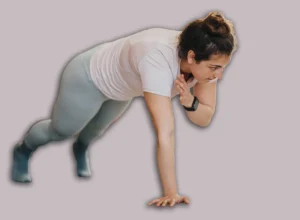
Wall Pushups: Offering an accessible alternative to traditional floor pushups, wall pushups strengthen the chest, shoulders, and triceps – the primary muscles of the upper body. Performing them against a wall reduces the gravitational load, making them suitable for individuals seeking to build upper body pushing strength without excessive strain. This exercise supports activities like pushing open doors, lifting objects, and maintaining upper body stability.
-
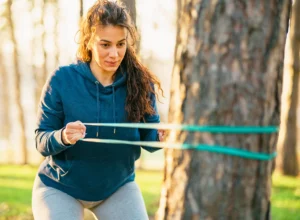
Standing Row: This exercise targets the muscles of the upper and mid-back, along with the biceps. Often performed using resistance bands anchored to a stable point or simply with bodyweight focusing on scapular retraction, the standing row is crucial for counteracting the forward-slumped posture common in older adults. Strengthening these pulling muscles improves posture, supports spinal health, and enhances the ability to pull objects or maintain balance.
-
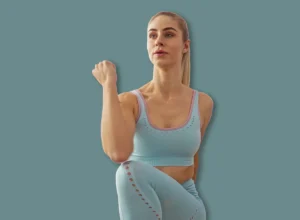
Heel Raises with Toe Raises Combo: This combined movement specifically addresses the calf muscles (heel raises) and the tibialis anterior (toe raises), the muscle on the front of the shin. Heel raises are essential for strengthening the calves, which are critical for propulsion during walking and for dynamic balance. Toe raises strengthen the opposing muscle, helping to prevent foot drop and improving ankle stability, further reducing the risk of tripping and falling. This dual action ensures comprehensive lower leg strength and flexibility.
The collective impact of these exercises, performed consistently, extends far beyond mere muscle growth. They contribute to enhanced balance, improved bone density, better circulation, and a more robust metabolic profile. The emphasis on functional movements means that the strength gained directly translates into improved performance of daily activities, fostering greater self-reliance and confidence.
Terry Tateossian’s assertion that the "daily habit" is the missing link underscores a profound truth in health and wellness. Even the most effective exercise program yields no benefits if it is not consistently applied. The beauty of a 10-minute routine lies in its perceived manageability; it is less daunting than committing to an hour at the gym, making it easier to initiate and sustain. Over time, these small, consistent efforts accumulate, leading to significant physiological improvements. Integrating such a routine might involve performing it first thing in the morning, during a mid-day break, or even while waiting for coffee to brew. The key is to make it an ingrained part of the daily schedule, transforming it from an optional activity into a non-negotiable component of a healthy lifestyle.
While this specific exercise protocol offers a powerful tool for combating sarcopenia, it is important to contextualize it within a broader holistic approach to senior health. Adequate protein intake is paramount for muscle synthesis and repair, making nutrition a critical partner to exercise. Hydration, sufficient sleep, and stress management also play significant roles in supporting overall physiological function and recovery. Furthermore, before embarking on any new exercise regimen, particularly for individuals with pre-existing health conditions or mobility concerns, consulting with a healthcare professional or a certified physical therapist is highly advisable. They can provide personalized guidance and ensure the routine is safe and appropriate for individual needs.
In conclusion, the challenge of age-related muscle loss is a universal concern, yet it is one that can be actively and effectively addressed. The simplicity and efficacy of a focused 10-minute standing exercise routine, designed by experts to target crucial muscle groups, represent an empowering solution. By cultivating a consistent daily habit, older adults can proactively mitigate the effects of sarcopenia, enhance their physical capabilities, and safeguard their independence and vitality for years to come. This brief investment of time offers a profound return in terms of sustained health and an enriched quality of life, proving that a small commitment can yield monumental benefits in the journey of aging well.
Related posts:

Related News