Cultivating Strength and Mobility: A Comprehensive Guide to Reclaiming Functional Fitness in Later Life
As the years advance, many individuals encounter a gradual shift in their physical capabilities, often exacerbated by extended periods of reduced activity. Simple actions that were once effortless, such as bending to pick up an object, rising from a low chair, or maintaining balance on uneven ground, can become noticeably challenging. This decline is not an inevitable consequence of aging alone but is significantly influenced by lifestyle choices, particularly the amount and type of physical movement one undertakes. While flexibility-focused practices like yoga offer undeniable benefits for joint health and range of motion, a truly effective strategy for reversing the impact of inactivity and fostering sustained independence in later life necessitates a more comprehensive approach that intentionally integrates foundational strength training.
The human body is remarkably adaptable, yet it responds directly to the demands placed upon it. When physical activity diminishes, the body conserves energy by reducing muscle mass and bone density, a process known as sarcopenia and osteopenia, respectively. Joints can become stiffer, connective tissues lose elasticity, and the neuromuscular pathways responsible for coordination and balance can weaken. This cascade of physiological changes contributes to a reduced capacity for everyday tasks, increased risk of falls, and a general decrease in overall vitality. For those over 65 who have experienced a decade or more of a sedentary lifestyle, the goal isn’t merely to "loosen up" but to systematically rebuild lost muscular strength, improve joint stability, and enhance dynamic balance – components that are critically linked to independent living and a higher quality of life.
A well-rounded fitness regimen designed for older adults returning to activity must therefore move beyond mere stretching or gentle movement. It should strategically combine exercises that promote dynamic flexibility with those that build functional strength, allowing the body to first rediscover its range of motion and then develop the muscular support necessary to control and utilize that range. The following five exercises are carefully selected to address key areas of physical decline, offering a progressive pathway to reclaim fundamental movements, enhance core stability, and strengthen major muscle groups, providing a more robust and efficient recovery than flexibility training alone. The emphasis throughout should be on mindful execution, controlled movements, and listening to the body’s signals, gradually increasing intensity as comfort and strength improve.
1. Dynamic Spinal and Shoulder Flow
This integrated movement, which smoothly transitions between two opposing postures, serves as an excellent starting point for re-engaging the entire posterior chain, enhancing spinal mobility, and opening the shoulders. It encourages coordinated movement across multiple joints, a crucial element often lost during periods of inactivity.
- Purpose and Benefits: This exercise gently mobilizes the spine through flexion and extension, improves flexibility in the hamstrings and calves, and enhances shoulder joint articulation. It also engages the core muscles to stabilize the trunk during transitions, contributing to better posture and reduced stiffness in the back and neck. The flowing nature promotes circulation and warms up the major muscle groups.
- Execution: Begin on all fours, hands directly under shoulders, knees under hips. Inhale as you gently extend your spine, allowing your belly to drop slightly and gaze upward (similar to a modified cobra or upward-facing dog). Exhale as you press your hips back and up towards the ceiling, straightening your arms and legs as comfortably as possible to form an inverted V-shape (resembling a downward-facing dog), letting your head relax between your arms. Focus on the smooth transition between these two positions, moving with your breath.
- Muscles Engaged: Primarily targets the shoulders, upper back, core, glutes, and hamstrings.
- Adaptations for Accessibility: Individuals can modify the range of motion, keeping knees slightly bent in the inverted V-shape, or performing the upward-facing portion with less spinal extension if the lower back feels sensitive. For those who find getting to the floor challenging, an elevated version can be performed with hands placed on a sturdy chair or counter.
- Recommendations: Aim for 2 to 3 sets of 6 to 10 fluid repetitions, resting for 30-45 seconds between sets. Prioritize smooth, controlled movement over achieving a deep stretch.
2. Forward Stepping Lunge with Vertical Reach
This exercise is a powerhouse for lower body strength, balance, and improving functional mobility, directly translating to everyday activities like walking, climbing stairs, and reaching for objects overhead. It demands coordination and stability, which are often compromised after prolonged sedentary periods.
- Purpose and Benefits: The lunge component strengthens the quadriceps, glutes, and hamstrings, while simultaneously challenging balance and hip flexibility. The overhead reach actively stretches the chest and shoulders, improving posture and increasing the functional range of motion needed for tasks like putting items on a high shelf or hanging clothes. This combined movement pattern addresses leg power, dynamic balance, and upper body mobility in one efficient exercise.
- Execution: Stand tall with feet hip-width apart. Step forward with one leg, lowering your hips until both knees are bent at approximately a 90-degree angle. Ensure your front knee remains aligned over your ankle and your back knee hovers above the floor. As you lunge, simultaneously extend both arms straight overhead. Push off your front foot to return to the starting position, lowering your arms. Alternate legs with each repetition.
- Muscles Engaged: Primarily targets the quadriceps, glutes, hamstrings, and shoulders, with significant core engagement for stability.
- Adaptations for Accessibility: Begin with a shorter step length to reduce the depth of the lunge and improve control. For added stability, perform the lunge while holding onto a wall or sturdy furniture. A reverse lunge variation, stepping backward instead of forward, can also be easier for some individuals.
- Recommendations: Complete 2 to 3 sets of 6 to 8 repetitions per side, resting for approximately 45 seconds between sets. Focus on a controlled descent and a powerful, balanced return to standing.
3. Supported Lateral Core Engagement (Kneeling Side Plank)

Core strength is fundamental to almost all physical activity, providing stability for the spine and pelvis. This exercise specifically targets the oblique muscles and hip abductors, which are crucial for maintaining balance during walking and preventing lateral instability.
- Purpose and Benefits: This modified side plank builds isometric strength in the core, particularly the obliques, and strengthens the muscles along the side of the hip. This improves trunk stability, enhances posture, and significantly contributes to better balance and reduced risk of falls, especially when navigating uneven surfaces or changing directions. It’s an excellent progression from simple abdominal crunches, offering anti-lateral flexion benefits.
- Execution: Lie on your side with your bottom knee bent at 90 degrees and your top leg extended straight. Prop yourself up on your bottom forearm, ensuring your elbow is directly under your shoulder. Engage your core and lift your hips off the floor, forming a straight line from your head through your extended top leg to your bent bottom knee. Hold this position, keeping your hips stacked and torso stable.
- Muscles Engaged: Primarily targets the obliques, shoulders (for stability), and glutes (specifically the gluteus medius for hip stability).
- Adaptations for Accessibility: Start with a shorter hold duration (e.g., 10-15 seconds) and gradually increase as strength improves. Ensure the bottom knee and hip are comfortably supported. If maintaining a straight line is too challenging, focus on simply lifting the hips a small amount off the floor.
- Recommendations: Perform 2 to 3 holds of 15 to 30 seconds per side, resting for 30 seconds between sides. Concentrate on maintaining a rigid, stable torso without sagging.
4. Assisted Deep Squat to Chair
The ability to sit down and stand up unassisted is a cornerstone of functional independence. This exercise systematically rebuilds the strength and control required for this essential movement pattern, using a chair as a reliable target and safety net.
- Purpose and Benefits: This foundational exercise strengthens the major muscles of the lower body – quadriceps, glutes, and hamstrings – and improves hip and knee joint mobility. By using a chair, individuals can practice the proper squatting mechanics, focusing on controlled descent and ascent, which directly translates to improved ease in daily activities like getting out of a chair, using the toilet, or getting into and out of a car. It also implicitly strengthens the core for spinal stability.
- Execution: Stand with your feet shoulder-width apart, facing away from a sturdy chair or box. Initiate the movement by pushing your hips backward as if you are going to sit down. Keep your chest lifted and back straight. Slowly lower yourself until you lightly touch the chair with your glutes, avoiding fully relaxing onto it. Then, drive through your heels and stand back up to the starting position, fully extending your hips and knees.
- Muscles Engaged: Primarily targets the quadriceps, glutes, and hamstrings, with supporting roles from the core muscles.
- Adaptations for Accessibility: Begin with a higher chair or by placing cushions on a lower chair to reduce the range of motion. For additional support, place hands on your thighs, a wall, or a sturdy counter during the movement. As strength increases, gradually decrease the chair height or remove external support.
- Recommendations: Complete 2 to 3 sets of 8 to 12 repetitions, resting for 45 to 60 seconds between sets. Emphasize a slow, controlled descent and a powerful, yet stable, ascent.
5. Controlled Plank with Alternating Hand Lifts
This advanced core exercise builds upon basic plank stability by introducing a dynamic element that challenges anti-rotational strength and upper body control. It’s critical for maintaining balance when encountering unexpected pushes or pulls.
- Purpose and Benefits: This exercise significantly enhances core stability, particularly the anti-rotational strength of the trunk, which is vital for preventing unwanted twisting and maintaining balance during dynamic movements. It also strengthens the shoulders, chest, and deep abdominal muscles, improving overall body stiffness and coordination. The challenge comes from resisting the natural tendency for the hips to sway when one hand is lifted.
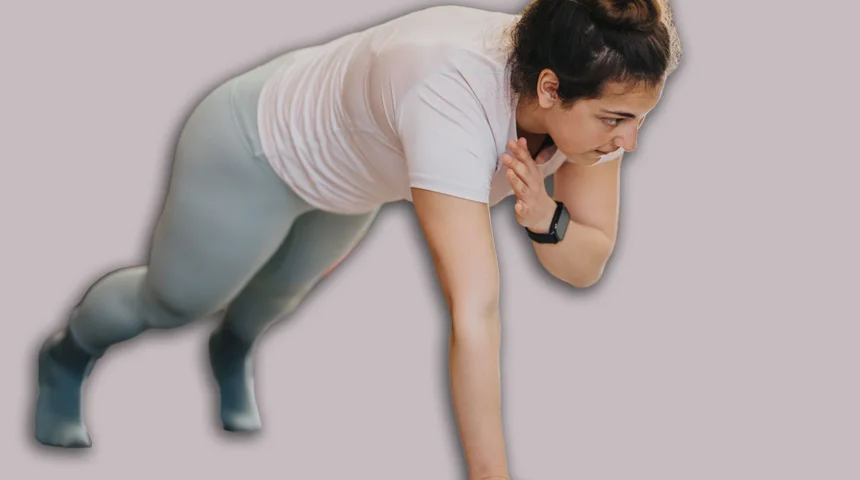
- Execution: Assume a plank position, either on your hands with arms extended (like the top of a push-up) or on your forearms, ensuring your body forms a straight line from head to heels. Your feet can be hip-width apart for more stability, or closer together for increased challenge. Engage your core deeply. While maintaining a stable, level torso, gently lift one hand and tap the opposite shoulder. Return the hand to the floor and repeat on the other side. Focus on minimizing any rocking or shifting of your hips.
- Muscles Engaged: Primarily targets the entire abdominal wall (rectus abdominis, obliques, transverse abdominis), shoulders, chest, and glutes.
- Adaptations for Accessibility: Perform the plank on an incline by placing your hands on a sturdy elevated surface (e.g., a counter or bench). Widening your feet provides a broader base of support, making it easier to maintain hip stability. Alternatively, perform the plank from your knees if a full plank is too challenging, still focusing on maintaining a straight line from head to knees.
- Recommendations: Aim for 2 to 3 sets of 6 to 10 taps per side, resting for 30 to 45 seconds between sets. The key is controlled movement with minimal hip rotation.
Principles for Sustainable Progress and Long-Term Well-being
Embarking on a fitness journey after a prolonged hiatus requires patience, consistency, and a mindful approach. The objective is not to "catch up" instantly but to systematically build a more resilient and capable body.
- Listen to Your Body: Differentiate between muscle fatigue and pain. Discomfort is normal when muscles are challenged; sharp or persistent pain signals a need to modify or stop the exercise.
- Consistency Over Intensity: Regular, moderate effort yields better long-term results than sporadic, intense workouts that risk injury. Aim for 2-3 sessions per week, allowing adequate recovery time.
- Progressive Overload: As these exercises become easier, gradually increase the challenge. This could involve performing more repetitions, adding another set, increasing the hold duration, reducing assistance, or trying more advanced variations.
- Holistic Health: Support your physical efforts with adequate hydration, balanced nutrition, and sufficient sleep, all of which are crucial for muscle repair and energy.
- Professional Guidance: Before starting any new exercise program, especially after a period of inactivity or with existing health conditions, consult with a healthcare provider or a certified fitness professional specializing in older adult fitness. They can offer personalized advice and ensure the exercises are appropriate for your individual needs.
By embracing this balanced and progressive approach to exercise, focusing on both mobility and foundational strength, individuals can significantly mitigate the effects of age and inactivity. This journey leads not just to improved physical capacity but also to enhanced confidence, greater independence, and a renewed sense of vitality, empowering a more active and fulfilling life in the later years.

Related News