Empowering Nations with Data: WHO Unveils Integrated Strategy for Robust Global Health Information Systems.
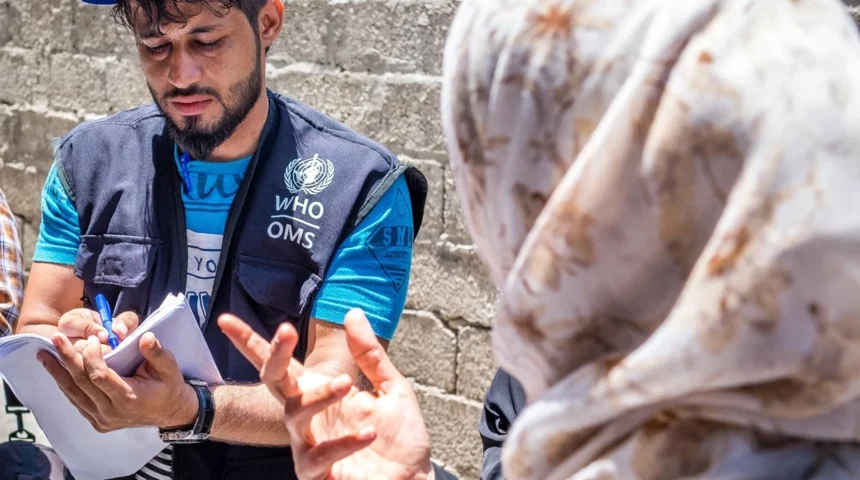
The global community stands at a pivotal juncture, grappling with the profound lessons imparted by the COVID-19 pandemic, chief among them the indispensable role of accurate, timely, and accessible health data. In a concerted effort to fortify national health infrastructures and enhance preparedness for future crises, the World Health Organization (WHO) has introduced a groundbreaking initiative: the SCORE for Health Data Technical Package. This comprehensive framework represents a paradigm shift in how countries can systematically gather, analyze, and leverage health information, moving beyond fragmented approaches towards a unified, data-driven public health strategy.
For decades, many nations, particularly those with limited resources, have contended with systemic weaknesses in their health information systems. These deficiencies manifest as incomplete vital statistics, unreliable disease surveillance, and an overall inability to translate raw data into actionable insights. The recent pandemic starkly illuminated these vulnerabilities, demonstrating how data gaps can impede rapid response, hinder effective resource allocation, and ultimately cost lives. Without a clear picture of disease prevalence, demographic susceptibility, and healthcare capacity, governments found themselves navigating an unprecedented crisis with an incomplete map. It became acutely apparent that robust health data is not merely an administrative necessity but a fundamental pillar of national security and public well-being.
Responding directly to these critical observations, the WHO’s SCORE package offers a holistic solution. The acronym SCORE encapsulates its five core components: Survey, Count, Optimize, Review, and Enable. Each element addresses a distinct yet interconnected aspect of health information system strengthening, designed to ensure a continuum from data generation to policy formulation. "Countries must be able to measure progress to make progress," affirmed Dr. Tedros Adhanom Ghebreyesus, WHO Director-General, underscoring the foundational principle behind this initiative. He further emphasized, "Particularly during COVID-19, reliable data is the best way to coordinate response efforts and improve health in all areas." This statement encapsulates the urgent mandate driving the SCORE framework.
The Survey component focuses on population-based health surveys and censuses, crucial for understanding demographic health profiles, risk factors, and access to services. This involves standardizing methodologies for data collection at the community level, ensuring representativeness and comparability across regions and over time. Effective surveys provide foundational insights into health determinants that routine service delivery data might miss.
Count refers to the robust collection of routine data from health facilities and through disease surveillance systems. This includes birth and death registrations, infectious disease incidence, immunization rates, and service utilization. Strengthening this pillar means establishing reliable reporting mechanisms, improving data quality at the point of care, and ensuring that information flows efficiently from local clinics to national health authorities.
Optimize delves into the technological and analytical infrastructure required to manage vast amounts of health data. This includes developing secure data storage solutions, promoting interoperability between different information systems, and enhancing analytical capacities to transform raw data into meaningful intelligence. It also encompasses the adoption of digital tools and artificial intelligence to process and interpret complex datasets, making them more accessible for decision-makers.
The Review component emphasizes data quality assurance, validation, and dissemination. It advocates for regular data audits, performance reviews, and transparent reporting to ensure that the information used for policy is accurate and trustworthy. Furthermore, it focuses on making validated data readily available to a wide range of stakeholders, from policymakers and researchers to healthcare providers and the public, fostering evidence-based decision-making at all levels.
Finally, Enable underpins the entire framework by addressing the critical supportive elements: governance, human resources, sustainable financing, and legal frameworks. This involves establishing clear policies for data ownership, privacy, and ethics, investing in training and capacity building for health information professionals, securing long-term funding for data systems, and enacting legislation that supports data collection and use. Without these enabling factors, even the most sophisticated technical tools can falter.
The SCORE for Health Data Technical Package is not a standalone endeavor but a strategic component of the WHO’s broader commitment to global health improvement, notably articulated in its Thirteenth General Programme of Work (GPW 13). This program sets ambitious "Triple Billion targets" aiming for one billion more people benefiting from universal health coverage, one billion more people better protected from health emergencies, and one billion more people enjoying better health and well-being by 2023. Achieving these targets is inextricably linked to the availability of robust, disaggregated data that can track progress, identify disparities, and guide targeted interventions. The package also serves as a crucial instrument for countries striving to meet the health-related Sustainable Development Goals (SDGs), particularly SDG 3, which calls for good health and well-being for all.
The development and implementation of SCORE have been significantly bolstered by key partnerships. The Bloomberg Philanthropies Data for Health Initiative, a prominent advocate for data-driven public health, has provided crucial funding and expertise, recognizing the transformative potential of this initiative. Dr. Kelly Henning, Director of Public Health Programs at Bloomberg Philanthropies, highlighted this collaboration, stating, "Using data to inform public health priorities and strategies has never been more important. The SCORE Technical Package provides country governments around the world with high-quality, essential technical guidance so that countries can strengthen their own data systems." This partnership underscores a shared vision for a world where public health decisions are consistently grounded in reliable evidence.
The initial rollout of the SCORE package includes foundational documents that outline the framework and provide initial guidance for implementation. Crucially, the initiative is designed to be practical, actionable, and flexible, allowing countries to adapt the tools and standards to their specific contexts and existing infrastructure. Looking ahead, future components are slated for release later this year, including a dedicated SCORE Assessment Instrument. This instrument will allow nations to rigorously evaluate their current health information systems against global benchmarks, identifying strengths and areas for improvement. Complementary global, regional, and country status reports will then provide a comprehensive overview of progress, fostering accountability and enabling targeted support where it is most needed. These forthcoming tools are vital for transforming the theoretical framework into measurable improvements on the ground.
The long-term implications of a globally strengthened health data ecosystem extend far beyond pandemic response. Accurate, country-owned, and disaggregated data is fundamental for designing equitable health policies, ensuring that interventions reach the most vulnerable populations, and addressing health disparities. It empowers governments to efficiently allocate scarce resources, optimize healthcare delivery, and develop preventative strategies tailored to specific community needs. The ability to monitor disease trends, evaluate the effectiveness of public health campaigns, and understand population health outcomes systematically will build more resilient and sustainable health systems capable of navigating both acute emergencies and chronic health challenges.
As Dr. Samira Asma, Assistant Director-General for Data, Analytics and Delivery for Impact at WHO, powerfully articulated, "We must keep score to save lives. WHO is committed to working with countries and partners to rapidly scale up capacity for data collection and use in order to improve policy and performance." She emphasized the urgency, stating, "We must act now to invest in statistical systems in countries, respond to this pandemic and meet the SDGs and the Triple Billion targets. Our window of opportunity is closing, and we cannot wait to address data gaps. Data use to address country needs has to be a priority today." This compelling call to action resonates with the global imperative to learn from past challenges and proactively build a healthier, more prepared future. The SCORE for Health Data Technical Package stands as a testament to the power of collaboration and the unwavering belief that a world equipped with better data is a world better positioned to safeguard public health for all.
Related posts:

Related News