Biomimetic Breakthrough Unlocks Potential for Natural Dental Enamel Restoration
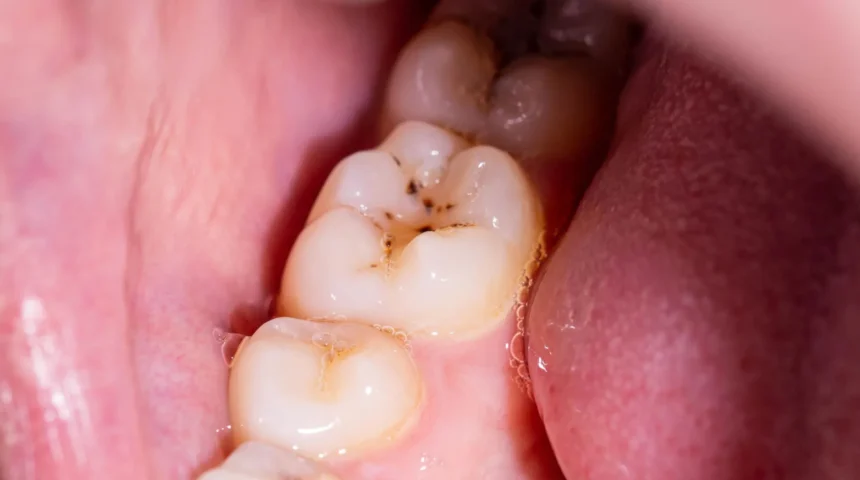
The enduring challenge of regenerating human tooth enamel, a critical yet non-living tissue, may soon be overcome thanks to pioneering research from the University of Nottingham. Scientists there have engineered a novel protein-inspired gel designed to rebuild and strengthen this vital outer layer of teeth, offering a paradigm shift in the treatment of dental decay and sensitivity. Unlike most bodily tissues, which possess an innate capacity for self-repair, dental enamel, once damaged or lost, lacks the biological machinery to regenerate. This fundamental limitation has long necessitated restorative interventions like fillings and crowns, but a new approach, detailed in the prestigious journal Nature Communications, introduces a pathway to biologically inspired reconstruction.
For millennia, human oral health has been inextricably linked to the integrity of tooth enamel. Composed primarily of hydroxyapatite crystals, enamel is the hardest biological substance in the body, providing an essential shield against physical wear, chemical erosion from acids, and temperature fluctuations. Its remarkable durability is not merely due to its mineral composition, but crucially, to the highly organized, tightly packed arrangement of these crystalline structures. However, this formidable protection is finite. Factors such as dietary acids, bacterial plaque, mechanical stress from chewing and grinding, and even aggressive brushing can gradually demineralize and wear away the enamel. Once compromised, the underlying dentin, a softer and more porous tissue, becomes exposed, leading to increased sensitivity, heightened vulnerability to decay, and ultimately, potential tooth loss. The global burden of dental caries and related conditions underscores the profound need for more effective, restorative solutions, as these issues affect billions worldwide and can contribute to broader systemic health problems, including cardiovascular disease and diabetes.
Current dental practices primarily focus on preventing enamel loss through fluoride treatments and maintaining oral hygiene, or on repairing existing damage with synthetic materials. While fluoride therapies effectively promote remineralization in the earliest stages of decay by incorporating into existing enamel crystals, they cannot rebuild lost tissue or fully restore the intricate architecture of natural enamel. Fillings, inlays, and crowns address structural deficits but are essentially prosthetic replacements that require removal of healthy tooth structure and have a finite lifespan. The inability to naturally regenerate enamel has thus represented one of the most significant frontiers in dental research.
The Nottingham team’s breakthrough gel directly confronts this challenge by mimicking the sophisticated biological processes that guide enamel formation during early tooth development. Their innovation is not a mere surface coating but a material engineered to integrate structurally with the existing tooth. The gel itself is fluoride-free, distinguishing it from conventional remineralization products. Instead, its core mechanism relies on a unique protein-based material that replicates the critical characteristics of amelogenins – the natural proteins responsible for orchestrating the precise crystallization of enamel during childhood.
When applied to the tooth surface, the gel establishes a thin, yet resilient, scaffold. This framework permeates microscopic cracks and pores within the enamel, or even directly onto exposed dentin. Within this protein matrix, the process of epitaxial mineralization unfolds. This highly controlled phenomenon involves the gel attracting naturally occurring calcium and phosphate ions from saliva. Crucially, the protein structure then directs these minerals to organize themselves into new hydroxyapatite crystals that grow in perfect alignment with the remaining natural enamel. This directed growth is paramount; simply depositing calcium and phosphate onto a tooth would result in an amorphous, weak layer. Epitaxial mineralization ensures that the newly formed material mirrors the highly ordered, columnar crystalline structure that bestows natural enamel with its exceptional hardness, stiffness, and fracture resistance. By guiding this intricate crystal growth, the new gel promises to restore both the microscopic architecture and the robust physical properties of healthy enamel.
Beyond its primary function in rebuilding enamel, the research reveals a significant secondary benefit: the gel’s efficacy on exposed dentin. Dentin, the yellowish tissue beneath the enamel, is characterized by thousands of microscopic tubules that extend from the outer surface towards the tooth’s pulp, which contains nerves and blood vessels. When enamel erodes or gums recede, exposing this dentin, external stimuli like hot, cold, sweet, or acidic foods and beverages can travel through these tubules, causing the characteristic discomfort of tooth sensitivity. The new gel facilitates the formation of an enamel-like mineral layer directly over the exposed dentin. This protective barrier can effectively occlude the dentinal tubules, thereby mitigating sensitivity. Furthermore, the researchers suggest that this integrated mineral layer could enhance the bond strength and longevity of traditional dental restorations, such as fillings, by providing a more biomimetically compatible surface for attachment.
The potential implications for patient care are vast. Individuals suffering from chronic tooth sensitivity, extensive enamel erosion, or recurrent decay could experience significant relief and improved oral health. The ability to regenerate a patient’s own enamel-like structure could lead to fewer invasive procedures, reduce the need for repeat treatments, and ultimately improve the long-term prognosis for teeth that might otherwise require extraction. This regenerative approach could fundamentally alter the trajectory of dental care, shifting from primarily reparative to truly restorative and preventive.
To validate the functional properties of the regenerated material, the research team conducted rigorous mechanical testing under conditions designed to simulate the harsh environment of the oral cavity. These experiments subjected the newly formed enamel to stresses mimicking daily activities such as chewing forces, abrasive actions of brushing, and exposure to acidic challenges from foods and drinks. The results were highly encouraging: the regenerated enamel exhibited mechanical properties, including hardness and wear resistance, that were remarkably comparable to those of healthy, natural human enamel. Dr. Abshar Hasan, a postdoctoral fellow and the lead author of the study, emphasized the critical importance of replicating enamel’s intrinsic structure. “Dental enamel possesses a unique internal architecture that underpins its remarkable resilience against physical, chemical, and thermal assaults throughout life,” Dr. Hasan stated. “When our material is applied to demineralized enamel, eroded areas, or exposed dentin, it actively promotes the organized growth of crystals, effectively recovering the architecture of natural, healthy enamel. Our tests confirmed that this regenerated tissue performs just like healthy enamel under real-life simulated conditions.” These findings suggest the gel offers more than a superficial protective layer; it provides a structural and functional restoration.
The University of Nottingham researchers, led by Professor Alvaro Mata, Chair in Biomedical Engineering & Biomaterials, have designed this technology with practical clinical translation firmly in mind. The gel is envisioned to be safe, straightforward to apply, and adaptable for large-scale manufacturing. Its potential application method—a simple, non-invasive procedure akin to existing fluoride treatments—could facilitate its seamless integration into routine dental care. Professor Mata expressed significant enthusiasm for the product’s future: “We are incredibly excited because this technology has been developed with both the clinician and the patient at its forefront. It is safe, can be applied quickly and easily, and is scalable. Moreover, its versatility opens avenues for integration into various dental products, potentially benefiting patients of all ages who suffer from enamel loss and exposed dentin.”
The journey from laboratory discovery to widespread patient access is already underway. The research team has initiated the commercialization process through a startup company, Mintech-Bio, with an ambitious target of introducing an initial product to market within the next year. While further clinical trials and regulatory approvals will be essential to fully establish the long-term efficacy and safety in human patients, the fundamental ability of this technology to replicate the complex structure and robust mechanical properties of natural enamel marks a profound advancement. If successful, this biomimetic gel could herald a new era in dental medicine, offering a truly regenerative solution for a problem that has plagued humanity for centuries, thereby improving the oral health and quality of life for countless individuals worldwide.
Related posts:

Related News