The pursuit of a robust midsection often leads individuals to focus predominantly on isolated abdominal exercises performed on the floor. While traditional crunches, planks, and leg raises certainly contribute to muscular endurance and strength in specific core regions, they may not fully address the dynamic stability and functional power required for everyday movements, particularly as we age. For individuals in their middle years and beyond, integrating standing, multi-joint exercises into a fitness regimen offers a more comprehensive approach to fortifying the core, translating into improved balance, better posture, and greater independence in daily life. This method shifts the paradigm from merely strengthening individual abdominal muscles to enhancing the core’s integral role as the body’s central stabilizer during complex actions.
The human core musculature is a complex network extending far beyond the rectus abdominis, encompassing the obliques, transverse abdominis, erector spinae, pelvic floor, and diaphragm. Its primary function is not just to flex the spine, but to stabilize the torso, transfer force between the upper and lower body, and protect the spinal column during movement. As individuals mature, physiological changes such as sarcopenia (age-related muscle loss), reduced proprioception (body awareness), and shifts in spinal alignment can compromise core function. Traditional floor-based exercises, while valuable, often isolate core muscles in a static, supine position, which doesn’t always mimic the demands of real-world activities like lifting groceries, walking on uneven terrain, or simply maintaining an upright stance.
Standing exercises, by contrast, compel the core to engage actively in maintaining equilibrium and controlling motion across multiple planes. When the body is upright and limbs are in motion, the core naturally activates to prevent instability, acting as a crucial link in the kinetic chain. This type of engagement is inherently more functional because it mirrors the demands of daily living. By challenging the core in conjunction with movements of the extremities, these exercises build a synergistic strength that improves balance, mitigates the risk of falls, and fosters a more resilient and integrated physique. The consistent recruitment of core stabilizers during these dynamic movements helps to develop an intuitive sense of bodily control, reinforcing proper postural habits even outside of structured workouts.
Here are five standing exercises that expertly integrate core engagement with full-body movement, offering significant advantages for mature adults seeking to enhance their functional strength and overall well-being.
1. Goblet Squats: Anchoring Stability with Anterior Load
The goblet squat stands as a foundational movement, exceptionally effective for developing lower body strength while simultaneously demanding significant core activation. Unlike back squats, where the load rests on the upper back, holding a dumbbell or kettlebell against the chest in a goblet position shifts the center of gravity forward. This anterior loading naturally encourages a more upright torso posture and forces the deep core muscles—particularly the transverse abdominis and obliques—to work intensely to prevent the trunk from rounding or collapsing forward. The act of descending into the squat and then returning to standing requires continuous stabilization of the spine, cultivating an awareness of how to brace the midsection effectively. For older adults, mastering the goblet squat translates directly into improved ability to rise from a seated position, lift objects safely, and maintain an erect posture throughout the day. This exercise primarily engages the quadriceps, glutes, and hamstrings, but the constant isometric contraction required from the core and upper back to hold the weight upright makes it a profound core builder. To optimize core engagement, individuals should focus on keeping the chest lifted, shoulders down, and the weight close to the body, driving through the heels on the ascent. Performing 3 sets of 8 to 12 repetitions, with 45 to 60 seconds of rest, builds both strength and muscular endurance.
2. Bent-Over Dumbbell Rows: Isometric Core Bracing Under Dynamic Load
Bent-over dumbbell rows are primarily known for strengthening the upper back and lats, but their efficacy in core development, particularly for mature individuals, is often underestimated. To execute this exercise correctly, one must maintain a rigid, hinged torso position, typically parallel or near-parallel to the floor, while pulling weights towards the body. This static, forward-leaning posture requires immense isometric strength from the lower back, glutes, and the entire abdominal wall to prevent the spine from rounding or extending. As the arms move dynamically, lifting and lowering the dumbbells, the core’s role becomes one of anti-rotation and anti-flexion, ensuring the trunk remains stable and aligned. This constant engagement builds foundational core stability crucial for everyday tasks that involve bending, lifting, and carrying. The muscles primarily trained include the latissimus dorsi, rhomboids, trapezius, and biceps, with the core acting as a critical stabilizing anchor. Emphasizing a steady torso and controlled movement, rather than swinging the weights, maximizes core activation. Aim for 3 sets of 8 to 12 repetitions, resting for about 45 seconds between sets, to enhance both upper body pulling strength and deep core endurance.
3. Dumbbell Push Press: Full-Body Power Generation with Core Integration
The dumbbell push press is a dynamic, full-body movement that beautifully illustrates the core’s role in transferring power from the lower body to the upper body. It begins with a slight dip of the knees, followed by an explosive drive upwards, using leg and hip power to assist in pressing dumbbells overhead. Throughout this rapid sequence, the core must remain tightly braced to efficiently channel the force generated by the legs through the torso and into the arms. Without a strong, engaged core, this power transfer becomes inefficient, leading to energy leaks and potential strain on the lower back. For older adults, this exercise not only builds strength in the shoulders, triceps, and quadriceps but also enhances coordination, timing, and dynamic core stability—skills vital for activities requiring sudden bursts of movement or reaching overhead. The controlled integration of the dip, drive, and press requires the core to act as a resilient conduit. Focusing on bracing the core before initiating the upward drive is paramount for safety and effectiveness. Performing 3 sets of 6 to 10 repetitions, with 60 seconds of rest, helps develop explosive strength and integrated core control.
4. Kettlebell Swings: Propulsive Hip Power and Eccentric Core Control
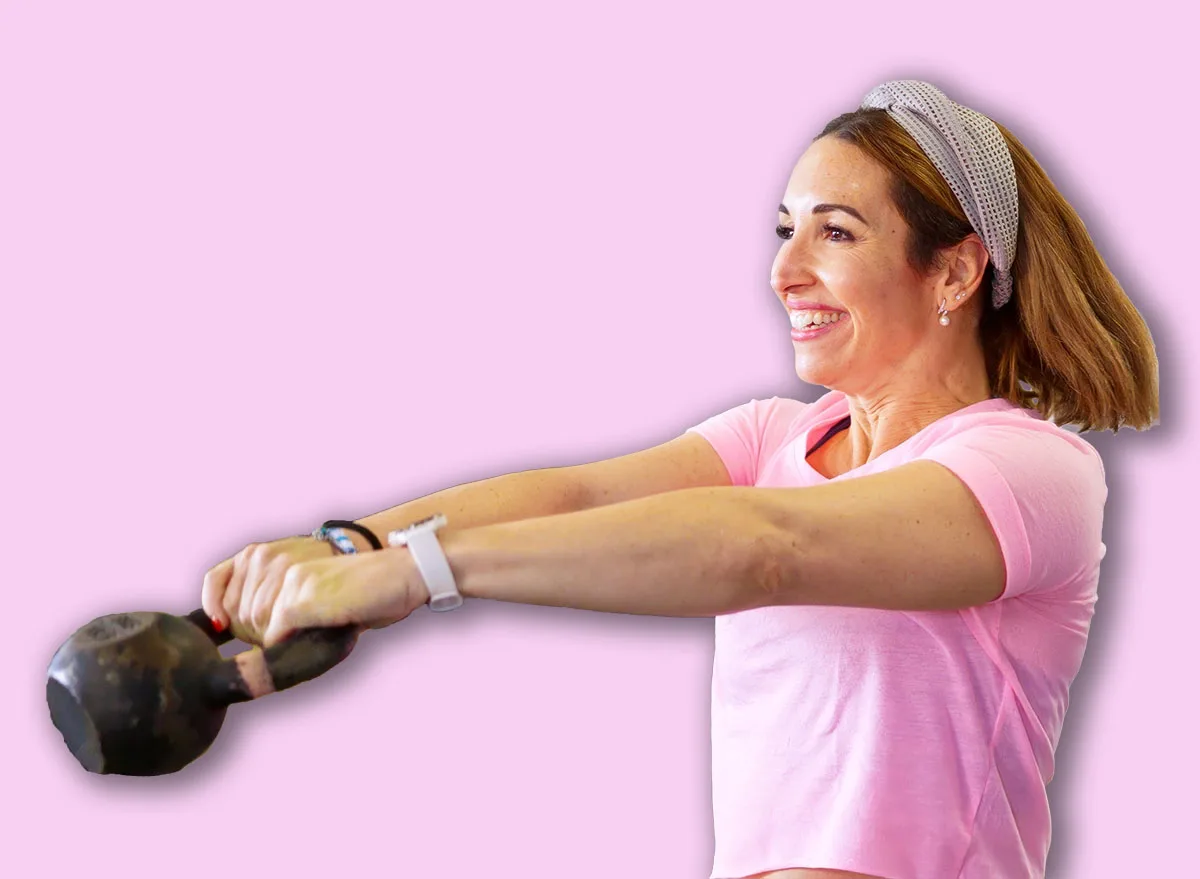
Kettlebell swings are a highly dynamic exercise that primarily targets the posterior chain (glutes and hamstrings) but simultaneously demands powerful and continuous core engagement. The movement is initiated by a hip hinge, propelling the kettlebell forward and upward using hip drive, not arm strength. As the kettlebell reaches its apex and begins its descent, the core, particularly the deep abdominal muscles, must work eccentrically to control the momentum and prepare for the next powerful hip hinge. This repetitive cycle of explosive hip extension and controlled deceleration builds incredible power, endurance, and coordination throughout the core and posterior chain. For mature adults, kettlebell swings can significantly improve hip mobility, explosive power (crucial for preventing falls), and cardiovascular fitness, all while training the core to stabilize against dynamic forces. The emphasis should always be on driving the movement from the hips, allowing the arms to act merely as levers, with the core maintaining a rigid, neutral spine throughout the swing. Aim for 3 sets of 12 to 15 repetitions, with 45 to 60 seconds of rest, to cultivate robust hip power and resilient core stability.
5. Dumbbell Step-Ups: Unilateral Stability and Balance Challenge
Dumbbell step-ups are a deceptively simple yet profoundly effective exercise for developing unilateral leg strength, balance, and integrated core stability. As one foot steps onto an elevated surface (like a bench or box) and the body lifts, the core must actively engage to stabilize the trunk and prevent lateral sway or rotation. Holding dumbbells further intensifies this demand, as the core works to counteract the added load and maintain an upright, controlled ascent. This constant stabilization required with each repetition helps to strengthen the deep abdominal muscles, obliques, and erector spinae, fostering a more secure and balanced posture. For older adults, the benefits extend significantly to improving balance, reducing fall risk, and enhancing the ability to navigate stairs or uneven terrain with confidence. The exercise primarily works the quadriceps, glutes, and hamstrings of the stepping leg, but the core’s role in maintaining equilibrium is central to its efficacy. Focusing on a controlled, deliberate movement, driving through the entire foot on the box, maximizes both leg strength and core stabilization. Execute 3 sets of 8 to 12 repetitions per side, resting for 45 seconds between sets, to build comprehensive lower body and core strength.
Integrating these standing functional exercises into a regular fitness routine offers a holistic pathway to a stronger, more stable, and more capable core, particularly beneficial for mature adults. This approach moves beyond aesthetics, focusing on practical strength that supports better posture, improved balance, and enhanced independence in all facets of life. Consistency in execution and a focus on proper form, rather than heavy weights or high volume, will yield the most significant and lasting benefits. As with any new exercise program, consulting with a qualified fitness professional is always recommended to ensure movements are performed safely and effectively, tailored to individual needs and capabilities. By embracing these dynamic movements, individuals can proactively cultivate a robust core that serves as the bedrock for a vibrant and active lifestyle through the later years.
About the Author