
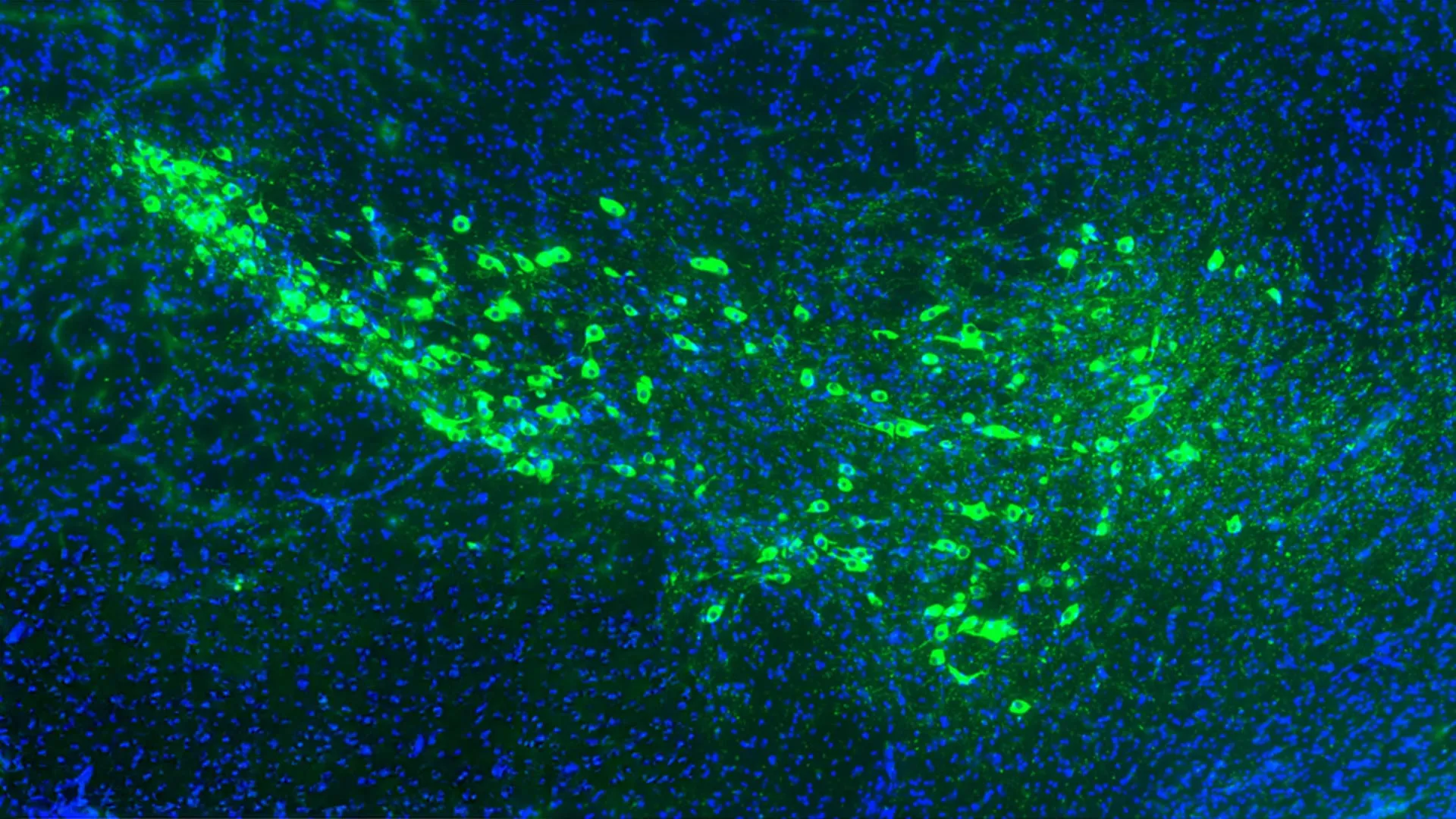
A groundbreaking investigation conducted by scientists at Yale School of Medicine has potentially illuminated the clandestine pathways through which Parkinson’s disease propagates within the intricate network of the human brain. This pivotal discovery, centered on the identification of two specific proteins residing on the exterior of motor neurons, offers a compelling new avenue for therapeutic interventions aimed at not merely alleviating the debilitating symptoms of Parkinson’s but fundamentally impeding its relentless advance. Parkinson’s disease, a progressive neurodegenerative condition, is characterized by the gradual deterioration and demise of brain cells, a process intrinsically linked to the aberrant accumulation of a misfolded protein known as alpha-synuclein. The insidious nature of this protein lies in its capacity to migrate from compromised neurons to healthy ones, thereby exacerbating the disease’s impact and contributing to the escalating severity of its manifestations over time.
For an extended period, the precise mechanisms by which this toxic alpha-synuclein infiltrates intact neurons after its release from dying cells remained an elusive enigma for the scientific community. However, a recent study, meticulously detailed in the esteemed journal Nature Communications, has put forth compelling evidence implicating two cell surface proteins, identified as mGluR4 and NPDC1, as critical facilitators or "transporters" responsible for ushering the misfolded protein into unsuspecting healthy brain cells. This revelation marks a significant departure from previous understandings and opens a new chapter in deciphering the disease’s complex pathogenesis.
The implications of this research are profound, offering a tantalizing glimpse into the possibility of developing treatments that could effectively disrupt the chain reaction of neuronal damage. Dr. Stephen Strittmatter, the senior author of the study and a distinguished figure in neurology and neuroscience at Yale, emphasized the transformative potential of these findings. "Misfolded alpha-synuclein is the pathological hallmark of Parkinson’s disease," he stated, underscoring its central role in the disease’s destructive cascade. The ability to comprehend and subsequently intercept the cellular entry points of this protein could pave the way for interventions that meaningfully slow or even halt the progression of Parkinson’s, moving beyond the current paradigm of symptom management. "If we understood how it gets into neurons, we could perhaps block or slow down the progression of the disease," Dr. Strittmatter elaborated, highlighting the critical need to unravel the molecular intricacies of its intercellular transmission.
The research team embarked on an ambitious endeavor to meticulously track the journey of alpha-synuclein into healthy brain cells. Neurodegenerative disorders, including Parkinson’s and Alzheimer’s, represent a growing and substantial public health challenge, particularly within the United States. The Parkinson’s Foundation reports that approximately 1.1 million Americans are currently living with Parkinson’s disease, with an alarming nearly 90,000 new diagnoses occurring annually. The hallmark symptoms of Parkinson’s are primarily motor-related, encompassing tremors, difficulties with balance, and a general slowing of movement. These debilitating symptoms arise as alpha-synuclein aggregates within motor neurons, and as this pathological protein spreads to additional neurons, the disease inevitably advances.
Prior to this study, researchers harbored a strong suspicion that alpha-synuclein might gain access to healthy cells by adhering to specific proteins present on the cell’s outer membrane. To rigorously test this hypothesis, Dr. Strittmatter and his dedicated team cultivated an extensive array of 4,400 distinct cell cultures. Each of these cultures was meticulously engineered to express a unique surface protein, allowing for a systematic screening process. The researchers then introduced misfolded alpha-synuclein to these cultures to observe whether it would selectively bind to any of the engineered surface proteins.
The overwhelming majority of the tested cell cultures exhibited no discernible interaction with the misfolded protein, indicating that the binding was not a random occurrence. However, a critical breakthrough emerged when 16 different surface proteins demonstrated a clear affinity for the toxic alpha-synuclein. Among these identified proteins were mGluR4 and NPDC1, both of which are known to be present on dopamine-producing neurons within the substantia nigra—the brain region most profoundly impacted by Parkinson’s disease. The research unequivocally demonstrated that these specific proteins acted as conduits, effectively transporting misfolded alpha-synuclein into the cells.
Building upon this pivotal identification, the researchers then delved into investigating whether mGluR4 and NPDC1 were indeed instrumental in the intercellular spread of alpha-synuclein. To achieve this, they employed sophisticated genetic engineering techniques to create mouse models where either the mGluR4 or NPDC1 protein was rendered non-functional. These modified mice were subsequently exposed to misfolded alpha-synuclein to observe the consequences.
The results were striking and highly informative. In the control group of normal mice, the exposure to misfolded alpha-synuclein led to the development of significant protein accumulations within their brains, mirroring the pathological changes seen in Parkinson’s disease, and consequently, these mice exhibited Parkinson’s-like symptoms. In stark contrast, the mice genetically engineered to lack functional mGluR4 or NPDC1 proteins did not develop these toxic protein aggregates, nor did they display the characteristic motor impairments associated with the disease. Furthermore, in a separate experimental model specifically designed to mimic Parkinson’s disease progression, the researchers found that inactivating the genes responsible for either mGluR4 or NPDC1 significantly reduced symptom severity and demonstrably lowered the risk of mortality in the affected animals.
Collectively, these findings provide robust evidence that mGluR4 and NPDC1 function in concert as essential partners, facilitating the transport of misfolded alpha-synuclein into neurons, at least within the experimental context of mouse models. This collaborative mechanism represents a highly promising target for the development of future therapeutic strategies. Current treatments for Parkinson’s disease primarily focus on managing the symptomatic manifestations, such as tremors and rigidity, and offer little to no effect on slowing the underlying pathological processes that drive the disease. The ability to specifically target and block the intercellular spread of alpha-synuclein via these identified protein transporters could offer a revolutionary approach, potentially slowing or even halting the inexorable progression of Parkinson’s disease.
The imperative for developing disease-modifying therapies for Parkinson’s is poised to intensify significantly in the coming years. Neurodegenerative conditions like Parkinson’s predominantly affect older adults, and with a substantial projected increase in the population aged 65 and over in the United States over the next few decades, the demographic at risk for these diseases is set to expand considerably. "We have an aging population. How we can stop or slow neurons from dying is an enormous problem," Dr. Strittmatter commented, highlighting the immense societal challenge posed by these conditions. He concluded with a call to action, emphasizing that "This is really the time to make some inroads into figuring out how to slow it down," underscoring the urgency and critical importance of this ongoing scientific pursuit.
About the Author












