A groundbreaking therapeutic strategy has emerged from Oregon State University, offering a beacon of hope against glioblastoma, a notoriously aggressive and often fatal form of brain cancer. This debilitating disease currently sees fewer than 30% of diagnosed patients surviving beyond two years, underscoring the urgent need for more effective treatment modalities.
The innovative approach, spearheaded by a team of researchers including Oleh Taratula, Olena Taratula, and Yoon Tae Goo from the OSU College of Pharmacy, directly confronts two formidable obstacles that have historically hampered the success of glioblastoma therapies: the formidable blood-brain barrier and the imperative to precisely target cancerous cells while sparing healthy brain tissue.
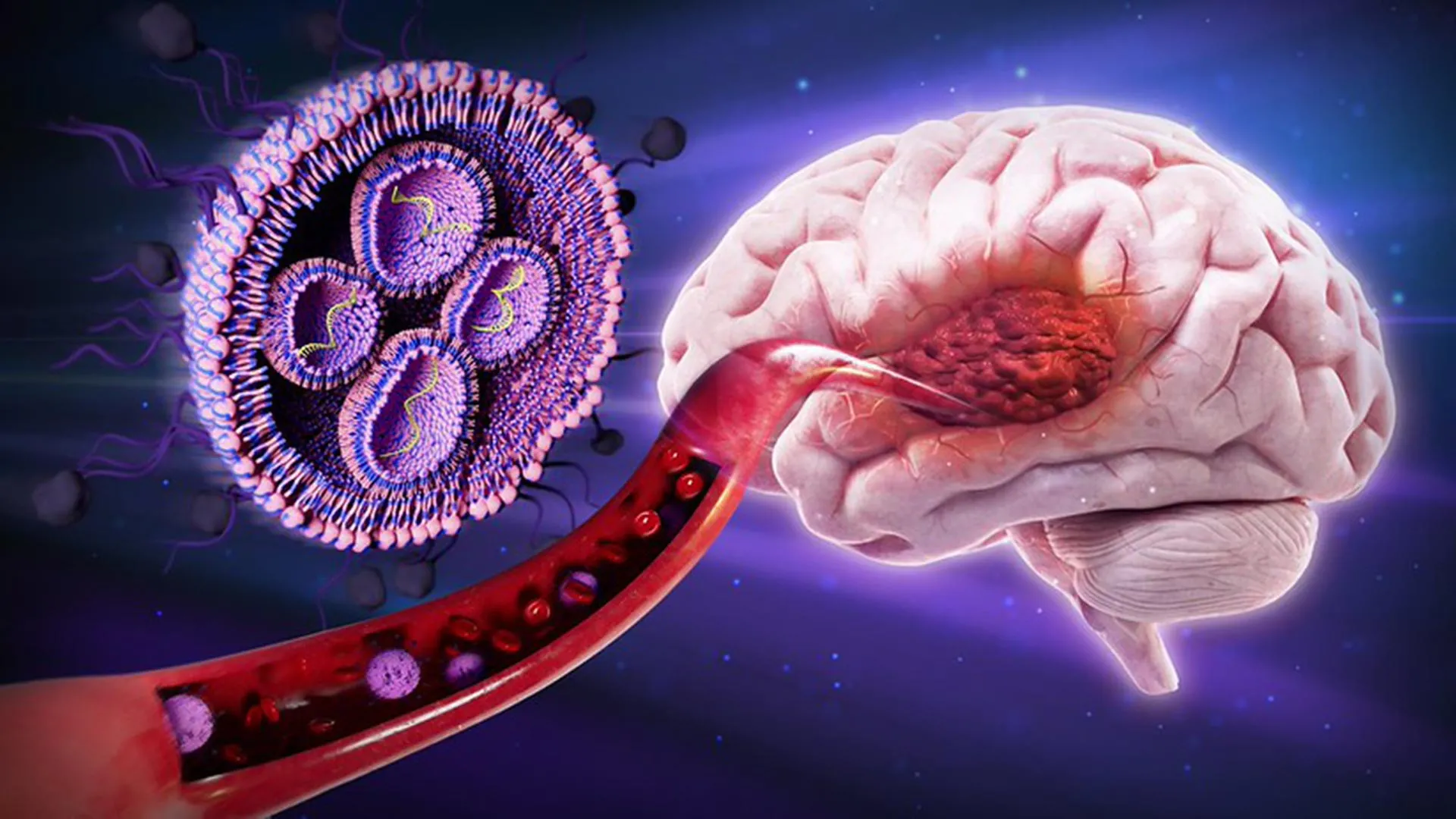
At the heart of this novel strategy lies the development of specialized lipid nanoparticles, meticulously engineered to navigate the complex biological landscape of the brain. These microscopic carriers are not merely passive delivery vehicles; they are imbued with genetic material specifically designed to reactivate the body’s intrinsic mechanisms for suppressing tumor proliferation. A crucial element of their design is an outer layer of a unique sugar coating, a feature that dramatically enhances their ability to penetrate the brain’s protective barrier and subsequently concentrate within tumorous growths.
Experiments conducted on a glioblastoma mouse model have yielded remarkable results, demonstrating a substantial 50% increase in median survival time among the treated subjects, as detailed in findings published in the esteemed Journal of Controlled Release. This significant improvement points to the potential of this technology to fundamentally alter the prognosis for patients battling this devastating illness.
The key to the nanoparticles’ success in breaching the blood-brain barrier lies in the judicious use of mannose, a sugar structurally analogous to glucose, the body’s primary fuel source. The endothelial cells that form the blood-brain barrier are equipped with a specialized transporter, known as GLUT1, which plays a vital role in facilitating glucose uptake into the central nervous system. Crucially, this same GLUT1 transporter exhibits an affinity for mannose. This inherent characteristic allows the mannose-coated nanoparticles to effectively hijack this natural transport system, thereby gaining access to the brain.
Oleh Taratula elaborated on the challenge and the team’s innovative solution: "The bloodstream is saturated with relatively high concentrations of glucose, and this presents a competitive challenge for our nanoparticles vying for GLUT1’s attention. To overcome this, the nanoparticles require a densely packed sugar surface, which represents our central innovation. By chemically linking mannose to cholesterol, a fundamental structural component of these nanoparticles, we achieved a sixfold improvement in surface coverage." This enhanced coating density was critical for ensuring sufficient nanoparticle uptake despite the presence of abundant glucose.
Beyond their ability to traverse the blood-brain barrier, the nanoparticles are engineered to deliver a precise therapeutic payload: messenger RNA (mRNA) programmed to instruct cells to produce PTEN. PTEN is a critical protein that acts as a natural brake on uncontrolled cell division and tumor development. Glioblastoma cells are frequently characterized by a deficiency or inactivation of this vital tumor-suppressing protein, rendering them prone to unchecked growth.
To safeguard the delicate mRNA cargo from degradation by enzymes present in the bloodstream or brain tissue before it can reach its intended cellular targets, the researchers incorporated a positively charged cholesterol derivative. This component acts as an internal shield, ensuring the genetic material remains securely encapsulated within the nanoparticles until arrival at the tumor site.
Furthermore, glioblastoma cells themselves exhibit a heightened metabolic activity, leading to an overproduction of GLUT1 transporters compared to healthy brain tissue. This metabolic anomaly, with glioblastoma cells expressing GLUT1 at levels up to three times higher than normal brain cells, creates a targeted accumulation effect. Once the sugar-coated nanoparticles have successfully navigated the blood-brain barrier, they are preferentially drawn to and taken up by tumor cells due to this elevated GLUT1 expression.
Olena Taratula highlighted this crucial aspect of tumor selectivity: "Glioblastoma undergoes metabolic reprogramming and consequently expresses GLUT1 at significantly higher levels than normal brain tissue. This allows the nanoparticles to preferentially accumulate within the tumor environment after crossing the blood-brain barrier. The subsequent restoration of PTEN expression within these tumor cells effectively reinstates growth control. Importantly, across multiple rounds of dosing, we observed significant tumor shrinkage without any detectable organ toxicity." This dual mechanism of targeted delivery and therapeutic action, coupled with a favorable safety profile in preclinical studies, underscores the transformative potential of this research.
Glioblastoma remains a formidable adversary in the oncological landscape, affecting approximately 3.19 individuals per 100,000 in the United States. The disease exhibits a slightly higher incidence in males and typically presents in individuals around the age of 64. The grim reality is that over 95% of patients succumb to the disease within five years of their initial diagnosis, a statistic that emphasizes the profound impact of this research on improving patient outcomes.
The collaborative effort behind this significant advancement included contributions from Vincent Cataldi, Vladislav Grigoriev, Neera Yadav, Tetiana Korzun, Chao Wang, and Adam Alani, all affiliated with the College of Pharmacy. This extensive research was made possible through the generous support of several prominent funding bodies, including the National Cancer Institute of the National Institutes of Health, the Eunice Kennedy Shriver National Child Health and Human Development, and the National Research Foundation of Korea, underscoring the widespread recognition of the importance of this work.
About the Author