
As individuals progress into their later decades, often beyond the age of sixty, a common complaint arises: persistent ankle stiffness and a noticeable decline in overall lower limb mobility. This pervasive issue frequently leads to impaired balance, a reduction in the ease of daily movements, and a heightened risk of falls, significantly impacting quality of life and functional independence. While many instinctively attribute this stiffness to mere muscular tightness, prompting endless cycles of stretching, emerging perspectives in exercise physiology and neurological rehabilitation suggest a more intricate underlying mechanism. The true impediment to fluid ankle function often lies not in a lack of tissue extensibility, but rather in a compromised communication pathway between the ankle joint and the brain.
The human ankle, far from being a simple hinge, represents a complex biomechanical marvel, serving as a critical nexus for relaying vital information about the body’s position in space. This sophisticated joint comprises numerous bones, including the tibia, fibula, and talus, intricately bound by a network of ligaments and tendons. These soft tissues are not passive structures; they are richly embedded with specialized sensory receptors known as proprioceptors. These microscopic sensors continuously transmit real-time data to the central nervous system, informing the brain about joint angles, muscle tension, and the speed and direction of movement. This constant stream of feedback is fundamental to maintaining balance, coordinating gait, and enabling adaptive responses to uneven terrain or unexpected shifts in body weight.
With advancing age, or following periods of inactivity and prior injuries, the efficiency of this intricate communication system can diminish. The brain, receiving less precise or even distorted signals from the ankle’s proprioceptors, may interpret certain movements or positions as potentially unsafe. In a protective response, the nervous system often limits the joint’s range of motion, manifesting as the sensation of stiffness. This neural guarding mechanism is the body’s attempt to prevent perceived injury, even if no actual tissue damage is present. Consequently, traditional stretching, which primarily aims to lengthen muscles, frequently falls short in addressing this fundamental neural disconnect. While stretching can improve muscle elasticity, it may not effectively re-establish the brain’s "trust" in the joint’s stability across its full potential range. Mobility, therefore, is not merely a physical attribute that can be forced upon a joint; it is a neurological permission granted by the brain when it perceives safety and control.
The concept that "micro-movements dictate macro-movements" underscores the profound influence of the foot and ankle complex on the entire kinetic chain. Every step taken, every shift in weight, begins at the ground contact point of the foot and ankle. The forces generated here are meticulously absorbed and distributed upwards through the knees, hips, pelvis, and even into the spinal column. When the fine-tuned, small-scale movements within the ankle are compromised—whether due to restricted motion, instability, or poor neuromuscular conditioning—the ripple effect can be far-reaching. This distal dysfunction can lead to compensatory patterns in more proximal joints, contributing to knee pain, hip stiffness, lower back discomfort, and even affecting shoulder and neck alignment over time. Moreover, the critical role of the ankle in dynamic balance makes its decline a primary contributor to an increased risk of falls, a significant public health concern among older populations.

Proprioception operates under a fundamental principle: "use it or lose it." The body excels at what it consistently practices. If the ankles are routinely exposed to a limited repertoire of movements, predictable walking surfaces, and uniform loading patterns over many years, the intricate sensory awareness within the joint can gradually erode. This decline is further exacerbated by past injuries, even those long since healed. A sprained ankle, for instance, can leave a lasting "memory" in the nervous system. Even after the ligaments have repaired, the brain might continue to maintain a heightened protective response, perpetuating stiffness and limiting range of motion as if the original injury were still present. The objective of targeted proprioceptive training is to disrupt this ingrained neural pattern, replacing the old message of vulnerability with a new one that affirms the ankle’s capacity for both robust stability and fluid mobility.
This paradigm shift emphasizes the primacy of stability before pursuing greater ranges of motion. Before asking the ankle to extend further into a stretch, it is imperative to ensure the joint can be accurately sensed and controlled by the brain throughout its existing range. The clearer and more accurate the sensory feedback transmitted from the ankle’s ligaments and tendons, the more effectively the brain can orchestrate coordinated movement across the entire body. Once this foundational stability is re-established through enhanced proprioceptive awareness, natural mobility often follows organically, without the need for forceful stretching.
Implementing a structured regimen of targeted, gentle movements can significantly enhance this crucial brain-ankle connection. These exercises are designed not to stretch muscles aggressively, but to stimulate the proprioceptors, providing the brain with the precise sensory input it needs to "re-learn" and "re-trust" the ankle’s capabilities. Importantly, these movements can often be performed from a seated position, making them accessible even for individuals with significant mobility limitations.
Four Foundational Proprioceptive Exercises for Ankle Rejuvenation:
1. Dynamic Ligament Activation: Medial and Lateral Ankle Engagement
This exercise specifically targets the intricate network of ligaments and tendons that stabilize the ankle joint along its medial (inner) and lateral (outer) aspects. These structures are crucial for preventing excessive inversion (rolling inward) and eversion (rolling outward) of the foot, which are common mechanisms of ankle injury. By introducing subtle, controlled tension, we aim to awaken the proprioceptors embedded within these ligaments, enhancing the brain’s awareness of the joint’s side-to-side stability.
- Execution: Begin seated comfortably in a chair with your feet flat on the floor, hip-width apart. Focus on one leg at a time. Plant your foot firmly on the ground, ensuring the entire sole remains in contact. Slowly and deliberately, push your knee inwards, subtly shifting your weight onto the outer edge of your foot. Maintain the foot’s fixed position on the floor, allowing the movement to originate from the knee and shin. You should feel a gentle stretch or activation along the lateral (outer) ankle ligaments. Hold this position briefly, then slowly reverse the movement, pushing your knee outwards. This action will shift your weight onto the inner edge of your foot, creating tension and activation along the medial (inner) ankle ligaments.
- Focus: The key is the opposing motion: the foot remains stable while the knee articulates, creating specific loading patterns on the ankle ligaments. Concentrate on the subtle sensations within the ankle joint, rather than the movement of the knee itself.
- Duration: Perform this controlled oscillation for approximately 90 seconds per leg, aiming for continuous, fluid transitions.
2. Anterior Compartment Sensory Refinement
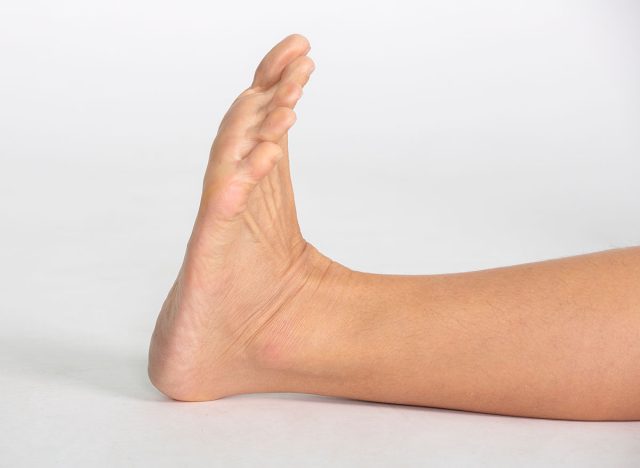
The anterior aspect of the ankle joint is crossed by numerous ligaments and tendons that facilitate dorsiflexion—the action of lifting the foot upwards towards the shin. These structures are vital for clearing the foot during the swing phase of gait and for maintaining balance on uneven surfaces. This exercise seeks to improve the neurological connection with these anterior components, enhancing the brain’s ability to perceive and control movements in this plane.
- Execution: Remain seated. Extend one leg slightly forward, keeping the heel on the ground but allowing the forefoot to be slightly lifted. Begin by slowly and meticulously pointing your toes away from your body (plantarflexion), then equally slowly drawing your toes back towards your shin (dorsiflexion). The emphasis here is on precision and control, not speed or maximal range. Imagine you are drawing the smallest, most controlled arc possible with your toes.
- Focus: The goal is to cultivate a clear, conscious connection between your brain and the intricate network of ligaments and tendons at the front of your ankle. Avoid rushing. Each repetition should be executed with deliberate awareness of the sensations in the anterior ankle compartment.
- Duration: Dedicate 90 seconds to each leg, focusing on the quality and clarity of the movement rather than the number of repetitions.
3. Posterior Chain Proprioceptive Engagement: Achilles Tendon Focus
The Achilles tendon, the largest and strongest tendon in the body, connects the calf muscles to the heel bone, playing a pivotal role in plantarflexion (pushing off), shock absorption, and maintaining upright posture. The posterior ankle ligaments also contribute significantly to stability. This exercise specifically targets these vital posterior structures, enhancing their proprioceptive contribution to overall ankle function.

- Execution: For this exercise, a small block, a thick book, or a rolled-up towel can be beneficial. Place the object on the floor in front of your chair. Place the ball of one foot onto the elevated object, allowing your heel to drop towards the floor. Keep your heel slightly suspended but relaxed. From this position, slowly and mindfully press the ball of your foot into the block, engaging your calf muscles and feeling the tension travel through your Achilles tendon. Then, gently relax, allowing the heel to descend again.
- Focus: The objective is a profound mind-muscle connection with the Achilles tendon and surrounding posterior ankle structures. Concentrate on the feeling of tension and release within this specific region. Visualize the fibers of the Achilles tendon activating and relaxing with each controlled movement.
- Duration: Perform this focused engagement for 90 seconds per foot.
Integrating Proprioceptive Training into Daily Life:
These exercises, while seemingly subtle, can yield significant improvements in ankle mobility, balance, and overall confidence in movement. Consistency is paramount. Incorporating these gentle, mindful movements into a daily routine can gradually re-educate the nervous system, replacing old patterns of stiffness with renewed fluidity and stability. However, it is always advisable to consult with a healthcare professional, such as a physical therapist or physician, before embarking on any new exercise regimen, particularly if you have pre-existing medical conditions or a history of significant ankle injuries.
By shifting the focus from merely stretching muscles to intelligently re-engaging the brain’s communication with the ankle joint, individuals can unlock a more profound and lasting improvement in their lower limb function. This approach not only alleviates discomfort and stiffness but also empowers older adults to regain greater independence, reduce their risk of falls, and enjoy a more active and fulfilling life. The journey to restored mobility begins with understanding the intricate dialogue between our bodies and brains, allowing us to move not just further, but more intelligently and securely.
About the Author