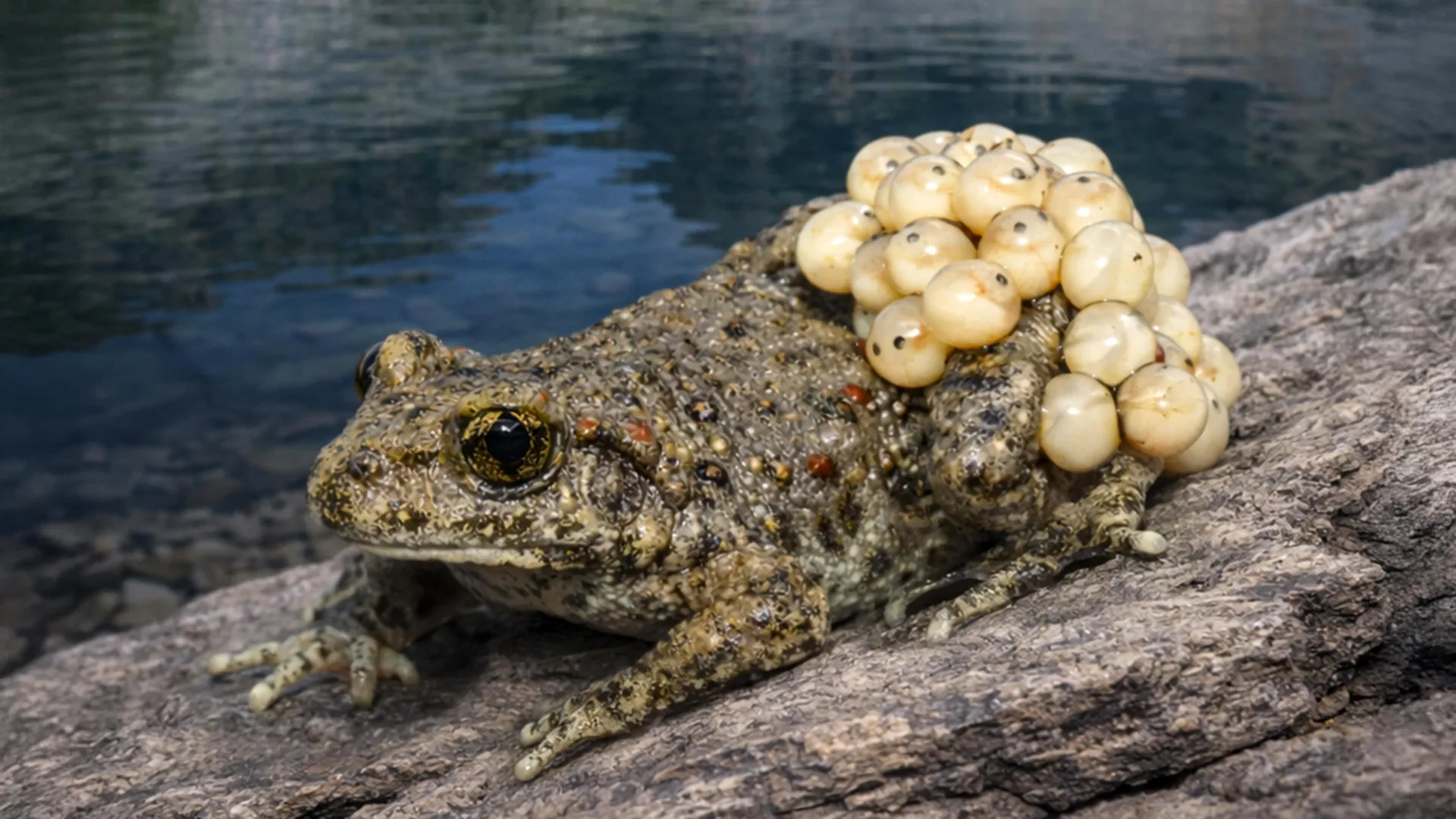
A groundbreaking scientific inquiry has illuminated the critical factor behind the survival and resurgence of certain amphibian populations following devastating outbreaks of a virulent fungal pathogen that has decimated frog and toad species globally. Researchers, a collaborative effort involving University College London (UCL), the Zoological Society of London (ZSL), and Imperial College London, have pinpointed the precise timing of an amphibian’s immune system maturation as the key determinant of its ability to withstand infection. These pivotal findings were formally presented and published in the esteemed scientific journal Nature Chemical Biology.
The fungal culprit, identified as Batrachochytrium dendrobatidis (often abbreviated as Bd), is responsible for the often-fatal disease known as chytridiomycosis. This microscopic organism inflicts severe damage upon the skin of amphibians, compromising their vital physiological processes, particularly their capacity to regulate essential bodily fluids, electrolytes, and mineral balances. The ecological impact of Bd has been nothing short of catastrophic, precipitating drastic population declines and even local extinctions across numerous continents.
A peculiar aspect of this fungal affliction is its differential impact across amphibian life stages. Younger amphibians, in their larval or tadpole phases, generally remain unaffected. This protection is attributed to their skin composition, which at this stage is not rich in keratin, the proteinaceous material that serves as the fungus’s primary nutrient source. However, upon metamorphosis, when tadpoles transform into their adult form, their skin undergoes significant changes, developing the keratinized layers that render them highly susceptible to Bd infection. This transition period is frequently marked by widespread mortality events, leading to the precipitous collapses observed in affected populations.
To unravel the mystery of why some amphibian communities manage to recover and persist while others continue to dwindle, the scientific team conducted an in-depth study of common midwife toads (Alytes obstetricans) inhabiting four distinct lakes situated within the Pyrenees mountain range, straddling the borders of France and Spain. Crucially, all four of these lakes had previously experienced severe infestions of the Bd fungus. The research observed a stark contrast: at one of the studied lakes, the midwife toad population was still in a state of decline, having been reduced to near extinction. In contrast, the toad populations at the remaining three lakes had demonstrated remarkable recovery, successfully rebounding and establishing stable numbers, even in the continued presence of the Bd pathogen in their environment.
The central hypothesis driving the research focused on the role of antimicrobial peptides, a crucial component of the amphibian immune system. These are naturally occurring chemical compounds secreted by the skin that act as a first line of defense against pathogens. The researchers discovered a significant correlation: toads originating from the recovering populations exhibited an accelerated development of these protective peptides during their tadpole stage. Consequently, by the time they reached adulthood and became vulnerable to Bd, their immune defenses were already robustly established and fully operational.
Conversely, toads from the population that was still struggling displayed a markedly reduced production of these vital peptides during their larval development. This deficiency left them inadequately prepared to combat the fungal threat once they matured, contributing to their ongoing vulnerability and high mortality rates. Dr. Phillip Jervis, the lead author of the study and affiliated with UCL Chemistry, ZSL Institute of Zoology, and Imperial College London, emphasized this crucial finding, stating, "Our study demonstrates that species heavily impacted by this disease possess the inherent capacity for recovery. They possess the biological mechanisms to combat infection; the critical determinant is the timing of their immune system’s readiness." He further elaborated that the disease predominantly affects amphibians during their transition from tadpole to adult. "Achieving mature immunity during the tadpole phase significantly enhances the survival prospects of these toads, enabling their populations to persist," Dr. Jervis explained.
Looking ahead, Dr. Jervis indicated that the next phase of research would investigate the underlying factors that might impede the early maturation of these immune systems. He posited that such impediments could be rooted in genetic predispositions or influenced by environmental variables. Potential environmental factors include ambient temperature or the presence of predatory species like trout. The latter, for instance, could act as a stressor, prompting tadpoles to accelerate their development into terrestrial adults prematurely, thereby reducing the window of opportunity for their immune systems to fully mature.
The investigative techniques employed by the research team were instrumental in uncovering a vast and previously underestimated repertoire of immune-related peptides. Utilizing advanced mass spectrometry, the scientists meticulously analyzed the complex cocktail of peptides secreted from the skin of the midwife toads. This sophisticated analytical process revealed a significantly larger collection of immune peptides than had been previously documented or anticipated. Out of an astonishing 1,152 distinct peptides identified, a remarkable 1,145 were entirely novel, with only seven having been cataloged in prior scientific literature.
Further analysis confirmed the direct link between peptide diversity and survival rates. The study found that tadpoles capable of producing a broader spectrum of peptides, indicative of a more mature immune system prior to metamorphosis, exhibited a considerably higher likelihood of surviving Bd outbreaks. In stark contrast, populations that produced fewer types of peptides during their tadpole phase continued to experience substantial losses.
The implications of these findings extend far beyond understanding amphibian ecology, offering potential avenues for novel therapeutic developments in human medicine. Professor Alethea Tabor, the senior author from UCL Chemistry, highlighted the immense potential of these newly discovered peptides. "We have uncovered a far greater diversity of peptides than we initially expected," she remarked. "Our immediate focus is to elucidate their precise mechanisms of action in pathogen control and to identify which among them possess potent antimicrobial properties."
Professor Tabor drew a parallel to historical medical breakthroughs, noting that many human medicines have originated from natural sources. Penicillin, a cornerstone antibiotic, is a prime example, derived from fungi. "These peptides represent promising new leads that could be harnessed to benefit human health," she stated, particularly in light of the escalating global challenge of antimicrobial resistance, which necessitates the urgent discovery of new strategies for treating infections.
The technical sophistication of mass spectrometry was central to this discovery. This technique allows for the extraordinarily precise measurement of molecular masses. In this specific study, researchers at UCL Chemistry employed tandem mass spectrometry. This advanced method involves fragmenting peptides into smaller components, measuring the mass of these fragments, and then computationally reconstructing the complete structure of the original peptide. This meticulous process enabled the identification and sequencing of hundreds of molecules that had remained undiscovered until this research.
Dr. Kersti Karu, a co-author from UCL Chemistry, underscored the transformative impact of recent technological advancements in analytical chemistry. "The capability to analyze hundreds to thousands of molecules simultaneously has only become feasible within the last decade," she observed. While mass spectrometry is more commonly applied in human health research, such as differentiating cancerous from healthy cells, its application is now expanding significantly into other fields of biological investigation.
The extensive research program that led to these revelations was made possible through the generous financial support of the UK’s Natural Environment Research Council (NERC) and the Leverhulme Trust.
About the Author