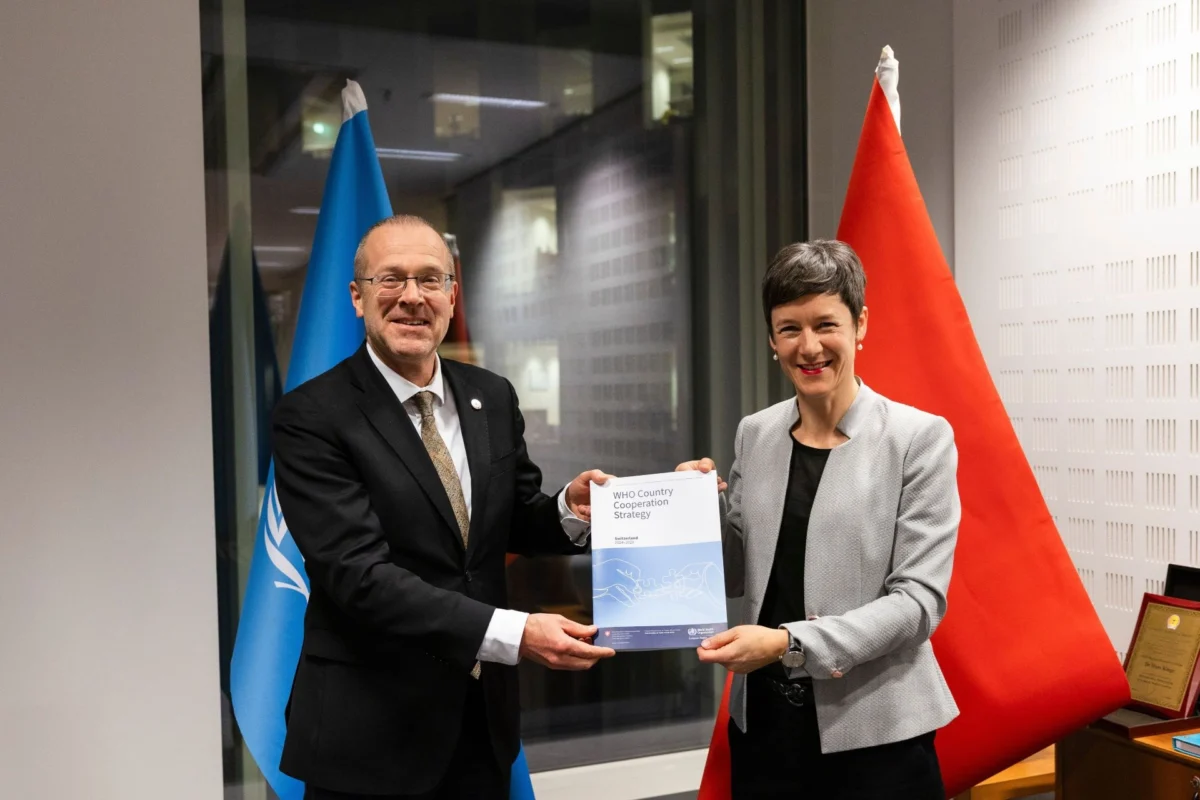
The World Health Organization (WHO) and Switzerland have formally re-established their robust strategic collaboration, outlining a comprehensive plan that will guide their joint efforts in global health initiatives from 2024 through 2028. This renewed commitment underscores a deep, long-standing alliance, signaling a collective determination to address the world’s most pressing health challenges with enhanced coordination and shared resources. The formalization of this five-year blueprint occurred on March 4, 2025, during a significant ceremony held at the WHO Regional Office for Europe in Copenhagen, Denmark, bringing together high-level representatives from both entities.
This latest iteration of the WHO-Switzerland Cooperation Strategy is not merely a continuation but an evolution of a pioneering partnership that commenced over a decade ago. In 2013, Switzerland distinguished itself by becoming the inaugural high-income nation within the WHO European Region to embark on a structured country cooperation strategy with the global health body. This initial venture served as a vital pilot program, laying the groundwork for how developed nations could strategically align their national health priorities and international development goals with WHO’s broader mandate. Switzerland’s proactive engagement set a precedent, demonstrating a model for integrated collaboration that extended beyond conventional donor-recipient relationships to encompass mutual strategic planning and implementation. The success and insights gleaned from this decade-long collaboration provided the impetus and justification for the joint decision in 2022 to update and extend the framework.
Switzerland’s unique position as a neutral nation, a hub for international organizations including the WHO’s headquarters in Geneva, and a significant contributor to global humanitarian and development efforts, positions it as an indispensable partner in global health governance. Its foreign policy traditionally emphasizes multilateralism, human rights, and humanitarian assistance, making global health a natural area for strategic engagement. This alignment of values and objectives forms the bedrock of the WHO-Switzerland cooperation, allowing for synergistic efforts that leverage Swiss expertise, financial contributions, and diplomatic influence to support WHO’s global health agenda. The collaboration extends beyond mere financial contributions, encompassing technical expertise, policy advocacy, and the facilitation of critical global health dialogues.

The comprehensive strategy for 2024-2028 is anticipated to focus on several critical pillars, reflecting both the enduring priorities of global health and the emerging challenges of the post-pandemic era. While specific details of the strategy’s operational components are elaborated in the official documents, it is expected to encompass areas such as strengthening health systems for universal health coverage (UHC), enhancing preparedness and response to health emergencies, combating communicable and non-communicable diseases, promoting mental health, and fostering innovation in health technologies and digital health solutions. These areas are intrinsically linked to WHO’s "Triple Billion" targets and the Sustainable Development Goals (SDGs), particularly SDG 3 on good health and well-being. The strategy’s design likely incorporates lessons learned from the COVID-19 pandemic, emphasizing resilience, equitable access to health services and products, and robust global health security architectures.
One of the most tangible and impactful manifestations of the WHO-Switzerland partnership lies in their joint commitment to the Global BioHub System. This groundbreaking initiative, for which Switzerland serves as the host country, represents a critical advancement in global pathogen sharing and pandemic preparedness. The BioHub System, established in 2021, aims to create a reliable and secure mechanism for countries to voluntarily share novel pathogens and biological materials with the WHO. This sharing is crucial for rapid scientific analysis, the development of diagnostics, treatments, and vaccines, and ultimately for accelerating an equitable response to potential future pandemics. Switzerland’s role is multifaceted: it provides the physical location and infrastructure for the BioHub facility, contributes significant financial resources, and offers political and diplomatic support to ensure the system’s neutrality and effectiveness. This initiative directly addresses a key lesson from past outbreaks, where delays and inequities in pathogen sharing hampered the global response, demonstrating Switzerland’s commitment to practical, actionable solutions in global health security. The BioHub system is a prime example of how the strategic cooperation translates into concrete projects with worldwide implications.
The renewal process for such a significant strategic document involves extensive consultation and rigorous evaluation. Leading up to the 2022 decision to update the strategy, both WHO and Swiss authorities likely undertook a thorough review of the preceding cooperation period, assessing achievements, identifying areas for improvement, and recalibrating objectives in light of evolving global health landscapes. This comprehensive assessment would have involved expert consultations, stakeholder dialogues, and technical working groups, ensuring that the new strategy is both ambitious and pragmatic. The formal signing event in Copenhagen saw key figures such as Barbara Schedler, Switzerland’s Ambassador for Global Health at the Federal Office of Public Health, and Dr. Henri P. Kluge, WHO Regional Director for Europe, affirming their commitment, symbolizing the high-level political will underpinning this collaboration. Their presence underscored the mutual recognition of the partnership’s strategic importance for both Switzerland’s foreign policy objectives and WHO’s regional and global health mandates.
Looking ahead, the 2024-2028 strategy is expected to yield substantial benefits, not only for the populations served by WHO but also for the global health community as a whole. For the WHO, Switzerland’s continued and enhanced support translates into crucial resources—both financial and human—as well as invaluable political backing in an increasingly complex geopolitical environment. For Switzerland, the partnership reinforces its standing as a responsible global actor, a champion of multilateralism, and a nation deeply committed to humanitarian values. It also allows Switzerland to project its values and expertise onto the global stage, contributing to a more stable and healthier world, which ultimately serves its own national interests through enhanced global health security. The strategy will likely include clear metrics and reporting mechanisms to ensure accountability and transparent progress tracking against its stated objectives, ensuring that the collaborative efforts translate into tangible improvements in health outcomes worldwide. This renewed agreement stands as a testament to the enduring power of international cooperation in confronting shared health challenges and building a more resilient future.
About the Author