Accessible Strength: How Supported Chair Exercises Bolster Walking Stamina and Balance in Later Years
Maintaining robust physical independence, particularly the ability to walk with confidence and endurance, becomes a paramount concern for many individuals navigating their later decades. As the population ages, preserving mobility emerges as a cornerstone of overall well-being, directly impacting quality of life, social engagement, and the capacity for self-care. While traditional modalities like treadmill walking are often lauded for their cardiovascular benefits and lower body conditioning, a growing body of expert opinion highlights the profound efficacy and distinct advantages of chair-supported exercise routines, especially for those over the age of 60. These foundational movements not only enhance muscular strength and stamina but also significantly mitigate the inherent risks associated with balance deficits, potentially accelerating the journey toward improved gait and endurance.
The natural physiological progression of aging often introduces challenges such as sarcopenia, the gradual loss of muscle mass and strength, and proprioceptive decline, affecting one’s sense of body position and balance. These factors collectively contribute to a heightened risk of falls, which can severely impact an older adult’s independence and confidence. Consequently, many individuals may shy away from physical activity, inadvertently entering a cycle of deconditioning that further exacerbates their mobility issues. This is precisely where the strategic integration of chair-based exercises presents a transformative solution.
According to Matt Kasee, MS, CSCS, the founder of Trilogy Fitness System, incorporating supported movements offers a uniquely beneficial pathway to fitness for older adults. He emphasizes that "Chair exercises allow us to work on strength, muscular endurance, mobility, and coordination in a more supported environment." This inherent stability is critical, providing a secure platform that diminishes the apprehension of losing balance or sustaining an injury during exercise, a common barrier to participation for many seniors. By offering a controlled environment, these routines empower individuals to challenge their muscles and cardiovascular system without the constant worry of instability.
Furthermore, Kasee points out that when performed continuously or in circuit formats with minimal rest, these seemingly simple exercises can effectively elevate heart rate, thereby contributing to improved cardiovascular endurance. This dual benefit—simultaneous strength and cardiovascular conditioning within a safe framework—positions chair exercises as an exceptionally potent tool for comprehensive physical rehabilitation and maintenance. He succinctly frames the chair not as a constraint, but as "a starting point," fostering the necessary capacity and self-assurance that can seamlessly translate into greater proficiency in standing activities, unassisted walking, and a broader spectrum of physical pursuits.
While treadmills undeniably offer an excellent platform for sustained cardiovascular activity and leg muscle engagement, particularly through controlled incline variations, their utility can be limited by an individual’s existing balance and lower body strength. For someone over 60 experiencing early signs of mobility decline or recovering from an injury, the dynamic nature of a treadmill might pose an initial hurdle. Chair exercises, by contrast, build the foundational muscular strength and stability required to safely and effectively utilize a treadmill or engage in outdoor walking. By first strengthening the primary movers and stabilizers in a supported manner, individuals can then transition to weight-bearing activities with a reduced risk of injury and greater confidence, potentially making their overall progression to restored walking endurance more efficient. It’s about building the prerequisites for success.
A well-rounded exercise regimen for older adults typically involves two to three strength-focused sessions per week, allowing for at least a day of recovery between more intensive workouts. Kasee underscores the importance of a gradual, consistent approach. While chair exercises are instrumental in developing the underlying strength and stamina, he advises that "the chair work should also gradually be paired with actual walking whenever it’s safe to do so." The ultimate objective remains to walk farther and more confidently, meaning direct practice of walking is indispensable once the foundational strength is established. This integrated strategy—beginning with supported strength training and progressively incorporating functional walking—ensures a holistic improvement in mobility.
Let us delve into specific chair-based exercises that are highly effective for bolstering the muscle groups crucial for walking endurance and balance.
1. Sit-to-Stands:
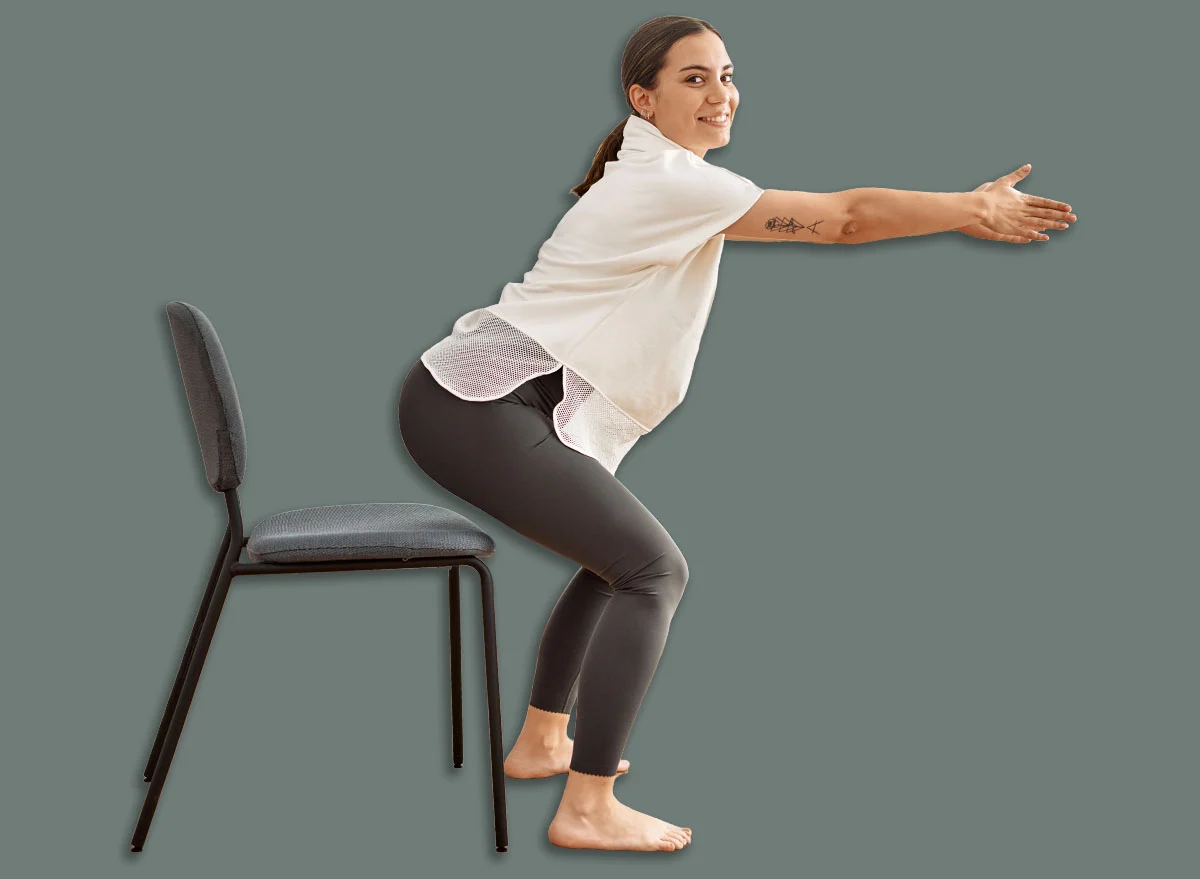
This exercise directly mimics a fundamental daily movement: rising from a seated position. It is a powerful functional exercise that targets the quadriceps, glutes, and core muscles. These muscle groups are indispensable for propelling the body forward during walking, maintaining an upright posture, and safely transitioning between sitting and standing.
- Execution: Begin by sitting on a sturdy chair with your feet flat on the floor, hip-width apart, and knees bent at a 90-degree angle. Lean slightly forward, engaging your core, and push through your heels to stand up completely, without using your hands if possible. Slowly and with control, lower yourself back down to the starting position, gently tapping the chair before rising again.
- Benefits for Walking: Strengthens the prime movers responsible for leg extension and hip drive, essential for a powerful and efficient stride. Improves functional strength crucial for navigating stairs, getting out of beds, and maintaining independence.
- Progression: Start by using armrests for assistance, gradually reducing reliance. Increase repetitions (aim for 10-15), then add sets. Once proficient, consider holding a light weight (e.g., a dumbbell or water bottle) against your chest.
2. Seated Marches:
Though performed seated, this exercise effectively engages the hip flexors, core stabilizers, and promotes coordination, all vital components for rhythmic and controlled walking. It helps to train the muscles responsible for lifting the leg during the swing phase of gait.
- Execution: Sit tall on the edge of your chair, maintaining a straight back and engaged core. Keep your feet flat on the floor. Alternately lift one knee towards your chest, ensuring your thigh comes parallel to the floor if possible, while keeping your back straight and not leaning back. Lower the foot with control and repeat with the other leg, simulating a marching motion.
- Benefits for Walking: Enhances hip flexor strength, which is crucial for clearing the ground during the swing phase of walking, preventing tripping. Improves coordination and rhythm, contributing to a smoother, more natural gait.
- Progression: Increase the speed of the marches while maintaining control. Add light ankle weights for increased resistance. Incorporate arm movements consistent with walking to further improve coordination.
3. Seated Heel-to-Toe Raises:
This compound movement targets both the calf muscles (gastrocnemius and soleus) and the tibialis anterior, located on the front of the shin. These muscles are fundamental for ankle stability, shock absorption during foot strike, and the powerful push-off required for each step.
- Execution: Sit upright with your feet flat on the floor. First, lift your heels as high as possible, engaging your calf muscles, keeping the balls of your feet on the ground. Hold briefly, then slowly lower your heels. Immediately after, lift your toes as high as possible off the floor, engaging your shin muscles, keeping your heels on the ground. Hold briefly, then slowly lower your toes. Alternate between heel raises and toe raises.
- Benefits for Walking: Strengthens the muscles critical for propulsion (calf raises) and foot clearance/shock absorption (toe raises). Improves ankle stability, which is essential for navigating uneven terrain and preventing stumbles.
- Progression: Increase repetitions for both heel and toe raises (12-15 reps each). Introduce a resistance band looped around the toes for toe raises, or hold a weight on your knees for heel raises.
4. Seated Knee Extensions:
This exercise primarily isolates and strengthens the quadriceps muscles, the large muscle group on the front of the thigh. Strong quadriceps are essential for knee stability, the powerful extension of the leg during walking, and supporting the body’s weight.
- Execution: Sit towards the front of your chair with your back straight and feet flat. Slowly extend one leg straight out in front of you until your knee is fully straightened, flexing your quadriceps. Hold this position for a moment, then slowly lower your foot back to the starting position. Repeat with the other leg.
- Benefits for Walking: Builds strength in the quadriceps, crucial for extending the leg during the push-off phase of walking and providing knee stability. Supports the knee joint, potentially reducing discomfort during prolonged walking.
- Progression: Increase the hold time at the top of the extension. Add light ankle weights to increase resistance. Aim for 10-15 repetitions per leg.
As individuals progress, it is vital to remember Kasee’s advice: "Start with what you can tolerate, build consistently, and gradually increase time, repetitions, or walking distance rather than trying to do everything at once." This measured approach minimizes the risk of overexertion and promotes sustainable improvement. Incorporating these exercises into a routine, perhaps three times a week with rest days in between, can yield significant improvements in lower body strength and muscular endurance.
Beyond the physical mechanics, the psychological impact of these exercises cannot be overstated. The enhanced sense of stability and control cultivated through chair-based routines directly translates into increased confidence, which is a powerful motivator for engaging in more challenging activities. This newfound self-assurance can encourage older adults to participate in social events, explore their communities, and maintain an active lifestyle, thereby enriching their lives in multifaceted ways.
In conclusion, while treadmills hold their place in fitness regimens, the strategic application of supported chair exercises offers a uniquely accessible, safe, and highly effective pathway for older adults to bolster their walking endurance and overall mobility. By meticulously targeting key muscle groups essential for gait and balance in a secure environment, these exercises lay a robust foundation for increased physical capacity and confidence. This approach not only addresses immediate physical limitations but also empowers seniors to reclaim their independence, fostering a more active, fulfilling, and fall-resilient lifestyle. It is a testament to the idea that effective fitness is not always about intensity, but about intelligent, sustainable engagement.
Related posts:

Related News