Strengthening Global Health Defenses: Netherlands Amplifies Commitment to WHO’s Climate Resilience Agenda
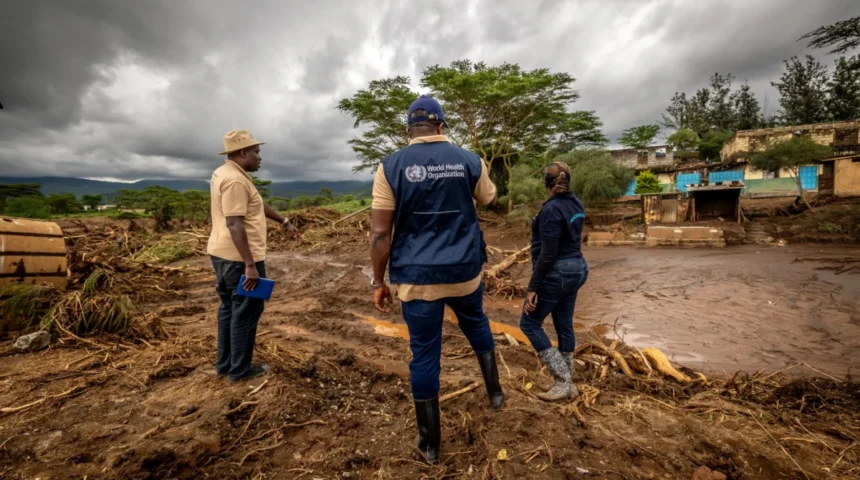
In a pivotal move underscoring the escalating global health challenges posed by a changing climate, the World Health Organization (WHO) and the Kingdom of the Netherlands have formally extended their strategic alliance. This renewed collaboration is set to significantly bolster international efforts aimed at mitigating the profound health impacts of climate change, reinforcing the commitment of both entities to fostering climate-resilient and sustainable healthcare systems across the globe. The continuation of this partnership signals a heightened focus on proactive strategies designed to protect human well-being against an increasingly volatile environmental backdrop.
The urgency for such concerted action has never been more apparent. Climate change is no longer a distant threat; its manifestations are already profoundly altering the global health landscape. Extreme weather events, such as prolonged heatwaves, devastating floods, and severe droughts, are becoming more frequent and intense, leading to direct mortality, injuries, and the widespread displacement of populations. Beyond these immediate crises, climate shifts are expanding the geographical range of vector-borne diseases like malaria and dengue, contaminating water sources, exacerbating food insecurity, and intensifying respiratory illnesses due to air pollution. The mental health burden associated with environmental disruption, loss, and uncertainty also represents a growing public health concern. Recognizing this intricate web of interconnected threats, the international community, led by organizations like WHO, is increasingly prioritizing integrated approaches that link environmental protection with public health security.
Central to this renewed commitment is a substantial financial injection from the Netherlands. For the year 2024, the Dutch government has allocated an additional €500,000 to the WHO, building upon an initial investment made in 2023. This latest contribution elevates the total Dutch support for WHO’s climate change and health initiatives to over €1.1 million since the partnership’s inception. This funding is strategically earmarked to empower the Secretariat of the Alliance for Transformative Action on Climate and Health (ATACH) and to advance critical climate change and health programs worldwide. ATACH, a WHO-led initiative, serves as a crucial platform for countries and stakeholders to translate commitments made at global climate summits, particularly those related to health, into concrete action. By strengthening ATACH, the partnership aims to enhance its capacity to facilitate knowledge exchange, coordinate policy development, and mobilize resources for national-level implementation.
The foundation for this deepened collaboration was laid in 2023, marking the initial phase of the Netherlands and WHO joining forces to confront the intertwined challenges of climate change and health. During this formative period, the partnership focused its efforts on supporting nations in Africa, Asia, and the Eastern Mediterranean regions—areas often disproportionately vulnerable to climate impacts. The initiatives undertaken were diverse yet interconnected, aiming to build robust national capacities. Key successes included the advancement of integrated climate and health surveillance systems, which enable countries to monitor both environmental indicators and health outcomes simultaneously, providing crucial data for early intervention. Furthermore, the partnership played a vital role in enhancing countries’ abilities to meet the health-related commitments outlined during the 26th Conference of the Parties (COP26) to the UNFCCC. This involved improving the harmonization of early warning systems for climate-related health risks, ensuring that communities receive timely and accurate information to prepare for and respond to impending threats. Ultimately, these collective efforts were designed to empower countries to cultivate a state of readiness within their health systems, making them more resilient to future climate shocks.

A core tenet of this strategic alliance, alongside contributions from other international organizations, is its pivotal role in assisting WHO Member States in the development of both climate-resilient and low-carbon health systems. A climate-resilient health system is one capable of anticipating, responding to, and recovering from the shocks and stresses imposed by climate change, while continuing to deliver essential health services. This encompasses everything from climate-smart infrastructure and robust supply chains to adequately trained healthcare personnel and effective emergency preparedness protocols. Concurrently, the emphasis on low-carbon health systems acknowledges the health sector’s own significant environmental footprint. Hospitals and healthcare facilities, with their energy consumption, waste generation, and complex supply chains, contribute substantially to global greenhouse gas emissions. The drive towards low-carbon solutions involves adopting renewable energy sources, implementing sustainable procurement practices, and promoting energy efficiency, thereby ensuring that the health sector itself contributes to climate mitigation rather than exacerbating the problem. The partnership actively fosters engagement with a broad spectrum of stakeholders, including civil society organizations, Multilateral Development Banks, other UN Agencies, and frontline health professionals, recognizing that a multi-sectoral and inclusive approach is indispensable for effective and sustained action.
The Netherlands has consistently positioned itself as a leading advocate for integrating climate action within the health agenda. This leadership is deeply embedded in the Dutch Global Health Strategy for 2023-2030, which explicitly highlights the critical intersection of climate change and health as a foundational pillar. This strategic alignment ensures that Dutch foreign policy and development cooperation actively support initiatives that address these interconnected challenges. A notable demonstration of this advocacy came in 2024, when the Netherlands, in collaboration with Peru, spearheaded the adoption of the World Health Assembly’s 77th Resolution on Climate Change and Health. This landmark resolution, which effectively updates and strengthens a previous resolution from 2008, signals a renewed and intensified global commitment. Recognizing the escalating urgency of the climate crisis and the imperative for accelerated efforts, the resolution calls for the development of a comprehensive WHO global action plan. It further urges increased national-level efforts and advocates for the mainstreaming of climate change and health considerations across all facets of WHO’s new Fourteenth General Programme of Work (GPW), which outlines the organization’s strategic priorities for the coming years.
The timing of this partnership renewal is exceptionally critical. Nations worldwide are grappling with the intensifying health ramifications of climate change, from unprecedented heat-related illnesses to the resurgence of infectious diseases in new territories. As the global health community prepares for the crucial discussions on climate change and health slated for COP29 in Azerbaijan later in 2024, the strengthened alliance between the Netherlands and WHO sends a powerful message. It underscores the undeniable link between environmental health and human health, positioning health as a central, non-negotiable component of global climate negotiations and policy formulation. The integration of climate change as a key priority area within WHO’s new GPW further solidifies this commitment. According to WHO’s latest Investment Case, the organization’s collaborative work with Member States and partners is projected to avert 7.5 million lives over the next four years, a testament to the potentially transformative impact of these coordinated efforts.
Looking ahead, the Netherlands and WHO are committed to leveraging their enduring partnership to ensure that health remains at the forefront of all climate-related negotiations and actions. A core focus will continue to be the reinforcement of resilience in regions most vulnerable to climate impacts, empowering these countries to implement sustainable and low-carbon healthcare solutions tailored to their specific contexts. This forward-looking vision encompasses not only immediate emergency response capabilities but also long-term systemic transformations that safeguard public health for generations to come. The collaboration serves as a model for how international partners can pool resources, expertise, and political will to tackle one of humanity’s most complex and pressing challenges.

Related News