Unlocking Novel Immunotherapeutic Pathways for Refractory Lung Cancer with Gamma Delta T Cell Discovery
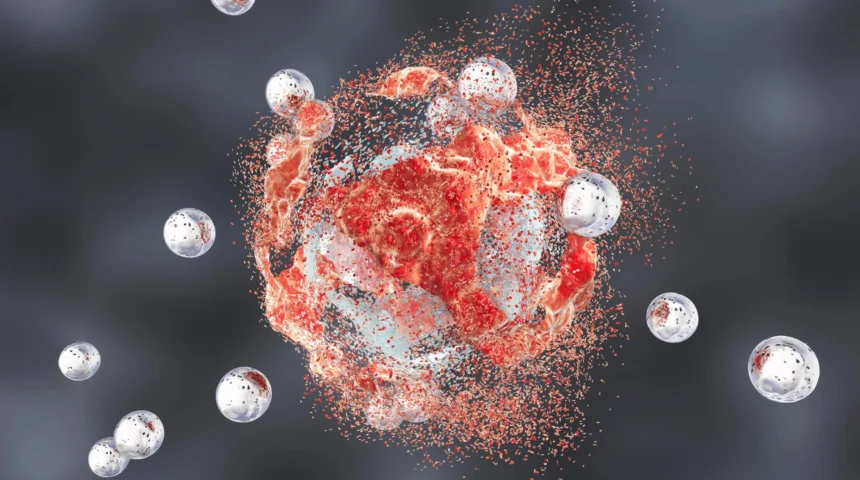
A groundbreaking investigation has unveiled a previously unacknowledged population of immune cells capable of identifying and eradicating small cell lung cancer (SCLC), a particularly aggressive and virulent form of pulmonary malignancy. This seminal discovery, detailed in the esteemed journal Cancer Cell by researchers affiliated with WEHI (Walter and Eliza Hall Institute of Medical Research), suggests a critical, heretofore unrecognized immune defense mechanism. The findings carry profound implications, potentially paving the way for innovative therapeutic strategies against tumors that have historically proven exceptionally challenging to manage. Furthermore, the study elucidated how specific pharmacological agents, already established in clinical practice, could amplify the inherent capacity of these specialized immune cells to combat cancerous proliferation. This approach promises to refine existing treatment protocols and broaden the cohort of patients who derive lasting benefits from immunotherapeutic interventions.
Small cell lung cancer stands as one of the deadliest human malignancies, characterized by an exceptionally bleak prognosis where fewer than seven percent of individuals survive beyond five years post-diagnosis. Its aggressive nature stems from rapid proliferation and a propensity for early metastasis, often presenting at an advanced stage. While immunotherapeutic regimens have revolutionized the treatment landscape for numerous cancer types, their efficacy against SCLC has been markedly restricted. A limited subset of patients experiences sustained remission, underscoring the urgent need for more effective treatment modalities.
A primary obstacle in treating SCLC lies in its sophisticated ability to elude immunological detection. SCLC tumors frequently circumvent recognition by conventional immune cells, specifically alpha-beta T cells, which constitute the primary targets and effectors for many contemporary immunotherapy drugs. This immunological cloaking mechanism allows the disease to persist and progress despite the body’s intrinsic protective mechanisms. The insights garnered from the Cancer Cell publication, however, point towards a distinct pathway through which the immune system might recognize and assault these recalcitrant tumors. By identifying an unexplored immunological route, researchers have brought to light a potential strategy for circumventing the malignancy’s adeptness at remaining hidden from immune surveillance.
Professor Kate Sutherland, a leading author of the study and a laboratory head at WEHI, emphasized the potential of this discovery to address a persistent conundrum in lung cancer research: how to extend the benefits of immunotherapy to a larger proportion of patients afflicted with SCLC. "For several decades, the scientific community has grappled with the reality that small cell lung cancer exhibits an extraordinary proficiency at camouflaging itself from the immune system," Professor Sutherland stated. "Our team has identified a specific immune cell type that appears uniquely equipped to penetrate this deceptive facade." She further elaborated on the striking correlation observed: "Remarkably, patients whose tumor microenvironments harbored a greater abundance of these specialized immune cells often demonstrated superior clinical outcomes and more favorable responses to treatment."
The newly identified immune effectors are a distinct subset of lymphocytes known as gamma delta T cells. Unlike their more common alpha-beta T cell counterparts, gamma delta T cells possess a unique T cell receptor that allows them to recognize stress signals and abnormal metabolites produced by cancerous cells, rather than relying solely on the presentation of specific antigens by major histocompatibility complex (MHC) molecules. This inherent characteristic potentially grants them an advantage in detecting tumors that have evolved to downregulate MHC expression or alter antigen presentation, a common immune evasion tactic employed by SCLC. Professor Sutherland highlighted the significance of these findings, noting, "This represents the most compelling evidence to date that gamma delta T cells are not only present within small cell lung cancer lesions but also appear to possess the functional capacity to combat the disease." She added, "This suggests these cells could offer an alternative immunological offensive pathway against tumors adept at evading conventional cancer-fighting immune components, thereby unveiling fresh possibilities for managing a cancer that has witnessed limited therapeutic progress over many decades."
To meticulously investigate the direct anti-cancer potential of gamma delta T cells against lung cancer, the scientific team meticulously developed sophisticated in vitro tumor models. Utilizing tissue samples generously donated by patients through the Victorian Cancer Biobank, in collaboration with the Royal Melbourne Hospital, they created three-dimensional miniature tumors, often referred to as "organoids" or "patient-derived tumoroids." These advanced models provide an exceptionally realistic representation of SCLC behavior in a laboratory setting, offering an invaluable platform for studying disease progression and evaluating responses to prospective therapeutic agents.
Subsequently, the researchers introduced gamma delta T cells, isolated from the peripheral blood of the same patients, into these meticulously crafted tumor models. The experimental results were unequivocally positive, demonstrating that these specific immune cells exhibited a pronounced efficacy in discerning and subsequently annihilating SCLC cells. Building upon this foundational observation, the scientists advanced their investigation by evaluating whether two existing pharmacological agents could further augment this potent immune response. The drugs selected for testing were tarlatamab, a bispecific T-cell engager already approved for SCLC, and zoledronate, a bisphosphonate commonly utilized for osteoporosis and cancer-related bone pathologies.
Each medication contributed synergistically but through distinct mechanisms. Zoledronate was observed to enhance the proliferation of gamma delta T cells and bolster their inherent capacity to identify lung cancer tumors. Its action likely involves increasing the expression of specific phosphoantigens that gamma delta T cells recognize. Tarlatamab, on the other hand, functioned by bridging the gap between the immune cells and the neoplastic cells, effectively directing the gamma delta T cell-mediated attack precisely towards the tumor. This dual-pronged approach, when employed in combination, resulted in a substantial amplification of gamma delta T cells’ ability to eliminate cancer cells during laboratory experiments. These compelling findings suggest that the strategic combination of currently available treatments could present an innovative paradigm for fortifying the immune system’s response to SCLC.
Dr. Jin Ng, the study’s primary author, underscored another critical implication of this discovery: its potential to underpin and advance an established therapeutic modality known as adoptive cell transfer. This sophisticated approach entails the extraction of a patient’s own immune cells, their ex vivo expansion to significantly increase their numbers, and subsequent reinfusion back into the patient’s circulatory system to bolster their endogenous anti-cancer defenses. Given that methodologies for the propagation and systemic administration of gamma delta T cells are already well-established in the biomedical field, the researchers anticipate that their current findings could significantly accelerate the development and implementation of novel therapeutic strategies.
"For individuals presenting with lower baseline levels of gamma delta T cells, therapeutic interventions such as zoledronate could offer a viable pathway to enhance their endogenous cancer-fighting immune effectors and improve their responsiveness to various treatments," Dr. Ng explained. He further elaborated on the promising translational potential: "As existing protocols for expanding and reinfusing gamma delta T cells are already in place, our discoveries raise the exciting prospect of expeditiously translating these insights into novel treatment paradigms." This advancement, Dr. Ng believes, "could unveil an entirely new pathway for bespoke therapeutic interventions in small cell lung cancer and potentially other solid malignancies that frequently evade detection by classical immunological components."
The genesis of this comprehensive investigation involved a meticulous re-examination of data derived from two pivotal clinical trials: IMpower133 and CASPIAN. Both studies were instrumental in solidifying the role of immunotherapy as a standard treatment option for patients diagnosed with small cell lung cancer. During this re-analysis, researchers discerned compelling indicators suggesting a significant involvement of gamma delta T cells. To delve deeper into these preliminary observations, they employed advanced genomic profiling and sophisticated computational bioinformatics methodologies.
Comprehensive analyses executed by WEHI’s dedicated genomics and bioinformatics teams conclusively revealed that patients exhibiting more robust gamma delta T cell transcriptional signatures were among those who demonstrated the most favorable responses to immunotherapeutic regimens in the original trials. These real-world clinical correlations, when considered in conjunction with the meticulously conducted laboratory findings, profoundly corroborate the evidence that gamma delta T cells play a crucial and previously underappreciated role in the immune response against SCLC. Consequently, these specialized lymphocytes represent promising therapeutic targets for subsequent interventions.
Currently, the WEHI research team is actively collaborating with scientific colleagues at the Doherty Institute to further elaborate upon this seminal finding. Their collective ambition is to transform these discoveries into an innovative category of immunomodulatory pharmaceuticals specifically tailored for small cell lung cancer. This collaborative effort holds the promise of ushering in a new era of targeted and more effective treatments for a cancer that has long defied conventional therapeutic approaches. The pivotal research received substantial financial backing from several esteemed organizations, including Cancer Council Victoria, the National Health and Medical Research Council (NHMRC), The CASS Foundation, and The International Association for the Study of Lung Cancer, underscoring the broad scientific community’s recognition of its potential impact.

Related News