Belgium and WHO Deepen Strategic Partnership to Accelerate Equitable Health Solutions and Fortify Global Resilience
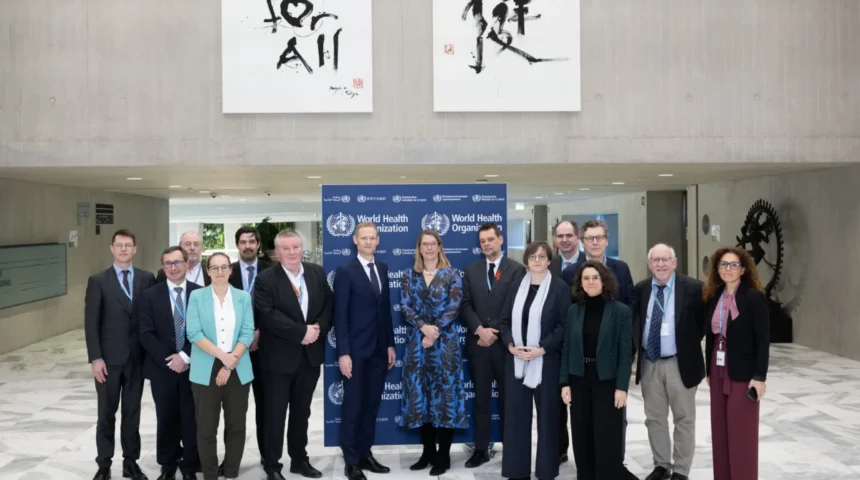
A pivotal three-day strategic dialogue, held from March 2nd to 5th, 2025, underscored the enduring commitment of Belgium and the World Health Organization (WHO) to fortify their collaborative efforts across critical global health domains. This high-level engagement served as a comprehensive review of past accomplishments within their extensive partnership and laid a robust foundation for intensified cooperation, focusing primarily on the central tenets of global health equity: universal health coverage (UHC), the robust fortification of health systems, and ensuring fair access to vital vaccines, therapeutic agents, and advanced health technologies.
The discussions, which brought together a distinguished Belgian delegation led by H.E. Christophe Payot, Ambassador of Belgium to the United Nations and other international organizations in Geneva, alongside WHO leadership and technical experts from both its Headquarters and the Regional Offices for Africa and Europe, delved into matters of profound strategic importance. A key objective was to explore avenues to harmonise the WHO’s overarching strategic objectives with Belgium’s national development cooperation mandates, particularly within the dynamic and ever-shifting panorama of global health challenges. This alignment is crucial for ensuring that collaborative initiatives yield maximum impact in an increasingly interconnected and vulnerable world. Furthermore, participants exchanged updates on Belgium’s substantive support for various global health priorities that gained prominence during its 2024 presidency of the Council of the European Union, demonstrating a concerted international leadership role.
One of the cornerstones of this strengthened alliance is the pursuit of Universal Health Coverage (UHC). The dialogue specifically reviewed the significant strides made through the UHC-Partnership, an initiative where Belgium’s financial and strategic backing has been instrumental. From 2021 to 2024, this collaboration yielded tangible results, particularly within Belgium’s designated partner countries. The participants meticulously examined achievements and deliberated on future strategies to enhance country-level collaboration. This included exploring potential synergies and direct alignment between the programmes executed by WHO country offices and Belgium’s bilateral cooperation initiatives at the national level. The Democratic Republic of Congo served as a pertinent case study, illustrating both the successes and the inherent complexities of implementing health interventions in challenging operational environments. Beyond the broader UHC framework, the discussions also highlighted the WHO’s comprehensive policies and operational strategies concerning mental health integration within primary healthcare settings, recognizing mental well-being as an indispensable component of holistic health. The shared vision for the WHO’s 14th General Programme of Work (GPW14) firmly positions UHC and the strengthening of health systems at its core, reinforcing their status as essential priorities in the WHO’s ongoing strategic planning.
Another critical area of focus was accelerating equitable access to essential vaccines, medicines, and health technologies. The dialogue provided an opportunity to assess the current status and notable achievements of the ‘Access to Essential Medicines’ program, an initiative substantially supported by Belgian funding. WHO representatives elucidated their extensive work and persistent challenges in this domain, offering a granular perspective through a country-level implementation example from Senegal. They also detailed the WHO’s overarching policies and operational frameworks designed to promote equitable access and foster local production capabilities for health commodities. Both parties unequivocally acknowledged a mutual objective for ensuring the long-term viability and sustainability of the Access to Essential Medicines initiative. This understanding underscored the critical role of strategic interventions in market dynamics—often referred to as ‘market shaping’—as an indispensable element for securing the initiative’s enduring efficacy and reaching populations most in need.
The imperative of global health security, encompassing emergency prevention, preparedness, and response, formed another central pillar of the discussions. Conversations centered on the WHO’s pivotal and irreplaceable role in reinforcing the foundational global framework for anticipating, preparing for, responding to, and building resilience against health crises. This complex agenda encompasses the ongoing and intricate negotiations surrounding a new international accord on pandemics, a crucial instrument for future global health governance. The holistic ‘One Health’ paradigm—which recognizes the interconnectedness of human, animal, and environmental health—was also a key theme, reflecting a comprehensive approach to mitigating health threats. The WHO’s crucial field operations in responding to health emergencies were vividly demonstrated through a presentation detailing its activities in Gaza, offering a stark reminder of the organization’s frontline humanitarian work. The debate further extended to addressing the escalating threats posed by the rapid acceleration of biological risks and zoonotic diseases (illnesses transmitted from animals to humans), alongside the WHO’s multifaceted engagement in risk mitigation strategies.

Beyond these primary areas, the partners also reviewed advancements in other vital WHO programmes benefiting from Belgian support. These included collaborative efforts concerning Neglected Tropical Diseases (NTDs), a diverse group of debilitating conditions primarily affecting impoverished populations, and Sexual, Reproductive Health and Rights (SRHR), which are fundamental to individual well-being and gender equality. The review strongly reaffirmed the importance of an evidence-based approach in these specialized fields, ensuring that interventions are both effective and tailored to specific community needs.
The WHO expressed profound appreciation for Belgium’s steadfast commitment and proactive engagement, prominently displayed by the diverse participation of representatives from the country’s Federal government, as well as the Flemish and Walloon regional governments. Dr. Catharina Boehme, Assistant Director-General for External Relations and Governing Bodies at the WHO, conveyed gratitude, acknowledging Belgium’s "support, honesty, and strong engagement for global health." She highlighted the tangible impact of Belgium’s contributions, citing efforts in Mozambique and Senegal as "clear examples of the crucial work we accomplish together," underscoring the real-world implications of their collaborative endeavors.
Looking towards the horizon, both parties engaged in substantive discussions regarding the future trajectory of the Belgium-WHO collaboration framework and the associated multi-year agreement. Progress towards a renewed WHO-Belgium Country Cooperation Strategy was a significant point of deliberation, aiming to establish a more integrated and impactful long-term partnership. The shared aspiration is for this enhanced collaboration to substantially bolster a robust global health agenda, particularly under the ambit of the WHO’s 14th General Programme of Work (GPW14). As mentioned, the consensus affirmed that UHC and comprehensive health systems strengthening, being at the very heart of GPW14’s ambitious goals, will serve as the essential scope for the WHO’s ongoing prioritization efforts.
Mr. Dirk Brems, Director of Thematic and Multilateral Cooperation within Belgium’s Directorate-General Development Cooperation and Humanitarian Aid, articulated Belgium’s perspective, stating, "We recognize WHO as a trustworthy partner in global health. We felt proud hearing how crucial our support is to the Organization and how it is having a positive impact at country, regional, and global levels." He emphasized the imperative of continuing these vital dialogues as the global community navigates "uncharted territories," expressing anticipation for sustained joint efforts in upholding strong and resilient multilateralism.
This strategic dialogue not only reaffirmed a profound and effective partnership but also charted a clear course for future collaboration, cementing Belgium’s role as a crucial ally in the WHO’s mission to achieve health for all in an increasingly complex global landscape. The commitment to shared values and a pragmatic approach positions this alliance to deliver lasting positive change in global health outcomes.
Related posts:

Related News