
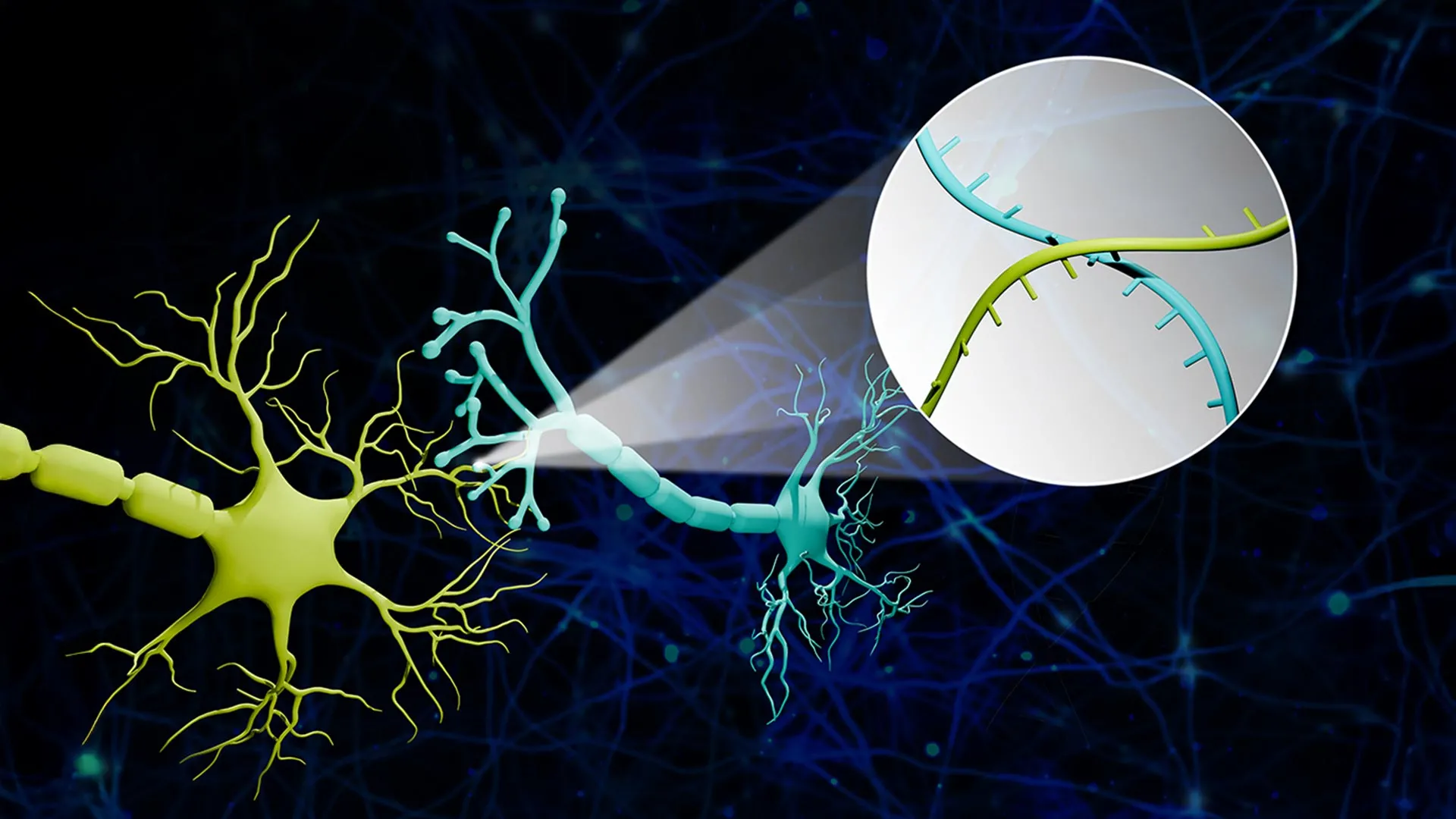
A groundbreaking scientific advancement has yielded a novel methodology for precisely delineating the intricate communication pathways within the brain, allowing researchers to visualize neural connections with unparalleled resolution and speed. This innovative approach employs molecular identifiers, akin to digital fingerprints, to tag individual neurons, thereby enabling the charting of extensive neural networks. Early applications of this technique have successfully mapped thousands of synaptic connections in the murine brain, offering a level of detail previously unattainable.
The implications of this breakthrough extend profoundly into our understanding of brain function and dysfunction. By providing a clearer picture of how neural circuits are organized and operate, scientists can begin to unravel the complex mechanisms underlying neurological disorders. The ability to meticulously examine these connections may illuminate the origins of diseases such as Alzheimer’s, offering insights into their progressive development and the cellular alterations that accompany them.
Professor Boxuan Zhao, a leading figure in cell and developmental biology at the University of Illinois Urbana-Champaign and the study’s principal investigator, drew an analogy to sophisticated engineering. "When constructing a complex computational system, a thorough comprehension of the central processing unit’s internal circuitry is paramount," Zhao explained. "Without a detailed understanding of how all components are interconnected, grasping its operational capacity, optimizing its performance, or rectifying malfunctions becomes an insurmountable challenge. We are now approaching the brain with a similar imperative for granular structural knowledge."
Zhao further emphasized the transformative potential of their technology, stating, "Our developed platform facilitates the simultaneous mapping of thousands of neural connections, achieving single-synapse precision—a capability currently absent in existing technologies. This directly addresses the challenge of understanding circuit abnormalities in neurodegenerative conditions and offers a robust foundation for the development of circuit-targeted therapeutic interventions." The comprehensive findings detailing this innovative technique were formally presented and published in the esteemed scientific journal, Nature Methods.
Historically, the process of charting the brain’s intricate web of connections has been characterized by its laborious nature and inherent difficulties. Traditional methods often necessitated the meticulous slicing of brain tissue into exceedingly thin sections, followed by microscopic examination and the painstaking manual reconstruction of neural pathways. While more contemporary sequencing-based techniques have demonstrated the capacity to label numerous neurons concurrently, they typically indicate the general trajectory of a neuron’s projection rather than identifying the specific cellular partners at the precise junction where communication occurs, known as the synapse. This crucial limitation has been directly addressed by the newly developed system.
To surmount these prior constraints, Zhao and his research cohort engineered a novel technological framework designated as Connectome-seq. This system assigns a distinct RNA sequence, functioning as a unique molecular barcode, to each individual neuron within the brain. Specialized protein complexes are instrumental in ferrying these distinctive barcodes from the neuron’s central soma, or cell body, to the synapse, the critical interface where signals are transmitted between neurons.
Subsequent to the labeling process, researchers are able to isolate these synaptic junctions. Employing advanced high-throughput sequencing methodologies, they can then decipher the specific pairs of barcodes that are co-located. This analytical process effectively reveals which neurons are in direct communicative contact, thereby enabling the large-scale reconstruction of neural connectivity maps.
The researchers ingeniously reframed the complex challenge of understanding neural connectivity as a problem amenable to advanced sequencing analysis. Professor Zhao illustrated this concept with an analogy: "Imagine a vast collection of balloons, each adorned with a unique set of barcode stickers across its surface. Some of these stickers then migrate to the distal end of the balloon’s string. If two balloons become physically tethered together at their string ends, the barcodes from both will converge at that specific point of connection." He continued, "Our process involves excising these knots and then sequencing the barcodes present within each excised segment. The detection of stickers originating from balloon A and balloon B within the same knot unequivocally establishes a direct linkage between these two entities. We are effectively applying this principle to the brain, but at the cellular scale, involving thousands of neurons. Armed with this data, we can construct a sophisticated map that accurately depicts the interconnections among these seemingly disparate cellular assemblies."
Employing the Connectome-seq methodology, the research team successfully charted the neural connections within a specific region of the mouse brain known as the pontocerebellar circuit. This circuit plays a vital role in linking the pons and the cerebellum, two crucial brain structures. The analysis, which encompassed over 1,000 individual neurons, unveiled previously unrecognized patterns of connectivity. Notably, it identified direct connections between specific cell types that were not previously understood to engage in direct communication within the adult brain.
With ongoing advancements and refinements being actively implemented in their laboratory, Zhao expressed strong confidence in their ability to further enhance the system’s capabilities. He articulated their ultimate objective: "We are confident that we can make it even better and eventually reach the goal of mapping the whole mouse brain."
The rapid and scalable nature of Connectome-seq holds immense promise for accelerating research into a wide spectrum of neurological and psychiatric conditions. By enabling comparative analyses of neural connections in healthy individuals versus those affected by various stages of disease, scientists are poised to identify subtle, early-stage alterations within neural circuits that may precede overt clinical symptoms.
"Utilizing sequencing-based approaches dramatically reduces both the time and cost associated with this type of analysis, making it genuinely feasible to discern variations across different brains," Zhao elaborated. "We will be able to pinpoint where connections undergo changes and identify the brain regions that are most susceptible, potentially even before the onset of observable symptoms. For instance, if we can precisely locate the compromised link that initiates the cascade of pathological events in Alzheimer’s disease, could we then develop targeted strategies to reinforce those specific connections, thereby mitigating disease progression or even halting it entirely?"
This pivotal research received crucial financial backing from several esteemed institutions, including a Neuro-omics Initiative grant awarded by the Wu Tsai Neurosciences Institute at Stanford University, alongside contributions from the Elsa U. Pardee Foundation and the Edward Mallinckrodt Jr. Foundation.
About the Author












