For many individuals embarking on a fitness journey, or those simply maintaining an active lifestyle, the plank has long been championed as the quintessential core exercise. Its widespread adoption stems from its apparent simplicity and effectiveness in engaging the abdominal muscles. However, as one progresses through life, particularly past the age of 60, the traditional understanding of core strength often requires a significant re-evaluation. While static holds like planks build foundational isometric strength, the demands of everyday life for older adults necessitate a more dynamic and functional approach to core conditioning. This shift acknowledges that our core’s primary role isn’t merely to brace against movement, but to actively stabilize, react, and support the body through a myriad of complex, real-world actions.
The human body is an intricate system designed for movement, and this becomes increasingly critical as we age. Daily activities such as walking, bending, reaching for objects, lifting groceries, or even navigating uneven terrain inherently involve constant adjustments and micro-stabilizations from the core musculature. In these scenarios, the ability of the core to respond dynamically to forces, prevent uncontrolled rotation, and maintain upright posture far outweighs the benefits of holding a rigid position on the floor. A robust, responsive core acts as the central pillar of stability, directly influencing balance, coordination, and overall functional independence. Neglecting this dynamic aspect can lead to increased vulnerability to falls, reduced mobility, and a diminished quality of life in one’s later years.
Understanding the anatomy of the core reveals why a functional approach is paramount. The core is not just the rectus abdominis (the "six-pack" muscles); it comprises a complex network of muscles including the transverse abdominis, obliques (internal and external), multifidus, erector spinae, pelvic floor, and diaphragm. These muscles work synergistically to create intra-abdominal pressure, support the spine, and transfer force between the upper and lower body. When the body is in motion, these muscles must fire in precise sequences to resist external forces, prevent unwanted movement, and maintain equilibrium. For instance, when carrying a heavy bag on one side, the core must actively engage to prevent the torso from leaning excessively, a phenomenon known as anti-lateral flexion. Similarly, turning to look over one’s shoulder involves controlled rotation, while walking requires continuous anti-rotational and anti-extension stability to prevent the pelvis from swaying or tilting. Planks, while valuable for initial muscle activation, primarily train anti-extension in a static, supine position, which doesn’t fully translate to these multifaceted demands.
Recognizing this critical distinction, many fitness professionals advocate for a paradigm shift towards standing, movement-based core exercises for older adults. These exercises intrinsically challenge the core in ways that mimic real-life scenarios, fostering improved proprioception—the body’s awareness of its position in space—and enhancing neuromuscular control. By engaging the core while the body is upright and actively moving, individuals can cultivate strength that directly translates into better posture, heightened balance, reduced back pain, and greater confidence in navigating their environment. This approach is not about abandoning core work but evolving it to meet the specific needs and goals of active aging.
Here are five highly effective standing core exercises that rebuild and enhance functional core strength, offering superior benefits compared to traditional static planks for individuals over 60:
1. Pallof Press (Anti-Rotation)
Often overlooked due to its seemingly subtle nature, the Pallof Press is a powerhouse for developing anti-rotational core strength. Performed with a cable machine or resistance band, the exercise involves pressing a handle straight out from the chest while standing perpendicular to the anchor point. The primary challenge lies in resisting the rotational pull of the resistance, which constantly attempts to twist the torso. This engagement primarily targets the oblique muscles and transverse abdominis, forcing them to stabilize the spine against external forces. In daily life, this translates to maintaining stability when reaching, carrying items on one side, or encountering unexpected pushes or pulls. The key is controlled, deliberate movement, focusing on keeping the hips and shoulders square throughout the press and return. This exercise teaches the core to "lock down" and prevent unwanted movement, a crucial skill for preventing injuries and maintaining balance.
2. Suitcase Carry (Anti-Lateral Flexion)
The Suitcase Carry is an exceptionally practical and functional exercise that directly addresses anti-lateral flexion, or the core’s ability to resist side bending. By simply holding a heavy weight (like a dumbbell or kettlebell) in one hand and walking a set distance, the body’s natural tendency to lean towards the loaded side is immediately apparent. The core, particularly the obliques and quadratus lumborum, must work intensely to keep the torso upright and prevent lateral sway. This exercise not only builds robust core stabilizers but also significantly enhances grip strength, shoulder stability, and overall posture. It directly mimics everyday actions such as carrying groceries, luggage, or briefcases, preparing the body to handle asymmetrical loads with ease and preventing imbalances that can lead to discomfort or injury. Maintaining a tall, upright posture without letting the weight dictate the body’s alignment is paramount for maximizing its benefits.
3. Cable Woodchop (Controlled Rotation)
While anti-rotation is vital, the ability to execute controlled, powerful rotation is equally important for functional movement. The Cable Woodchop, performed with a cable machine or resistance band, trains the core to initiate and control rotational forces. Starting with the handle at a high position and chopping it diagonally downwards and across the body (or vice versa for a low-to-high chop), this movement engages the entire core, including the obliques, rectus abdominis, and serratus anterior, along with the hips and shoulders. Unlike fast, ballistic movements that rely on momentum, the woodchop emphasizes a slow, deliberate tempo, forcing the core to guide and stabilize the movement throughout its full range. This translates directly to activities like swinging a golf club, throwing a ball, reaching across the body, or simply twisting to look behind you, enhancing both power and control in rotational movements.
4. Dumbbell March (Dynamic Stability and Gait Enhancement)
The Dumbbell March, especially when performed with external resistance, might appear simple, but it is incredibly effective for developing dynamic core stability, particularly relevant for improving gait and balance. Holding dumbbells in each hand (or even a single dumbbell in a suitcase carry variation) while marching in place or walking, challenges the core’s ability to stabilize the pelvis and spine with each leg lift. As one leg leaves the ground, the core must prevent the body from shifting or tilting laterally, engaging the hip flexors, glutes, and various core stabilizers. This constant adjustment and re-stabilization directly mimics the demands of walking, climbing stairs, or recovering from a momentary loss of balance. It fosters improved single-leg stability and proprioception, crucial elements in fall prevention for older adults. The key to maximizing its efficacy is performing the movement slowly and deliberately, focusing on minimizing any side-to-side rocking.
5. Landmine Rotation (Guided Rotational Control)
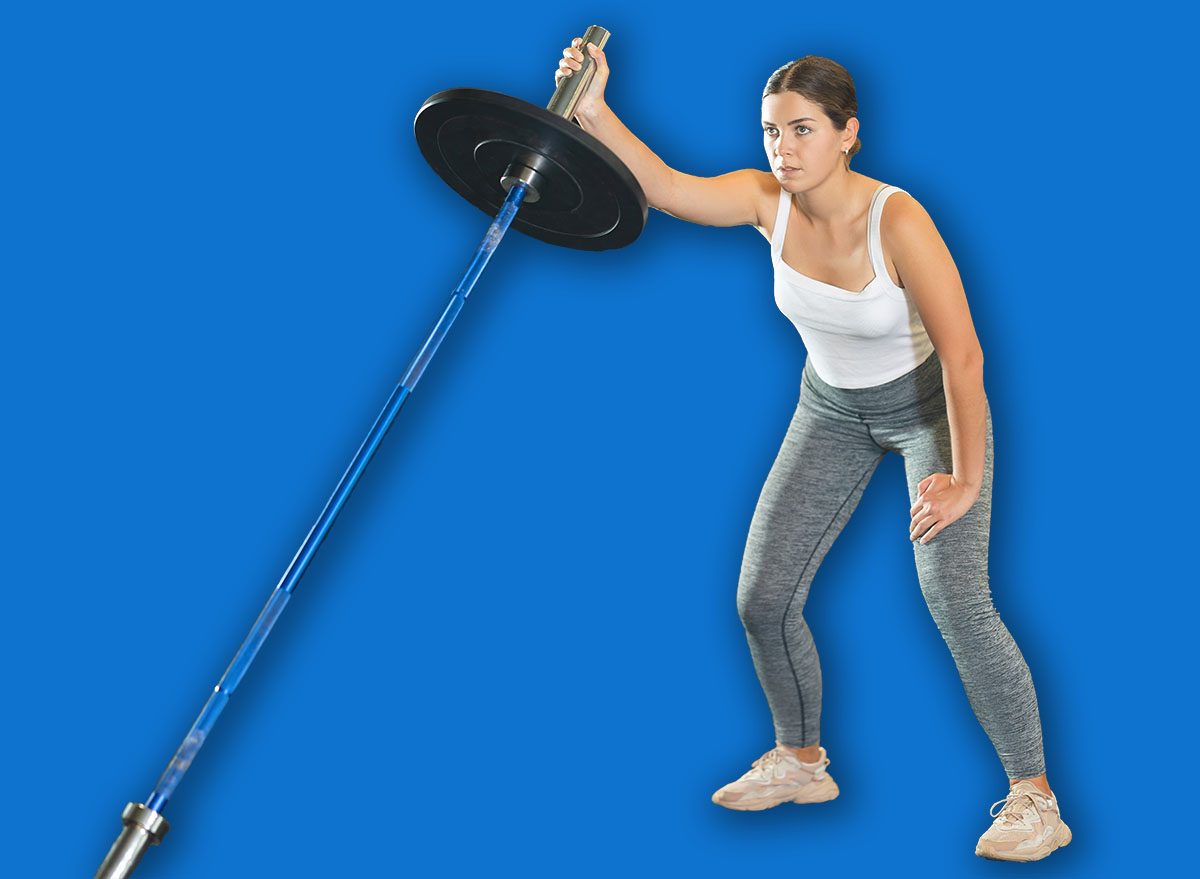
The Landmine Rotation provides an accessible and effective way to train controlled rotation, particularly beneficial for those who might find free-standing rotational movements challenging initially. Anchoring one end of a barbell in a landmine attachment (or simply in a corner against a wall) and holding the other end with both hands, the exercise involves rotating the torso from side to side, moving the barbell in an arc. The fixed pivot point of the landmine guides the movement, reducing the risk of awkward or uncontrolled motions while still challenging the obliques, shoulders, and hips. This guided path allows individuals to focus on engaging their core to initiate and control the rotation, rather than relying solely on upper body strength or momentum. It builds foundational rotational strength and mobility, which are essential for tasks like pivoting, reaching for objects on different sides of the body, and maintaining fluidity in movement. Smoothness and control throughout the arc of motion are more important than the speed or range of the rotation.
Integrating these standing core exercises into a regular fitness regimen offers a profound impact on the functional capabilities and overall well-being of individuals over 60. The emphasis shifts from merely enduring a static position to actively engaging the core in motions that reflect the realities of daily living. This approach not only strengthens the muscles but also enhances the neural pathways responsible for balance, coordination, and reactive stability. When undertaking these exercises, it is crucial to prioritize proper form over heavy weights or high repetitions. Controlled, deliberate movements, adequate rest between sets, and consistent practice will yield the most significant and lasting benefits. Listening to one’s body and gradually progressing the intensity are also vital for safe and effective training. By embracing these dynamic strategies, older adults can cultivate a resilient, responsive core, unlocking greater mobility, preventing falls, and supporting an active, independent lifestyle for years to come.
About the Author