As individuals navigate the landscape of life beyond their sixth decade, maintaining physical vitality becomes a cornerstone of independent living and overall well-being. A critical component of this vitality is a robust and functional core, which extends far beyond aesthetic considerations. For many older adults, traditional gym environments can present barriers, whether due to accessibility, intimidation, or the specific challenges associated with balance and mobility. This article explores an innovative and highly effective approach to cultivating core strength and full-body fitness right within the comfort and safety of one’s home, utilizing a common household fixture: the doorway.
The importance of a strong core for individuals over 60 cannot be overstated. The core musculature, comprising the abdominal muscles, lower back, hips, and pelvic floor, acts as the body’s central powerhouse. It stabilizes the spine, facilitates movement, and is fundamental to almost every daily activity, from bending to tie shoelaces to reaching for items on a high shelf. With age, natural physiological changes such as sarcopenia – the age-related loss of muscle mass and strength – can diminish core capacity, leading to increased risk of falls, poorer posture, and chronic lower back pain. Enhancing core strength through targeted, safe exercises can significantly mitigate these risks, improve balance, and foster greater functional independence, ultimately contributing to a higher quality of life.
One of the most significant advantages of incorporating a doorway into a fitness routine, especially for older adults, is the unparalleled stability it offers. Many home workout regimens lack adequate support, forcing participants to constantly battle for balance, which can detract from proper form and muscle engagement. A doorway, however, provides a reliable anchor point, enabling exercisers to focus intensely on the intended muscle groups without the pervasive fear of losing equilibrium. This enhanced stability empowers individuals to perform movements with greater confidence, explore a fuller range of motion, and engage larger muscle groups more effectively. The psychological benefit of feeling secure cannot be underestimated; it fosters a sense of accomplishment and encourages consistent participation, transforming a potentially daunting activity into an accessible and rewarding one.
For those aiming to strengthen their midsection and improve overall body composition, the strategy must encompass more than isolated abdominal contractions. A holistic approach that integrates compound movements, engaging multiple muscle groups simultaneously, yields superior results. The doorway serves as an exceptional tool for this, allowing for full-body engagement where hands can maintain a light, steady grip while the legs, upper body, and core execute the primary effort. This approach not only builds strength but also enhances coordination and proprioception, the body’s sense of its position in space. The versatility of doorway exercises also permits easy progression and regression; as strength improves, individuals can gradually reduce their reliance on the support, or conversely, increase support when needed, making the routine adaptable to varying fitness levels.
Below are five distinct exercises that harness the power of a doorway to build a stronger, more resilient body, with particular emphasis on core integration and functional movement patterns. These movements are designed to be performed as a standing circuit, emphasizing consistency and controlled execution.
1. Doorway-Assisted Squat with Dynamic Knee Lift
This exercise transforms a fundamental lower-body movement into a comprehensive strength and balance challenge. While the primary action of lowering and rising primarily activates the quadriceps, glutes, and hamstrings, the integrated knee lift introduces a dynamic element that targets the hip flexors and enhances core stability. The doorway’s support allows for a deeper, more controlled squat, ensuring proper form and maximizing muscle recruitment without compromising balance. The upward knee drive further engages the core to maintain an upright posture.
- Muscles Engaged: Quadriceps, gluteal muscles, hamstrings, hip flexors, calf muscles, and deep core stabilizers.
- Execution: Position yourself facing the doorway, gripping the frame lightly with both hands. Initiate the squat by pushing your hips back and bending your knees, as if sitting into a chair, ensuring your chest remains lifted. Descend to a comfortable depth, then powerfully drive through your heels to return to a standing position. As you stand tall, immediately lift one knee towards your chest, holding briefly before lowering it and repeating the sequence on the opposite side. Maintain a smooth, rhythmic flow throughout.
- Progression/Regression: To simplify, perform standard doorway-supported squats without the knee lift. To increase challenge, pause at the bottom of the squat or extend the duration of the knee lift.
2. Vertical Press Against Doorway Frame
Offering a unique angle for upper body development, the vertical press (or doorway push-up) targets the chest, shoulders, and triceps without requiring floor access. This exercise is highly scalable, making it suitable for a wide range of strength levels. By adjusting your proximity to the doorway, you can significantly alter the resistance and challenge.
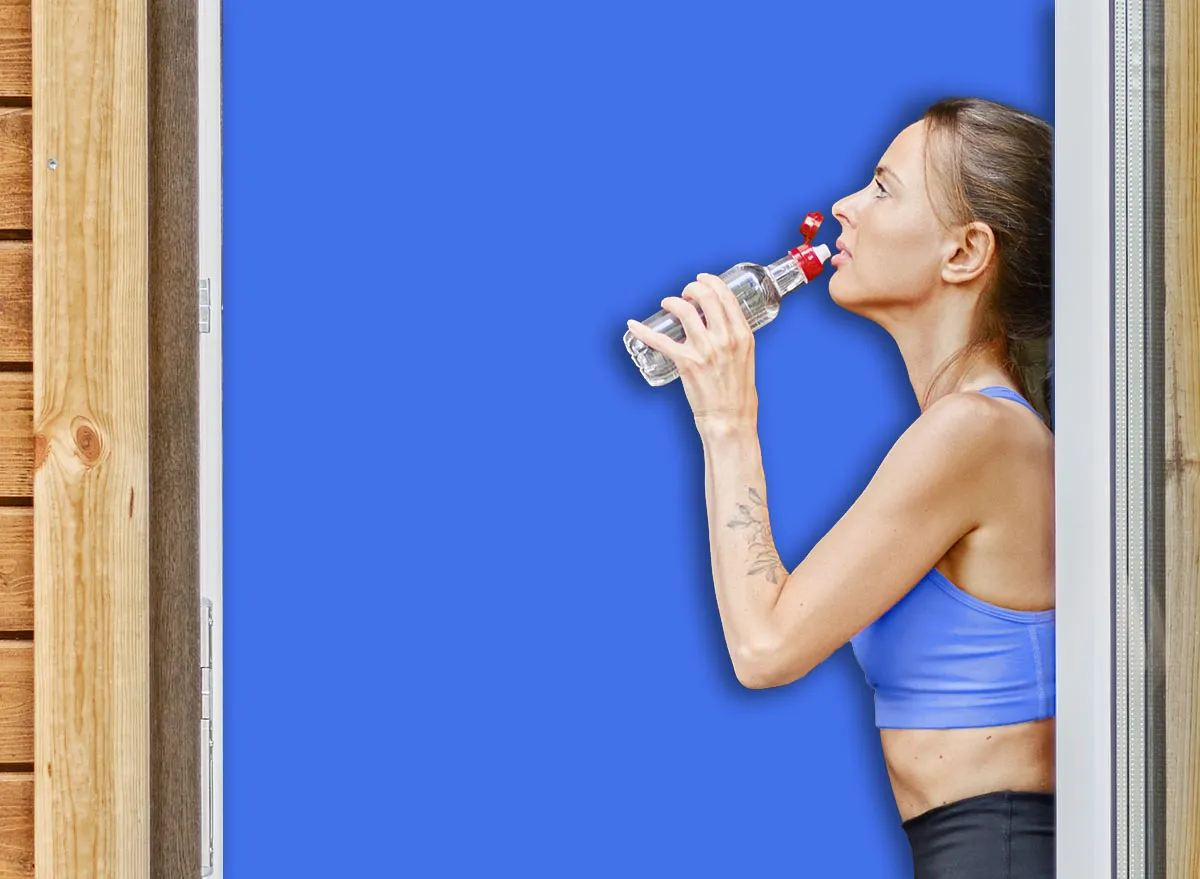
- Muscles Engaged: Pectoralis major (chest), deltoids (shoulders), triceps brachii (back of upper arm), and core musculature for maintaining a rigid body line.
- Execution: Stand facing the doorway at arm’s length, placing your hands shoulder-width apart on the vertical frame. Lean into the doorway, bending your elbows and keeping your body in a straight line from head to heels. Your elbows should point slightly backward as you lower your chest towards the frame. Push powerfully through your hands to return to the starting position, fully extending your arms without locking your elbows. Maintain core engagement to prevent sagging in the hips or arching in the lower back.
- Progression/Regression: Stepping further away from the doorway increases the incline and thus the challenge. Moving closer or using a wider stance reduces the difficulty.
3. Supported Alternating Leg Lunge
Lunges are invaluable for building unilateral (single-leg) strength, which is crucial for activities like walking, climbing stairs, and maintaining balance. The doorway-supported reverse lunge minimizes the balance component often associated with lunges, allowing for a deeper focus on muscular engagement in the thighs and glutes.
- Muscles Engaged: Quadriceps, gluteal muscles, hamstrings, and calf muscles of the front leg, with core stabilization throughout.
- Execution: Stand inside the doorway, holding the frame lightly with one or both hands for support. Take a controlled step backward with one leg, lowering your hips until both knees are bent at approximately a 90-degree angle. Ensure your front knee remains stacked over your ankle, and your back knee hovers just above the floor. Push through the heel of your front foot to return to the starting position, bringing your back leg forward. Alternate legs with each repetition, maintaining a steady pace.
- Progression/Regression: Begin with shorter steps backward for less range of motion. As strength and confidence grow, increase the step length and depth of the lunge.
4. High-Knee Marching with Doorway Assistance
This dynamic exercise serves as an excellent cardiovascular component within the circuit, elevating heart rate while simultaneously working the hip flexors, thighs, and core. The doorway support enables a faster, more purposeful march without compromising posture or stability, making it an ideal choice for improving stamina and coordination.
- Muscles Engaged: Hip flexors, quadriceps, gluteal muscles, calf muscles, and abdominal muscles.
- Execution: Stand upright within the doorway, gripping the frame with both hands. Begin marching in place, actively driving your knees high towards your chest. Focus on maintaining a tall, upright posture, resisting the urge to lean backward. Keep your footfalls light and deliberate, engaging your core with each knee lift. Aim for a brisk, controlled pace.
- Progression/Regression: Vary the pace from a slower, more deliberate march to a quicker, higher-intensity interval. Incorporating a brief pause at the peak of each knee lift can increase muscular time under tension.
5. Lateral Step Squat with Stability Aid
Incorporating lateral movement is vital for comprehensive fitness, as it targets muscles often neglected in sagittal plane (forward-backward) activities like walking. The doorway side-step squat strengthens the thighs, glutes, and crucial outer hip muscles, which are key for stability during side-stepping and preventing falls on uneven surfaces.
- Muscles Engaged: Gluteal muscles (especially gluteus medius and minimus), quadriceps, hamstrings, and core stabilizers.
- Execution: Stand facing the doorway, gripping the frame lightly. Take a wide step to one side, simultaneously pushing your hips back and bending the knee of the stepping leg, performing a squat. Keep the non-stepping leg relatively straight. Ensure your squatting knee tracks in line with your toes. Drive through the heel of your squatting foot to return to the center, bringing your feet together. Alternate sides with each repetition, moving with controlled fluidity.
- Progression/Regression: Start with smaller side steps and shallower squats. As you gain strength, increase the width of your step and the depth of your squat.
To effectively integrate these movements into a weekly routine, consider performing them as a standing circuit. Complete one full set of each of the five exercises in the order presented. After completing the lateral step squat, take a rest period of 60 to 90 seconds. Subsequently, repeat the entire circuit for a total of two to three rounds. This structured approach ensures comprehensive muscle engagement and allows for adequate recovery between rounds. Aim to perform this full-body routine two to four times per week, allowing for rest days in between to facilitate muscle repair and growth. Always prioritize proper form over speed or quantity of repetitions.
Before embarking on any new exercise regimen, particularly for individuals over 60, it is always advisable to consult with a healthcare professional or a certified fitness expert. This ensures the chosen exercises are appropriate for individual health conditions and fitness levels. Listen attentively to your body, and never push through pain.
Beyond the physical exercises, a holistic approach to abdominal health and overall wellness for older adults encompasses several other critical pillars. Adequate nutrition, rich in lean protein and fiber, supports muscle maintenance and healthy digestion. Sufficient hydration is crucial for metabolic function and joint health. Quality sleep and effective stress management techniques also play significant roles in recovery, hormonal balance, and overall physical and mental resilience. A "firmer midsection" in this context is not merely an aesthetic goal but a beneficial byproduct of a body that is functionally strong, stable, and well-cared for.
In conclusion, the humble doorway offers a remarkably effective, safe, and accessible platform for older adults to build substantial core strength and enhance overall fitness. By embracing these stability-assisted exercises, individuals can cultivate greater confidence in their movements, improve balance, and significantly contribute to their long-term health and independence. Consistent engagement with such a practical home-based routine is a powerful step towards a more vibrant and active life beyond 60.
About the Author