As individuals progress into their later adult years, maintaining robust physical capacity, particularly in critical joints like the shoulders, becomes paramount for sustaining independence and overall quality of life. The shoulders, a complex assembly of bones, muscles, tendons, and ligaments, are highly susceptible to age-related degeneration, often manifesting as reduced strength, decreased range of motion, and heightened susceptibility to injury. This physiological shift, characterized by conditions such as sarcopenia – the gradual loss of muscle mass and strength – and diminished connective tissue elasticity, underscores the imperative for targeted and effective strength training interventions. While gym machines offer controlled movements, free weights, specifically dumbbells, present a compelling alternative for older adults seeking to cultivate truly functional shoulder strength that translates directly to everyday activities.
Dumbbells, unlike their machine counterparts, demand greater engagement from stabilizing muscles, mimic natural movement patterns more closely, and allow for a wider, more fluid range of motion. This versatility fosters a more comprehensive muscular response, promoting not just raw strength but also improved coordination, balance, and proprioception – the body’s awareness of its position in space. For those over 55, the focus shifts from merely building bulk to fortifying the entire shoulder girdle, enhancing joint stability, and mitigating the risk of common age-related injuries such as rotator cuff tears or impingement syndromes. A judiciously designed dumbbell regimen, integrating both multi-joint, compound exercises and targeted isolation work, offers a superior pathway to rebuilding and sustaining shoulder vitality. This approach ensures that strength gains are not merely aesthetic but deeply functional, supporting everything from lifting groceries to reaching overhead or confidently navigating uneven terrain.
The foundation of an effective shoulder strengthening program for older adults lies in prioritizing compound movements. These exercises engage multiple joints and muscle groups simultaneously, generating a more significant physiological stimulus and fostering holistic strength development. Such movements are inherently more functional, mirroring the integrated muscular actions required in daily life. Once a solid base of multi-joint strength is established, incorporating isolation exercises becomes crucial for addressing specific muscle heads, correcting imbalances, and refining overall shoulder stability. This synergistic combination ensures a balanced development across the anterior (front), medial (side), and posterior (rear) deltoids, alongside their crucial supporting musculature. Consistency, meticulous attention to form, and a progressive overload strategy – gradually increasing resistance, repetitions, or sets – are the cornerstones of long-term success.
Here are five highly effective dumbbell exercises, carefully selected and structured to optimize shoulder strength and functional capacity for individuals over 55, emphasizing safety, efficacy, and comprehensive development:
1. Seated Dumbbell Overhead Press
The seated dumbbell overhead press serves as an excellent starting point for building foundational pushing strength in the shoulders. By performing this exercise from a seated position, individuals gain enhanced spinal stability, minimizing the need for complex balance and allowing for a concentrated effort on the primary movers: the anterior and medial deltoids, supported by the triceps. This focused engagement is particularly beneficial for those who may have initial concerns about core stability or lower back strain. The movement directly translates to daily tasks requiring overhead extension, such as placing items on high shelves or overhead storage.
To perform this, sit upright on a bench with back support, holding a dumbbell in each hand at shoulder height, palms facing forward. Your elbows should be bent, pointing slightly forward and out. Engage your core and press the dumbbells directly overhead until your arms are fully extended but not locked. Control the descent back to the starting position, maintaining tension in the shoulders throughout. Emphasize a neutral head position and avoid arching the lower back. This exercise not only strengthens the primary shoulder muscles but also improves the range of motion necessary for comfortable overhead movement, contributing significantly to functional independence. Starting with 3 sets of 8 to 12 repetitions, with a 60-second rest period between sets, allows for adequate recovery and muscle stimulation. Variations like a neutral grip (palms facing each other) can offer a different angle of attack and may feel more comfortable for some individuals.
2. Arnold Press
Named after the legendary bodybuilder Arnold Schwarzenegger, the Arnold press introduces a unique rotational element that challenges the shoulder through a wider, more dynamic range of motion compared to a traditional overhead press. This exercise effectively targets all three heads of the deltoid, promoting a more comprehensive and balanced development. The rotational component specifically engages the rotator cuff muscles, which are vital for shoulder stability and injury prevention, particularly in an aging population.
Begin seated (or standing, for a greater core challenge) with a dumbbell in each hand, palms facing you, at shoulder height. As you press the dumbbells upward, simultaneously rotate your wrists so that your palms face forward at the top of the movement, similar to a standard overhead press. Reverse the motion, rotating your wrists back to the starting position as you lower the weights. The key is to execute the rotation smoothly and deliberately, ensuring continuous tension on the deltoids. This multi-planar engagement enhances shoulder articulation and strength across various angles, making daily movements involving rotation, like reaching for a seatbelt or turning a steering wheel, feel more capable and secure. Perform 3 sets of 8 to 10 repetitions, allowing for a 60-second rest interval between sets. Focus intently on controlling the entire movement, resisting the urge to rush through the rotational phase.
3. Single-Arm Push Press
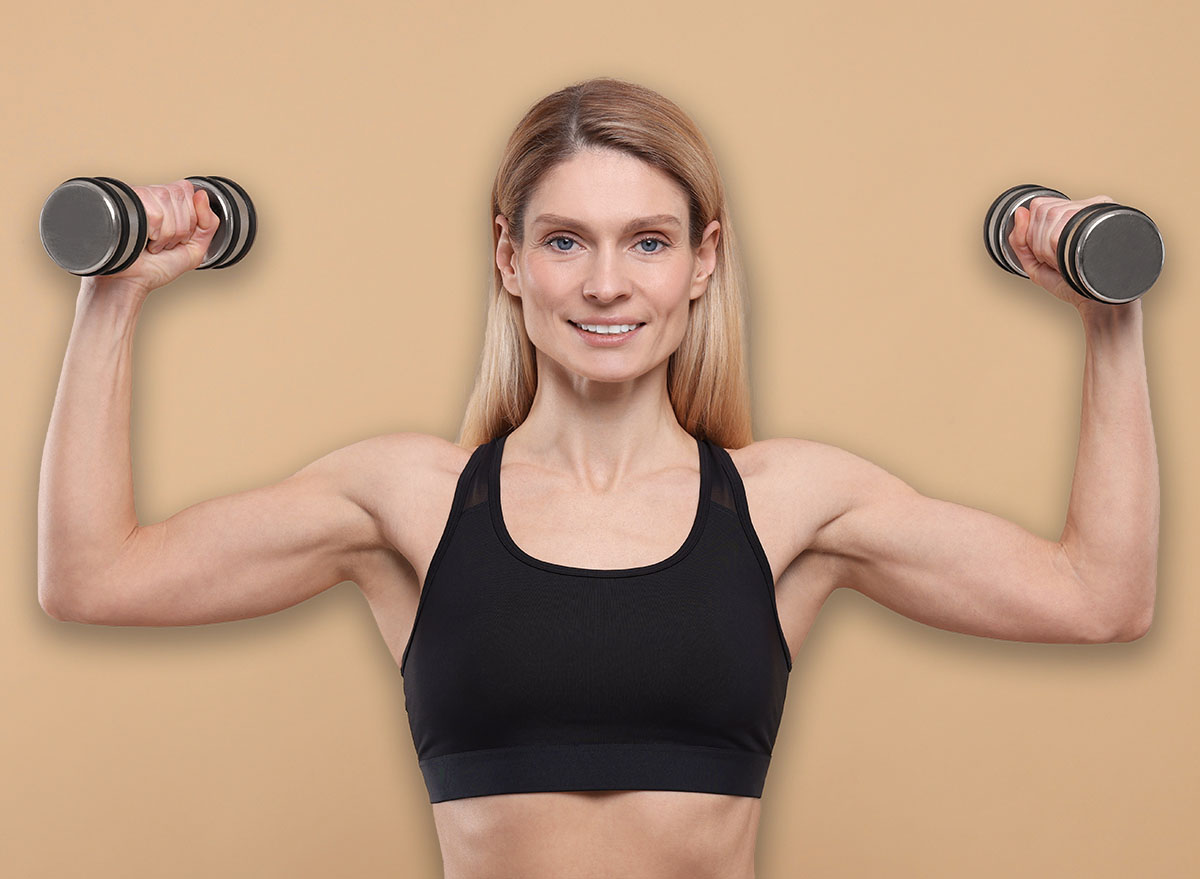
The single-arm push press is a powerful, full-body movement that ingeniously integrates the lower body to assist in driving the weight overhead, allowing individuals to lift heavier loads than they might with a strict shoulder press, while simultaneously reducing direct stress on the shoulder joint. This exercise is exceptional for building explosive power, enhancing coordination between the upper and lower body, and significantly engaging the core musculature for anti-rotational stability. The unilateral nature of the exercise further aids in identifying and correcting strength imbalances between the left and right sides of the body.
Stand with a dumbbell held at shoulder height in one hand, palm facing forward. Position your feet shoulder-width apart, knees slightly bent. Initiate the movement by dipping your knees slightly (a shallow squat) and then explosively driving upwards through your legs, using this momentum to press the dumbbell overhead with one arm. As the dumbbell reaches the top, your arm should be fully extended, and your core should be braced to maintain stability. Control the descent back to the starting position. This movement mirrors many functional activities, such as lifting an object from the ground to an overhead position, and the intense core activation translates to improved balance and postural integrity. Aim for 3 sets of 6 to 10 repetitions per side, with a 60-second rest between sets. Consciously brace your abdominal muscles before initiating the leg drive to maximize core engagement.
4. Lateral Raise
While compound movements build foundational strength, isolation exercises like the lateral raise are essential for specifically targeting and developing individual muscle heads, ensuring balanced strength and aesthetic symmetry. The lateral raise primarily isolates the medial (or lateral) deltoid, which is crucial for shoulder width and the ability to abduct the arm – moving it away from the body. Often, the anterior deltoid becomes overdeveloped from various pressing movements, leading to imbalances; the lateral raise helps to counteract this, contributing to overall shoulder health and preventing impingement.
Stand tall, holding a light dumbbell in each hand at your sides, palms facing inward. Maintain a slight bend in your elbows and a subtle forward lean in your torso. Keeping your shoulders down and away from your ears, slowly raise the dumbbells out to the sides until your arms are roughly parallel to the floor, forming a ‘T’ shape. The movement should originate from the shoulder joint, not the traps or momentum. Pause briefly at the top, feeling the contraction in the side deltoids, then slowly lower the weights back to the starting position with control. Avoid swinging the weights. This controlled, deliberate motion is critical for maximizing muscle activation and minimizing injury risk. Perform 3 sets of 10 to 15 repetitions, with a shorter rest period of 45 seconds between sets, as this is a lighter, isolation exercise. Focusing on a slow tempo, especially during the eccentric (lowering) phase, can significantly enhance its effectiveness.
5. Rear Flyes
The posterior (rear) deltoids are frequently neglected in many training programs, yet they play a pivotal role in shoulder health, posture, and stability. Weak rear deltoids can contribute to poor posture, such as rounded shoulders, and increase the risk of shoulder impingement. Rear flyes specifically target these muscles, along with synergistic upper back muscles, helping to pull the shoulders back and improve overall shoulder girdle balance. This exercise is vital for counteracting the effects of prolonged sitting and maintaining an upright, confident stance.
To execute rear flyes, bend at your hips, keeping your back straight and nearly parallel to the floor. Allow the dumbbells to hang directly below your chest, palms facing each other (neutral grip). With a slight bend in your elbows, engage your posterior deltoids and upper back muscles to raise the dumbbells out to the sides, squeezing your shoulder blades together at the top of the movement. Imagine you are trying to pinch a pencil between your shoulder blades. Avoid shrugging your shoulders upwards. Control the weights as you slowly lower them back to the starting position. It is crucial to use a lighter weight for this exercise to ensure proper form and prevent lower back strain. This movement directly enhances scapular retraction and external rotation, which are critical components for preventing rotator cuff issues and promoting robust shoulder mechanics. Aim for 3 sets of 10 to 15 repetitions, resting for 45 seconds between sets. Focusing on the mind-muscle connection, specifically feeling the contraction in the back of your shoulders and upper back, will optimize results.
Beyond the Exercises: Holistic Principles for Enduring Shoulder Strength
Achieving and maintaining optimal shoulder strength after 55 extends beyond the mere execution of these exercises; it encompasses a holistic approach to physical well-being.
- Consistency is Key: Regular engagement with your training program is more impactful than sporadic, intense sessions. Aim for two to three strength training sessions per week, allowing adequate recovery time between workouts for the same muscle groups.
- Prioritize Form Over Weight: Improper technique significantly increases the risk of injury and diminishes exercise effectiveness. Always choose a weight that allows for perfect form, even if it feels light. Gradually increase resistance only when your form is impeccable.
- Listen to Your Body: Acknowledge discomfort versus pain. Sharp, persistent pain is a signal to stop and assess. Modify exercises, reduce weight, or take additional rest days as needed. Consulting a physical therapist or certified trainer can be invaluable for personalized guidance and injury prevention.
- Adequate Nutrition and Hydration: Support muscle repair and growth with sufficient protein intake, a balanced diet, and ample hydration. These elements are foundational for any strength-building endeavor.
- Warm-up and Cool-down: Always begin workouts with a dynamic warm-up to prepare muscles and joints, and conclude with a cool-down involving gentle static stretches to improve flexibility and aid recovery.
- Progressive Overload: To continue building strength, muscles must be continually challenged. This can involve gradually increasing the weight, performing more repetitions or sets, reducing rest times, or incorporating more challenging variations of exercises.
- Integrate Flexibility and Mobility: Alongside strength, maintaining good shoulder mobility and flexibility is crucial for preventing stiffness and improving overall joint health. Incorporate exercises like arm circles, pendulum swings, and light stretching.
By embracing these principles and consistently incorporating these dumbbell exercises into a regular fitness routine, individuals over the age of 55 can significantly enhance their shoulder strength, improve functional capacity, and ultimately contribute to a more active, independent, and vibrant lifestyle. The adaptability and effectiveness of dumbbells make them an invaluable tool in the pursuit of lasting upper body vitality.
About the Author