As individuals progress into their later decades, maintaining robust lower body strength and agility becomes paramount for preserving independence and overall quality of life. The natural physiological process of aging often brings a gradual reduction in muscle mass and power, a phenomenon known as sarcopenia, which can significantly impact daily activities and increase the risk of falls. While traditional strength training methods, such as fixed-position exercises, hold undeniable value, a specialized approach focusing on dynamic, standing movements offers distinct advantages for older adults seeking to fortify their foundational strength, enhance balance, and improve functional mobility in ways that directly translate to real-world tasks.
The conventional wisdom often gravitates towards exercises like squats as the cornerstone of lower body development. However, for those over the age of sixty, a singular reliance on such movements, particularly if executed without proper form or in isolation, may not fully address the complex needs of an aging musculoskeletal system. The efficacy of an exercise regimen for older populations hinges on its capacity to challenge the body in diverse planes of motion, engage stabilizing musculature, and mimic the demands of everyday life. A seasoned fitness professional, specializing in senior wellness, frequently observes that the most rapid and enduring improvements in physical capability stem from incorporating movements that compel the body to stabilize itself, shift weight across different axes, and generate force in multiple directions simultaneously.
Standing exercises inherently impose greater demands on the entire kinetic chain compared to their seated or machine-based counterparts. By requiring the body to maintain an upright posture against gravity, these movements not only activate primary movers like the quadriceps, gluteal muscles, and calves, but also intensely recruit the core musculature to stabilize the trunk and pelvis. This synergistic activation fosters a more holistic and usable form of strength, equipping individuals with the physical resilience needed for essential activities such as ascending and descending stairs, traversing longer distances without fatigue, and moving with greater self-assurance and equilibrium.
Another critical component distinguishing highly effective training from merely adequate exercise for older adults is the emphasis on controlled, deliberate execution. Hastily performed repetitions, driven by momentum rather than muscular effort, diminish the physiological benefits by reducing the "time under tension" – the duration for which muscles are actively engaged and working against resistance. Conversely, slow, mindful movements amplify this tension, ensuring that the targeted muscle groups remain fully activated throughout the entire range of motion. This meticulous approach not only maximizes strength gains but also refines neuromuscular control and coordination, leading to more efficient and safer movement patterns. When consistently integrated into a daily routine, these carefully selected standing exercises have been shown to accelerate the restoration of lower body vitality more effectively than intermittent sessions focused solely on traditional compound lifts.
The following five dynamic movements are specifically chosen to fortify the entire lower body while simultaneously enhancing critical elements of balance and coordination. The guiding principles for their execution involve maintaining an upright, elongated posture, executing each phase with conscious control, and actively driving force through the lower extremities during every repetition.
1. Controlled Posterior Lunges
This exercise cultivates lower body strength through a precisely controlled movement pattern while significantly mitigating the joint stress often associated with traditional forward lunges. Its inclusion is strategic because stepping backward inherently shifts the workload away from the knee joint’s anterior structures and more prominently onto the glutes and quadriceps, facilitating better biomechanical alignment and reducing potential discomfort. As one leg steps back, the front leg is challenged to stabilize the body and generate the necessary force to return to the starting upright position. Executing this movement slowly ensures continuous muscle engagement, thereby optimizing strength development and refining inter-limb coordination. Over time, consistent practice of controlled posterior lunges directly enhances the functional strength required for everyday actions like walking, navigating stairs, and rising from a seated position with greater ease and stability.
2. Articulated Hip Hinges
The articulated hip hinge is a foundational movement pattern that trains the posterior chain – specifically the glutes and hamstrings – to generate power efficiently without imposing undue strain on the knee joints or lower back. Many individuals, especially as they age, lose the innate ability to hinge effectively at the hips, a deficit that can limit overall lower body strength and contribute to compensatory stress on other joints. Re-establishing and reinforcing this fundamental movement pattern rapidly rebuilds functional strength. The key lies in pushing the hips backward as if reaching for a chair, while simultaneously maintaining an upright chest and a neutral spine. This action deeply engages the gluteal muscles. The return to a standing position then requires these same powerful muscles to drive the movement forward. When performed with a slow, deliberate cadence, the muscles experience extended periods under tension, leading to superior gains in both strength and motor control. This exercise is crucial for activities like bending over to pick up an object, getting in and out of a car, or even improving posture during prolonged standing.
3. Elevated Heel Raises with Isometric Hold
The strength and endurance of the calf muscles are pivotal for effective walking mechanics, maintaining balance, and overall lower limb resilience. A common observation in many older adults is the struggle with leg fatigue, often directly attributable to insufficient calf strength and control. This particular movement is therefore an essential component for rebuilding the fundamental foundation of lower body power. By rising onto the balls of the feet, elevating the heels fully, and sustaining an isometric hold at the peak contraction, the calf muscles are forced into maximal engagement. The subsequent slow and controlled descent further prolongs the time under tension, contributing to more effective and efficient strength development. Over time, cultivating stronger calves translates directly into enhanced push-off power during gait, improved ankle stability, and a reduced risk of tripping or losing balance, thereby significantly enhancing mobility and confidence.
4. Lateral Stability Drills
This exercise specifically targets and strengthens the muscles of the outer hips and thighs, concurrently improving side-to-side stability, a often-overlooked aspect of functional fitness. Many individuals experience a decline in lateral movement strength with age, which can compromise dynamic balance and escalate the risk of falls, particularly when navigating uneven terrain or reacting to unexpected shifts in weight. By stepping out to the side, the standing leg is compelled to engage its stabilizing muscles to control the lateral displacement of the body. The controlled return of the stepping foot requires a renewed engagement of these same muscle groups. Executing these repetitions slowly and with precision ensures consistent tension on the targeted muscles, leading to comprehensive improvements in strength, coordination, and overall dynamic stability in the frontal plane. This movement is highly beneficial for navigating crowded spaces, stepping sideways to avoid obstacles, or maintaining balance during multi-directional activities.
5. Dynamic Unilateral Knee Lifts
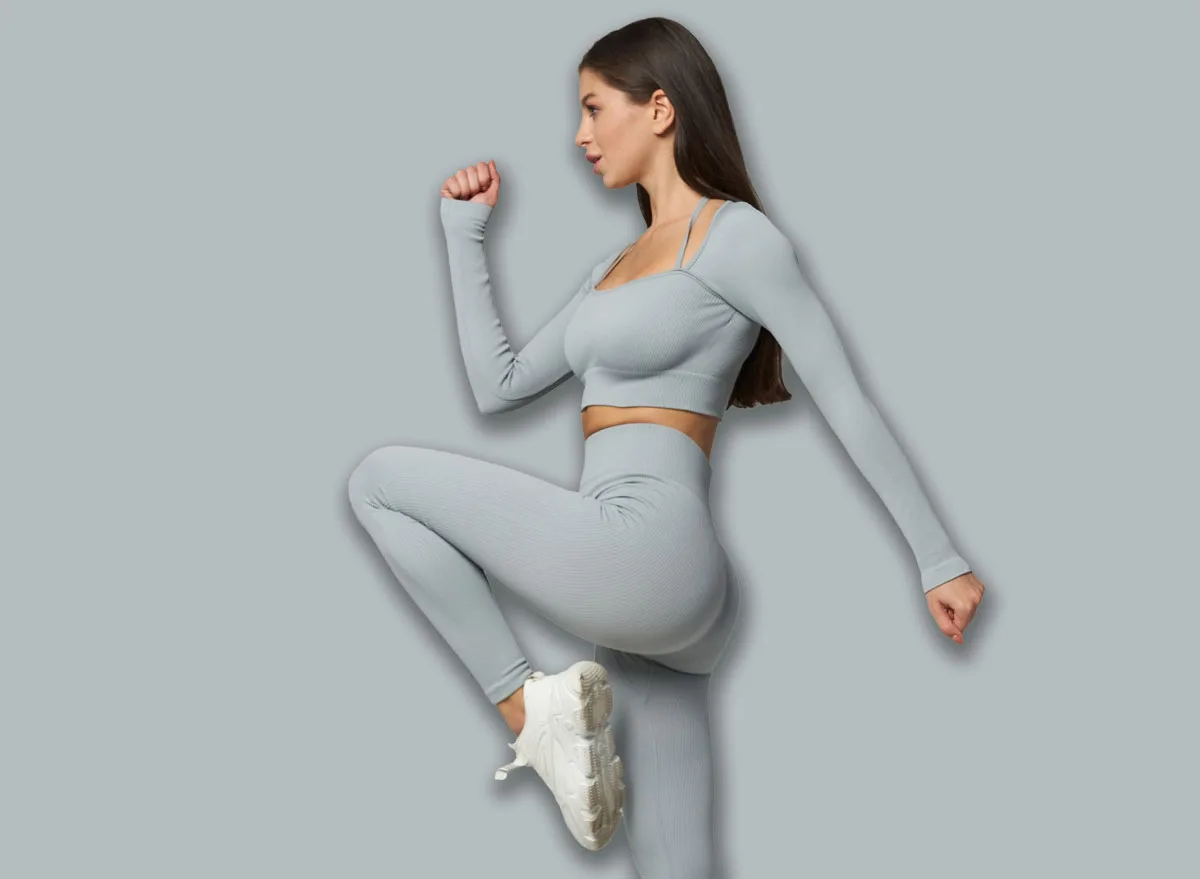
This final exercise serves as a powerful culmination, integrating strength, balance, and coordination into a single, fluid motion. It is frequently utilized to conclude a routine due to its capacity to cultivate explosive power in the lower limbs while simultaneously reinforcing core stability. This combined benefit is instrumental in fostering superior overall movement quality and functional capacity. The act of driving one knee forcefully upward requires the standing leg to act as a primary stabilizer, while the core musculature engages intensely to maintain an upright and balanced posture. Performing this movement with deliberate control, rather than relying on momentum, ensures that all participating muscles remain actively engaged throughout the entire range of motion. Consistent practice of dynamic unilateral knee lifts progressively enhances muscular strength, refines single-leg balance, and significantly boosts confidence in performing complex, coordinated movements, such as quickly stepping over an obstacle or regaining balance after a stumble.
Integrating these functional, standing movements into a regular fitness regimen offers a powerful pathway for older adults to not only counteract age-related strength decline but also to profoundly enhance their overall physical capabilities. The emphasis on controlled execution, multi-directional challenges, and inherent balance demands ensures that the strength gained is directly applicable to the nuances of daily living. By prioritizing these dynamic exercises, individuals can cultivate a resilient lower body that supports greater independence, reduces the risk of falls, and ultimately contributes to a more active, confident, and fulfilling life well into their senior years. As with any new exercise program, it is advisable to consult with a healthcare professional or a certified fitness expert specializing in older adult populations to ensure proper form and individual suitability.
About the Author