
Nutritional Nuance Emerges in Large-Scale Analysis of Processed Foods and Colorectal Cancer Risk.
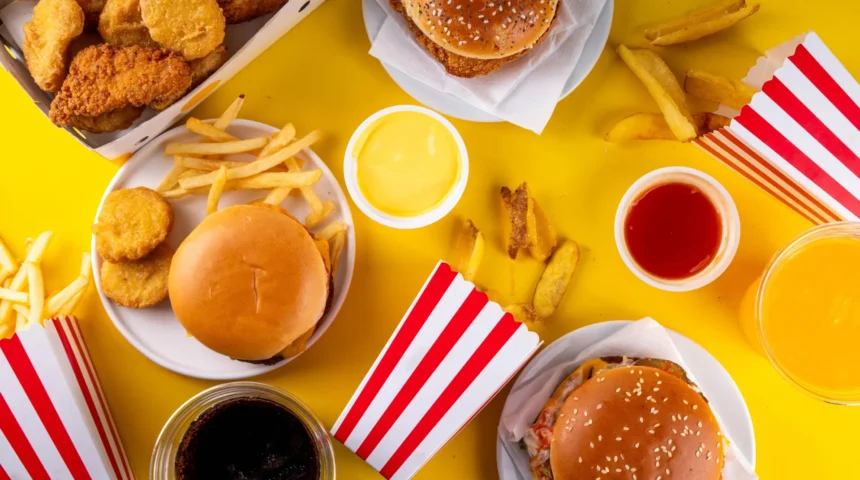
A comprehensive investigation encompassing over 460,000 American adults has yielded findings that necessitate a re-evaluation of the direct link between ultra-processed food consumption and the development of colorectal cancer. Contrary to prevailing concerns that a high intake of these foods universally elevates cancer risk, this extensive study suggests a more intricate relationship, indicating that the overall incidence of colorectal cancer was not significantly associated with increased consumption of ultra-processed items. However, a deeper dive into the data revealed a crucial dichotomy: certain categories of ultra-processed foods appeared to correlate with a reduced risk of cancer, while others were demonstrably linked to an increased incidence.
This pivotal research, spearheaded by Erikka Loftfield from the National Cancer Institute and formally presented in the October 15th edition of the open-access scientific journal PLOS Medicine, strongly implies that the health implications of ultra-processed products are far from uniform and are profoundly influenced by their specific constituent ingredients and nutritional profiles. The very definition of "ultra-processed food" encompasses an exceptionally broad spectrum of items, making broad generalizations about their health effects problematic. These products currently constitute more than half of the caloric intake for adults in the United States, drawing increasing scientific and public attention due to their potential association with various chronic health conditions, including colorectal cancer.
The diversity within the ultra-processed food category is significant. For instance, some products that are ultra-processed but derive from whole grains and dairy have been observed in previous research to be associated with a lower risk of colorectal cancer. Conversely, processed meats, also falling under the ultra-processed umbrella, have been consistently linked to a higher risk of this particular cancer. This stark contrast raises a fundamental question: is the degree of processing alone a reliable indicator of a food’s ultimate impact on health, or are the intrinsic nutritional qualities of the food itself paramount?
To meticulously explore these nuanced associations, the research team meticulously analyzed the health and dietary records of 461,682 individuals. These participants, aged between 50 and 71 at the commencement of their involvement in the NIH-AARP Diet and Health Study, provided detailed information on their dietary habits in 1995 and 1996. At the study’s outset, each participant completed comprehensive questionnaires detailing the frequency with which they consumed a wide array of food items. This detailed input allowed researchers to accurately estimate the quantity of ultra-processed foods consumed by each individual.
The participants were then followed prospectively until 2018, accumulating a median follow-up period of nearly 19 years. This extended observation window was critical, enabling the research team to discern potential correlations between established dietary patterns and the subsequent development of colorectal cancer over an extended period. The aggregated results indicated no statistically significant overall association between the total volume of ultra-processed food consumed and the incidence of colorectal cancer. In simpler terms, individuals who reported consuming higher amounts of ultra-processed foods did not, as a collective group, exhibit a statistically higher rate of developing colorectal cancer.
However, a more granular examination, dissecting the data by specific food categories, painted a considerably more complex and revealing picture. The researchers discovered that a higher intake of certain ultra-processed foods, specifically those rich in whole grains, fiber, dairy components, and calcium, was correlated with a lower incidence of colorectal cancer. This finding challenges the notion that all ultra-processed items are detrimental. In a contrasting trend, meat products that were ultra-processed demonstrated the opposite pattern; increased consumption of these items was associated with a higher likelihood of developing colorectal cancer.
Further analysis explored the potential benefits of substituting less processed alternatives for ultra-processed items. The study’s findings indicated that replacing 10% of an individual’s ultra-processed food intake by weight with minimally processed foods was associated with a 2% reduction in colorectal cancer incidence. This suggests that the qualitative aspects of food – its nutrient density and composition – may hold more predictive power for health outcomes than simply categorizing it as "ultra-processed." The implications are profound: foods that share the same broad classification can exhibit markedly different associations with cancer risk.
Despite the considerable strengths of this study, including its substantial sample size and prolonged follow-up duration, the researchers have articulated several important limitations that temper the definitive interpretation of the conclusions. A primary concern is the demographic composition of the study participants. The vast majority were older, white Americans, which means that the findings might not accurately represent the health experiences of younger populations or those from more diverse racial and ethnic backgrounds. Generalizing these results to broader populations requires caution.
Another significant limitation pertains to the methodology of dietary data collection. Participants reported their eating habits only once, at the inception of the study. Consequently, the research team could not account for potential shifts and changes in individual dietary patterns that may have occurred over the subsequent decades of the study period. Furthermore, the availability and variety of ultra-processed foods expanded dramatically during this time, a factor that could not be fully captured by the initial dietary assessments. This evolution in the food landscape means that the early dietary reports might have underestimated the actual consumption levels of ultra-processed foods by participants as the study progressed.
Crucially, as this was an observational study, it is inherently incapable of establishing direct causal relationships. The research can identify associations and correlations between dietary habits and cancer incidence but cannot definitively prove that specific foods directly cause or prevent cancer. Other unmeasured lifestyle factors or genetic predispositions could also play a role.
The implications of these findings for guiding healthy dietary choices are substantial. Rather than adopting a blanket approach that treats all ultra-processed foods as uniformly detrimental, the study advocates for a more nuanced evaluation of individual foods based on their specific nutritional content and their documented associations with health outcomes. These results align harmoniously with established dietary recommendations that are aimed at preventing colorectal cancer. These guidelines consistently encourage the consumption of whole grains, fiber-rich foods, dairy products, and calcium-rich sources, while simultaneously advising a reduction in the intake of processed meats.
Dr. Loftfield elaborated on the findings, stating, "In this large population of older US adults, we did not observe an association between total ultra-processed food (UPF) intake and colorectal cancer incidence; however, when we looked at food groups, like whole grains, dairy, and meat, by UPF or non-UPF source, we found that associations were in line with current dietary guidance for colorectal cancer prevention such that higher whole grain and dairy but lower meat intakes were associated with lower colorectal cancer incidence." This underscores the importance of looking beyond the broad "ultra-processed" label.
Ultimately, this research serves to highlight why the simple categorization of foods as "ultra-processed" may not provide a complete or accurate picture of their impact on health. When considering the complex issue of colorectal cancer, the specific types of foods individuals consume appear to be a more critical determinant of risk than their processing classification alone. The study’s methodology was supported by the Intramural Research Program of the National Cancer Institute, part of the National Institutes of Health. Authors associated with this program provided no input into the study’s design, data collection, analysis, or the decision to publish, ensuring the independence of the findings.
Related posts:

Related News