Traditional medicine, a rich tapestry of knowledge, practices, and beliefs spanning millennia, remains an essential component of healthcare for billions worldwide, deeply ingrained in cultural heritage and daily wellness routines across diverse societies. Despite its pervasive global usage, the systematic integration of traditional healing modalities into contemporary health systems has often faced challenges, primarily due to a fragmented evidence base, varying regulatory frameworks, and a lack of standardized practices. Recognizing this critical gap and the immense potential of traditional medicine to contribute to global health goals, the World Health Organization (WHO) established its Global Centre for Traditional Medicine (GCTM) in Jamnagar, India, marking a pivotal moment in the global discourse on health and well-being. This ambitious initiative aims to harness the scientific rigor required to validate, standardize, and integrate traditional medicine safely and effectively into universal healthcare frameworks.
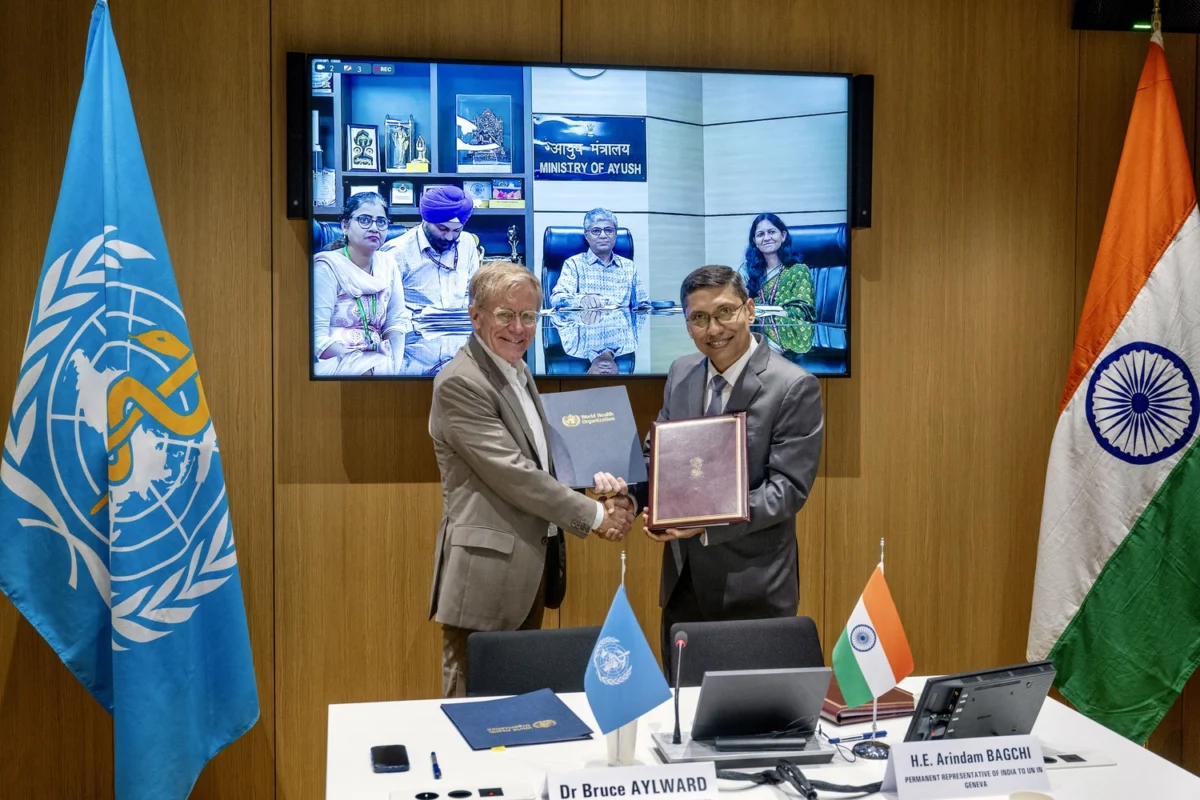
In a significant stride towards solidifying the GCTM’s foundational work and long-term operational capabilities, the Government of India formally pledged a substantial financial contribution of US$ 85 million. This commitment, formalized through a donor agreement signed in Geneva, is designated to support the Centre’s core programming over a ten-year period, commencing in 2022 and extending through 2032. This decadal funding injection is specifically earmarked to propel a comprehensive, interdisciplinary work program designed to bolster the scientific understanding of traditional medicine. Its primary objective is to generate robust data and empirical evidence concerning traditional medicine policies, clinical practices, product efficacy and safety, and public health applications, thereby enabling informed decision-making and wider, safer adoption.
This US$ 85 million pledge represents a distinct component of a broader US$ 250 million investment from India, a testament to the nation’s profound dedication to advancing traditional medicine on a global scale. The initial, larger investment, instrumental in the GCTM’s establishment in 2022, covered critical infrastructure development, including the provision of interim facilities and the construction of a permanent new building in Jamnagar. Furthermore, it encompassed seed funding for the Centre’s initial strategic work plan. The strategic alignment of these financial contributions is designed to significantly augment WHO’s organizational capacity and technical expertise in the realm of traditional medicine, fostering a spirit of worldwide collaboration and mutual support across its various technical divisions and regional offices. Notably, a portion of this substantial Indian contribution is also slated for inclusion in the WHO’s upcoming Investment Round, an essential fundraising mechanism intended to resource the organization’s core global health activities from 2025 to 2028, underscoring India’s institutional commitment to the WHO’s broader mission.
The integration of traditional medicine into national health systems is increasingly viewed as a crucial pathway to achieving universal health coverage (UHC), particularly for populations that often remain underserved by conventional healthcare services. Dr. Bruce Aylward, Assistant Director-General of WHO’s Universal Health Coverage and Life Course division, emphasized the timeliness and strategic importance of India’s leadership in this domain. He articulated that India’s proactive stance in expanding the evidence-based contributions of traditional medicine to global health and planetary well-being arrives at an opportune moment. Dr. Aylward further highlighted that when traditional medicine is appropriately supported within national health structures, it possesses the unique potential to reach individuals who are frequently marginalized, asserting that the thoughtful integration of traditional practices and indigenous knowledge is indispensable for realizing the overarching goal of health for all.
This significant donor agreement also signifies a key developmental landmark, actualizing a shared strategic vision championed by India’s Honorable Prime Minister, Shri Narendra Modi, and WHO Director-General Dr. Tedros Adhanom Ghebreyesus, for the establishment and growth of the WHO Global Centre of Traditional Medicine in Jamnagar. Vice Minister Vaidya Rajesh Kotecha, Secretary of the Ministry of Ayush, Government of India, underscored this collaborative spirit, stating that the agreement marks a pivotal step towards fulfilling this joint ambition. Echoing this sentiment, Ambassador Arindam Bagchi, Permanent Representative of India to the UN and other International Organizations in Geneva, reaffirmed India’s unwavering commitment to assisting the WHO in its endeavors to bolster traditional medicine systems globally. He stressed that this support is geared towards achieving universal health coverage and serving the entirety of humanity, particularly through the GCTM in Jamnagar, which will concentrate these efforts to benefit all Member States worldwide.

The WHO Global Centre for Traditional Medicine functions as a vital knowledge nexus, operating across five interconnected strategic areas, each designed to foster a holistic approach to traditional medicine integration. These core pillars include: robust research and the generation of evidence to validate traditional practices; strengthening the role of traditional medicine within primary health care and universal health coverage frameworks; safeguarding and leveraging Indigenous Knowledges and biodiversity; exploring and implementing digital health applications for traditional medicine; and convening regular global summits and fostering international collaborations to advance the field. Under the leadership of Dr. Shyama Kuruvilla, the Centre’s Director a.i., these initiatives are meticulously coordinated to ensure a comprehensive and impactful approach.
A landmark event in this global effort was the inaugural WHO Traditional Medicine Global Summit, convened in August 2023 in Gujarat, India. This summit brought together a diverse array of stakeholders, culminating in the adoption of a comprehensive, multi-stakeholder action agenda known as the Gujarat Declaration. This declaration laid out key principles and commitments for the future direction of traditional medicine. Building on this momentum, the subsequent WHO Global Summit is scheduled for November 2025. This future gathering is strategically timed to follow the anticipated launch of the new 2025-2034 Global Strategy for Traditional Medicine, which is expected to be unveiled at the 78th World Health Assembly in May 2025, providing a fresh global roadmap for the sector.
India’s steadfast advocacy for traditional medicine is not a recent development but rather stems from a history of enduring partnerships and collaborative initiatives with the WHO. In 2023, for instance, India formalized a separate five-year agreement to provide technical support to WHO’s Traditional, Complementary and Integrative Medicine (TCI) unit. This specialized unit plays a crucial role in developing the new WHO traditional medicine global strategy (2025-2034), a document requested by Member States to guide future policy. Furthermore, the TCI unit is responsible for publishing authoritative benchmark documents, establishing standardized terminologies, and producing other evidence-informed technical resources crucial for the safe and effective incorporation of traditional medicine into national health systems worldwide.
The close collaboration between the GCTM and the TCI unit exemplifies a unified "One WHO" approach to traditional medicine. These two entities work hand-in-hand with various other WHO teams to advance the organization’s multi-sectoral agenda on traditional medicine. This integrated effort is facilitated through regular meetings of the WHO Technical Expert Network, which is jointly coordinated by the GCTM and the TCI unit. This collaborative framework ensures a coherent and consistent strategy for promoting traditional medicine across WHO headquarters, regional offices, and country offices, maximizing impact and fostering a truly global perspective.
The substantial and long-term financial backing from India, coupled with the strategic vision of the WHO Global Centre for Traditional Medicine, marks a transformative period for traditional healthcare systems worldwide. By meticulously focusing on evidence generation, standardization, and integration into mainstream healthcare, this initiative holds the promise of unlocking the full potential of traditional medicine. It aims to not only enhance global health outcomes but also to preserve and elevate the rich heritage of diverse healing traditions, ensuring they contribute meaningfully and safely to the health and well-being of all people, now and for generations to come. This enduring partnership between India and the WHO serves as a beacon of global cooperation in an increasingly interconnected world, demonstrating how diverse knowledge systems can converge to address complex health challenges and build more inclusive and resilient health systems.
About the Author