The extraordinary longevity observed in certain bat species, particularly in relation to their diminutive body size, presents a compelling biological puzzle that scientists are actively endeavoring to solve, with their genetic makeup offering profound insights into the mechanisms of extended healthy living. This fascination with the biological underpinnings of long life first captured the attention of Juan Manuel Vazquez during his doctoral studies at the University of Chicago, a period marked by a significant dearth of readily available genomic data on bats, which hindered in-depth investigations into their longevity. Upon transitioning to a postdoctoral fellowship at the University of California, Berkeley, in 2020, Vazquez embarked on an ambitious field expedition across the western United States, a quest to gather crucial tissue samples from diverse bat populations for comprehensive DNA sequencing.
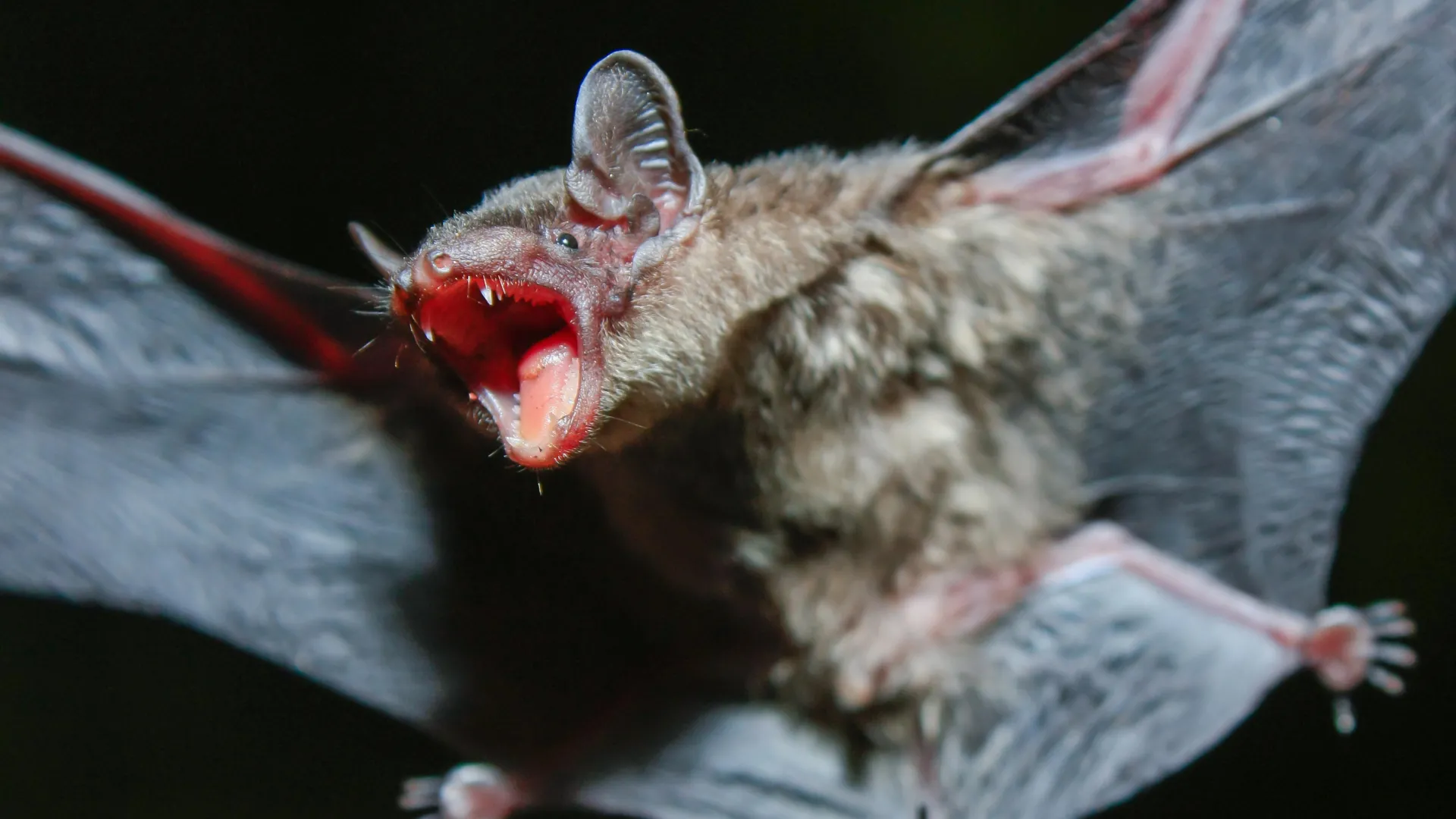
Collaborating with a dedicated team of undergraduate researchers from Berkeley, Vazquez meticulously navigated the nocturnal landscapes of the region, employing mist nets strategically positioned over riparian environments such as streams, ponds, and rivers. These nocturnal expeditions allowed for the careful capture of bats, from which minute biopsy samples were expertly collected before the animals were promptly released back into their natural habitats. A substantial portion of this intensive fieldwork was dedicated to the genus Myotis, a group encompassing several species renowned for their exceptionally prolonged lifespans. Illustrative of this remarkable trait, a specimen of Brandt’s myotis (Myotis brandtii) was once observed to be recaptured 50 years after its initial banding in Europe, a testament to its enduring vitality.
The culmination of this extensive research effort has yielded significant breakthroughs, detailed in a recent publication in the prestigious journal Nature, where Vazquez and his research consortium have presented the inaugural comprehensive genomic analysis of eight distinct Myotis species. The findings from this pioneering study strongly indicate a profound correlation between a species’ lifespan and the efficacy of its immune system, with longer-lived bat species exhibiting a notably higher prevalence of genes associated with robust cancer-fighting capabilities. This discovery suggests that the capacity for extended life may be intrinsically linked to an immune system that maintains peak performance in combating both prevalent infectious agents and the insidious development of cancerous cells. Furthermore, the research has uncovered a striking degree of overlap between the genetic pathways implicated in the aging process and those integral to disease defense mechanisms, implying that a deeper understanding of one biological phenomenon could illuminate the intricacies of the other.
Vazquez articulated the significance of these findings, emphasizing that the evolutionary trajectory of bats towards prolonged existence without succumbing to widespread disease suggests a paradigm shift in our approach to studying aging. "Bats evolved to live for a long time without getting diseases," he explained, "which suggests that we don’t necessarily need to look at diseases of aging and diseases of infection as completely separate fields. We can look at these bats and try to understand how, in the same way you can improve your immune system to fight off viruses, maybe you can improve your immune system so it doesn’t decline in old age. Or maybe bats can help us find ways to fight off tumors so our immune system doesn’t get tired, and that can also help us deal with other stresses of life and not exhaust our immunity." This perspective underscores the potential for bats to serve as invaluable models for developing novel therapeutic strategies that bolster immune resilience and mitigate age-related decline.
An intriguing facet of the research involved the investigation of how bat cells respond to cellular damage, a critical aspect of maintaining tissue integrity and preventing disease. Vazquez cultivated cells derived from bat wing biopsies in laboratory settings, amassing cell cultures from an impressive 259 individuals representing 32 distinct species. These cultured cells were then deliberately exposed to toxic chemical agents to meticulously observe their responses to severe cellular stress. In a particularly unexpected outcome, the longest-lived bat species within his sample, the ubiquitous little brown bat (Myotis lucifugus), exhibited a response that defied conventional expectations. Rather than activating genes responsible for DNA repair processes, these cells dramatically increased the expression of genes that promote programmed cell death, a process known as apoptosis.
"We found the literal opposite of what we expected if you treat the bats with a lethal dose of this chemical," Vazquez remarked. "The longest-lived bat in North America decides ‘I can’t save this ship’ and immediately switches gears to prioritize killing off the cells that are damaged. The elephant, another cancer-resistant species that is long-lived, has the exact same strategy — if you can’t save the cell, kill the cell." This observation suggests that across evolutionarily diverse species, remarkably different cellular strategies have been adopted to prevent compromised cells from initiating dangerous pathological processes. The implications of understanding these distinct cellular defense mechanisms are profound, offering valuable clues for unraveling the complex puzzle of longevity, according to Peter Sudmant, an Associate Professor of Integrative Biology at Berkeley who specializes in the genetics of aging and lifespan.
"By looking across the diversity of life and the remarkable longevities of different species, we hope we can better understand the interplay between DNA damage and the immune system to enable us to have full and healthy life spans," Sudmant stated. "If you start looking at long-lived species like elephants, whales and bats, you start finding ways that nature has actually already resolved a lot of these problems in human health," Vazquez added, highlighting the immense potential for biomimicry in addressing human health challenges.
Bats have achieved remarkable evolutionary success since their emergence approximately 60 million years ago, diversifying to constitute about 20% of all known mammal species and colonizing habitats across every continent except Antarctica, demonstrating an exceptional capacity for adaptation to a wide array of ecological niches. Within the vast diversity of 1,511 recognized bat species, the Myotis genus stands out, comprising approximately 139 species. What makes these bats particularly compelling for longevity research is the observation that closely related species can exhibit dramatically divergent lifespans. For instance, Brandt’s myotis can live for up to half a century, a stark contrast to the black myotis (Myotis nigricans) of South and Central America, which has a lifespan of only about seven years. Vazquez drew a striking parallel, likening this disparity to a hypothetical scenario where Homo neanderthalensis lived nine times longer than modern Homo sapiens.
Another distinctive characteristic of bats lies in the sophisticated operation of their immune systems. Scientific investigations have revealed that bat immune systems function at an unusually elevated level, enabling them to effectively manage chronic inflammation and coexist with persistent viral infections without manifesting overt signs of illness. This remarkable ability allows healthy bats to act as reservoirs for an extraordinary spectrum of viruses, some of which, including viruses related to the etiology of COVID-19, have the potential to transmit to human populations. Researchers have posited that the potent immune capabilities of bats may be intricately linked to their highly active lifestyles. Vazquez draws a compelling analogy, comparing the nightly foraging flights of bats in pursuit of insects to the physiological demands of running multiple ultramarathons daily.
"Bats have evolved this incredible fitness capacity, this incredible ability to deal with disease and this incredible ability to be able to prevent cancer," he remarked. "That means that, by understanding how bats have evolved to do all these things that other mammals haven’t, we can find completely new and unexpected ways of dealing with the normal things that cause human diseases." This perspective emphasizes the potential for bats to inspire innovative approaches to combating human ailments by leveraging their evolved resilience.
The comprehensive genomic analysis has unveiled yet another compelling connection: whenever Vazquez identified a gene strongly associated with bat lifespan, his collaborator Elise Lauterbur, then at the University of Arizona, had frequently identified the same gene as being involved in the complex interactions between bats and viruses. "There is way more overlap than you would expect just by random chance between the genes that are associated with longevity and genes that are associated with viral interactions," he stated. The research team also discovered that Myotis bats possess a disproportionately large number of genes responsible for producing proteins that interact with DNA viruses, such as herpesviruses, which store their genetic material in DNA. These viral-interacting proteins can either facilitate viral infection or, conversely, bolster the host’s defense mechanisms. One such protective function involves augmenting the production of interferon, a critical antiviral signaling protein that orchestrates immune responses.
"DNA viral interacting proteins were strongly enriched for selection in bats in contrast to most other mammals, where there is a very strong enrichment for selection for both DNA and RNA viral interacting proteins," noted Sudmant. This evolutionary pattern diverges significantly from that observed in humans and other primates, who tend to possess a greater number of genes encoding proteins that interact with RNA viruses, including pathogens like COVID and HIV, compared to their interactions with DNA viruses.
This evolutionary divergence in immune defense strategies between bats and humans may shed light on why certain viruses that successfully cross from bat populations into human populations can trigger severe zoonotic diseases. "Humans and bats are badly suited to each other," Vazquez observed. "That is one of the reasons why we have to be careful working with bats — it’s a two-way street for zoonoses. We don’t want to give the bat something and we don’t want to get something from the bat. That mismatch is definitely something we should look into more." This reciprocal susceptibility highlights the importance of understanding interspecies viral dynamics and potential disease transmission.
Vazquez is continuing his research into the genetic mechanisms governing longevity from his new faculty position at Pennsylvania State University, employing cell culture techniques to further his investigations. Concurrently, Sudmant is concentrating his efforts on elucidating how these cells regulate their immune responses. "One thing that I’m really excited about is the trade-off between how a bat protects itself by producing proteins that attack the genomes of viruses but also protects its own genome from being attacked by those proteins," he elaborated. Sudmant is currently maintaining extensive cell cultures from numerous primate species, utilizing them to explore the genetic underpinnings of longevity and the intricate relationship between lifespan and DNA repair genes. Beyond Vazquez, Sudmant, and Lauterbur (now at the University of Vermont), the research paper’s authorship includes Lucie Etienne from the École Normale Supérieure in Lyon, France, and David Enard from the University of Arizona in Tucson, with the work receiving crucial funding from the National Institutes of Health and the National Science Foundation.
About the Author