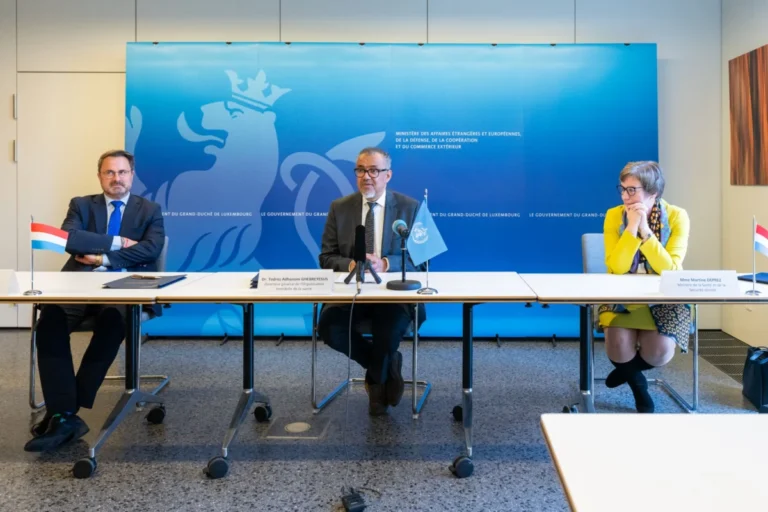
Geneva served as the backdrop for a significant diplomatic and public health event on October 17, 2024, as the World Health Organization (WHO) and the Republic of France formalized a series of seven crucial funding arrangements. The agreements, signed at the WHO headquarters, underscore France’s enduring commitment to international health cooperation and its vital support for the global body’s multifaceted agenda. Representing their respective entities were His Excellency Mr. Jérôme Bonnafont, France’s Permanent Representative to the United Nations Office in Geneva, and Dr. Tedros Adhanom Ghebreyesus, the Director-General of the WHO. This ceremonial gathering marked a pivotal moment in reinforcing a partnership dedicated to addressing the world’s most pressing health challenges.
The collective financial pledge from the French Ministry of Europe and Foreign Affairs amounts to a substantial €24 million. This latest infusion of capital is meticulously integrated into the overarching France-WHO Framework Agreement, an instrumental document governing their collaborative efforts from 2020 through 2025. Such a framework is more than a mere formality; it establishes a robust strategic blueprint, ensuring that France’s contributions are precisely aligned with the WHO’s strategic objectives and priorities outlined in its General Programmes of Work. Furthermore, it furnishes the essential legal, administrative, and financial instruments necessary to translate strategic intent into tangible operational initiatives on the ground. These structured agreements are fundamental to fostering predictable and impactful international cooperation, allowing the WHO to plan and execute long-term health strategies with greater confidence.
A particularly noteworthy component of this financial commitment is a generous €4.5 million allocated as fully flexible voluntary funds directed towards the Core Voluntary Contributions Account (CVCA). This specific allocation holds immense significance for the WHO’s operational agility and effectiveness. Unlike earmarked funding, which is designated for specific projects or regions, flexible funds empower the organization to deploy resources where they are most urgently needed, adapt to evolving global health landscapes, and cover essential core functions that often lack specific donor appeal. The availability of flexible resources is critical for maintaining the WHO’s foundational infrastructure, supporting its scientific expertise, normative work, and rapid response capabilities. Many international organizations grapple with the challenge of securing sufficient flexible funding, making France’s contribution a leading example of best practice in donor support, directly enhancing the WHO’s ability to maintain its independence and responsiveness.
Beyond the flexible funding, France’s contribution strategically targets several key programmatic areas identified by the WHO as critical for advancing global health equity and security. These include initiatives aimed at combating non-communicable diseases (NCDs), fostering urban health innovations through "urban health labs," advancing the "One Health" approach, bolstering the WHO Contingency Fund for Emergencies (CFE), and supporting specific humanitarian health responses in areas experiencing acute crises.
The global burden of non-communicable diseases, encompassing conditions like cardiovascular disease, cancer, diabetes, and chronic respiratory illnesses, represents a profound public health crisis, responsible for a staggering majority of premature deaths worldwide. WHO’s efforts in this domain focus on prevention, early detection, treatment, and palliative care, particularly in low- and middle-income countries where access to effective interventions remains limited. French support will help scale up these vital programs, aiming to reduce risk factors such as tobacco use, unhealthy diets, physical inactivity, and harmful alcohol consumption, while strengthening health systems to manage NCDs more effectively.

Urban health labs represent an innovative approach to understanding and addressing the unique health challenges posed by rapidly growing urban environments. With an increasing proportion of the global population residing in cities, these hubs serve as critical centers for research, policy development, and community engagement, tailoring health interventions to the specific socio-economic and environmental contexts of urban populations. France’s investment in these labs acknowledges the complex interplay between urbanization and health outcomes, from infectious disease transmission to mental well-being and access to healthcare services.
The "One Health" concept, which recognizes the intrinsic interconnectedness of human, animal, and environmental health, has gained unprecedented prominence in the wake of recent global pandemics. French support for One Health initiatives will facilitate intersectoral collaboration, strengthening surveillance systems for zoonotic diseases, promoting responsible antimicrobial use, and addressing environmental determinants of health. This holistic approach is essential for preventing future pandemics and tackling complex health threats that transcend traditional disciplinary boundaries.
Furthermore, a significant portion of the funding is directed towards the WHO Contingency Fund for Emergencies (CFE). The CFE is an indispensable mechanism enabling the WHO to provide immediate financial resources at the onset of health crises, before larger, more sustained funding streams become available. This rapid deployment of funds is critical for conducting initial assessments, deploying emergency medical teams, and delivering essential supplies within the crucial first days and weeks of an emergency, thereby saving lives and preventing wider outbreaks. France’s contribution to the CFE reflects an understanding of the urgent need for agile financing in an increasingly volatile global landscape marked by frequent humanitarian disasters and disease outbreaks.
The agreement also earmarks support for several specific humanitarian health emergencies where the WHO is playing a critical role. This includes ongoing response efforts in Gaza, a region facing profound humanitarian and health challenges; interventions addressing cholera outbreaks, which continue to plague vulnerable populations globally and require rapid, coordinated responses to contain their spread; and crucial mental health support services in Ukraine, where prolonged conflict has exacted a severe toll on the psychological well-being of the population. These targeted contributions highlight France’s responsiveness to acute humanitarian needs and its commitment to alleviating suffering in crisis-affected areas.
Beyond these specific programmatic areas, France is also maintaining its crucial support for the WHO emergencies centre located in Lyon. This strategically important facility serves as a linchpin in global health security, playing a pivotal role in strengthening epidemic preparedness and response capabilities. The Lyon center’s work includes developing robust surveillance systems, enhancing early warning mechanisms, training emergency responders, and coordinating international efforts to contain and mitigate the impact of disease outbreaks. Its continued operation and enhancement are vital for building a resilient global health architecture capable of confronting future public health threats.
Ambassador Jérôme Bonnafont articulated France’s unwavering dedication to the WHO’s mission, emphasizing that the agreements reflect shared priorities. He underscored the fundamental importance of promoting health equity across all populations, ensuring effective and rapid responses to health emergencies, and reinforcing healthcare systems globally to withstand future shocks. This statement encapsulates France’s vision of a more resilient and equitable world health order, achieved through multilateral cooperation.

In expressing profound appreciation, Dr. Tedros Adhanom Ghebreyesus lauded the French government for its consistent partnership, steadfast support, and leadership in the realm of global health. He highlighted that this latest financial commitment would significantly empower the WHO to confront critical health threats, ranging from the pervasive challenge of non-communicable diseases to the immediate demands of emergency responses, ultimately contributing to the preservation of human lives and the protection of the most vulnerable communities worldwide.
France’s advocacy extends beyond direct financial contributions; it is a leading proponent for a comprehensively and flexibly funded WHO. Paris has actively demonstrated leadership and provided robust support for increasing assessed contributions to the Organization. Assessed contributions, derived from member states’ national income, are critical for providing the WHO with a stable and predictable financial foundation, allowing for long-term strategic planning rather than relying solely on voluntary, often earmarked, donations. This stance aligns with broader efforts to reform WHO financing and ensure its long-term sustainability.
Furthermore, France has taken a prominent role as one of the co-hosts for the WHO’s inaugural Investment Round. This innovative initiative aims to mobilize predictable and flexible resources specifically for the WHO’s core work under its Fourteenth General Programme of Work (GPW14), spanning the period from 2025 to 2028. GPW14, which received approval from the World Health Assembly in 2024, sets forth the strategic priorities and operational targets for the WHO for the coming years, making the Investment Round crucial for securing the necessary funding to achieve these ambitious goals. France’s engagement in this process underscores its commitment not just to immediate funding but to systemic improvements in how global health is financed and governed.
This recent signing ceremony represents more than a financial transaction; it is a testament to the robust and enduring partnership between the World Health Organization and France. It reaffirms their collective resolve to work in concert towards building a healthier, safer, and more equitable world for all, addressing complex global challenges through sustained cooperation and strategic investment.
About the Author