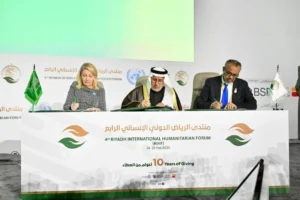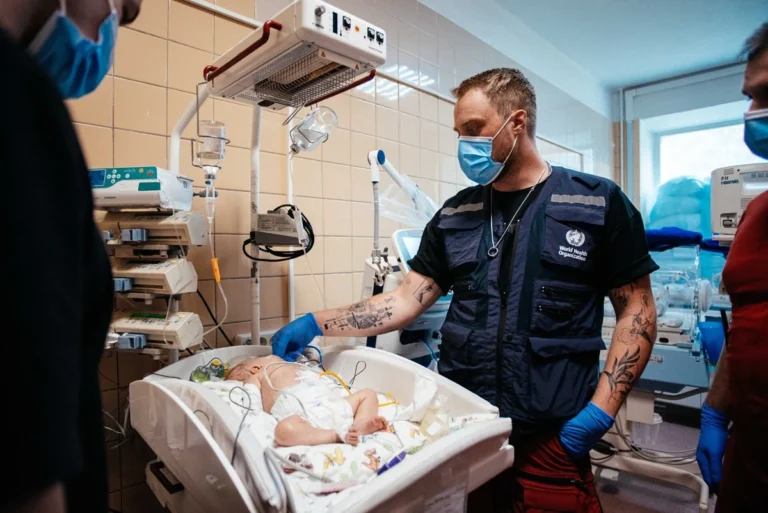
Luxembourg has significantly amplified its commitment to global health through the formalization of two pivotal agreements with the World Health Organization (WHO), underscoring an enhanced strategic partnership designed to fortify international health infrastructure and advance universal well-being. Signed on December 20, 2024, these landmark accords represent the Grand Duchy’s most substantial financial contribution to the WHO to date, collectively channeling over €47 million towards crucial global health initiatives from 2025 through 2028. This move solidifies Luxembourg’s role as a proactive force in multilateral health cooperation, aligning its development and health policies with the ambitious targets of the United Nations Sustainable Development Goals (SDGs).
The cornerstone of this renewed collaboration is a comprehensive Strategic Partnership Framework (SPF) established with Luxembourg’s Ministry of Development Cooperation and Humanitarian Affairs. This framework alone commits a remarkable €46.5 million, marking it as the largest agreement ever forged between the WHO and Luxembourg. Such a significant financial pledge highlights a deepening trust and shared vision between the international health body and the European nation. The SPF’s multi-year structure, extending to 2028, provides the WHO with predictable and sustained funding, a critical element for long-term strategic planning and the implementation of complex, global health interventions. This stability is particularly vital in the current geopolitical and epidemiological landscape, where global health challenges demand sustained attention and resources.
A key feature of the €46.5 million allocation is its blend of fully flexible and thematically earmarked funding. The provision of fully flexible funding is a testament to Luxembourg’s strategic understanding of the WHO’s operational needs. Unlike strictly earmarked donations, flexible contributions empower the WHO to deploy resources to areas of highest immediate need, respond swiftly to emerging crises, and allocate funds efficiently across its diverse programmatic portfolio, often bridging critical funding gaps that might otherwise impede vital work. This flexibility ensures that the organization can adapt to evolving global health priorities, whether it be a sudden outbreak, a humanitarian emergency, or an unforeseen research imperative.
Beyond its flexible component, the SPF directs substantial resources towards several high-priority thematic areas. Among these, support for the Universal Health Coverage (UHC) Partnership stands out. Universal Health Coverage is a foundational principle of the SDGs, aiming to ensure that all people have access to the health services they need, when and where they need them, without financial hardship. This encompasses a full spectrum of essential health services, from health promotion to prevention, treatment, rehabilitation, and palliative care. Luxembourg’s contribution will bolster the WHO’s efforts in assisting countries to strengthen their primary healthcare systems, develop robust health financing mechanisms, and address inequities in access, thereby moving closer to a world where health is a right, not a privilege.

Furthermore, the SPF explicitly allocates funding towards vital research into tropical diseases and the ongoing global campaign for polio eradication. Neglected tropical diseases (NTDs) continue to afflict over a billion people worldwide, primarily in low-income communities, causing debilitating illness, disability, and poverty. Funding for tropical disease research is crucial for developing new diagnostics, treatments, and prevention strategies to combat these often-overlooked scourges. Simultaneously, the sustained effort to eradicate polio, a preventable disease that once paralyzed hundreds of thousands of children annually, remains a global health triumph nearing its final stages. However, reaching the "last mile" requires persistent surveillance, vaccination campaigns in hard-to-reach areas, and robust outbreak response mechanisms. Luxembourg’s support ensures continued momentum towards achieving a polio-free world, safeguarding future generations from this devastating virus.
In addition to the extensive SPF, a second, equally significant agreement was signed: the first-ever multiyear agreement with Luxembourg’s Ministry of Health and Social Safety, contributing €1 million. This marks the country’s inaugural voluntary contribution directly from its health ministry to the WHO, signaling a profound alignment between Luxembourg’s national health priorities and its international health diplomacy. While smaller in monetary value than the SPF, this agreement carries immense symbolic weight, demonstrating a comprehensive, whole-of-government approach to global health engagement. The multiyear nature of this funding further ensures consistent support for critical areas identified by the Ministry.
This €1 million contribution is specifically earmarked for bolstering sanitary crisis preparedness and response mechanisms, alongside efforts to combat health inequalities, with a particular emphasis on gender-related disparities. The COVID-19 pandemic served as a stark reminder of the interconnectedness of global health security and the imperative for robust preparedness frameworks. This funding will support the WHO’s initiatives to strengthen national and regional capacities to detect, prevent, and respond to infectious disease outbreaks, enhancing surveillance systems, laboratory capabilities, and emergency response planning. By investing in preparedness, Luxembourg and the WHO aim to mitigate the human and economic toll of future health emergencies.
Addressing health inequalities, especially those rooted in gender, is another critical focus of this agreement. Health disparities often disproportionately affect women, girls, and gender-diverse populations due to societal norms, economic disadvantages, and unequal access to healthcare services, education, and resources. This targeted funding will enable the WHO to implement programs and policies that promote gender equity in health outcomes, advocating for inclusive health services, addressing gender-based violence, and empowering women in health leadership roles. This focus acknowledges that achieving overall health equity necessitates confronting and dismantling systemic barriers that perpetuate disparities based on gender.
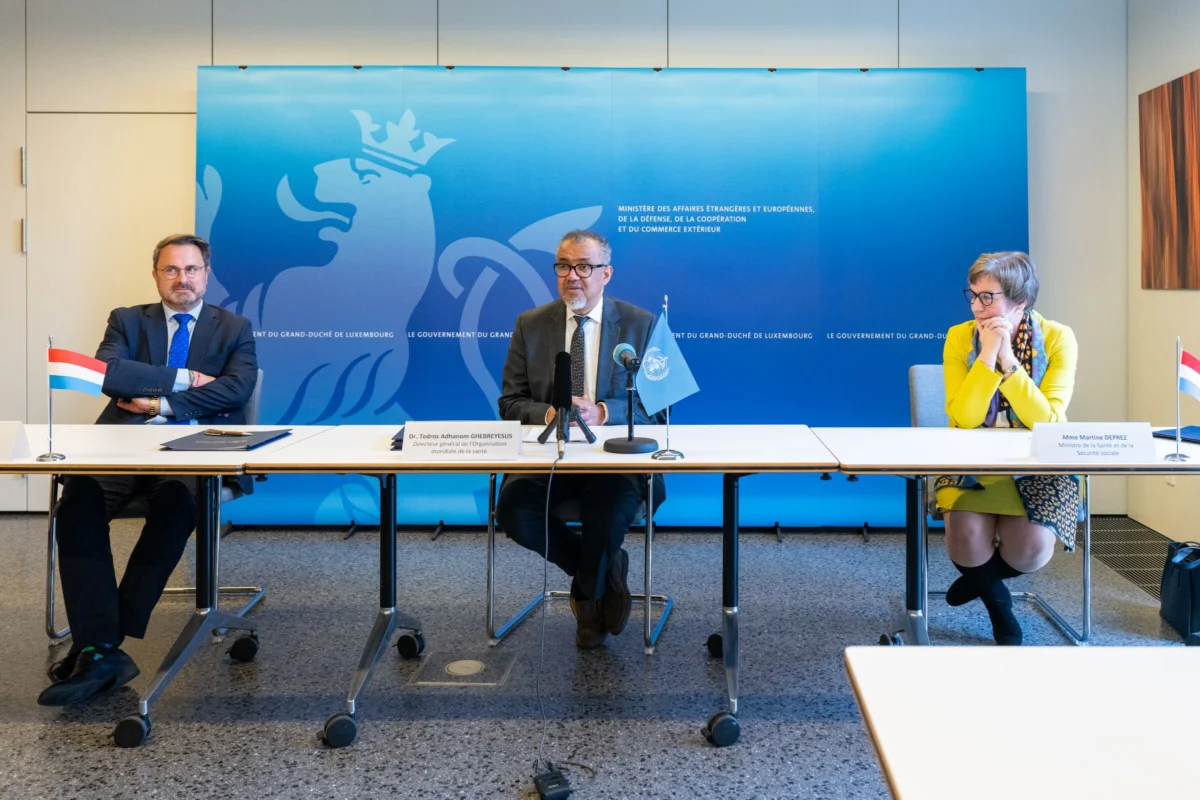
During the bilateral discussions surrounding these agreements, Luxembourg’s Minister of Health and Social Safety, Martine Deprez, emphasized the strategic allocation of the €1 million contribution. She articulated that this funding, extending until 2028, would directly support priority areas within Luxembourg’s collaboration with the WHO, specifically highlighting "sanitary crisis preparedness and response and the fight against health inequalities, with a special focus on gender." Her remarks underscore the deliberate alignment of Luxembourg’s domestic health policy objectives with its international commitments, reflecting a unified approach to promoting health resilience and equity.

Xavier Bettel, Luxembourg’s Deputy Prime Minister and Minister of Foreign and European Affairs, Cooperation and Foreign Trade, reiterated the Grand Duchy’s unwavering support for the WHO’s mission and mandate. He stated that the signing of these two new partnership agreements unequivocally "reaffirmed Luxembourg’s continued support for the WHO and its mission," further adding that this action "reflects our strong commitment to promoting global health and multilateralism." Minister Bettel articulated a powerful philosophy underpinning these investments: "We launch these agreements with WHO because we believe the best way to avoid is to prevent." This statement encapsulates Luxembourg’s proactive stance, favoring strategic prevention and preparedness over reactive crisis management, a principle that resonates deeply within the global health community.
Dr. Tedros Adhanom Ghebreyesus, the Director-General of the WHO, highlighted the profound symbolism of the agreements being signed on the International Day of Solidarity. He described them as "a strong statement of solidarity by Luxembourg, not just with WHO, but with the people of the world." This observation underscores the ethical imperative of global health partnerships, emphasizing that collective action and mutual support are fundamental to addressing health challenges that transcend national borders. Solidarity, in this context, signifies a shared responsibility to protect and promote the health of all individuals, irrespective of their geographical location or socioeconomic status.
The strategic partnership framework with Luxembourg also explicitly includes support for the WHO’s foundational work in developing, delivering, and implementing high-quality technical products. This core function involves the creation of evidence-based guidelines, norms, and standards that serve as benchmarks for health policy and practice worldwide. These technical instruments are indispensable, providing countries with the blueprints for effective public health interventions, clinical care protocols, disease surveillance systems, and regulatory frameworks. Many nations, particularly those with developing health systems, rely heavily on WHO’s expertise to inform their health strategies and improve health outcomes. Luxembourg’s contribution ensures that the WHO can continue to be a leading authority in setting these global health standards, thereby fostering consistency and excellence in healthcare delivery across diverse settings.
This latest financial commitment builds upon a long-standing historical strategic partnership between Luxembourg and the WHO, characterized by a shared vision to promote, provide, and protect health globally. The Grand Duchy, despite its relatively small size, has consistently demonstrated a disproportionately large impact on international development and humanitarian affairs, often championing multilateral solutions to complex global problems. These new agreements are not merely financial transactions; they are a reaffirmation of this enduring alliance and a blueprint for intensified collaboration in the years ahead.
Looking forward, these substantial investments from Luxembourg are poised to significantly bolster the WHO’s capacity to address a spectrum of evolving global health challenges, from climate change-induced health impacts and antimicrobial resistance to the threat of future pandemics and the persistent burden of non-communicable diseases. By providing flexible, multi-year funding and targeting critical areas like UHC, disease eradication, crisis preparedness, and health equity, Luxembourg is setting a powerful example of how committed nations can contribute meaningfully to a healthier, more secure, and more equitable world. The enduring partnership between Luxembourg and the WHO continues to be a beacon of multilateralism, demonstrating that collective action and sustained investment are paramount in the pursuit of universal health and well-being.
About the Author