Daily Bedside Mobility Program: Enhancing Hip Strength and Stability for Older Adults
Maintaining robust hip strength and mobility is a cornerstone of independent living, particularly as individuals progress beyond their sixth decade. For many, conventional exercise routines involving floor work can present significant barriers, ranging from physical discomfort to the psychological challenge of getting down and back up. However, a pragmatic and highly effective alternative exists, offering a pathway to improved hip health directly from the comfort of one’s bed. This innovative approach, championed by physical therapy experts, demonstrates how a brief, targeted routine can facilitate superior hip strengthening outcomes compared to traditional floor stretches, providing a crucial advantage for older adults seeking to enhance their functional capacity and overall well-being.
The human hip joint, a marvel of biomechanical engineering, plays a pivotal role in nearly every movement we undertake. It acts as the primary connector between the trunk and the lower limbs, enabling locomotion, maintaining balance, and supporting the body’s weight. The muscles surrounding the hip, including the powerful gluteal group, hip flexors, and deep rotators, are instrumental in performing daily activities such as walking, climbing stairs, standing from a seated position, and even maintaining upright posture. As individuals age, a natural physiological process known as sarcopenia leads to a gradual decline in muscle mass and strength. This age-related weakening can significantly impact the hip musculature, compromising stability, reducing range of motion, and substantially increasing the risk of falls—a leading cause of injury and disability among older populations. Addressing this decline through targeted strength training is not merely beneficial; it becomes an essential component of healthy aging.
Recognizing the unique challenges faced by older adults, especially those with limited mobility or chronic pain, healthcare professionals are increasingly exploring accessible exercise modalities. Dr. Jackie Sanders, a Doctor of Physical Therapy and Certified Running Coach at WAVE Physical Therapy, highlights a critical point regarding exercise adherence: "If getting onto the floor requires considerable effort, causes pain, creates fear of getting back up, or requires another person nearby, then a theoretically excellent floor program may have almost no real-world value." This insightful observation underscores why many well-intentioned fitness regimens often falter. The "entry cost" of exercise—the perceived difficulty or discomfort associated with starting—can be an insurmountable obstacle. By shifting the exercise environment to the bed, many of these barriers are instantaneously removed.
Exercising in bed offers a host of advantages beyond mere convenience. It provides a soft, supportive surface that can mitigate joint impact and discomfort often associated with hard floors. For individuals experiencing joint pain from conditions like arthritis or recovering from injuries, the gentle support of a mattress can make movement less painful and more inviting. Furthermore, the psychological comfort of a familiar, safe space like one’s own bed can significantly reduce anxiety related to exercise, particularly the fear of falling or the struggle to transition from the floor. This lowered threshold for participation dramatically increases the likelihood of consistent engagement, transforming exercise from a daunting chore into an integrated part of a daily ritual. Dr. Sanders emphasizes this transformative potential: "A bed changes the entry cost. Someone can begin in a familiar environment without: kneeling, getting onto an uncomfortable hard surface, pushing themselves up from the floor, worrying about whether they’ll be able to get back up, or making exercise into an elaborate event. By starting in an approachable way, doing a few exercises in bed, the individual may progress to the point of doing more intensive exercises." This incremental approach fosters confidence and builds a foundation for greater physical activity over time.
Integrating a brief, six-minute hip strengthening routine into one’s daily schedule can yield substantial benefits. This short duration makes the program highly sustainable, easily fitting into a morning wake-up routine or an evening wind-down period. This "habit stacking" strategy—linking a new habit with an existing one—enhances adherence. Moreover, low-intensity bed workouts have been noted to potentially aid individuals facing sleep challenges by helping to lower the heart rate and promote a more restful night’s sleep, adding an extra layer of therapeutic value.
The expert-recommended routine focuses on three fundamental exercises, each targeting different aspects of hip strength and stability crucial for functional independence:
1. Single-Leg Hip Bridges
This exercise is a cornerstone for activating the gluteal muscles and strengthening the posterior chain, which is vital for hip extension and maintaining an upright posture. Hip extension is the primary movement that propels the body forward during walking and helps in standing tall against gravity.
- Execution: Lie on your back with knees bent and feet flat on the bed, hip-width apart. Engage your core. Lift one foot slightly off the bed, keeping the knee bent. Press through the heel of the grounded foot, lifting your hips off the bed until your body forms a straight line from your shoulders to your knee. Hold briefly, then slowly lower your hips back down.
- Muscles Targeted: Gluteus maximus, hamstrings, and erector spinae (lower back muscles) as stabilizers.
- Benefits: Crucial for walking efficiency, improving balance, and strengthening the muscles that prevent slouching.
- Dr. Sanders’ Insight: "Hip bridging is a great movement to start with. It works the muscles of hip extension, which are the muscles that keep us standing upright. It is also an easy exercise to make more challenging by adding a resistance band at the knees or a ball squeeze."
- Routine Integration: Perform 10-15 repetitions on each leg, focusing on controlled movement rather than speed. This can be done for 1-2 minutes per leg, allowing for a brief rest between sets.
2. Side-Lying Clamshell
The clamshell exercise specifically targets the hip abductor muscles, particularly the gluteus medius and minimus. These muscles are essential for lateral stability, preventing the pelvis from dropping when one leg is lifted during walking, a condition known as Trendelenburg gait, which increases fall risk.
- Execution: Lie on your side with knees bent at a 45-degree angle, one leg stacked directly on top of the other. Keep your feet together. While keeping your hips stacked and feet touching, lift your top knee towards the ceiling, opening your legs like a clamshell. Ensure your pelvis remains stable and does not roll backward. Slowly lower your knee back to the starting position.
- Muscles Targeted: Gluteus medius, gluteus minimus, and deep hip external rotators.
- Benefits: Enhances lateral hip strength, improves balance, and stabilizes the pelvis during gait, reducing lateral sway.
- Dr. Sanders’ Insight: "A side-lying clamshell exercise addresses the frontal plane and works on the muscles that prevent excessive lateral sway with walking."
- Routine Integration: Complete 15-20 repetitions on each side. Dedicate 1-2 minutes per side to this exercise.
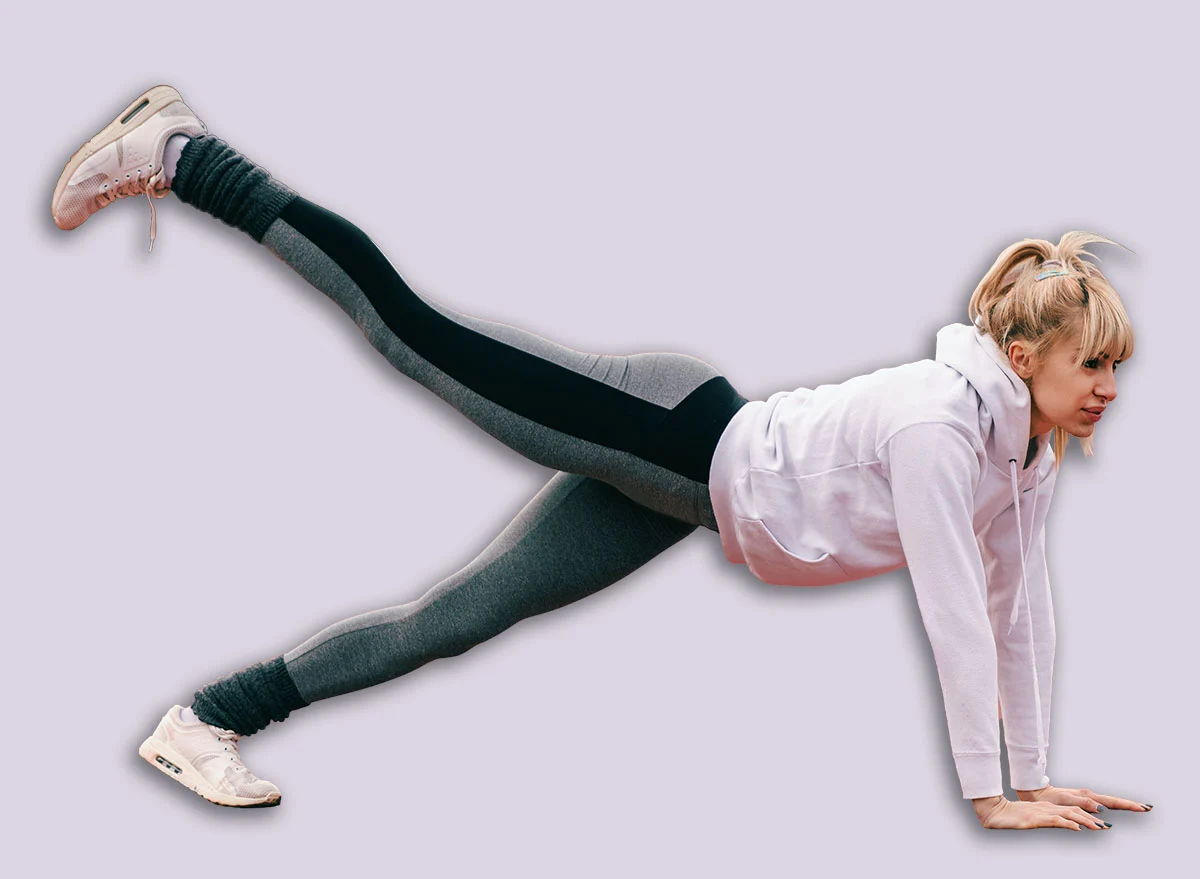
3. Quadruped Leg Extension
This movement, often referred to as a "donkey kick" variation, further strengthens the gluteal muscles and hamstrings, emphasizing the propulsive phase of walking—the action of pushing off the ground. It also engages core stability.
- Execution: Start on your hands and knees (quadruped position) on the bed. Ensure your wrists are under your shoulders and knees under your hips. Keeping a neutral spine, slowly extend one leg straight back behind you, lifting it until it’s roughly parallel to the bed surface, or as high as comfortable without arching your lower back. Focus on squeezing your glute. Slowly return the leg to the starting position.
- Muscles Targeted: Gluteus maximus, hamstrings, and core stabilizers.
- Benefits: Improves the power phase of walking, strengthens the posterior chain, and enhances overall balance and coordination.
- Dr. Sanders’ Insight: "Lastly, I would include a quadruped leg extension to again facilitate the leg moving behind the body to propel the body forward during walking. It’s another exercise that can be made harder by lifting the opposite arm in conjunction with the leg or even taking the leg to the side."
- Routine Integration: Perform 10-15 repetitions on each leg. Allocate 1-2 minutes per leg for this exercise, allowing for short breaks.
For a comprehensive six-minute routine, one could allocate two minutes to each exercise, rotating through them with minimal rest. Alternatively, a minute could be spent on each side for the unilateral exercises, followed by a minute of rest or dynamic stretching. The key is consistency and mindful execution.
The long-term implications of such an accessible and consistent exercise routine are profound. Beyond the immediate benefits of increased strength and stability, regular physical activity directly contributes to improved bone density, better circulation, enhanced mood, and cognitive function. For older adults, maintaining hip strength translates directly to sustained independence, reducing the reliance on assistive devices or caregivers for daily tasks. It empowers individuals to continue participating in activities they enjoy, from gardening to walking with grandchildren, thereby significantly enhancing their quality of life.
While this bed-based routine offers an excellent starting point, it is always advisable to consult with a healthcare professional or physical therapist before embarking on any new exercise program, especially if you have pre-existing health conditions or concerns. A professional can provide personalized guidance, ensure proper form, and help tailor the exercises to individual needs and capabilities. This expert-guided approach ensures safety and maximizes the benefits of the program, setting the stage for a stronger, more mobile, and independent future. The power of consistent, accessible movement, even from the bed, proves to be a formidable tool in the journey toward healthy and active aging.
Related posts:

Related News