Cellular Signals Post-Chemotherapy: Investigating Fructose’s Role in Ovarian Cancer Metastasis
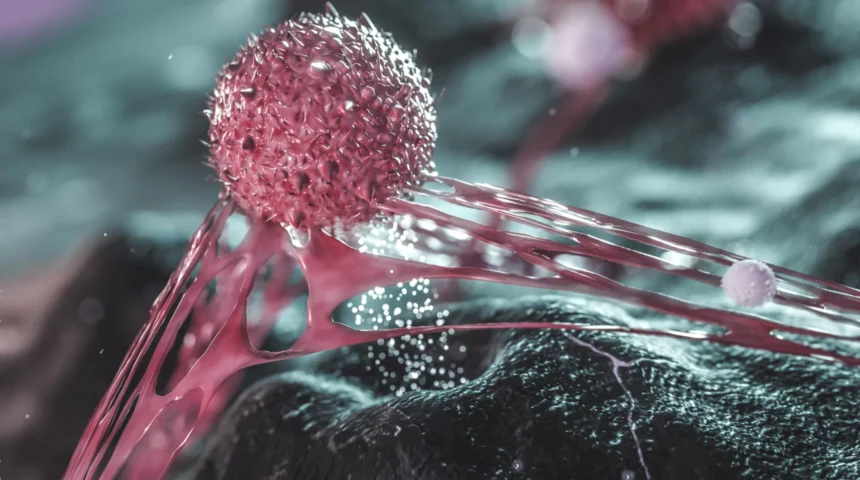
Ovarian cancer remains one of the most formidable challenges in oncology, often diagnosed at advanced stages and characterized by a high rate of recurrence and metastatic dissemination. Despite initial responsiveness to standard treatments, the disease frequently returns, spreading aggressively throughout the abdominal cavity and becoming resistant to further therapies. This spread, known as metastasis, is the primary cause of mortality in approximately 90% of ovarian cancer patients, underscoring an urgent need to unravel the intricate mechanisms driving this relentless progression. Recent groundbreaking research from The Wistar Institute has shed new light on a previously unrecognized pathway, suggesting that a common dietary sugar, fructose, might play a pivotal and unexpected role in empowering cancer cells to detach from primary tumors and establish secondary growths, particularly after chemotherapy.
The conventional understanding of cancer recurrence often focuses on the re-proliferation of residual tumor cells. However, scientists have increasingly recognized that not all surviving cancer cells immediately resume division. A distinct population of cells, often termed "persister" or "senescent-like" cells, can survive chemotherapy without actively multiplying. While seemingly dormant, these cells are far from inactive; they remain metabolically vibrant and capable of influencing their microenvironment. Dr. Aidan Cole, a postdoctoral fellow, and Dr. Katherine Aird, a professor and co-leader of the Molecular and Cellular Oncogenesis Program at The Wistar Institute, along with their team, hypothesized that these treatment-tolerant cells might be actively communicating with their surroundings, inadvertently contributing to the cancer’s ability to spread. Their findings, recently detailed in the journal Nature Aging, illuminate a novel signaling paradigm where such cells release molecules that can instigate metastatic behavior in neighboring tumor cells.
To rigorously test this hypothesis, the researchers devised an ingenious experimental setup. They isolated cancer cells that had survived platinum-based chemotherapy—the standard frontline treatment for ovarian cancer—and separated them from the various substances these cells secreted into their environment. A critical aspect of their methodology involved demonstrating that it was indeed these secreted molecules, rather than the surviving cells themselves, that possessed the capacity to promote cancer dissemination. In preclinical models, the introduction of the isolated molecular "secretome" from chemotherapy-persisting cells significantly enhanced the metastatic potential of other cancer cells. This observation was crucial, as it provided compelling evidence, beyond simple laboratory dish experiments, that a non-cellular component released by drug-resistant cells could actively drive one of cancer’s most dangerous traits: its ability to spread. This revelation redefined the scope of how residual disease contributes to relapse, pointing towards a complex interplay of biochemical signals.
The subsequent challenge involved pinpointing the specific molecular components within this complex secretome responsible for encouraging cancer cells to become more motile and invasive. Through sophisticated analytical techniques, including comprehensive metabolomic profiling, the research team made a surprising discovery: fructose. Typically recognized as a simple sugar that serves as an energy source, fructose emerged as a potent chemical messenger. It is naturally present in fruits, vegetables, and honey, but also abundantly found in processed foods and sweetened beverages, often in the form of high-fructose corn syrup, a prevalent sweetener in many Western diets. The study elucidated that ovarian cancer cells that endured chemotherapy possessed the capacity to synthesize and excrete fructose into their immediate surroundings. Crucially, this secreted fructose did not act as a fuel for growth; instead, it served as an intercellular signal, actively instructing adjacent cancer cells to acquire characteristics associated with heightened metastatic capability.
To understand the exact mechanism by which fructose facilitated cancer spread, the Wistar team delved into the intracellular consequences of fructose exposure. Utilizing advanced investigative tools, including a CRISPR-based genetic screening approach—a powerful technique allowing systematic perturbation and analysis of gene function—they meticulously examined the biological alterations occurring within cancer cells treated with fructose. Their experiments uncovered a fascinating and pivotal link: fructose suppressed the intracellular production of cholesterol in recipient cancer cells. Cholesterol, while often associated with cardiovascular health, is an indispensable lipid molecule with myriad critical functions throughout the body. Within the context of cancer cells, it is a vital structural component of cell membranes, influencing their fluidity, permeability, and overall integrity. More importantly for metastasis, cholesterol plays a crucial role in maintaining cell-to-cell adhesion complexes—specialized structures that essentially act as molecular glue, anchoring neighboring cells together and preventing their easy detachment.
When fructose reduced cholesterol synthesis within these cells, the intricate connections holding them together were compromised. The cellular "glue" weakened, making it significantly easier for cancer cells to disengage from the primary tumor mass. This loosening of intercellular bonds is a critical prerequisite for metastasis, enabling individual cells or small clusters to break away, invade surrounding tissues, enter the bloodstream or lymphatic system, and eventually establish new tumors in distant sites. This discovery provided a coherent biochemical explanation for how a seemingly innocuous nutrient could directly influence one of the most perilous aspects of cancer progression, transforming it from a mere metabolic substrate into a sophisticated signaling molecule that facilitates cellular escape.
The implications of these findings extend beyond the immediate post-chemotherapy scenario. The preclinical experiments also revealed a concerning observation: even in the absence of chemotherapy, high levels of dietary fructose, comparable to those consumed through sugary drinks, could promote signaling pathways associated with increased cancer spread. This suggests that sustained high fructose intake might prime cancer cells for metastatic behavior through a mechanism previously unrecognized by the scientific community. Given that high-fructose corn syrup alone can contribute a substantial portion—estimated between 8% to 20%—of daily caloric intake for some individuals in the United States, this potential dietary link to cancer progression warrants serious consideration. However, the researchers are quick to emphasize the preliminary nature of these observations in human contexts. While dietary fructose intake is a modifiable factor, rigorous clinical trials are essential to determine whether reducing fructose consumption can translate into improved outcomes for ovarian cancer patients. The current findings do not establish a direct causal link between dietary sugar and human cancer spread, and no specific dietary recommendations can yet be made based solely on this mechanism.
The cholesterol link uncovered by the study also led to another unexpected, yet profound, line of inquiry concerning statins. These widely prescribed medications, taken by tens of millions globally (approximately 39 million in the U.S. alone), are renowned for their ability to lower cholesterol levels, primarily by inhibiting an enzyme crucial for cholesterol synthesis. Given that fructose promoted cancer spread by suppressing cholesterol production, the research team hypothesized that statins, by their very mechanism of action, might produce similar effects on cancer cell adhesion. Their experiments confirmed this suspicion: statins, when applied to cancer cells, could indeed weaken the connections between them, facilitating their separation and potential escape.
This surprising correlation raises complex questions about the potential influence of cholesterol-lowering medications on the efficacy of chemotherapy, particularly in patient populations where statin use is common. Ovarian cancer, for instance, is predominantly diagnosed in postmenopausal women, a demographic frequently prescribed statins to mitigate cardiovascular risks. The confluence of these factors—chemotherapy, endogenous fructose release, dietary fructose, and statin use—paints a far more intricate picture of cancer progression than previously appreciated. Dr. Aird underscored the importance of further investigation into these potential interactions in patient settings. Crucially, both researchers and clinicians stress that these preliminary findings are not a basis for patients to discontinue any prescribed statin medication. Such decisions should only be made in consultation with a healthcare provider, weighing the established benefits of statins against these newly identified, yet unverified, potential interactions in cancer.
While the current research focused specifically on ovarian cancer, the scientific team posits that the underlying biological processes might not be exclusive to this disease. Other cancers affecting organs within the abdominal and thoracic cavities—such as pancreatic, colon, and liver cancers—also exhibit aggressive metastatic patterns, often spreading locally before disseminating widely. If fructose similarly influences intercellular connections in these malignancies, the implications of this discovery could extend significantly beyond ovarian cancer. Dr. Aird and Dr. Cole have already initiated further experiments to explore whether these findings can be replicated in other gastrointestinal and solid tumor types.
In conclusion, the investigation from The Wistar Institute marks a significant advance in our understanding of cancer metastasis, particularly in the challenging context of post-chemotherapy recurrence. By identifying fructose as a novel intercellular signaling molecule that compromises cell-to-cell adhesion through cholesterol suppression, the research unveils a previously hidden pathway contributing to cancer’s ability to spread. This work not only provides new insights into the complex interplay between metabolism, cellular communication, and disease progression but also opens promising new avenues for therapeutic intervention. Future research will undoubtedly focus on validating these mechanisms in human studies, exploring targeted strategies to disrupt fructose-mediated signaling or strengthen cellular adhesion, and meticulously evaluating the potential implications for dietary guidelines and co-administered medications in the ongoing battle against cancer.

Related News