
Groundbreaking Clinical Trial Validates Non-Invasive Liquid Therapy for Halting Childhood Tooth Decay
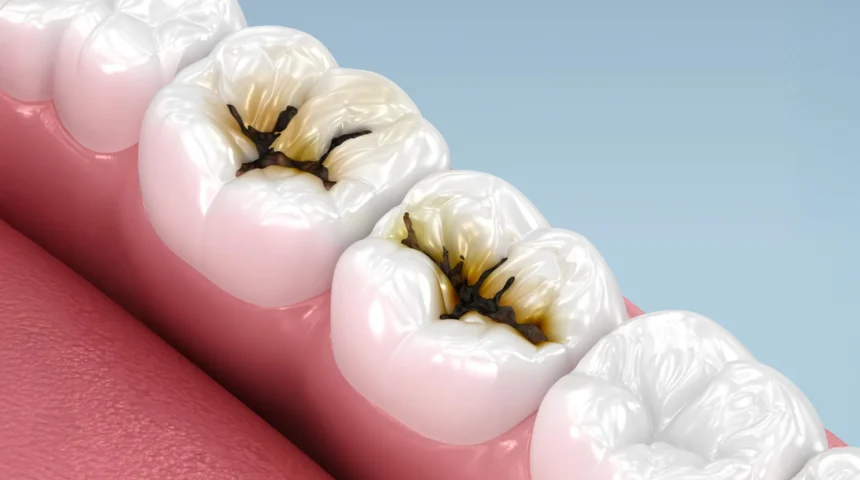
A significant clinical investigation has provided robust confirmation that a remarkably simple and cost-effective liquid solution possesses the capacity to halt the progression of tooth decay in very young children, thereby offering a compelling alternative to conventional drilling and invasive dental procedures. This development holds the potential to avert painful infections and the necessity for complex dental surgeries, transforming the landscape of pediatric oral healthcare. The treatment, identified as silver diamine fluoride (SDF), is applied with extraordinary speed, requiring mere seconds per affected tooth. Instead of the traditional approach of excavating decayed tooth structure and inserting a filling, dental professionals administer the liquid using a specialized, fine-tipped applicator that gently coats the cavity. This method circumvents the need for drills, anesthetic injections, or sedation, presenting a profoundly less intimidating experience for young patients.
The implications of these findings for the management of childhood dental health are far-reaching. Annually, a considerable number of very young children in the United States present at emergency departments with complications arising from untreated cavities. Emergency room physicians, while equipped to address immediate health crises, are generally not outfitted to perform the specialized dental interventions required to resolve the underlying decay. This often leaves these children enduring persistent pain and recurring infections. In more severe instances, some children ultimately necessitate dental surgery performed under general anesthesia, a procedure that renders them entirely unconscious for its duration.
At the forefront of this paradigm shift in dental care are researchers affiliated with the University of Michigan, who have now presented compelling evidence that a considerably more accessible and less intrusive methodology can effectively arrest the advancement of numerous dental cavities. Their findings, meticulously detailed in the esteemed journal JAMA Pediatrics, stem from a comprehensive Phase III clinical trial involving 830 children under the age of six. Participants were drawn from a diverse range of healthcare and educational settings, including dental clinics, pediatric medical practices, and federally funded Head Start and Early Head Start programs, with recruitment efforts spanning across Michigan, New York, and Iowa. These Head Start and Early Head Start initiatives are instrumental in providing comprehensive early childhood education and essential support services to families meeting specific eligibility criteria.
The trial’s outcomes demonstrated that a solution formulated with 38% silver diamine fluoride proved successful in halting decay in over half of the affected primary teeth, particularly when treatments were administered at six-month intervals. Dental practitioners refer to this cessation of deterioration as "arresting tooth decay." Crucially, this SDF treatment does not aim to replace the tooth structure that has been lost to decay; rather, its primary function is to prevent the existing decay from progressing further. The therapeutic efficacy of SDF is attributed to the synergistic action of its constituent components. Silver ions exhibit potent antimicrobial properties, effectively targeting and neutralizing the bacteria implicated in the initiation and perpetuation of tooth decay. Concurrently, fluoride ions play a vital role in fortifying the mineral matrix of the tooth enamel, thereby enhancing its resilience against future demineralization and damage.
Dr. Margherita Fontana, a distinguished professor of dentistry at the University of Michigan School of Dentistry and the principal investigator for the study, underscored the significance of these findings, stating, "This is a very effective and safe treatment — even in children as young as 1." This assertion highlights the broad applicability of SDF across a very young demographic.
Tooth decay, commonly known as cavities, stands as the most prevalent chronic disease affecting children in the United States, impacting more than 40% of this population. While early-stage cavities may not present with immediately discernible symptoms, untreated decay can escalate into severe toothaches, debilitating infections, significant difficulties with eating and sleeping, absenteeism from school, and a cascade of repeated medical and dental appointments. For very young children, conventional dental restorative treatments can pose substantial challenges. A significant proportion of these children may be too young to remain still and cooperative throughout a procedure, while others grapple with profound fear and anxiety associated with dental visits.
The introduction of SDF offers a transformative alternative for a substantial number of these young patients, primarily due to its rapid application and the absence of the specialized equipment and elaborate procedures necessitated by traditional filling techniques. Professor Fontana further elaborated that the benefits of SDF are not confined to young children alone. The treatment also holds immense promise for older adults, individuals with developmental or physical disabilities, those experiencing severe dental anxiety, and patients who encounter significant barriers to accessing conventional dental care.
However, it is imperative to acknowledge a notable trade-off associated with SDF therapy. The application of SDF results in a permanent darkening of the decayed portion of the treated tooth. This discoloration can be particularly conspicuous on the anterior (front) teeth, and while primarily a cosmetic concern, it may influence the decision-making process for both patients and their families regarding the adoption of this treatment. For a considerable segment of the population, the prospect of avoiding pain, drilling, and more invasive interventions may decisively outweigh this aesthetic consideration.
The underlying therapeutic agent, silver diamine fluoride, is not a recent innovation; rather, it is a substance that has been employed by dental professionals in various countries for decades with demonstrable success in managing cavities. Within the United States, the Food and Drug Administration (FDA) initially granted approval for SDF as a medical device in 2014, specifically for the treatment of tooth sensitivity. Since that time, dentists have also utilized SDF "off-label" for the purpose of arresting cavities, meaning they apply an FDA-approved product for a clinical indication that extends beyond its original approved use. What had been conspicuously absent until now was large-scale clinical evidence derived from U.S. populations that rigorously substantiates its safety and efficacy for the specific purpose of treating tooth decay. Such evidence is a critical prerequisite for obtaining FDA approval for this particular indication.
The University of Michigan trial was specifically designed to bridge this evidentiary gap. "If we want more children and families to benefit from this treatment, we need rigorous evidence showing both that it works and that it’s safe," Professor Fontana articulated. "From a public health perspective, if we want broader implementation across the United States, including in medical settings, we need carefully collected data in U.S. populations, and we now have that." The extensive research initiative commenced in 2018 and persevered through considerable disruptions, including the unprecedented challenges posed by the COVID-19 pandemic.
The research team posits that the availability of more robust clinical evidence could significantly facilitate the wider accessibility of SDF, including its integration into pediatric medical settings, where many children receive their initial healthcare long before their first dental appointment. "In medicine, clinicians want high-quality evidence before changing practice," Professor Fontana observed. "It is important to have data they can refer to because young children often see pediatricians years before they ever visit a dentist, broader acceptance could allow many more cavities to be treated while a referral to a dental home is successful, and before they become painful, infected or require surgery." The concept of a "dental home" refers to the establishment of an ongoing relationship with a dental care provider who can deliver comprehensive preventive care, necessary treatment, and essential follow-up services. By expanding the accessibility of SDF, it is anticipated that a greater number of children could benefit from early intervention, thereby preventing relatively manageable cavities from escalating into serious and complex dental health problems.
The comprehensive clinical trial was a collaborative effort involving researchers from prominent institutions, including the University of Michigan, New York University, the University of Iowa, and Indiana University. Substantial financial backing for this endeavor was provided by the National Institute of Dental and Craniofacial Research, a division of the National Institutes of Health, which contributed over $12 million in funding. The specific SDF product utilized in the trial was Advantage Arrest 38% SDF, manufactured by Elevate Oral Care.
The compelling results generated by this clinical trial provide the essential evidentiary foundation that the manufacturer can leverage in its application for FDA approval of SDF as a therapeutic agent specifically indicated for arresting dental caries, the medical terminology for tooth decay. Dr. Amr Moursi, a professor of pediatric dentistry at New York University College of Dentistry and a co-principal investigator on the study, emphasized the potential regulatory and practical significance of this forthcoming change. "Our results support FDA approval of SDF for managing arrest of tooth decay in young children," Dr. Moursi stated. "Removing SDF from off-label status would be an important innovation which could lead to increased utilization by providers, enhanced payments by insurers and more consistent product quality."
For certain children, receiving a subsequent application of SDF at periodic intervals, such as every few months, may prove sufficient to effectively manage a cavity until the affected primary tooth naturally exfoliates. The benefits of SDF are also considerable for adult populations, either as a means to manage ongoing decay over an extended period or as a valuable interim solution until more definitive restorative procedures, such as fillings or crowns, become financially accessible or logistically feasible. It is important to note that SDF is not universally applicable to all types of cavities, and arresting decay does not inherently preclude the necessity for future dental interventions. Nevertheless, the findings strongly suggest that a procedure requiring mere seconds to perform can empower a multitude of patients to circumvent more complex and potentially burdensome treatments. "For almost anyone, this can arrest the decay and stop the infection and the pain it causes," Professor Fontana concluded. "This could benefit many people."

Related News