Africa’s Health Future: Forging Self-Reliance Through Strengthened AU-WHO Collaboration
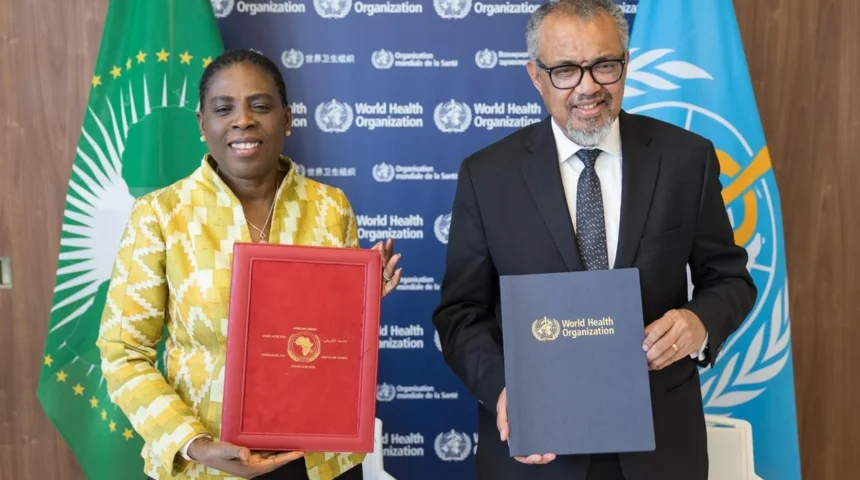
In a significant diplomatic event underscoring a pivotal shift in global health paradigms, the African Union (AU) Commission and the World Health Organization (WHO) formally recommitted to their strategic partnership, signing an updated Memorandum of Understanding (MoU) during the 78th World Health Assembly in Geneva. This renewed agreement, inked amidst a landscape of evolving global health priorities and considerable financial pressures, signals a collective determination to bolster health security, advance universal health coverage (UHC), and foster sustainable development across the African continent. It represents more than a mere administrative update; it embodies a strategic repositioning, emphasizing African leadership and a concerted move towards health autonomy.
The signing ceremony itself was a moment of diplomatic gravity, held on the sidelines of the premier global health gathering where nations convene to discuss and decide on pressing health issues. Representing the African Union, Her Excellency Ambassador Amma Adomaa Twum-Amoah, the Commissioner for Health, Humanitarian Affairs, and Social Development, affixed her signature on behalf of His Excellency Mahmoud Ali Youssouf, the Chairperson of the African Union Commission. Dr. Tedros Adhanom Ghebreyesus, the Director-General of the World Health Organization, signed for the global health body. This high-level endorsement underscored the political will and mutual recognition of the critical importance of this collaboration in shaping the future of health for over 1.4 billion people.
At its core, the renewed MoU solidifies a joint commitment to three overarching objectives that are particularly vital for Africa: enhancing health security, accelerating progress towards universal health coverage, and embedding health within broader sustainable development goals. Health security, a concept brought into sharp focus by recent global pandemics, involves the collective efforts required to prevent, detect, and respond to public health threats, whether from infectious diseases, environmental hazards, or other emergencies. For Africa, this translates into strengthening epidemiological surveillance, building robust laboratory networks, and establishing effective emergency response mechanisms across diverse geographical and socio-economic contexts.
Universal health coverage, a foundational pillar of equitable societies, aims to ensure that all individuals and communities receive the health services they need without suffering financial hardship. This ambitious goal encompasses the full spectrum of essential health services, from health promotion and prevention to treatment, rehabilitation, and palliative care. Achieving UHC in Africa necessitates substantial investments in primary healthcare infrastructure, a well-trained and adequately compensated health workforce, and equitable access to essential medicines and technologies. The renewed partnership underscores the critical role of primary healthcare as the bedrock upon which UHC can be built, emphasizing community-level interventions and accessible services as crucial entry points into the health system.
Furthermore, integrating health within sustainable development acknowledges that health outcomes are intrinsically linked to social, economic, and environmental factors. This holistic approach, reflected in the United Nations Sustainable Development Goals (SDGs), recognizes that progress in areas such as poverty eradication, education, gender equality, and climate action directly influences population health. The AU-WHO collaboration seeks to leverage these interdependencies, advocating for policies and programs that simultaneously advance health and broader developmental aspirations, moving beyond a siloed approach to health interventions.
The timing of this renewed agreement is particularly salient, arriving amidst what both organizations described as "unprecedented financial challenges in the global health landscape" and "cuts to bilateral aid that imperil the health of millions in Africa." This environment of dwindling external funding necessitates a fundamental re-evaluation of how health initiatives are financed and sustained on the continent. Historically, many African health programs have relied heavily on international donor aid, creating a dependency that, while beneficial in times of acute need, often proves unsustainable and susceptible to the shifting priorities of donor nations. The recent downturn in bilateral aid flows, exacerbated by global economic strains and competing geopolitical interests, has exposed the vulnerabilities of this model, highlighting the urgent need for African nations to cultivate greater self-reliance in health financing and program implementation.
Against this backdrop, the concept of "health sovereignty" has emerged as a central theme in the discourse surrounding the renewed partnership. As articulated by Commissioner Twum-Amoah, the ambition is to "move from budgeting for survival to planning for health sovereignty." This statement encapsulates a paradigm shift: from merely reacting to immediate crises and relying on external support to proactively shaping a long-term, self-determined health agenda. Health sovereignty implies the capacity of African nations and the continent as a whole to define their own health priorities, mobilize domestic resources, develop local expertise, and implement culturally appropriate health solutions without undue external influence. It is about building resilient health systems that can withstand external shocks and consistently deliver quality care, driven by African leadership and ownership.
Dr. Tedros echoed this sentiment, emphasizing the determination to "support countries to leave behind the era of aid dependency and transition to sustainable self-reliance." This commitment from WHO signals a recognition that true partnership involves empowering countries to take charge of their own health destinies. It suggests a collaborative effort to strengthen domestic resource mobilization, explore innovative financing mechanisms, and foster local pharmaceutical production and research capabilities, thereby reducing reliance on imported goods and foreign assistance. This strategic pivot is not about severing ties with international partners but rather about rebalancing relationships towards genuine equity and mutual respect, where external support complements, rather than dictates, national and regional health strategies.
The renewed MoU significantly underscores the African Union’s ascendant leadership in global health governance. The AU, a continental body representing 55 member states, has increasingly asserted its voice and influence on the international stage. Its recent admission as a permanent member of the G20, the forum for the world’s major economies, is a powerful testament to this elevated status. This G20 membership provides the AU with an unprecedented platform to advocate for Africa’s health priorities, influence global health policy, and mobilize resources at the highest levels of international decision-making. The partnership with WHO now explicitly leverages this enhanced diplomatic clout, positioning the AU Commission’s Department of Health, Humanitarian Affairs, and Social Development at the very heart of the continent’s health policy implementation efforts. This department is tasked with translating continental health strategies into actionable programs, coordinating member states’ efforts, and ensuring a coherent African approach to regional and global health challenges.
WHO, in turn, reaffirms its enduring role as a central technical and normative leader in global and regional health. Its commitment to supporting the AU and its institutions in achieving health-related Sustainable Development Goals remains unwavering. WHO’s extensive technical expertise, its capacity to set global health standards, and its vast network of country offices are invaluable assets in supporting Africa’s journey towards health self-reliance. This involves providing evidence-based guidance, facilitating capacity building for health workers, assisting in disease surveillance and outbreak response, and supporting the development of robust health information systems. The partnership ensures that African health initiatives are informed by the best available science and aligned with international best practices, while simultaneously respecting and integrating local contexts and priorities.
Building upon the foundational framework established by the 2019 MoU, the updated agreement introduces crucial refinements. It is designed to streamline and strengthen collaboration across all AU entities, ensuring a more cohesive and efficient approach to health interventions. This means greater alignment of efforts between various AU departments, specialized agencies, and regional economic communities, all working in concert towards shared health objectives. The intent is to eliminate duplication, optimize resource utilization, and foster a truly integrated continental health strategy that is responsive to the diverse needs of member states. This enhanced cooperation sets the stage for a more impactful partnership, translating strategic intent into tangible health improvements on the ground.
While the original article does not detail the "five key areas of collaboration," the spirit of the renewed partnership clearly indicates broad areas of intensified focus. These would logically encompass bolstering emergency preparedness and response capabilities, strengthening primary healthcare systems, enhancing local manufacturing of health products (including vaccines and essential medicines), developing a resilient health workforce, and leveraging digital health technologies for improved service delivery and data management. Such concerted efforts across these critical domains are essential for building truly sustainable and equitable health systems.
Ultimately, the renewed Memorandum of Understanding marks a significant new momentum for regional and multilateral cooperation dedicated to tackling Africa’s most pressing health challenges. It embodies a shared vision for a continent where health is not merely a service provided but a fundamental right and a driver of prosperity. By combining the African Union’s political leadership and commitment to continental integration with the World Health Organization’s unparalleled technical expertise and global normative function, this partnership aims to deliver meaningful, lasting results for the people of Africa, fostering a future defined by health sovereignty and sustainable well-being.

Related News