Auditory and Somatosensory Pathways Dominate Speech Acquisition, Challenging Motor-Centric Theories.
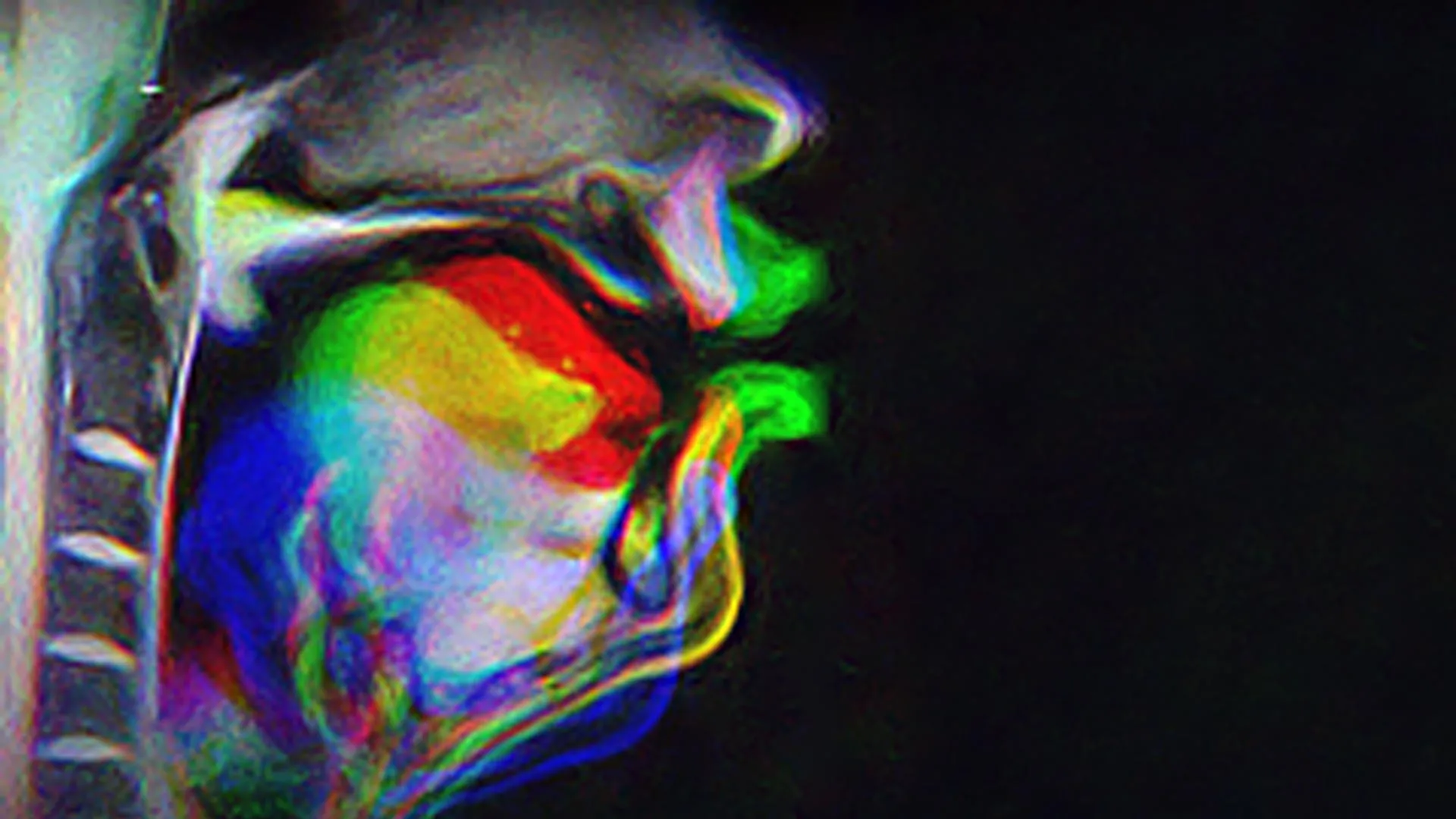
A groundbreaking investigation conducted collaboratively by scientists at McGill University and the Yale School of Medicine has revealed a paradigm shift in our understanding of how humans acquire and retain vocal communication skills, suggesting that the brain’s processing of sound and physical feedback plays a more pivotal role than previously theorized. This research, which challenges long-held assumptions, could fundamentally alter the scientific landscape of speech learning, memory, and the development of advanced technologies aimed at speech recognition and brain-computer interfaces for communication restoration.
For a considerable period, the prevailing scientific consensus posited that the intricate motor sequences necessary for articulation were primarily governed by the brain’s motor control centers. These neural pathways, located predominantly in the frontal lobes, are responsible for orchestrating the precise movements of facial muscles, the tongue, lips, and vocal cords that produce spoken language. The assumption was that learning new speech patterns, whether mastering a foreign tongue or regaining speech after injury, involved significant adaptation and recalibration within these motor circuits.
However, the findings from this latest study present a compelling counter-narrative, elevating the importance of sensory processing systems. The research indicates that the auditory cortex, responsible for interpreting sounds, and the somatosensory cortex, which processes touch and proprioception (the sense of one’s own body position and movement), are far more integral to the acquisition and consolidation of new speech behaviors. This suggests that the brain learns to speak not just by refining motor commands, but by intricately linking sensory input – what we hear ourselves say and how our vocal apparatus feels – to the motor output.
Professor David Ostry, a leading figure in psychology at McGill University and a principal investigator on the study, articulated the significance of these discoveries, stating, "Sensorimotor neuroscience has traditionally focused on frontal motor areas as the principal drivers of movement. This study changes that understanding by showing that human speech learning is extensively sensory in nature." This statement underscores a departure from a strictly motor-driven model to one that embraces a more holistic, sensorially informed approach to vocal learning.
The implications of this research extend beyond fundamental neuroscience, offering potential pathways for technological innovation. Emerging brain-speech interface technologies, designed to assist individuals who have lost the ability to communicate due to conditions like stroke, could be significantly enhanced by incorporating these newly understood sensory mechanisms. By focusing on sensory feedback and processing, future systems may offer more intuitive and effective means of restoring communication, improving both the performance and user experience of these assistive devices.
To empirically test these hypotheses, the research team employed a sophisticated experimental design that manipulated participants’ speech in real-time. Participants spoke into a microphone, and their vocalizations were subtly altered electronically before being played back through headphones. This auditory feedback loop created a scenario where participants were implicitly prompted to adjust their speech to match a target sound, thereby engaging in a form of motor learning.
Following this initial learning phase, the researchers utilized transcranial magnetic stimulation (TMS), a non-invasive neurostimulation technique, to transiently inhibit neural activity in three critical brain regions known to be involved in speech production and perception: the auditory cortex, the somatosensory cortex, and the motor cortex. TMS allows scientists to temporarily disrupt the function of specific brain areas, enabling them to observe the impact on cognitive and behavioral tasks.
The core of the experimental design hinged on evaluating the retention of the newly acquired speech patterns approximately 24 hours after the initial learning session. The researchers’ prediction was that if a particular brain region was indispensable for forming and storing memories related to speech, then temporary disruption of that region should lead to a measurable decline in the recall and execution of the learned speech modifications. Conversely, if a region was not critical to this memory consolidation process, its disruption should have minimal to no effect on retention.
The experimental outcomes provided robust support for the central role of sensory processing in speech learning. When the TMS intervention targeted either the auditory cortex or the somatosensory cortex, participants exhibited a marked impairment in their ability to recall and reproduce the speech patterns they had learned the previous day. This indicated that these sensory areas were crucial for consolidating the new motor memories associated with speech. In striking contrast, disrupting the motor cortex showed a negligible impact on speech retention, suggesting that while motor areas are necessary for executing speech, they are not the primary repositories for learning and remembering new vocal behaviors.
Nishant Rao, an Associate Research Scientist at Yale University and a co-author of the study, elaborated on these findings, stating, "Our study challenges the assumption that new speech memories are solely reliant on changes in motor areas of the brain. Instead, it underscores the importance of changes in auditory and somatosensory brain areas in shaping how we learn to speak." This statement encapsulates the study’s direct refutation of older models and its emphasis on the dynamic interplay between sensory perception and motor learning in the context of speech.
This research is situated within a broader scientific endeavor aimed at unraveling the complexities of neural plasticity, particularly how the brain’s sensory systems adapt and contribute to learning and the formation of long-term memories. The findings build upon a foundation of prior work conducted by the same research group, which had previously investigated motor learning in the limbs. Those earlier studies, focusing on arm and hand movements, had also demonstrated that interfering with sensory regions of the brain could impede an individual’s capacity to learn and retain new motor skills, hinting at a general principle of sensory involvement in motor learning across different domains.
Looking ahead, the research team plans to delve deeper into identifying the specific neural circuits within the cortex that are most actively engaged during speech learning. A significant future direction for this work involves exploring the development of sensory-based therapeutic interventions for movement disorders. The researchers express particular enthusiasm for the potential applications of their discoveries in the realm of stroke rehabilitation, with the ultimate goal of improving speech recovery outcomes for affected individuals by leveraging a more nuanced understanding of how the brain learns and adapts vocal communication.
The comprehensive findings of this significant study, titled "Sensory Basis of Speech Motor Learning and Memory," were authored by Nishan Rao, Rosalie Gendron, Timothy Manning, and David Ostry, and have been formally published in the esteemed journal Proceedings of the National Academy of Sciences of the United States of America. This impactful research was made possible through funding provided by the National Institute on Deafness and Other Communication Disorders in the United States.

Related News