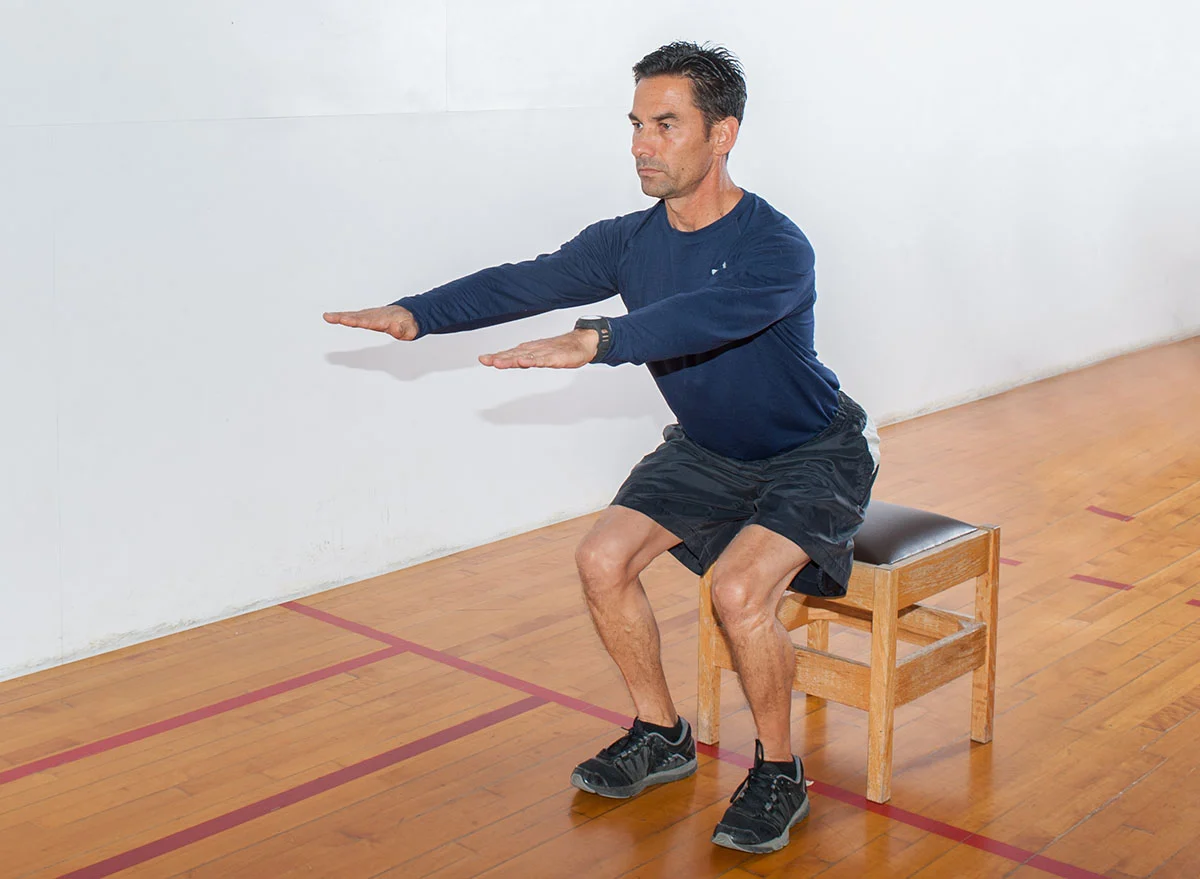
Maintaining robust physical function, particularly in the lower body, becomes increasingly vital for adults navigating their sixties and beyond. As individuals age, a natural physiological process known as sarcopenia, or age-related muscle loss, can diminish strength, stability, and overall mobility. This decline often manifests prominently in the hip complex, a critical anatomical region responsible for a vast array of daily movements, from walking and ascending stairs to simply rising from a chair or adjusting posture. Weakened hip muscles can significantly elevate the risk of falls, curtail independence, and ultimately impact an individual’s quality of life. Fortunately, targeted strength training, especially when adapted for accessibility and safety, offers a potent solution to counteract these age-related challenges and foster enduring vitality.
For many older adults, the prospect of embarking on a new exercise regimen can be daunting, often accompanied by concerns about balance, joint strain, or the potential for injury. This is precisely where the strategic incorporation of a chair as a support tool proves invaluable. Utilizing a chair during resistance exercises provides a stable anchor, alleviating anxieties related to maintaining equilibrium and allowing individuals to concentrate more effectively on precise muscle engagement and proper biomechanics. This supportive environment not only enhances safety but also empowers participants to explore a greater range of motion and apply controlled resistance, which are foundational for building strength. The chair acts as a constant point of contact, facilitating a deliberate focus on the working muscles, the connection of the feet to the ground, and maintaining pelvic alignment as weight shifts. This initial scaffolding allows for a progressive journey towards deeper engagement, increased resistance through bands, or gradually reducing reliance on the chair as confidence and strength grow.
While practices like yoga offer undeniable benefits for flexibility, joint mobility, and body awareness, the primary stimulus for building muscular strength—the ability to generate force and control movement against resistance—comes from dedicated strength training protocols. Chair-assisted exercises specifically address this need by providing repeated opportunities for hip musculature to work against external loads or body weight in a controlled manner. This focused approach to resistance training can be particularly effective for rapidly developing the foundational strength required for functional independence, often proving a more direct pathway to specific strength gains compared to modalities primarily focused on flexibility. Moreover, the inherent simplicity and minimal equipment requirements of a chair-based routine make it an exceptionally practical option for home workouts, removing common barriers to consistent physical activity.
The hip joint, a ball-and-socket marvel, is encircled by a complex network of muscles, each playing a distinct yet interconnected role in movement and stability. The gluteal muscles (maximus, medius, minimus) are paramount for hip extension, abduction, and rotation, crucial for propulsion during walking and stabilizing the pelvis. The quadriceps and hamstrings, though primarily knee movers, also contribute significantly to hip flexion and extension, respectively. Hip flexors, located at the front of the hip, enable movements like lifting the knee, essential for every stride. Furthermore, the often-overlooked deep hip rotators and adductors contribute to fine-tuning movement control and overall joint health. A comprehensive hip strengthening program must, therefore, engage these various muscle groups to ensure balanced development and optimal function.
The following five chair-assisted exercises are strategically designed to progressively challenge the hip musculature, beginning with more stable positions and advancing towards movements that demand greater unilateral control and balance. Integrating these into a routine two to three times per week, with a focus on smooth, controlled repetitions, will lay a strong foundation for improved hip strength and overall functional capacity.
1. Supported Unilateral Lowering and Rising (Chair-Supported Split Squat)
This exercise provides a direct and substantial challenge to the strength of each hip individually while leveraging the chair for essential balance support. By placing one foot forward and allowing the other leg to trail back, the front leg becomes the primary driver of the movement, recruiting the glutes, quadriceps, and the intricate hip stabilizing muscles. This unilateral loading is highly functional, directly translating to improved confidence and stability when navigating stairs, walking on uneven terrain, or executing changes in direction. The controlled descent and ascent help build both concentric (lifting) and eccentric (lowering) strength, which are vital for preventing falls. To perform this, position a chair behind you. Stand facing away from the chair with one foot forward, maintaining a slight bend in the knee, and the other foot resting on the chair seat behind you, toes pointed down. Gently lower your body by bending the front knee, keeping your torso upright, until your front thigh is roughly parallel to the floor or as deep as comfort allows. Drive through your front heel to return to the starting position. Aim for 3 sets of 8 to 10 repetitions on each side, resting for 45 to 60 seconds between sets. For progression, consider reducing the depth slightly for shorter range repetitions, incorporating pauses at the bottom of the movement, or slowing down the tempo of each rep. Ensure the front knee tracks in alignment with the toes, avoiding inward or outward collapse.
2. Assisted Power Generation from Seated Position (Band-Resisted Sit-to-Stand)
Transforming the everyday action of standing up from a chair into a powerful hip-strengthening exercise, this movement incorporates a resistance band to amplify muscle activation. The band, typically placed just above the knees, encourages the outer hip muscles to remain active, preventing the knees from caving inward during the ascent. The chair provides a consistent reference point for depth and ensures a controlled return, making it an excellent exercise for building functional power and stability. The glutes initiate the upward drive, while the quadriceps assist in straightening the legs, and the outer hip abductors maintain knee alignment. To execute this, sit on a sturdy chair with your feet flat on the floor, hip-width apart. Place a resistance band just above your knees. Lean slightly forward from the hips, engaging your core, and push through your feet to stand up, ensuring you maintain tension on the band by pushing your knees slightly outward. Slowly and controlled, return to the seated position. Complete 3 sets of 10 to 12 repetitions, with a rest period of 45 to 60 seconds between sets. Variations include performing standard sit-to-stands without the band, hovering just above the chair before fully sitting, or using a slower tempo for increased time under tension. Crucially, maintain light but consistent tension on the resistance band throughout the entire movement.
3. Seated Lateral Hip Stabilizer Engagement (Seated Band Hip Abduction)
This targeted exercise focuses specifically on the gluteus medius and minimus, the primary outer hip muscles critical for stabilizing the pelvis during single-leg activities like walking or standing. A robust set of outer hip muscles is fundamental for maintaining proper alignment of the lower body, reducing strain on the knees and ankles, and enhancing overall balance during lateral movements, turns, and stair climbing. The seated position simplifies the setup, allowing for concentrated effort on engaging these specific muscles. To perform this, sit upright on a chair with your feet flat on the floor, hip-width apart. Place a resistance band just above your knees. While keeping your feet firmly planted, gently push your knees outward against the resistance of the band, feeling the contraction in your outer hips. Hold briefly, then slowly return your knees to the starting position. Execute 3 sets of 12 to 15 repetitions, with a shorter rest of 30 to 45 seconds between sets. To modify, use a lighter resistance band, incorporate brief pauses at the peak of the abduction, or perform the movement with a slower tempo. It is important to avoid leaning or rocking the torso backward as the knees move outward, ensuring the focus remains on the hip abductors.
4. Supported Posterior Chain Strengthening (Chair-Supported Single-Leg Romanian Deadlift)
This sophisticated exercise effectively builds strength in the glutes and hamstrings, while simultaneously challenging the hip’s ability to control pelvic stability independently. By lightly holding onto a chair for balance, individuals can direct their focus to the hinge movement at the hips and truly feel the work in the posterior chain of the standing leg. This movement is incredibly beneficial for developing the eccentric control needed for safe descents, managing uneven ground, and confidently stepping off curbs. It also reinforces the crucial hip hinge pattern, protecting the lower back. Stand beside a sturdy chair, holding onto it lightly for support with one hand. Shift your weight onto one leg, maintaining a slight bend in the knee. Keeping your back straight and core engaged, hinge forward at your hips, extending the non-standing leg straight back behind you until your torso and extended leg form a relatively straight line, parallel to the floor. Focus on feeling the stretch in the hamstring and glute of the standing leg. Slowly and with control, return to the upright position. Aim for 3 sets of 8 to 10 repetitions per side, resting for 45 to 60 seconds between sets. Progressions include performing staggered-stance hip hinges (with the non-working foot lightly touching the ground), attempting bodyweight single-leg Romanian deadlifts without chair support, or slowing the tempo of the hinge. Throughout the movement, strive to keep your hips level and facing forward to maximize the engagement of the standing glute.
5. Assisted Hip Flexor and Core Activation (Chair-Supported Knee Drive)
This exercise specifically targets the hip flexors and core muscles, which are essential for lifting the leg during walking and maintaining spinal stability. The standing leg simultaneously works to stabilize the body, enhancing overall balance and coordination. The knee lift directly mimics a critical component of every stride, making this a highly functional movement for improving walking efficiency, stair climbing ability, and preventing tripping hazards. The chair offers a secure handhold, allowing the individual to concentrate on generating strength during the lift and maintaining control during the lowering phase. Stand tall beside a sturdy chair, holding onto its back or seat for support with one hand. Keeping your standing leg slightly bent and your torso upright, lift one knee towards your chest as high as comfortably possible, engaging your hip flexors and core. Hold briefly at the top, then slowly and with control lower your foot back to the starting position. Perform 3 sets of 10 to 12 repetitions per side, with a rest period of 30 to 45 seconds. Consider variations such as supported marches, incorporating a brief pause at the peak of the knee drive, or using a slower tempo for increased muscle activation. It is important to maintain a stacked alignment of the ribs over the hips, avoiding any excessive arching or rounding of the lower back as the knee lifts.
Incorporating these chair-assisted exercises into a regular fitness regimen offers a powerful and accessible pathway to bolstering hip strength, improving balance, and enhancing overall functional independence for adults over the age of sixty. Whether performed as a circuit or by completing all sets of one exercise before moving to the next, the consistent application of these movements, coupled with an unwavering focus on clean, controlled repetitions, will yield significant benefits. The chair is not merely a prop but a strategic partner in empowering individuals to rebuild and sustain the critical foundation for steadier steps, greater confidence, and a more active, fulfilling life. As with any new exercise program, it is advisable to consult with a healthcare professional or a certified fitness trainer to ensure these exercises are appropriate for individual health conditions and fitness levels.
About the Author