As the global population ages, the spotlight increasingly turns to strategies for maintaining quality of life and autonomy throughout one’s later years. Central to this objective is the preservation of physical capabilities, particularly the strength and endurance of the lower body. The ability to navigate daily tasks, engage in recreational pursuits, and prevent falls hinges significantly on robust leg musculature. While many indicators exist for assessing overall fitness in older adults, a particular two-minute standing endurance challenge has emerged as a compelling benchmark, signaling what experts deem as exceptional lower body strength in individuals over the age of 65. This simple, yet profound, test offers valuable insights into an individual’s potential for sustained functional independence.
The natural process of aging is often accompanied by a gradual decline in muscle mass and strength, a condition known as sarcopenia. This age-related muscular atrophy can begin as early as the third decade of life and accelerate after 60, leading to reduced mobility, increased frailty, and a heightened risk of falls. The consequences extend beyond mere physical inconvenience; sarcopenia can significantly diminish an individual’s capacity to perform Activities of Daily Living (ADLs) such as bathing, dressing, and eating, as well as Instrumental Activities of Daily Living (IADLs) like managing finances, cooking, and shopping. These limitations can precipitate a loss of independence, increased reliance on caregivers, and a substantial decrease in overall life satisfaction. Therefore, identifying and nurturing muscular strength, especially in the lower extremities, becomes a critical component of healthy aging.
Lower body strength is the cornerstone of virtually all ambulatory and balance-dependent movements. Consider the seemingly mundane actions that define an active existence: ascending and descending stairs, carrying groceries, rising from a seated position, walking across uneven terrain, or recovering from an unexpected stumble. Each of these actions demands a coordinated effort from the quadriceps, hamstrings, glutes, and core muscles. Strong legs provide the power for propulsion, the stability for balance, and the endurance for sustained activity. Moreover, well-conditioned leg muscles act as crucial support structures for the knee and hip joints, helping to alleviate stress and reduce the risk of pain or injury, thereby making everyday movements more fluid and less taxing. As Emily Hollon, a Certified Pilates Instructor and founder of Core Collective, who possesses extensive experience across various age demographics, emphasizes, "Sustaining leg power and stamina is paramount, as the legs are fundamental for walking, climbing steps, and even simply standing up from a chair, all of which foster functional autonomy in one’s advanced years. Potent leg muscles also stabilize the knee and hip articulations, simplifying these routine motions. Furthermore, robust lower-body strength aids in maintaining equilibrium, which can significantly lower the incidence of falls."
Understanding one’s own physical capabilities relative to peers can be a powerful motivator for maintaining or improving fitness. While laboratory assessments offer precise measurements, practical, easily replicable tests can provide immediate feedback. One such assessment, highlighted by Hollon, gauges both muscular strength and endurance in the lower body. For individuals aged 65 and above, the ability to successfully execute and sustain a specific semi-seated posture for two minutes is indicative of what she describes as "top-tier" leg strength. This particular benchmark stands out because it not only requires raw power to hold a challenging position against gravity but also demands muscular endurance to maintain that position for an extended period without fatiguing.
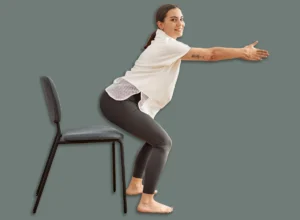
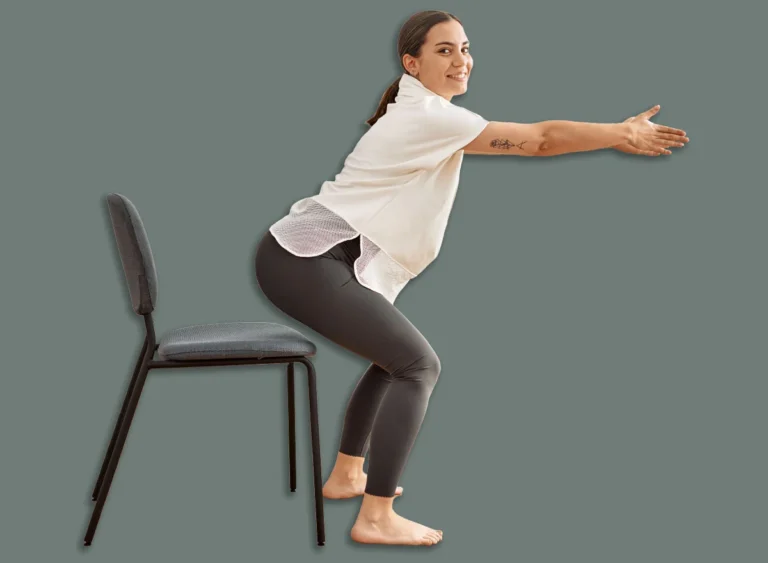
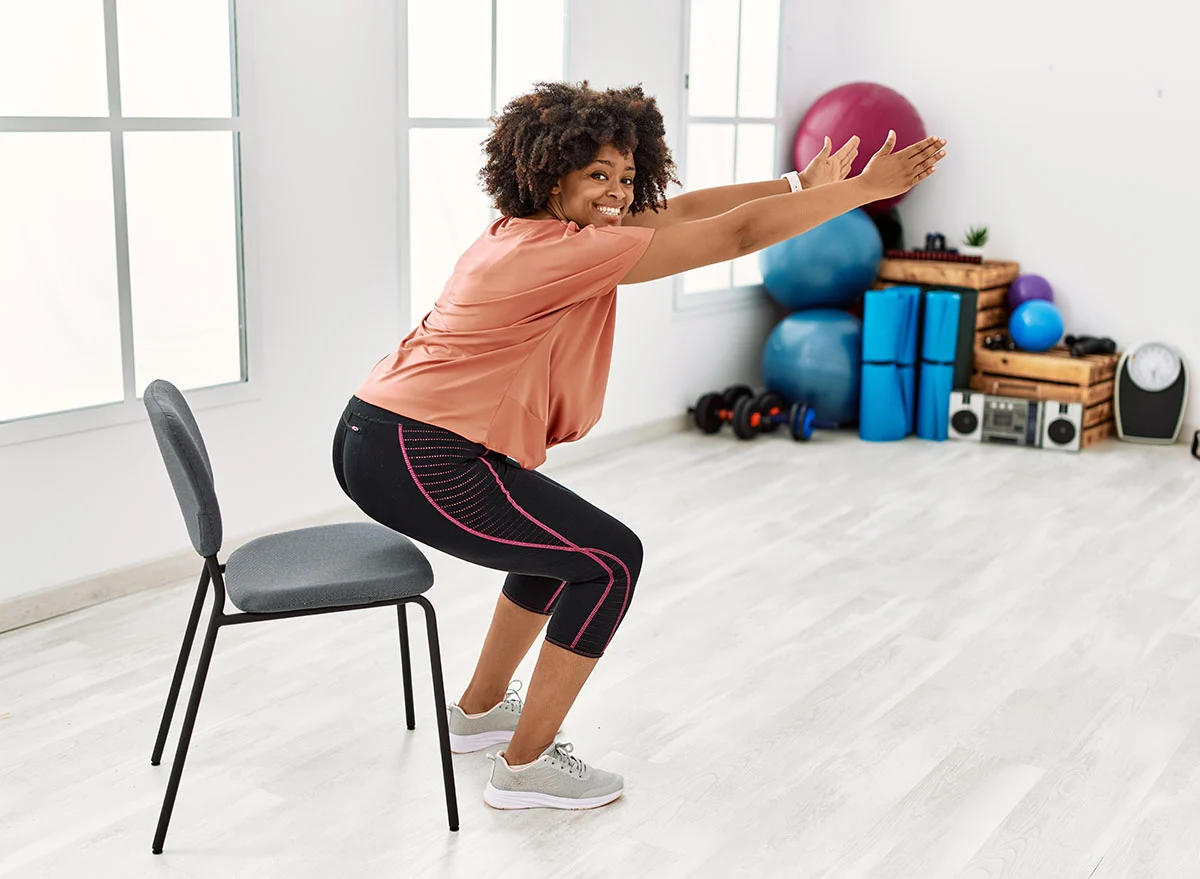
The exercise in question is a variation of the familiar chair sit-to-stand movement, often modified into an isometric hold. To perform this test, one begins from a standing position, facing a sturdy chair positioned behind them. The individual then slowly lowers their glutes towards the chair, as if preparing to sit, but critically, stops just short of making contact. The goal is to hover above the chair, maintaining a semi-seated position, for the full duration of two minutes. The depth of the squat is important: participants should aim to lower themselves to a point approximately one foot above the chair seat, or as low as they can comfortably manage without compromising their posture.

Proper form is essential to ensure the test is both effective and safe. Participants should keep their feet flat on the floor, roughly hip-width apart, and avoid letting their knees collapse inward or splay outward. The movement should initiate by pushing the hips backward, akin to sitting down, while simultaneously hinging slightly forward at the torso. This allows for a neutral spine and minimizes strain on the lower back. The back must remain straight, not rounded, throughout the hold. Engaging the core muscles is also vital for maintaining stability and preventing unwanted sway. The challenge lies in sustaining this controlled, semi-squat position, resisting the urge to fully sit or stand upright, for the entire 120 seconds. This static hold places significant isometric demands on the quadriceps, hamstrings, and gluteal muscles, requiring them to continuously contract to counteract gravity.
What renders this particular exercise so effective as a diagnostic tool for leg strength and endurance in the over-65 demographic? Its efficacy stems from its direct engagement of the primary muscle groups responsible for functional mobility. The quadriceps, located at the front of the thigh, are heavily involved in extending the knee and stabilizing the leg. The hamstrings, at the back of the thigh, contribute to knee flexion and hip extension. The gluteal muscles (gluteus maximus, medius, and minimus) are powerful hip extensors and abductors, crucial for propelling the body forward and maintaining pelvic stability. During the isometric chair hover, these muscles work synergistically to maintain a fixed hip and knee angle against the constant pull of gravity. The two-minute duration is key; it pushes beyond simple muscular strength into the realm of muscular endurance, differentiating those who possess adequate power from those who exhibit truly exceptional resilience to fatigue. Successfully holding this position for such a timeframe indicates not only strong muscles but also efficient neuromuscular control and a robust capacity for sustained effort, translating directly to an enhanced ability to perform repetitive or prolonged physical tasks in daily life without undue strain or exhaustion.
Beyond its immediate assessment value, this test also offers a practical means for individuals to monitor their progress over time. As Hollon notes, "The added benefit of this test is that it enables clients to assess their improvement longitudinally, as they can readily quantify both the proximity to the chair they can maintain and the duration they can hold the stance (and the number of sit-to-stands they can complete, assuming that aspect is also being evaluated)." This makes it a valuable component of any personal fitness regimen, allowing for tangible goals and measurable achievements.
The implications of possessing "top-tier" leg strength after 65 extend far beyond the gym or a fitness test. Strong lower body muscles are arguably the most critical factor in mitigating the risk of falls, a leading cause of injury, disability, and even mortality among older adults. Falls often result from a combination of poor balance, weakened muscles, and slower reaction times. By improving strength and endurance, individuals can enhance their balance, increase their ability to recover from a loss of equilibrium, and develop the explosive power needed to prevent a fall from escalating into a serious injury. Furthermore, maintaining robust leg strength ensures continued participation in cherished activities, from gardening and dancing to traveling and playing with grandchildren. It empowers individuals to live on their own terms, preserving their independence and enhancing their overall quality of life.
For those who may not yet meet the two-minute benchmark, or for anyone looking to bolster their lower body strength, various strategies can be employed. Regular resistance training, incorporating exercises such as squats, lunges, step-ups, and calf raises, is paramount. These can be performed using bodyweight, resistance bands, dumbbells, or gym machines. Incorporating balance exercises, like standing on one leg or heel-to-toe walking, can also improve neuromuscular coordination and stability. Activities like walking, hiking, cycling, and swimming contribute to cardiovascular health and muscular endurance. Consistency is key, along with progressive overload—gradually increasing the intensity, duration, or resistance of workouts to continually challenge the muscles. Consulting with a qualified fitness professional, like Emily Hollon, can provide personalized guidance and ensure exercises are performed safely and effectively, especially for those with pre-existing health conditions.
In conclusion, the simple, two-minute isometric chair hover test provides a powerful and accessible means for individuals over 65 to gauge their lower body strength and endurance. Achieving this benchmark signifies an exceptional level of functional fitness, directly correlating with a reduced risk of falls, enhanced mobility, and a sustained capacity for independent living. It serves as a testament to the profound impact of proactive physical activity on healthy aging, underscoring that maintaining robust leg strength is not merely about physical prowess, but about preserving the freedom and vitality essential for a fulfilling life in one’s later years.
About the Author