Beyond LDL: Unraveling Complex Lipid-Protein Interactions in Persistent Heart Disease Risk
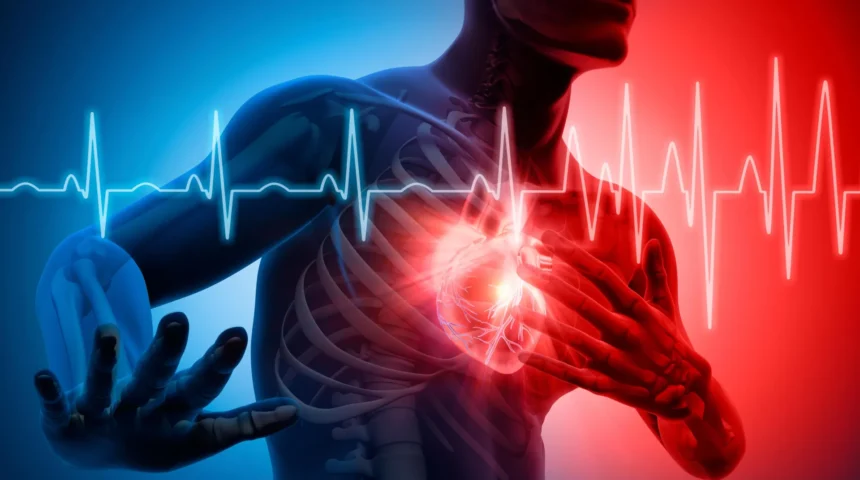
Despite significant advancements in cardiovascular medicine, a perplexing challenge persists: a substantial number of individuals continue to develop severe heart disease, including life-threatening heart attacks, even after successfully lowering their low-density lipoprotein (LDL) cholesterol to recommended levels. This enduring enigma has prompted researchers worldwide to look beyond conventional lipid markers, seeking to uncover the subtler biological mechanisms that contribute to this "residual risk." A groundbreaking study conducted by scientists at Chalmers University of Technology in Sweden, recently published in the European Heart Journal, offers compelling new insights, revealing that specific lipid-transporting particles in the bloodstream orchestrate intricate biological processes that damage blood vessels in ways fundamentally distinct from mere cholesterol accumulation. Their findings illuminate novel pathways involving triglyceride-rich lipoproteins (TRL) and lipoprotein(a) (Lp(a)), opening promising avenues for more personalized and effective preventative strategies.
Cardiovascular diseases (CVDs) remain the leading cause of mortality globally, claiming an estimated 17.9 million lives each year, according to the World Health Organization. Heart attacks and strokes alone account for over 80% of these tragic outcomes. The primary driver of these events is atherosclerosis, a progressive condition characterized by the insidious buildup of fatty deposits, known as plaques, within the arterial walls. These plaques, rich in cholesterol, gradually harden and narrow the arteries, impeding blood flow to vital organs like the heart. If a plaque ruptures, it can trigger the rapid formation of a blood clot, completely obstructing the artery and leading to a myocardial infarction (heart attack) or a cerebrovascular accident (stroke).
For decades, the cornerstone of cardiovascular disease prevention and treatment has revolved around managing blood cholesterol levels, particularly LDL cholesterol. Often referred to as "bad cholesterol," LDL particles are the primary carriers of cholesterol in the bloodstream, and their excessive presence is a well-established risk factor for plaque formation. Pharmaceutical interventions, lifestyle modifications, and dietary changes aimed at reducing LDL cholesterol have demonstrably lowered the incidence of heart attacks and improved patient outcomes. However, the clinical reality is that even patients who achieve optimal LDL cholesterol concentrations can still experience adverse cardiovascular events. This undeniable "residual risk" underscores the incomplete understanding of atherosclerosis and highlights the urgent need to identify additional contributing factors.
The research team at Chalmers University of Technology, spearheaded by lead author Jakub Morze and study leader Assistant Professor Clemens Wittenbecher, embarked on an ambitious quest to decipher the biological underpinnings of this persistent risk. "Our motivation for this investigation was to move beyond the traditional focus on cholesterol deposition in arterial walls," explained Morze. "We aimed to discern whether different classes of lipid-transporting particles might exert distinct damaging effects on blood vessels and to elucidate the reasons behind the cardiovascular risk that persists even after LDL cholesterol is well-controlled."
To achieve this, the scientists employed an advanced analytical technique known as proteomics. While genomics examines an individual’s relatively static DNA, proteomics provides a dynamic snapshot of the myriad proteins present in cells, tissues, or bodily fluids at a given moment. Proteins are the workhorses of the body, orchestrating nearly every biological process, from constructing cellular structures and processing nutrients to transmitting hormonal signals and mounting immune responses. Crucially, protein levels and their activity are highly responsive to environmental factors, lifestyle choices, aging, and disease states. By analyzing these constantly shifting protein patterns, proteomics offers unparalleled insights into the body’s current physiological condition, allowing researchers to identify specific biomarkers, diagnose medical conditions, and monitor treatment efficacy. In this study, proteomics enabled the team to investigate the systemic biological changes associated with various lipid-transporting particles, rather than merely quantifying the cholesterol they contained.
The focus of the study was on three major classes of apolipoprotein B (apoB)-containing lipoproteins: low-density lipoprotein (LDL), triglyceride-rich lipoproteins (TRL), and lipoprotein(a) (Lp(a)). These particles are essential for transporting fats, including cholesterol and triglycerides, throughout the circulatory system because fats are insoluble in blood plasma. All three contain the structural protein apoB and all three have the potential to contribute to atherosclerosis.
- Low-Density Lipoprotein (LDL): As previously noted, LDL is the primary carrier of cholesterol in the blood. An LDL cholesterol measurement reflects the amount of cholesterol encapsulated within these particles. Elevated LDL levels are a direct contributor to plaque formation.
- Triglyceride-Rich Lipoproteins (TRL): These particles, primarily liver-derived very-low-density lipoproteins (VLDL) and their remnants, transport both cholesterol and triglycerides. Triglycerides are a crucial energy source for the body. As TRL particles release their triglyceride cargo, the remaining cholesterol-rich remnants can become highly atherogenic, readily depositing their lipid content into arterial walls.
- Lipoprotein(a) (Lp(a)): Lp(a) is structurally similar to an LDL particle but possesses an additional, distinctive protein called apolipoprotein(a). The levels of Lp(a) in an individual’s blood are largely genetically determined and are considered an independent and established risk factor for coronary heart disease, irrespective of LDL cholesterol levels.
Previous research by the same Chalmers group had already indicated that simply counting the number of these harmful lipoprotein particles was a more effective predictor of future cardiovascular risk than measuring cholesterol content alone. Their earlier work also suggested that TRL and Lp(a) particles might pose a greater individual risk compared to an LDL particle, positioning them as significant contributors to the cardiovascular danger that persists even when LDL cholesterol is successfully managed.
In this latest investigation, the researchers meticulously analyzed nearly 3,000 proteins identified in comprehensive blood samples. These proteomic data were then cross-referenced with extensive genetic information and long-term health records from the study participants. This multifaceted approach allowed the team to pinpoint specific protein patterns that were consistently associated with each type of lipoprotein particle, providing crucial clues about the precise mechanisms through which these particles might inflict damage within the arteries.
One of the most compelling and unexpected discoveries centered on TRL and Lp(a). Despite being distinct types of lipoprotein entities, their associated blood protein patterns exhibited remarkable similarities. Crucially, these overlapping protein signatures were strongly correlated with the subsequent development of heart disease among the study cohort. Further analysis revealed that these shared protein patterns were linked to proteins known to attract immune cells and promote inflammation. This suggests that TRL and Lp(a) may contribute to cardiovascular disease not merely by depositing cholesterol, but by actively instigating inflammatory responses and inducing structural alterations within the delicate walls of blood vessels.
In stark contrast, LDL particles displayed a distinctly different protein signature. The proteins associated with LDL were predominantly connected to the classic mechanism of cholesterol accumulation within arterial walls. This finding highlights a critical mechanistic divergence: while LDL primarily contributes to plaque formation through lipid deposition, TRL and Lp(a) appear to engage broader, more complex inflammatory and vascular remodeling pathways. "The significant overlap observed in the protein patterns linked to TRL and Lp(a) is one of the most intriguing aspects of our study," Morze commented. "It strongly implies that these two particles may converge on common inflammatory and vascular processes, which could be instrumental in identifying novel targets for highly precise preventative interventions in the future."
These revelations carry profound implications for the future of cardiovascular disease prevention. By elucidating biological pathways associated with residual cardiovascular risk beyond LDL cholesterol, the findings furnish researchers with an entirely new framework for developing more personalized and targeted therapeutic strategies. The identification of shared inflammatory and vascular effects linked to TRL and Lp(a) opens up promising avenues for further investigation, potentially leading to the development of novel drugs that specifically modulate these pathways.
It is important to emphasize, however, that this research did not evaluate a new treatment regimen nor did it establish a blood protein test ready for immediate clinical application. The scientific community will require additional, extensive studies to ascertain whether routine measurement of these newly identified biological processes, or the development of pharmacological agents designed to target them, can effectively augment existing protection against heart disease.
"While lowering LDL cholesterol undeniably remains a foundational principle of cardiovascular disease prevention, our findings shed light on biological processes that may account for a portion of the risk that persists even after LDL levels are optimized," stated Clemens Wittenbecher. "The crucial next step involves rigorously establishing whether measuring or precisely targeting these newly identified processes can enhance preventative strategies alongside current, established treatments."
Ultimately, the study from Chalmers University of Technology reinforces the indispensable role of LDL cholesterol control while simultaneously revealing the limitations of a singular focus on cholesterol reduction. By meticulously dissecting the multifaceted ways in which different lipoprotein particles interact with arterial biology, scientists are moving closer to developing more precise, individualized, and ultimately more effective approaches to safeguarding cardiovascular health for millions worldwide.
The comprehensive study, titled "Apolipoprotein B-containing lipoproteins: distinct roles in atherosclerosis revealed by plasma proteomic profiling," was formally published in the esteemed European Heart Journal. The extensive list of contributing authors includes Jakub Morze, Elias Björnson, Michael Y Mi, Martin Adiels, Giorgio E Melloni, Gonçalo Rosas da Silva, Andrzej Rynkiewicz, Nicholas A Marston, Marta Guasch-Ferré, Michael Y Tsai, Jerome I Rotter, Robert E Gerszten, Qi Sun, Frank B Hu, Rikard Landberg, Göran Bergström, Chris J Packard, Jan Borén, and Clemens Wittenbecher. At the time of this seminal research, these authors were affiliated with various prestigious institutions globally, including Chalmers University of Technology and the Institute of Medicine at the University of Gothenburg in Sweden; Harvard Medical School and Harvard T.H. Chan School of Public Health in the USA; AstraZeneca in Sweden; the Municipal Hospital in Olsztyn, Poland; the University of Copenhagen, Denmark; the University of Minnesota, USA; The Lundquist Institute at Harbour-UCLA Medical Center in Torrance, USA; and the University of Glasgow, UK.
Related posts:

Related News