Switzerland and World Health Organization Forge Renewed Strategic Partnership for Global Health Advancement Through 2028
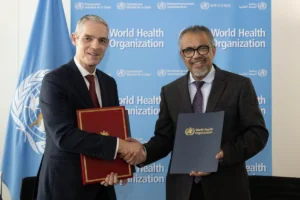
Copenhagen, Denmark – In a pivotal demonstration of enduring commitment to global public health, the World Health Organization (WHO) and Switzerland formally extended their comprehensive country cooperation strategy, solidifying a collaborative framework that will guide joint efforts until the close of 2028. This significant agreement, signed on March 4, 2025, at the WHO Regional Office for Europe in Copenhagen, underscores a deep-rooted partnership aimed at tackling some of the world’s most pressing health challenges and advancing health outcomes across the globe.
The decision to renew this strategic alliance was mutually agreed upon in 2022, reflecting the successful trajectory and evolving needs identified since the inception of the initial collaboration. Switzerland holds a unique distinction as the first high-income nation within the WHO European Region to pilot such a structured country cooperation strategy, an initiative first established in 2013. This pioneering move set a precedent for how affluent countries could formalize and strategically align their national health priorities with the broader global health agenda championed by WHO, extending beyond traditional financial contributions to encompass technical collaboration, policy development, and shared expertise.
At its core, a country cooperation strategy outlines the strategic priorities and expected outcomes of the partnership between WHO and a specific member state. For Switzerland, a nation renowned for its commitment to humanitarian principles, scientific innovation, and multilateral diplomacy, this framework has proven instrumental in channeling its considerable resources and expertise effectively into global health initiatives. The strategy is not merely a statement of intent but a detailed roadmap, outlining specific areas of collaboration, mutual objectives, and mechanisms for implementation and evaluation.
The history of this particular partnership highlights a proactive approach from both entities. When Switzerland first embarked on this journey in 2013, it demonstrated a forward-thinking perspective on international health governance. By formalizing its engagement, Switzerland sought to optimize the impact of its contributions and ensure alignment with WHO’s strategic objectives, particularly within the European context. This initial phase likely focused on areas pertinent to both Swiss domestic health policy and regional health challenges, such as strengthening health systems, addressing non-communicable diseases, and enhancing preparedness for health emergencies. Over the past decade, the world has witnessed profound shifts in the global health landscape, including the emergence of new pathogens, the growing burden of chronic diseases, the impacts of climate change on health, and the rapid advancements in digital health technologies. These developments undoubtedly informed the joint decision in 2022 to update and renew the strategy, ensuring its relevance and responsiveness to contemporary and future health threats.
The renewed 2024-2028 strategy is expected to build upon the successes of its predecessors while incorporating lessons learned and adapting to the current global health priorities articulated in WHO’s Thirteenth General Programme of Work (GPW 13) and the European Programme of Work (EPW) 2020–2025, "United Action for Better Health in Europe." While specific pillars of the new strategy will be detailed in the official publication, it is anticipated to focus on critical areas that resonate with both Swiss values and WHO’s mandate. These likely include bolstering health system resilience and universal health coverage, enhancing global health security and emergency preparedness, promoting healthier populations through preventative measures against communicable and non-communicable diseases, addressing the health impacts of climate change, and leveraging innovation and digital transformation for health.

A significant aspect of Switzerland’s collaboration with WHO, which is explicitly highlighted in related communications, involves its pivotal role in the WHO Global BioHub System. This groundbreaking initiative, which aims to facilitate the rapid, safe, and transparent sharing of novel pathogens and biological materials among member states, is crucial for accelerating research and development of diagnostics, therapeutics, and vaccines during pandemics. Switzerland has committed to hosting the central BioHub facility, providing a secure and neutral environment for handling highly pathogenic biological samples. This partnership is a testament to Switzerland’s advanced biosafety infrastructure, scientific expertise, and its diplomatic standing, which are all vital for the successful operation of such a globally critical system. The BioHub system directly addresses a key lesson from the COVID-19 pandemic: the urgent need for equitable and timely sharing of pathogen samples to enable a swift and coordinated global response to emerging threats. Switzerland’s active participation here underscores its commitment to practical, actionable solutions for global health security.
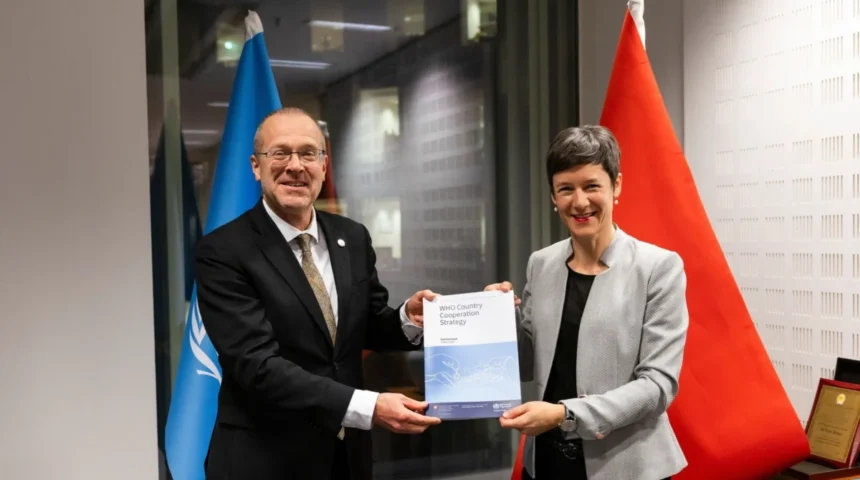
The signing ceremony in Copenhagen brought together key figures from both organizations. Dr. Hans Henri P. Kluge, WHO Regional Director for Europe, and Barbara Schedler, Ambassador for Global Health at the Swiss Federal Office of Public Health, were instrumental in formalizing this agreement. Their presence signifies the high-level commitment from both sides. Dr. Kluge, leading the WHO European Region, has consistently emphasized the importance of robust partnerships and multilateralism in achieving the ambitious goals of the European Programme of Work, which aims to improve the health and well-being of the 53 countries in the region. Ambassador Schedler’s role, meanwhile, highlights Switzerland’s dedicated diplomatic engagement in global health, ensuring that national expertise and policy insights contribute meaningfully to international health dialogues and initiatives.
Switzerland’s engagement with WHO extends beyond this cooperation strategy. As the host nation for WHO headquarters in Geneva, Switzerland naturally maintains a close and multifaceted relationship with the organization. This proximity fosters direct communication, collaboration on various projects, and the presence of a vast network of international health experts and institutions within Switzerland. The country consistently ranks among the top contributors to WHO’s budget, demonstrating its financial commitment to the organization’s mission. Moreover, Switzerland’s strong research and development sector, particularly in pharmaceuticals and life sciences, provides valuable scientific and technical insights that can inform WHO’s normative and standard-setting work. Its diplomatic neutrality also positions it as a credible mediator and facilitator in complex international health discussions.
The implications of this renewed cooperation strategy are far-reaching. For WHO, it represents a continued, stable, and strategically aligned partnership with a key member state that consistently champions multilateralism and invests in global health. For Switzerland, it provides a structured avenue to contribute its expertise, resources, and influence towards achieving the Sustainable Development Goals (SDGs), particularly SDG 3 on "Good Health and Well-being." By working hand-in-hand, both entities can more effectively address cross-border health threats, promote health equity, strengthen primary healthcare systems, and foster innovation that benefits populations worldwide. The strategy serves as a model for how high-income countries can move beyond a purely donor-recipient relationship to a more integrated and strategic partnership, where shared goals and mutual benefits drive collaborative action.
Looking ahead, the 2024-2028 cooperation strategy is poised to play a crucial role in navigating the evolving landscape of global health. It will undoubtedly emphasize preparedness for future pandemics, ensuring that the lessons from recent health crises are integrated into policy and practice. It will also likely focus on strengthening resilience within health systems, making them better equipped to withstand various shocks, from climate-related disasters to economic downturns. Furthermore, the commitment to leveraging digital health solutions and fostering innovation will be key to expanding access to care and improving health outcomes in an increasingly interconnected world. The renewal of this foundational agreement between Switzerland and the World Health Organization is a clear signal of their joint determination to build a healthier, safer, and more equitable future for all.

Related News