Sustainable Strength: Harnessing Bodyweight Training for Muscle Preservation and Vitality Past Midlife.
As individuals progress through their adult lives, a natural physiological phenomenon known as sarcopenia begins to exert its influence, progressively diminishing lean muscle mass and impacting overall physical capacity. This age-related decline, which typically commences after the third decade of life and accelerates significantly beyond the age of forty, represents a critical juncture for proactive health management. Far from being a mere aesthetic concern, the gradual erosion of muscular tissue carries profound implications for functional independence, metabolic health, and long-term quality of life. Counteracting this inevitable process becomes not just an advisable practice, but a cornerstone of healthy aging, with bodyweight exercises emerging as a highly accessible and remarkably effective strategy for muscle regeneration and sustained vitality.
The statistics surrounding sarcopenia are compelling, highlighting its widespread impact: adults can anticipate losing approximately 3-8% of their muscle mass per decade following their fortieth birthday, a rate that often intensifies in later years. This seemingly incremental loss accumulates over time, translating into noticeable reductions in strength, endurance, and mobility in one’s fifties, sixties, and beyond. Tasks once taken for granted, such as ascending a flight of stairs, lifting grocery bags, or even maintaining balance while performing household chores like vacuuming, can become increasingly challenging. The repercussions extend beyond mere physical exertion, influencing bone density, glucose metabolism, and even increasing the risk of debilitating falls, thereby affecting overall health trajectories and potentially escalating healthcare demands.
Recognizing the crucial role of proactive intervention, certified fitness specialist Alex McBrairty, founder of A-Team Fitness, underscores the profound benefits of consistent strength training. He articulates that while the initial stages of muscle loss may not immediately manifest as overt weakness, the compounded effects over decades significantly compromise an individual’s capacity to navigate daily life with ease and confidence. McBrairty views the cultivation of strength in one’s forties as a vital "investment" in future physiological resilience, a foundation upon which decades of independent living can be built. In this context, bodyweight training presents an exceptionally potent and practical avenue for individuals over 45 to reclaim and rebuild muscular strength, often with surprising efficiency.
The efficacy of bodyweight exercises in promoting muscle growth and functional strength, particularly for the midlife demographic, stems from several inherent advantages. Unlike traditional weight training that often necessitates specialized equipment, a gym membership, or specific expertise in handling external loads, bodyweight routines require nothing more than the individual’s own mass and gravity. This inherent accessibility removes common barriers to entry, enabling consistent practice within the comfort of one’s home or any convenient space. Furthermore, bodyweight movements inherently emphasize functional strength, mirroring the natural movement patterns involved in daily activities. By training the body to move efficiently and powerfully against its own resistance, individuals develop practical strength that directly translates to improved performance in everyday tasks, rather than isolated muscle development.
Moreover, bodyweight exercises are typically gentler on joints, making them an excellent starting point or a sustained regimen for those who may have joint pain, are new to exercise, or are returning after a hiatus. The focus on controlled movement and proper form, rather than lifting maximal external loads, reduces the risk of injury. The scalability of bodyweight exercises is another significant benefit; they can be easily modified to suit various fitness levels, from beginner to advanced. For instance, a push-up can be performed against a wall for less resistance, progressed to an incline, then on the knees, and finally from the toes on the floor. This adaptable nature ensures that progressive overload – the fundamental principle of muscle growth, which involves continually challenging the muscles with increasing resistance or intensity – can be effectively applied even without adding external weights. This capacity for consistent challenge allows for efficient muscle regeneration and the development of robust, resilient musculature.
McBrairty highlights four specific bodyweight exercises that are particularly effective for fostering muscle regrowth and enhancing functional capacity beyond the age of 45:
1. Step-Ups: This seemingly simple exercise is a powerhouse for lower body development, directly translating to improved performance in everyday activities. Step-ups engage the quadriceps, glutes, and hamstrings, while simultaneously challenging single-leg stability, balance, and proprioception. As McBrairty points out, the movement directly mimics actions like climbing stairs, ascending a hiking trail, or navigating uneven terrain. By practicing step-ups, individuals cultivate the unilateral strength and coordination crucial for preventing falls and maintaining mobility. To execute a step-up, begin by placing one foot on a sturdy elevated surface (e.g., a low bench, stair, or sturdy box). Drive through the heel of the lead foot, engaging the glute and quad to lift the body until standing upright on the step. Control the descent, returning the trailing foot to the floor. Variations include increasing the step height, slowing the tempo, or holding the top position briefly to enhance muscular endurance and balance.
2. Incline Push-Ups: A foundational exercise for upper body strength and core stability, the push-up, in its various forms, remains a highly effective compound movement. Incline push-ups offer a scalable entry point, allowing individuals to target major muscle groups including the chest (pectorals), shoulders (deltoids), and triceps, while simultaneously engaging the core for trunk and shoulder stability. McBrairty emphasizes the versatility of this exercise, which can be performed against a wall for the least resistance, progressed to a countertop or sturdy table, and eventually to a lower surface like a bench, gradually increasing the challenge. This progression builds foundational pushing strength essential for tasks like pushing open heavy doors, lifting objects, or maintaining upright posture. To perform an incline push-up, place hands slightly wider than shoulder-width apart on an elevated surface. Maintain a straight line from head to heels, engaging the core. Lower the chest towards the surface by bending the elbows, then push back up to the starting position.
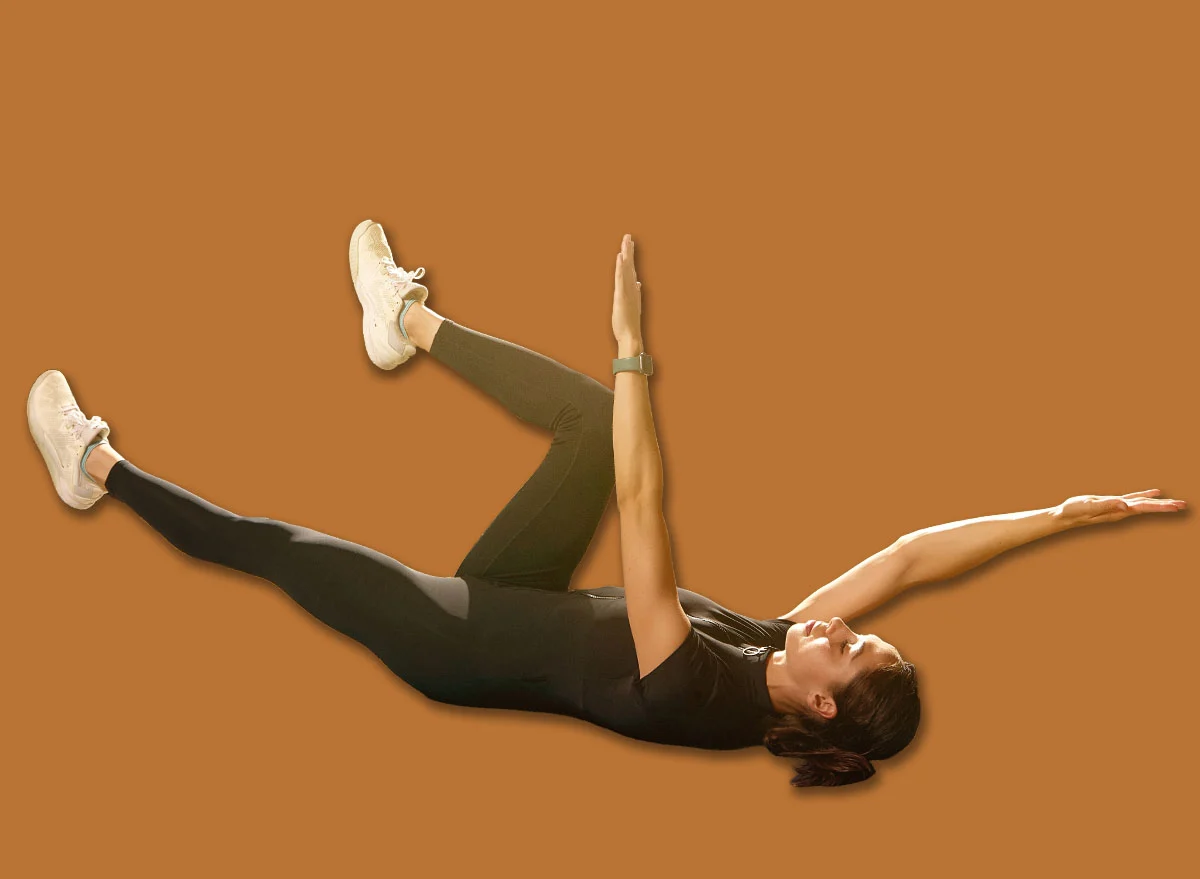
3. Dead Bug: Often underestimated, the Dead Bug is a crucial core stabilization exercise that teaches the body to maintain trunk control while the limbs are in motion. This exercise specifically targets the deep core muscles, including the transversus abdominis and obliques, which are vital for protecting the lumbar spine and facilitating efficient movement. McBrairty illustrates its practical relevance: "Think carrying groceries, picking something up, reaching into the back seat, or playing with kids. You’re training to keep the core controlled while the rest of your body moves." This anti-extension and anti-rotation exercise is paramount for preventing lower back pain and improving overall functional mobility. To perform the Dead Bug, lie on your back with knees bent at 90 degrees directly over the hips and arms extended straight up towards the ceiling. Slowly lower one arm towards the floor behind your head and the opposite leg towards the floor simultaneously, maintaining a stable core and ensuring the lower back does not arch. Return to the starting position and alternate sides.
4. Hamstring Isometric Holds: The hamstrings, a group of three muscles at the back of the thigh, are frequently overlooked in favor of more prominent muscle groups but play a critical role in hip and knee health, posture, and athletic performance. Isometric holds are an excellent method for building strength in these muscles, particularly for individuals who may find dynamic movements challenging or are new to strength training. As McBrairty highlights, "Isometric holds are a great way to begin building strength without requiring a lot of movement or coordination, making them a great entry point." These static contractions enhance strength at specific joint angles and can improve muscle endurance and stability around the knee and hip joints, aiding in injury prevention and overall lower body function. A common variation involves lying on your back with feet on a low surface (like a stability ball or a chair). Lift your hips off the floor, forming a straight line from knees to shoulders, and hold this position, squeezing the hamstrings and glutes. Another simple isometric hold involves pushing your heels into the floor as if trying to slide them towards your glutes, without actually moving them, and holding the tension.
While these bodyweight exercises form a robust foundation for muscle regeneration and functional strength, their effectiveness is amplified when integrated into a holistic approach to wellness. Adequate protein intake is crucial for muscle repair and growth, alongside a balanced diet rich in whole foods. Sufficient sleep allows the body to recover and rebuild, while proper hydration supports all physiological functions. Managing stress also plays a role in hormonal balance, which impacts muscle maintenance.
Ultimately, embracing a consistent bodyweight training regimen in the post-midlife years is more than just an exercise routine; it is a profound investment in sustained independence, enhanced vitality, and an improved quality of life. By committing to these fundamental movements, individuals can effectively counteract sarcopenia, rebuild lost muscle, and cultivate the enduring strength necessary to thrive through every decade.
Related posts:

Related News