
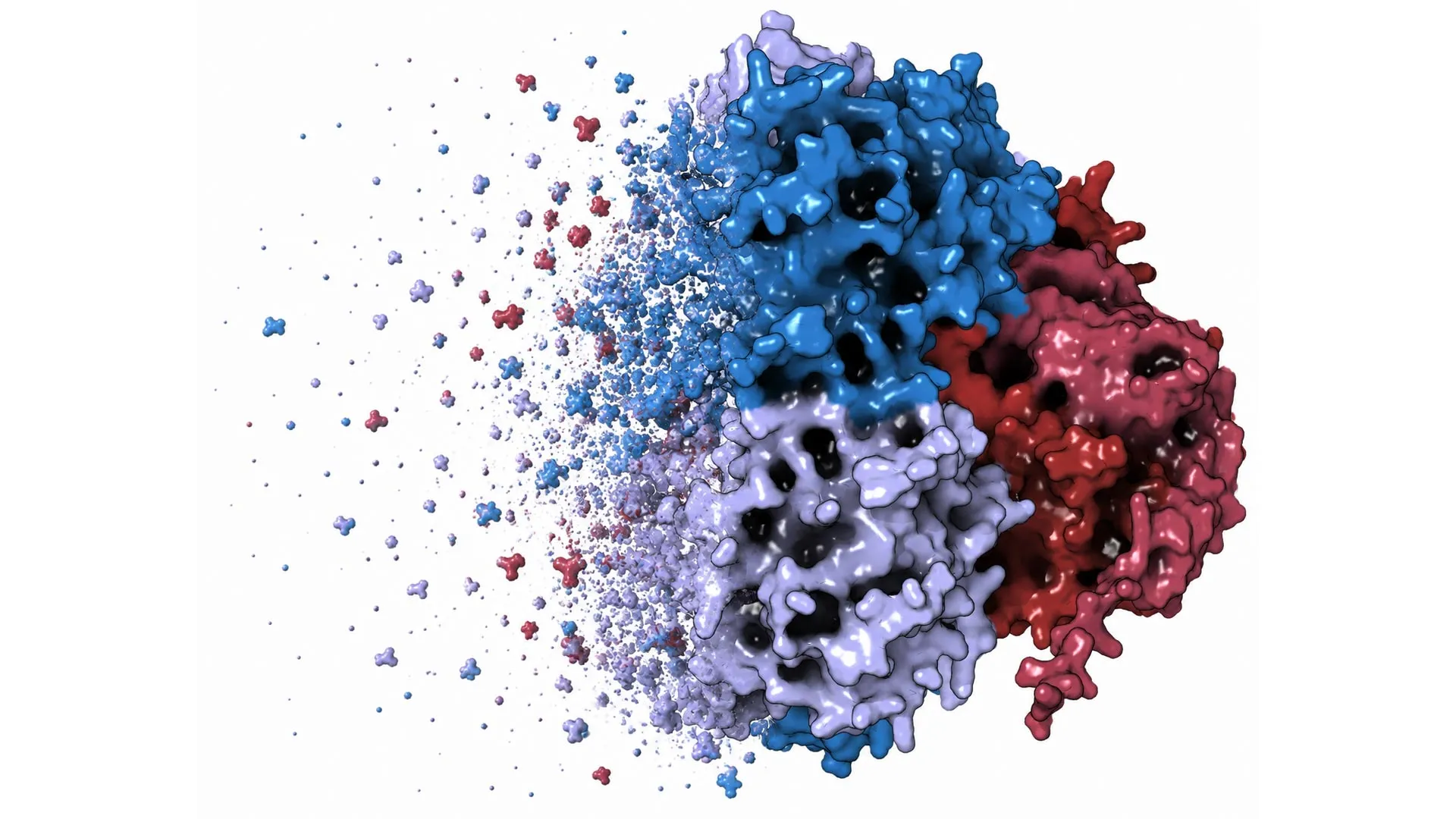
For over seventy years, the chemotherapeutic agent 6-thioguanine (6-TG) has served as a cornerstone in the medical arsenal against various forms of leukemia, its clinical efficacy in patient populations well-established through extensive use. However, the precise molecular intricacies dictating why certain cancerous cells succumb to this therapeutic intervention while others exhibit remarkable resilience have remained an area of ongoing scientific investigation. A collaborative effort involving researchers from the CeMM Research Center for Molecular Medicine of the Austrian Academy of Sciences, alongside esteemed colleagues from the University of Oxford, the Weizmann Institute of Science, and the University of Dundee, has now brought to light a previously unrecognized determinant of this differential cellular response: a protein designated as NUDT5.
This groundbreaking discovery emerges from a foundational understanding established by recent investigations from the Kubicek and Huber laboratories, published in Science in 2025. Their prior work had illuminated a fascinating dual nature for NUDT5, revealing a critical intracellular function that transcended its conventional enzymatic role. Far from operating solely as a catalyst facilitating specific biochemical reactions, NUDT5 was found to also function as a molecular architect, instrumental in the organized assembly and regulation of cellular metabolic pathways. It is precisely this atypical, structural capacity that appears to hold significant sway over a cell’s susceptibility or resistance to 6-TG.
The initial hypotheses posited by the research team anticipated that NUDT5’s influence on 6-TG’s cytotoxic effects would be mediated through its inherent enzymatic activity. "We initially expected that NUDT5 would influence 6-TG through its enzymatic activity," stated Tuan-Anh Nguyen, a co-first author of the study affiliated with CeMM. "Instead, we found that inhibiting the enzyme had little effect. What mattered was whether the protein itself was present." This observation marked a pivotal divergence from conventional drug-target paradigms, where the primary therapeutic strategy typically involves neutralizing an enzyme’s catalytic function.
The conventional approach to developing drugs that target enzymes centers on devising molecules capable of blocking the chemical reactions these enzymes catalyze. The researchers, therefore, sought to ascertain whether such an enzymatic blockade of NUDT5 would similarly alter the cellular impact of 6-TG. To address this question, they employed a sophisticated and rapidly evolving methodology known as targeted protein degradation. This innovative technique moves beyond mere inhibition, instead inducing the cell’s own machinery to completely dismantle and eliminate the targeted protein.
"We developed a cell-based platform to accelerate the discovery of NUDT5 degraders. This platform helped guide the medicinal chemistry efforts that ultimately produced dNUDT5, our most active degrader," explained Anne-Sophie Marques, another lead author whose contributions at Oxford were integral to the project. A focused medicinal chemistry initiative, spearheaded by the Huber laboratory at the University of Oxford, yielded a suite of highly specific compounds designed to degrade NUDT5. Crucially, the team also synthesized analogous control molecules that could bind to NUDT5 without triggering its degradation, providing essential comparative benchmarks.
The subsequent comparison of these novel degraders against traditional NUDT5 inhibitors yielded a starkly differentiated outcome. Merely inhibiting NUDT5’s enzymatic function did not induce any substantial alteration in the cells’ reaction to 6-TG. In contrast, the complete eradication of NUDT5 from the cellular environment conferred a significant protective effect, rendering the cells impervious to the toxic onslaught of the drug. Complementary genetic investigations corroborated these findings, reinforcing the conclusion that the physical presence of NUDT5, rather than its catalytic prowess, was the critical factor.
"Chemical degraders give us a way to separate what a protein does as an enzyme from what it does as a physical presence in the cell," commented Professor Kilian Huber, a co-corresponding author from the University of Oxford’s Centre for Medicines Discovery. "In this case, that distinction was decisive: removing NUDT5 revealed biology that conventional inhibitors missed." This highlights a fundamental limitation of traditional drug discovery, which often overlooks the non-enzymatic, structural contributions of proteins to cellular processes.
The experimental results collectively point towards NUDT5 influencing cellular sensitivity to thiopurine drugs through a pathway entirely independent of its catalytic capabilities. This implies that a comprehensive understanding of 6-TG’s mechanism of action requires looking beyond the enzyme’s biochemical reactions and acknowledging its role as a structural component within the cell. "As the results came in, it became immediately clear that the dNUDT5 was protecting cells from 6-thioguanine toxicity in a dose-dependent manner. That was an incredibly exciting moment," shared Ludwig Bauer, a first author on the paper, reflecting the profound significance of the emergent data.
Further exploration by the research team uncovered an intriguing interrelationship between NUDT5 and another protein, NUDT15. This latter protein is already recognized within the scientific community for its established role in modulating patient responses to thiopurine therapies. The newly identified interaction suggests an antagonistic relationship between these two proteins.
The data indicate that a deficiency in NUDT15 renders cells more susceptible to the cytotoxic effects of 6-TG. Conversely, a reduction in NUDT5 levels appears to confer increased resistance to this therapeutic agent. This suggests a complex regulatory network where these two proteins exert opposing influences on the thiopurine response, potentially through distinct molecular mechanisms that can steer cellular fate in diametrically opposed directions.
"Our results show that proteins can have important biological functions that are completely independent of their enzymatic activity," emphasized Stefan Kubicek, a corresponding author and Principal Investigator at CeMM. "By removing NUDT5 rather than simply inhibiting it, we were able to uncover a hidden layer of biology that helps determine how cells respond to a clinically important drug." This underscores the power of innovative experimental approaches in revealing previously obscured biological phenomena.
While these findings do not immediately translate into the development of a novel therapeutic, they illuminate an unexpected and crucial mechanism governing the efficacy of a long-standing leukemia drug. By demonstrating that NUDT5 exerts its influence on 6-TG through a non-catalytic function, this research provides a new framework for comprehending the variability observed in patient responses to thiopurine treatments. Moreover, it serves as a compelling testament to the utility of targeted protein degradation as a powerful tool for uncovering biological functions that might remain concealed when relying solely on conventional enzyme inhibitors. The study was generously supported by funding from the European Research Council (ERC), the Austrian Science Fund (FWF), the Vienna Science and Technology Fund (WWTF), Marie Skłodowska-Curie Actions Postdoctoral Fellowships, the Innovative Medicines Initiative 2 Joint Undertaking (IMI2 JU), the Wellcome Trust, Merck Sharp & Dohme Corp., and Janssen Pharmaceutica NV.
About the Author












