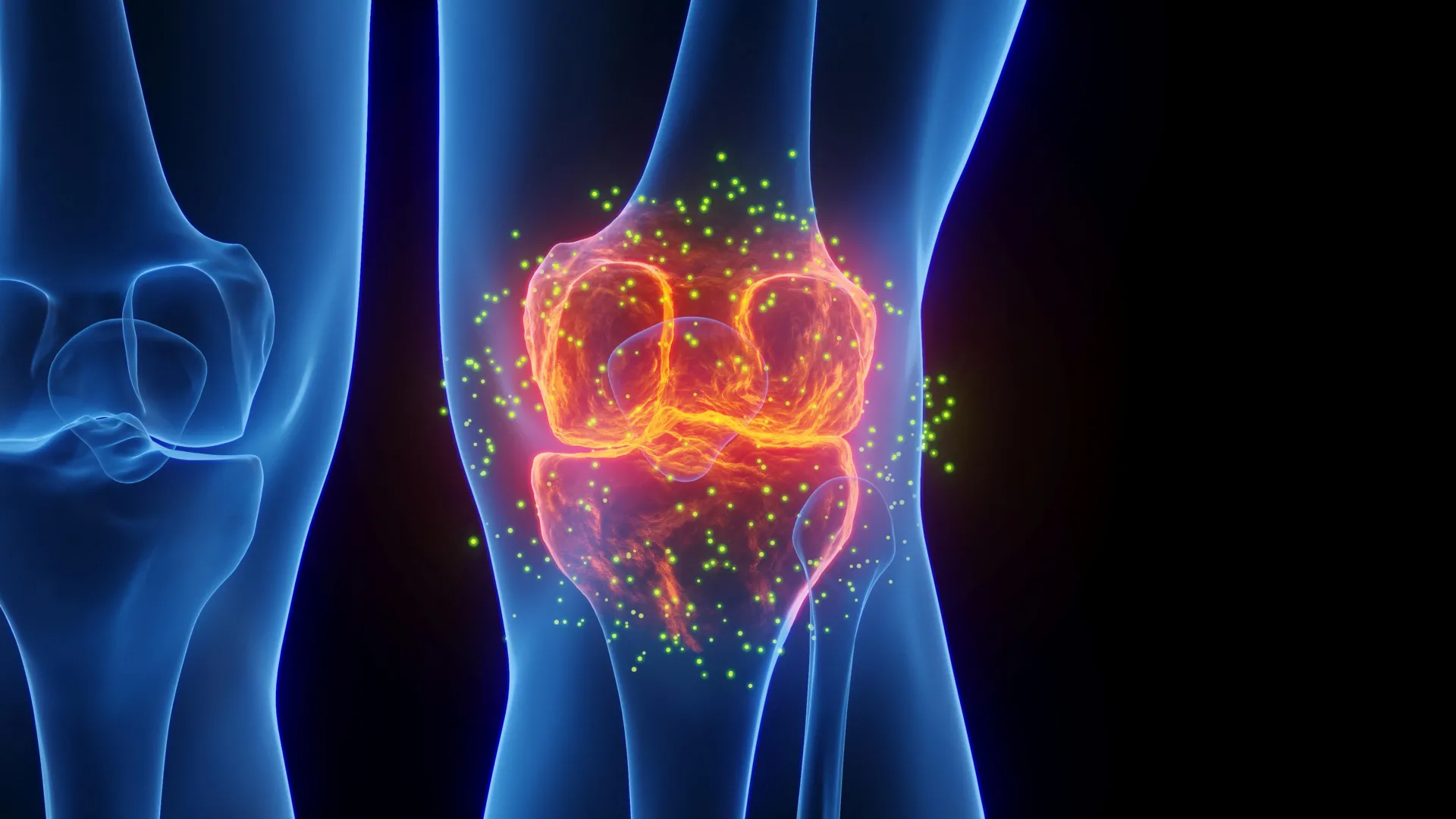
For millions globally, osteoarthritis (OA) represents a debilitating chronic condition characterized by persistent joint discomfort, stiffness, and ultimately, a significant decline in quality of life. This progressive degenerative disease, primarily affecting load-bearing joints like the knees, hips, and hands, has historically been managed with therapies focused predominantly on symptom alleviation rather than addressing the underlying pathological processes. While over-the-counter analgesics, non-steroidal anti-inflammatory drugs (NSAIDs), and corticosteroid injections can offer temporary respite from pain and inflammation, they fundamentally fail to halt the relentless deterioration of articular cartilage, which is the hallmark of OA progression. This creates a critical therapeutic gap, leaving many patients facing increasingly limited mobility and, eventually, invasive surgical interventions such as total joint replacement.
A groundbreaking investigation conducted by researchers at Yale University offers a promising new direction, suggesting that a medication already approved by the U.S. Food and Drug Administration (FDA) for epilepsy could serve a dual role in managing osteoarthritis. Published in the journal Bioactive Materials, the study elucidates how lacosamide, an antiepileptic drug, not only attenuates joint pain but also actively contributes to the repair and regeneration of damaged cartilage. The most compelling results were observed when this therapeutic agent was delivered directly into the affected joint through an ingeniously designed hydrogel system, indicating a potent strategy for localized and sustained intervention.
Osteoarthritis is frequently, and somewhat simplistically, described as a "wear and tear" condition, implying a mechanical breakdown of cartilage due to aging and repeated stress. However, this interpretation largely overlooks the intricate biological mechanisms at play. Within a healthy joint, specialized cells called chondrocytes meticulously maintain the delicate balance of cartilage tissue. These cells are constantly engaged in a dynamic process of synthesizing new components for the extracellular matrix—comprising collagen, proteoglycans, and other molecules that give cartilage its strength and elasticity—while simultaneously breaking down and removing old or damaged material. In osteoarthritis, this sophisticated equilibrium is severely disrupted. The catabolic processes (breakdown) begin to outpace the anabolic processes (synthesis), leading to a net loss of cartilage. As this protective layer erodes, the underlying bones can begin to rub directly against each other, causing excruciating pain, inflammation, and further structural damage. The severity of this degradation often dictates the need for reconstructive procedures in advanced stages of the disease.
"There exists a profound, unmet demand for more effective osteoarthritis treatments," states Dr. Chuan-Ju Liu, the principal investigator of the study and Charles W. Ohse Professor of Orthopaedics & Rehabilitation. "Our objective is to develop therapies that transcend mere pain management, actively modifying the disease’s trajectory and preventing structural decline." Currently, no single FDA-approved pharmaceutical agent simultaneously addresses both the symptomatic pain of osteoarthritis and the progressive structural breakdown of cartilage. The research spearheaded by Dr. Liu’s team presents a compelling case for a unified therapeutic approach capable of tackling both these critical aspects of the disease with a single intervention.
Central to this innovative research is the protein Nav1.7, a voltage-gated sodium channel that acts as a molecular gate within cell membranes, facilitating electrical signaling crucial for various physiological functions. For an extended period, Nav1.7 was primarily understood to function within nociceptive neurons—specialized nerve cells responsible for transmitting pain signals from the periphery to the brain. However, pioneering work from Dr. Liu’s laboratory unveiled a significant and previously underappreciated role for this protein: it is also highly expressed and active within chondrocytes, the very cells tasked with maintaining cartilage integrity.
In a healthy joint environment, Nav1.7 activity in chondrocytes remains relatively subdued. Yet, in the pathological context of osteoarthritis, its activity escalates substantially. The Yale team’s investigations revealed that this heightened Nav1.7 activity contributes to a dual pathology: it exacerbates the transmission of pain signals through nerve pathways, and crucially, it drives chondrocytes towards a catabolic state, prompting them to dismantle cartilage rather than preserve or regenerate it. This dual influence positions Nav1.7 as an exceptionally attractive therapeutic target, as modulating its activity could potentially address both the sensory experience of pain and the physical deterioration of joint tissue simultaneously. "When Nav1.7 becomes dysregulated, it contributes to both joint degeneration and pain perception," Dr. Liu explains. "Our findings strongly suggest that Nav1.7 functions as a dual-action target. By specifically inhibiting this single protein, we can potentially mitigate nociceptive signals and instruct cartilage cells to not only cease their destructive activities but also to initiate reparative processes."
Rather than embarking on the lengthy and resource-intensive development of an entirely novel pharmaceutical compound, Dr. Liu’s team strategically focused on repurposing existing medications known to inhibit sodium channels. Among the various compounds tested, lacosamide emerged as a standout candidate. It demonstrated robust biological efficacy at significantly lower concentrations compared to older sodium channel blockers and presented a more favorable safety profile. Lacosamide is a well-established antiepileptic drug, utilized clinically for the treatment of partial-onset seizures. The researchers’ investigations, however, uncovered that its beneficial effects on cartilage were highly dependent on its concentration.
Intriguingly, "more was not necessarily better" when it came to lacosamide’s impact on chondrocytes. At an optimized, low concentration, the drug actively encouraged these cells to produce proteins vital for building new cartilage matrix while simultaneously suppressing cellular pathways involved in tissue breakdown. Conversely, when the concentration was either too high or too low, these beneficial effects diminished significantly. "This indicates a finely tuned biological system," Dr. Liu observes. "There exists an optimal therapeutic window where the drug effectively restores homeostatic balance without overcorrecting. What was particularly striking was not just its effectiveness, but the minimal dosage required to achieve these profound cellular changes." Further mechanistic studies elucidated that lacosamide also influences intercellular communication, stimulating the release of two critical signaling proteins: Heat Shock Protein 70 (HSP70) and midkine. HSP70 is widely recognized for its role in cellular stress response and its capacity to support tissue repair mechanisms, while midkine plays a crucial part in regulating inflammatory processes and safeguarding joint tissues from degeneration. Collectively, these proteins appear to foster an environment conducive to cartilage maintenance and repair. "These signaling molecules cultivate a supportive microenvironment for cartilage integrity," Dr. Liu elaborates. "They enable the drug’s effects to propagate beyond individual chondrocytes, influencing the entire tissue architecture."
While oral administration of lacosamide demonstrated efficacy in preclinical models, systemic drug delivery carries an inherent risk of off-target effects as the medication circulates throughout the entire body. Consequently, the researchers explored intra-articular injection, a method that allows for direct delivery of the therapeutic agent into the affected joint, thereby maximizing local concentration and minimizing systemic exposure. However, even with direct injection, a significant challenge remained. "The knee joint, which is the most prevalent site for osteoarthritis, functions much like a ‘leaky bucket’ anatomically," Dr. Liu explains. "The body’s natural lymphatic and circulatory drainage systems can rapidly clear out liquids injected into the knee within a matter of hours." This rapid clearance necessitates frequent injections, which can be inconvenient, painful, and increase the risk of infection for patients.
To overcome this pharmacokinetic hurdle and ensure prolonged drug retention within the joint, Dr. Liu’s team engineered a specialized hydrogel formulated from Collagen II, a primary component of cartilage. This advanced biomaterial exhibits a unique temperature-responsive property: it remains in a liquid state while contained within a cool syringe, facilitating easy injection. Upon reaching body temperature inside the joint, however, it transitions into a firm, jelly-like material. Once solidified within the articular space, this hydrogel functions as a localized reservoir for lacosamide, maintaining a high concentration of the medication directly within the affected area while gradually releasing it in a controlled manner over several weeks. "The hydrogel serves as a localized depot," Dr. Liu confirms. "It precisely retains the drug at its site of action and releases it slowly over an extended period. This innovative system effectively transforms the need for a daily oral pill into a long-acting, localized treatment that can remain active for a month or potentially even longer." In parallel preclinical studies, a single intra-articular injection of the lacosamide-containing hydrogel administered every four weeks proved significantly more effective at preventing cartilage loss than daily oral doses of the medication.
A substantial advantage of employing lacosamide in this context is its existing FDA approval for human use. This regulatory status could dramatically accelerate the progression towards clinical trials in osteoarthritis patients, bypassing many of the initial, time-consuming safety and efficacy evaluations typically required for entirely novel pharmaceutical compounds. Furthermore, lacosamide has already been investigated in humans for specific nerve-related pain conditions linked to Nav1.7 genetic mutations. These prior human safety and preliminary efficacy data instill greater confidence among researchers that the promising effects observed in laboratory and preclinical studies could indeed translate into meaningful pain relief and disease modification for patients suffering from osteoarthritis.
This pioneering work also exemplifies a broader, burgeoning trend in modern medicine: the strategic integration of existing pharmaceutical agents with advanced biomaterials to precisely control the location and kinetics of therapeutic delivery. If this integrated approach proves successful in human clinical trials, it holds the potential to substantially reduce the frequency of medical procedures required by patients, minimize systemic unwanted side effects, and provide more durable, long-lasting protection against structural joint damage. "Our efforts extend beyond simply developing a new treatment," Dr. Liu concludes. "We are engineering a sophisticated system that empowers the medication to function with maximal effectiveness precisely where it is most needed. Our ultimate aspiration is to transcend mere symptom management and achieve genuine disease modification. This research brings us considerably closer to realizing that vital objective."
About the Author