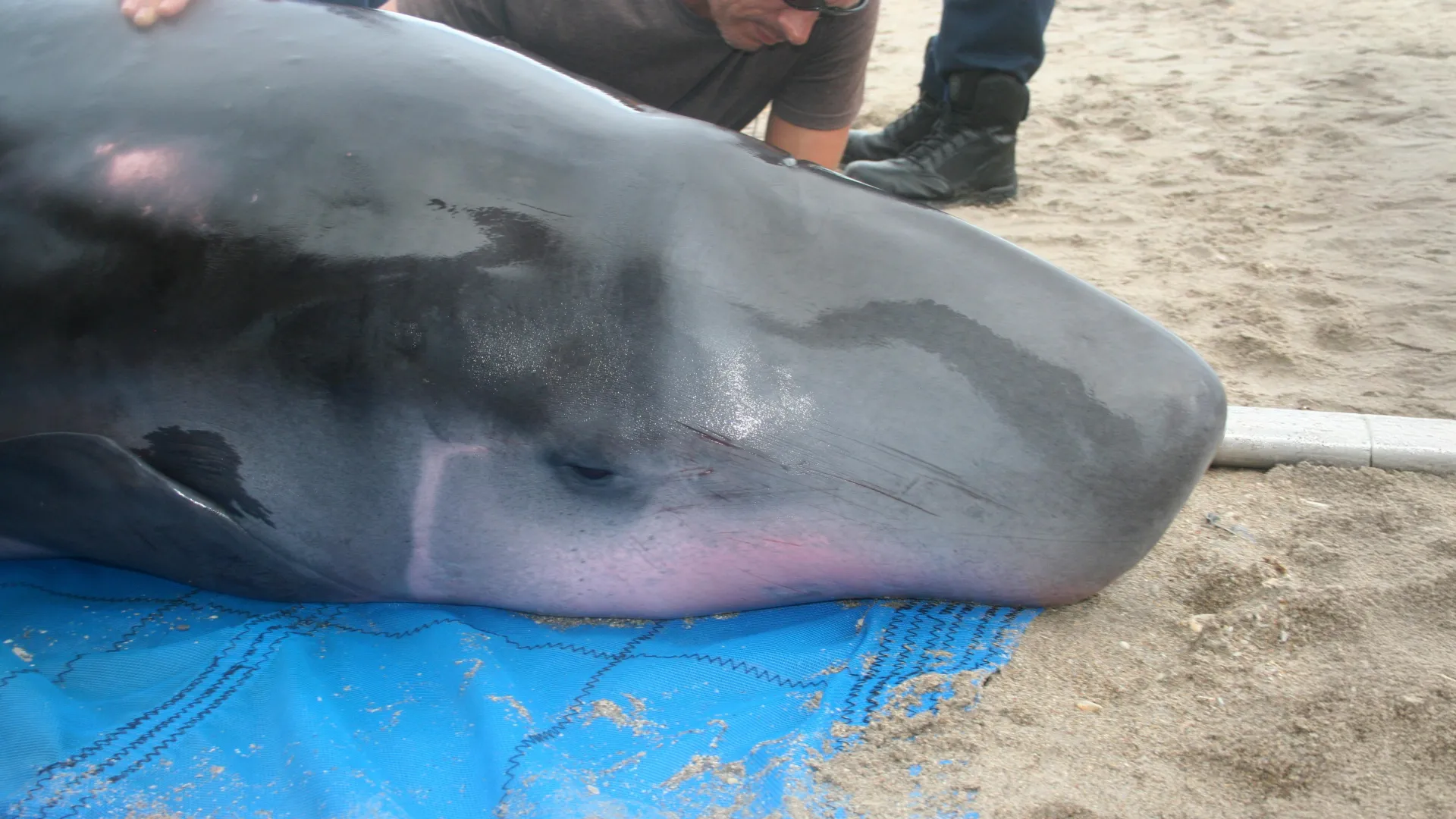
Pygmy sperm whales (scientific name: Kogia breviceps) represent one of the ocean’s most enigmatic and least understood mammalian inhabitants. These deep-diving cetaceans lead exceptionally private lives, spending the vast majority of their existence far from coastal waters. Typically observed in small, discreet groups, their primary foraging grounds are in the mesopelagic zone, where they skillfully hunt squid and various fish species at considerable depths. Their naturally quiet demeanor, reclusive habits, and infrequent surface appearances mean that direct observations of Kogia breviceps in their natural habitat are exceedingly rare, presenting significant challenges for marine biologists attempting to decipher their ecology, behavior, and health status.
Given the immense difficulty in studying these elusive creatures at sea, a substantial portion of the scientific community’s knowledge about pygmy sperm whales has been painstakingly gathered through the examination of individuals that have washed ashore, a phenomenon known as stranding. These events, while tragic for the individual animals, offer invaluable, albeit infrequent, windows into the biology, physiology, and pathology of a species that otherwise remains largely hidden from human sight. The southeastern United States coastline, in particular, experiences a disproportionately high incidence of pygmy sperm whale strandings, making it a critical region for research into this species, which appears here with greater regularity than almost any other large marine mammal. This geographical concentration of stranding events has allowed dedicated research teams to accumulate a wealth of data over decades, providing crucial insights that would be impossible to obtain through conventional field studies.
Post-mortem examinations, or necropsies, conducted on these stranded whales have consistently revealed a spectrum of recurring health issues, among which gastric ulcers are a particularly common finding. Historically, these ulcerative lesions in the stomach and intestines have been linked to the presence of Helicobacter bacteria, a diverse genus of microorganisms known to colonize the digestive tracts of a wide array of animal hosts, including humans and various marine mammals. The persistent observation of such pathology spurred researchers to investigate the microbial landscape of these whales more deeply.
A landmark study, recently published in the esteemed Journal of Wildlife Diseases, marks a significant advancement in our understanding of cetacean health. Collaborating institutions, spearheaded by researchers from Florida Atlantic University’s Harbor Branch Oceanographic Institute, undertook an extensive review of over two decades of stranding records and meticulously preserved tissue samples. This exhaustive analysis led to the unprecedented identification of three distinct Helicobacter genotypes that had previously been entirely undocumented by science. These novel bacterial strains have since been formally designated as Kogia Helicobacter 1, Kogia Helicobacter 2, and Kogia Helicobacter 3. Beyond simply expanding the known microbial diversity associated with an already enigmatic whale species, these groundbreaking findings propel broader inquiries into the intricate ways bacterial infections may influence the health of marine wildlife populations and, by extension, the overall vitality of oceanic ecosystems.
Dr. Annie Page, a distinguished senior author on the study, an associate research professor, and a clinical veterinarian at FAU Harbor Branch, commented on the significance of these discoveries. "The association between Helicobacter bacteria and gastrointestinal disorders in humans and numerous other animal species, including chronic gastritis, peptic ulcers, and even certain gastric cancers, is well-established," Dr. Page explained. "To uncover novel strains of these bacteria within a deep-diving whale species, which operates in such an extreme and remote environment, is truly captivating from a scientific perspective."
The extensive dataset underpinning this research spanned from 1999 through 2020, during which FAU Harbor Branch’s dedicated stranding response team attended to 59 incidents involving pygmy sperm whales. A remarkable 80% of these animals underwent comprehensive post-mortem examinations, providing an unparalleled opportunity for detailed pathological and microbiological investigation. Within this cohort, scientists specifically identified characteristic spiral-shaped, or "spirilliform," bacteria embedded within the stomach tissues of four individual whales. To precisely characterize these microbial invaders, the research team subsequently re-examined the archived tissue samples employing a sophisticated suite of diagnostic techniques. This multi-pronged approach included detailed histopathology, which involves microscopic examination of tissue structures; advanced molecular testing, which identifies specific genetic markers; and cutting-edge DNA sequencing, which deciphers the complete genetic code of the organisms. This rigorous analysis ultimately confirmed the presence of several previously unknown Helicobacter genotypes.
Wendy Marks, the corresponding author and a research coordinator at the marine wildlife veterinary medicine and research lab at FAU Harbor Branch, elaborated on the genetic characteristics of the newly identified strains. "Genetically speaking, Kogia Helicobacter 1 and Kogia Helicobacter 2 exhibit notable similarities to known Helicobacter species that have been previously isolated from other cetacean populations, such as various dolphin and porpoise species, and even from humans," Marks stated. "However, Kogia Helicobacter 3 belongs to a significantly more divergent genetic lineage. This particular finding strongly reinforces the compelling notion that the ocean’s depths harbor a far greater diversity of undiscovered microbial life than current scientific understanding fully encompasses." Intriguingly, researchers documented the co-occurrence of both Kogia Helicobacter 1 and Kogia Helicobacter 3 within the forestomach tissue of a single whale, suggesting the possibility of co-infection or complex microbial interactions.
Crucially, each of the four pygmy sperm whales that tested positive for these novel Helicobacter strains also displayed undeniable evidence of significant gastrointestinal pathology. Dr. Page further elaborated on these observations: "Every one of the four whales confirmed to be positive for Helicobacter presented with visible and often severe gastric pathology. Our examinations revealed clear signs of gastritis, which is inflammation of the stomach lining, along with distinct gastric ulcers, fibrous tissue scarring, and concurrent infestations by nematodes, a type of parasitic worm. In one specific case, we also identified colitis, indicating that the bacterial infection and associated inflammation might not be exclusively confined to the stomach but could extend to other parts of the digestive tract. While the presence of Helicobacter was not ultimately designated as the direct cause of death for any of these individual whales, the consistent and severe nature of these lesions raises profound questions regarding the potential role of these bacteria in contributing to chronic gastrointestinal disease in these animals."
The researchers carefully refrained from drawing definitive conclusions that Helicobacter directly caused the mortality of the affected whales. Nevertheless, the consistent correlation between the detection of these bacteria and the observed spectrum of inflammatory responses, ulcerative lesions, tissue scarring, and other serious digestive system abnormalities strongly implies that these microbial agents could play a significant role in the development and progression of chronic illness within this species. The broader scientific community first reported the presence of Helicobacter in marine mammals in the year 2000. Since that initial discovery, related bacterial species have been identified in a variety of other cetacean species across the globe. In some instances, infections in these animals have been associated with a range of debilitating symptoms, including reduced energy levels, loss of appetite, episodes of regurgitation, severe stomach ulcers, and widespread inflammation. Many of these clinical signs bear a striking resemblance to the symptoms observed in humans afflicted with Helicobacter infections.
The implications of these findings extend beyond individual animal health to encompass broader ecological concerns, particularly for marine mammal populations that are already under various environmental pressures. Marks emphasized this point, stating, "Just like humans, whales appear to be vulnerable to specific microbial infections that we are only just beginning to comprehend. If persistent Helicobacter infections are indeed instigating significant health issues in these magnificent animals, it could have far-reaching consequences not only for the well-being of individual whales but potentially for the viability and resilience of entire populations. This concern is particularly acute for species that are already classified as vulnerable or endangered, where any additional health burden could exacerbate existing threats."
Due to the inherent challenges in studying pygmy sperm whales in their vast oceanic habitat, scientists currently lack comprehensive data on the true prevalence of these newly identified bacteria throughout wild populations. Furthermore, the long-term effects of these infections on the animals remain largely unknown. Future research endeavors will be crucial to ascertain how widespread these novel Kogia Helicobacter strains are within the species, understand their modes of transmission, and definitively determine whether these infections contribute significantly to illness, increase the likelihood of stranding events, or pose a tangible threat to the health and stability of pygmy sperm whale populations at a broader level.
This extensive and impactful research was the result of a collaborative effort, bringing together the expertise of scientists and veterinarians from several leading institutions. Key contributors included FAU Harbor Branch Oceanographic Institute, the University of Florida’s College of Veterinary Medicine, Colorado State University, and Marine Mammal Pathology Services. The success of such a complex, long-term investigation underscores the critical importance of sustained scientific infrastructure and dedicated funding.
Dr. Page reflected on the foundational nature of this type of work: "This research powerfully highlights the indispensable value of enduring, long-term marine mammal stranding response programs. Without the consistent capability to study these stranded animals over a period spanning many decades, we would have been utterly unable to detect or characterize these previously unknown bacteria. Each individual whale that strands tells a unique and often profound story, and occasionally, that narrative can lead us into entirely uncharted scientific territories, fundamentally altering our understanding of marine life and ocean health."
The study’s co-authors included Jessy Castellanos-Gell, Ph.D.; Steven Tillis, Ph.D.; James F.X. Wellehan, D.V.M., Ph.D., DACZM; and April Childress, all affiliated with the College of Veterinary Medicine at the University of Florida. Additional contributions came from Nicole Pegg of FAU Harbor Branch; David Rotstein, D.V.M., representing Marine Mammal Pathology Services; Sushan Han, D.V.M., Ph.D., from the Diagnostic Medicine Center at Colorado State University; and Steve Burton, director of stranding and population assessment at FAU Harbor Branch. Financial support for this vital research was generously provided through the Florida State Specialty License Plate Program via the "Protect Florida Whales" grant, a program administered by the Harbor Branch Oceanographic Institute Foundation, demonstrating the broader community’s commitment to marine conservation and scientific discovery.
About the Author