Parkinson’s disease, a relentless neurodegenerative disorder, casts a wide shadow, impacting over one million individuals in the United States and a staggering ten million globally, leaving a trail of debilitating symptoms. While existing interventions, ranging from long-term pharmacological regimens to surgically implanted deep brain stimulation (DBS), offer some respite by mitigating tremors, motor control issues, sleep disturbances, and cognitive impairments, they fall short of halting the disease’s inexorable march or providing a definitive cure. This landscape is now poised for a significant shift, thanks to a groundbreaking international collaboration spearheaded by China’s Changping Laboratory, in partnership with Washington University School of Medicine in St. Louis and other esteemed institutions. These dedicated researchers have meticulously identified a specific neural circuit within the brain that appears to be intrinsically linked to the core manifestations of Parkinson’s disease, heralding a new frontier in therapeutic innovation.
The pivotal discovery centers on a brain network known as the somato-cognitive action network, or SCAN. Investigations revealed that this network plays a central and critical role in the pathology of Parkinson’s. Employing a non-invasive technique called transcranial magnetic stimulation (TMS), an experimental approach that uses magnetic pulses to modulate brain activity, the research team observed a remarkable outcome. When the SCAN was precisely targeted, patients experienced more than double the symptomatic improvement compared to instances where stimulation was applied to adjacent brain regions. These profound findings, meticulously detailed in a recent publication in the prestigious journal Nature, not only challenge long-held assumptions about the disease’s underlying mechanisms but also illuminate a path toward more refined and personalized treatment strategies.
Dr. Nico U. Dosenbach, a co-author of the study and the David M. & Tracy S. Holtzman Professor of Neurology at WashU Medicine, articulated the transformative implications of this research, stating, "This work demonstrates that Parkinson’s is a SCAN disorder, and the data strongly suggest that if you target the SCAN in a personalized, precise manner you can treat Parkinson’s more successfully than was previously possible." He further elaborated on the potential to not merely manage symptoms but to fundamentally alter the disease’s trajectory, suggesting that "Changing the activity within SCAN could slow or reverse the progression of the disease, not just treat the symptoms." This paradigm shift moves beyond symptomatic relief to addressing the root cause of neural dysfunction.
The SCAN, first described by Dr. Dosenbach in a 2023 Nature publication, resides within the motor cortex, the brain’s command center for voluntary movement. Its primary function is to translate abstract motor intentions into concrete physical actions and to continuously monitor the execution of these actions. Given that Parkinson’s disease extends its reach far beyond motor control, affecting critical bodily functions such as digestion, sleep regulation, motivation, and cognitive processes, senior author Dr. Hesheng Liu recognized the imperative to investigate the SCAN’s potential role in this multifaceted disorder. He collaborated with Dr. Dosenbach to explore whether disruptions within the SCAN could account for the disease’s extensive symptomology and, crucially, serve as a viable target for therapeutic intervention.
To rigorously test this hypothesis, Dr. Liu’s team embarked on an extensive analysis of brain imaging data. This comprehensive dataset comprised information from over 800 participants, pooled from multiple research centers across the United States and China. The study cohort included individuals diagnosed with Parkinson’s disease who were undergoing various treatments, including DBS, TMS, focused ultrasound, and conventional medications. To establish a clear baseline and differentiate Parkinson’s-specific patterns, the research also incorporated data from healthy volunteers and individuals with other movement disorders.
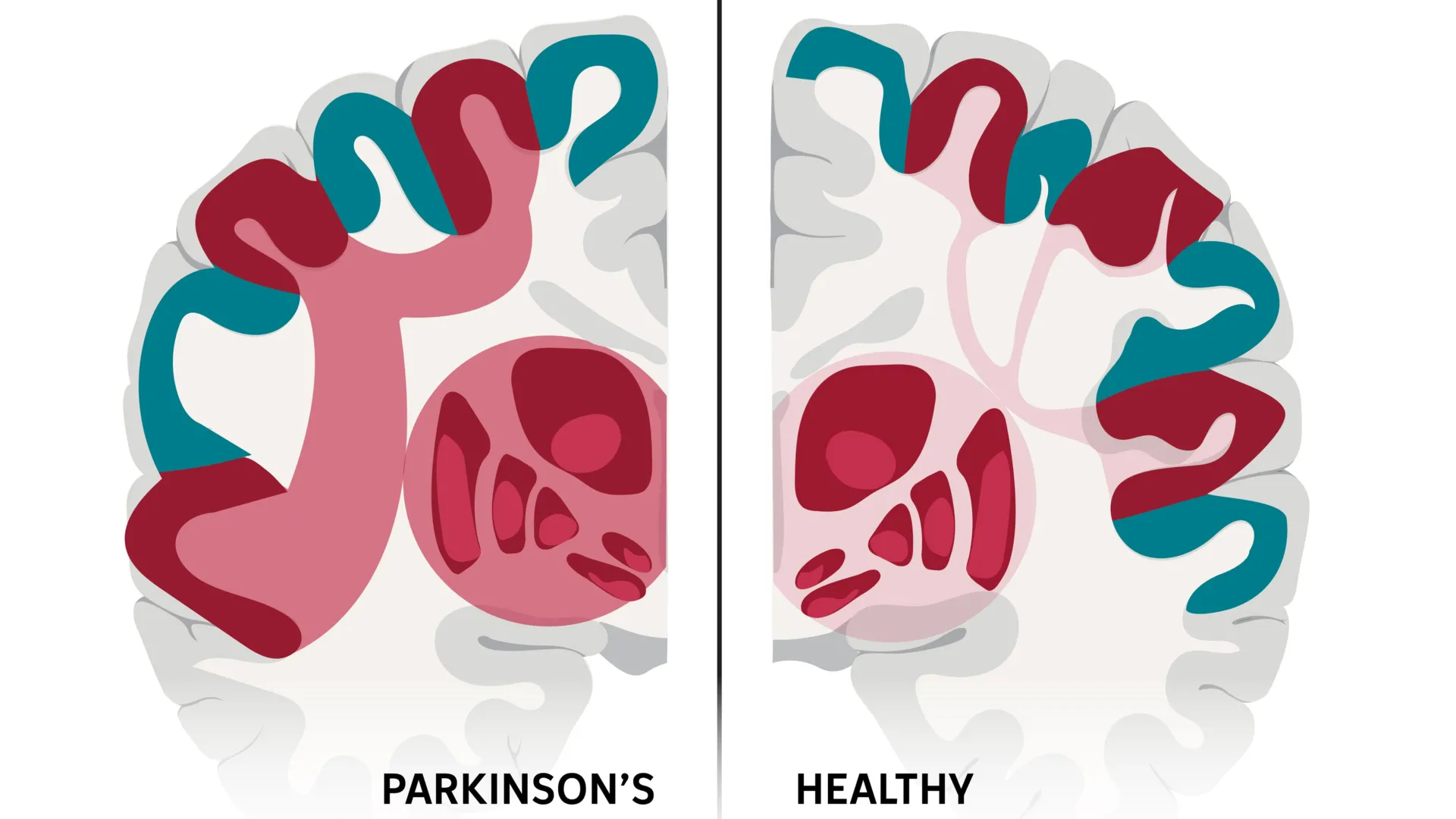
The meticulous analysis of this diverse dataset unveiled a compelling pattern: Parkinson’s disease is characterized by an excessive degree of connectivity between the SCAN and the subcortex, a region of the brain deeply implicated in emotional processing, memory formation, and motor regulation. Across all four therapeutic modalities examined in the study, treatments demonstrated their greatest efficacy when they succeeded in attenuating this heightened connectivity. The restoration of a more balanced inter-regional communication within the brain circuit responsible for planning and coordinating actions proved instrumental in normalizing neural activity.
"For decades, Parkinson’s has been primarily associated with motor deficits and the basal ganglia," Dr. Liu remarked, referring to the brain structure crucial for controlling muscle movements. He continued, "Our work shows that the disease is rooted in a much broader network dysfunction. The SCAN is hyperconnected to key regions associated with Parkinson’s disease, and this abnormal wiring disrupts not only movement but also related cognitive and bodily functions." This finding underscores a fundamental re-evaluation of the disease’s scope, moving from a localized motor issue to a more pervasive network disorder.
Building upon these critical insights, the research team engineered a sophisticated precision treatment system. This innovative approach is designed to target the SCAN non-invasively, with remarkable accuracy down to the millimeter level. Utilizing TMS technology, which delivers precisely controlled magnetic pulses to specific brain areas via a device worn on the head, the system offers a non-surgical avenue for intervention. In a preliminary clinical trial involving 18 patients, those who received SCAN-targeted stimulation exhibited a response rate of 56% after just two weeks of treatment. In stark contrast, a comparable group of 18 patients who received stimulation in nearby, non-SCAN regions showed an improvement rate of only 22%, demonstrating a remarkable 2.5-fold increase in therapeutic effectiveness for the targeted approach.
Dr. Dosenbach highlighted the significant advantage of this non-invasive methodology in the context of early intervention. "With non-invasive treatments, we could start treating with neuromodulation much earlier than is currently done with DBS" he explained, emphasizing that the absence of brain surgery removes a major barrier to timely treatment initiation. This opens the possibility of intervening at earlier stages of the disease, potentially before significant neurodegeneration occurs.
While these findings represent a monumental leap forward, the researchers acknowledge that further foundational research is essential to fully elucidate how distinct components of the SCAN contribute to the specific constellation of Parkinson’s symptoms experienced by individual patients. Understanding these nuances will be critical for developing even more personalized and effective treatments.
Looking to the future, Dr. Dosenbach is poised to initiate further clinical trials through Turing Medical, a startup he co-founded at WashU Medicine. These upcoming studies will evaluate a novel non-invasive therapy that employs surface electrode strips strategically placed over SCAN regions. The primary objective is to address gait disturbances, a common and often debilitating symptom of Parkinson’s disease. Additionally, Dr. Dosenbach plans to explore the potential of low-intensity focused ultrasound as another non-invasive modality for modulating SCAN activity, leveraging acoustic energy to achieve therapeutic effects. This multi-pronged research strategy underscores a commitment to exploring diverse non-invasive avenues for Parkinson’s treatment.
The extensive research underpinning this breakthrough received crucial support from a multitude of sources, including the Changping Laboratory, the U.S. National Institutes of Health (grants MH096773, MH122066, MH121276, MH124567, NS129521, NS088590, R01NS131405, U01NS098969, and U01NS117836), the National Natural Science Foundation of China (grants 81527901, 81720108021, 81971689, 31970979, and 82090034), the National Key R&D Program of China (grant 2017YFE0103600), the Intellectual and Developmental Disabilities Research Center, the Kiwanis Foundation, the Washington University Hope Center for Neurological Disorders, and the Collaborative Innovation Center of Neuropsychiatric Disorders and Mental Health of Anhui Province (grant 2020xkjT05). It is important to note that the content of this publication is solely the responsibility of the authors and does not necessarily reflect the official viewpoints of the National Institutes of Health.
Several individuals involved in this research have disclosed potential conflicts of interest. Dr. H. Liu is the chief scientist of Neural Galaxy Inc. Dr. L. Liu serves on the scientific advisory board for Beijing Pins Medical Co., Ltd and holds patents related to deep brain stimulators used in this work. Dr. N.U. Dosenbach has a financial interest in Turing Medical Inc., with potential financial benefits from the company’s marketing of FIRMM motion monitoring software, BullsAI neuromodulation targeting software, or PACE neuromodulation systems. Dr. E.M.G. and Dr. N.U. Dosenbach may receive royalty income based on FIRMM technology licensed to Turing Medical Inc. Dr. N.U. Dosenbach is also a co-founder of Turing Medical Inc. These potential conflicts have undergone review and are being managed by Washington University School of Medicine. Dr. S.L. consults for Iota Biosciences, and Dr. P.A.S. receives support from Medtronic and Boston Scientific for fellowship education. These disclosures ensure transparency and adherence to ethical research practices.
About the Author