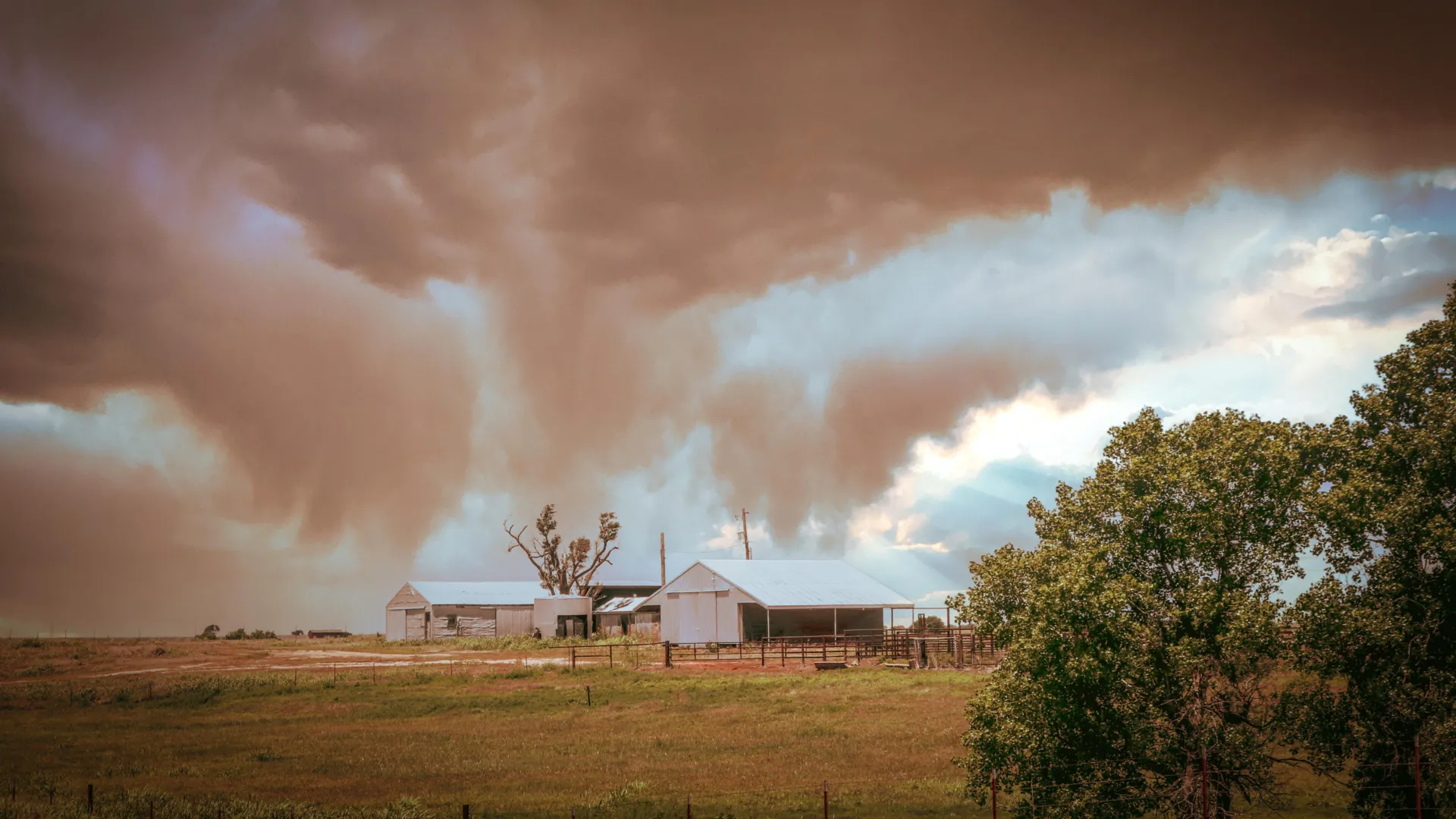
An unexpected scientific revelation has illuminated a previously uncharted environmental challenge in the Western Hemisphere. A team of researchers, initially focused on the dynamics of atmospheric particle formation, instead stumbled upon the inaugural airborne identification of Medium Chain Chlorinated Paraffins (MCCPs) within the skies above an agricultural expanse in Oklahoma. This significant finding, detailed in the scientific journal ACS Environmental Au, marks a pivotal moment in understanding the global distribution and potential pathways of these pervasive industrial compounds.
MCCPs represent a category of persistent organic pollutants (POPs), known for their inherent toxicity and capacity to endure in environmental matrices for extended periods, traveling vast distances from their source. Their detection in the North American atmosphere for the first time provides crucial data for international environmental monitoring efforts, especially as these chemicals are currently under consideration for inclusion in the Stockholm Convention. This global treaty aims to safeguard human health and the environment from chemicals that persist, bioaccumulate, and pose a threat through long-range atmospheric transport. While MCCPs have been documented in other remote locations, such as Antarctica and various parts of Asia, direct atmospheric measurement within the Western Hemisphere had remained elusive until this breakthrough study.
The lead author, Daniel Katz, a doctoral student in chemistry at the University of Colorado Boulder, expressed the inherent excitement of scientific discovery when encountering the unforeseen. "As scientists, finding something entirely unanticipated, something we weren’t actively seeking, is incredibly stimulating," Katz remarked. "This discovery deepens our comprehension of a toxic organic pollutant known to be present in the environment, yet whose atmospheric behavior and reach we are only now beginning to quantify."
These chlorinated organic compounds serve a multitude of roles in industrial manufacturing. They are integral components in metalworking fluids, acting as lubricants and coolants, and are also employed in the production of polyvinyl chloride (PVC) plastics and various textile treatments. Their widespread industrial application often leads to their presence in wastewater streams. A common consequence of wastewater treatment processes is the generation of biosolid fertilizers, colloquially known as sewage sludge, which can concentrate these chemicals.
The research team postulates that the MCCPs detected in Oklahoma likely originated from the application of these biosolid fertilizers to nearby agricultural fields. When such sludges are spread across land, there is a plausible mechanism for these embedded toxic substances to volatilize and become airborne. While direct causal evidence remains a subject for further investigation, the release of similar compounds from sewage sludge fertilizers has been previously documented, lending credence to this hypothesis. This suggests a potential nexus between agricultural practices, wastewater management, and atmospheric pollution.
The presence of MCCPs also brings into sharp focus the complex interplay of chemical regulation and industrial substitution. MCCPs are chemically analogous to Short Chain Chlorinated Paraffins (SCCPs), a class of compounds already subject to stringent controls under the Stockholm Convention and regulated by the U.S. Environmental Protection Agency since 2009. The regulatory actions against SCCPs were prompted by compelling evidence of their environmental persistence, long-range transport capabilities, and documented risks to human health.
However, environmental regulations, while critical for mitigating known hazards, can sometimes precipitate unforeseen outcomes. Researchers theorize that the restrictions placed on SCCPs may have inadvertently prompted industries to pivot towards MCCPs as a functional substitute. Ellie Browne, a chemistry professor at CU Boulder, CIRES Fellow, and co-author of the study, highlighted this phenomenon: "Regulatory measures often have these ripple effects. When a specific chemical is restricted, the demand for the products it was used in doesn’t vanish, leading to its replacement by a closely related alternative." This "regrettable substitution" underscores the need for comprehensive lifecycle assessments and broader chemical group evaluations in regulatory frameworks to avoid simply replacing one hazardous substance with another.
The pioneering detection method employed by the CU Boulder team was instrumental in this breakthrough. Operating at their Oklahoma field site, the scientists deployed a sophisticated nitrate chemical ionization mass spectrometer. This highly sensitive instrument is capable of continuously monitoring ambient air and precisely identifying specific chemical compounds by analyzing their unique mass-to-charge ratios and isotopic signatures. Mass spectrometry works by ionizing chemical compounds and then separating them based on their mass-to-charge ratio, allowing for the detection and identification of even trace amounts of substances in complex mixtures like air. Over a continuous month-long period, the instrument meticulously collected atmospheric data around the clock.
It was during the rigorous analysis of this extensive dataset that Daniel Katz observed anomalous isotopic patterns – chemical fingerprints that did not align with any known or anticipated atmospheric constituents. This deviation from expected profiles prompted deeper investigation, eventually leading to the definitive identification of chlorinated paraffins, specifically correlating with the molecular structure of MCCPs. This meticulous detective work highlights the power of advanced analytical chemistry in revealing hidden environmental contaminants that might otherwise go unnoticed.
The parallels between MCCPs and other widely recognized environmental contaminants, such as per- and polyfluoroalkyl substances (PFAS), often dubbed "forever chemicals" due to their extreme persistence, are notable. Both classes of compounds demonstrate remarkable environmental stability, resisting degradation and accumulating in ecosystems, raising concerns about long-term exposure and bioaccumulation. Public concern over PFAS contamination, particularly in soil and water, recently spurred the Oklahoma Senate to enact a ban on the application of biosolid fertilizers, underscoring the growing awareness and policy responses to persistent chemical threats and the potential for waste products to serve as vectors for environmental pollutants.
With the methodology for detecting airborne MCCPs now firmly established, the scientific community’s immediate priority shifts to longitudinal studies. Future research endeavors will focus on tracking the temporal dynamics of MCCP concentrations, investigating how levels fluctuate seasonally, and critically, elucidating the precise atmospheric fate and potential impacts of these chemicals once they are dispersed in the air. Understanding their atmospheric chemistry—how they react, transform, and deposit—is crucial for assessing their environmental burden and potential exposure pathways for human populations and ecosystems.
"Our initial step was identification; the subsequent challenge is to fully comprehend their atmospheric behavior and consequences, which necessitates extensive further investigation," Katz emphasized. He further articulated the imperative for robust governmental oversight: "It is paramount that we maintain and empower governmental agencies equipped to critically evaluate scientific findings and implement necessary regulations for these chemicals, thereby safeguarding public health and environmental integrity." This discovery serves as a potent reminder of the continuous need for vigilance in monitoring industrial chemical footprints in our shared global environment and adapting regulatory frameworks to address emerging chemical concerns.
About the Author