As individuals progress through their fifth decade and beyond, many observe natural physiological changes impacting various aspects of their physique, with the upper arms frequently becoming a focal point of aesthetic and functional concern. The phenomenon often colloquially referred to as "upper arm laxity" or "triceps jiggle" is a common experience, stemming from a confluence of age-related factors rather than a singular cause. While traditional resistance training is undeniably effective, the convenience and accessibility of targeted bodyweight exercises, performed in the comfort of one’s home, can offer a compelling and often more consistent pathway to enhancing triceps musculature and overall arm tone for this demographic.
The primary culprits behind these alterations in upper arm appearance are multifaceted. One significant factor is sarcopenia, the progressive, age-related loss of muscle mass and strength. This process typically begins in the 30s and accelerates after 50, particularly in muscle groups that are not regularly challenged. The triceps brachii, located at the back of the upper arm, are especially susceptible. Unlike the biceps, which are frequently engaged in daily activities such as lifting and pulling, the triceps—responsible for extending the elbow—often receive less stimulation in routine movements. This underutilization can lead to a quicker decline in their mass and firmness. Concurrently, the skin’s structural integrity diminishes with age due to reduced production of collagen and elastin, proteins vital for skin elasticity and firmness. This loss contributes to sagging, creating the appearance of loose skin. Furthermore, shifts in metabolism and hormonal balance can influence fat distribution, often leading to increased adipose tissue accumulation in areas like the upper arms, compounding the effect of reduced muscle tone and skin laxity.
Recognizing these physiological shifts is the first step toward effective intervention. Experts in body care and wellness, such as those at Dorado Maroma Spa, highlight that these changes are entirely normal. "Upper arm laxity in midlife is rarely attributable to a single issue," specialists explain. "It’s typically a convergence of very normal, age-related transformations occurring simultaneously. Post-forties, we experience a gradual decrease in muscle mass—a process known as sarcopenia—especially if we’re not actively engaged in strength maintenance. The triceps often exhibit weakness rapidly because they aren’t extensively recruited in everyday movements. While we might push shopping carts or carry bags, we seldom genuinely challenge the posterior aspect of the arms." This insight underscores the importance of deliberately incorporating exercises that specifically target the triceps.
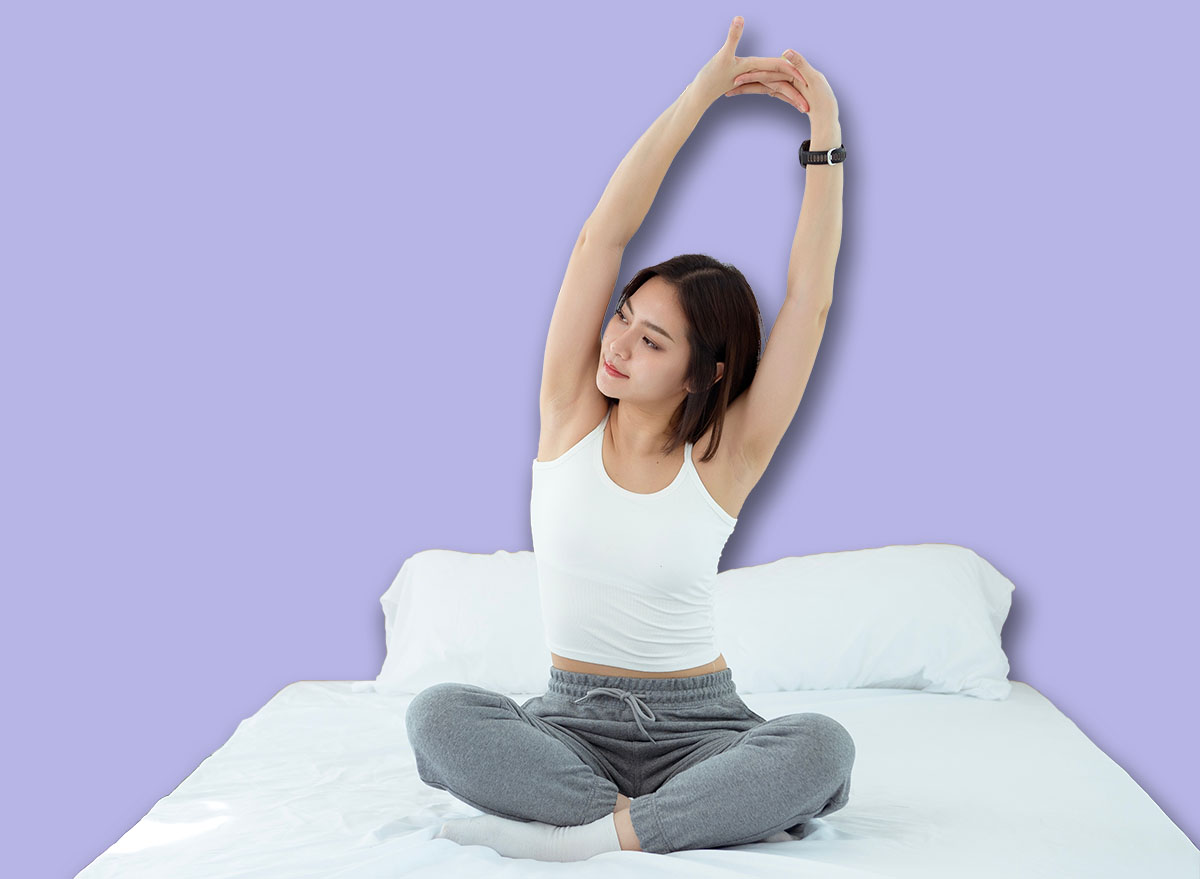
For many over the age of fifty, the prospect of visiting a gym or engaging in heavy weightlifting can be daunting or simply impractical. This is where bodyweight exercises, particularly those adaptable to a home environment like a bed, present a valuable alternative. The notion that these exercises can yield results "faster" than traditional weight training isn’t necessarily about accelerated physiological muscle growth. Instead, it often refers to the enhanced consistency and reduced barriers to entry they offer. When an exercise routine is convenient, low-impact, and requires no special equipment, individuals are far more likely to adhere to it regularly. This consistent engagement, even with lighter resistance (bodyweight), can lead to quicker noticeable improvements in muscle tone, strength, and overall confidence compared to a sporadic, high-intensity gym routine. Bed-based workouts transform a common piece of furniture into a versatile fitness tool, making exercise an accessible part of one’s daily routine, whether it’s a morning stretch or an evening wind-down.
Here are four accessible bodyweight exercises specifically designed to engage and strengthen the triceps, adaptable for performance on a bed, providing an effective strategy for individuals seeking to enhance upper arm definition after fifty:
1. Seated Triceps Press-Back
This exercise targets the triceps and posterior deltoids, promoting strength and definition in the back of the arms and shoulders.
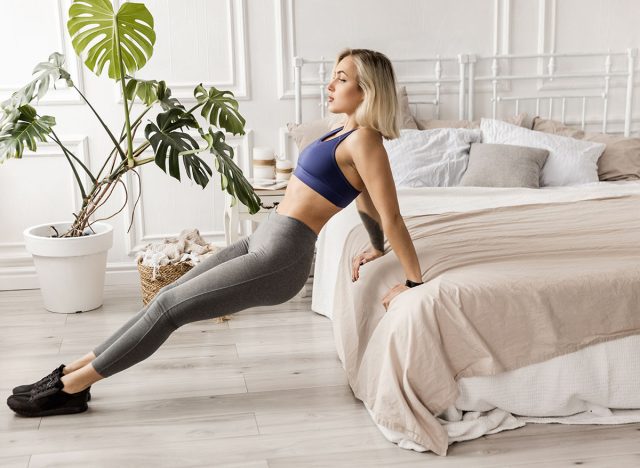
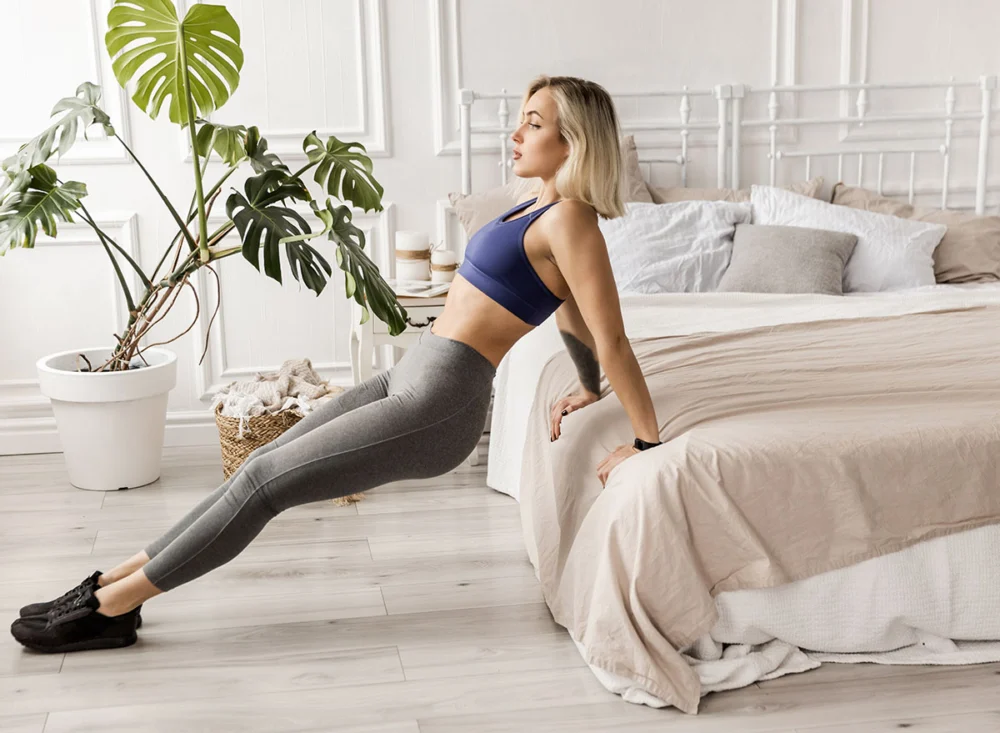
- Execution: Begin by sitting upright on the edge of your bed, ensuring your spine is elongated and your shoulders are relaxed. Place your palms flat on the bed surface beside your hips, fingers pointing forward or slightly outward. Your feet should be flat on the floor, hip-width apart. Engage your core gently. With a controlled motion, press down through your palms, lifting your hips slightly off the bed. Your arms should be straight, supporting your body weight. From this elevated position, bend your elbows directly backward, keeping them close to your body, and lower your hips a few inches towards the floor (without actually touching it). Feel the stretch and engagement in your triceps. Exhale as you powerfully press back up through your palms, straightening your arms to return to the starting elevated position. Maintain a stable torso throughout the movement, avoiding any rocking.
- Muscles Targeted: Primarily the triceps brachii, with secondary engagement of the deltoids and core stabilizers.
- Recommendations: Perform 2-3 sets of 10-15 repetitions. Focus on slow, deliberate movements to maximize muscle activation and minimize reliance on momentum. For increased difficulty, extend your legs further forward, or perform with slightly less bed support.
2. Lying Triceps Extensions (Skullcrushers Variation)
This exercise offers a unique way to isolate the triceps while lying down, minimizing strain on the lower back and allowing for greater focus on the muscle contraction.
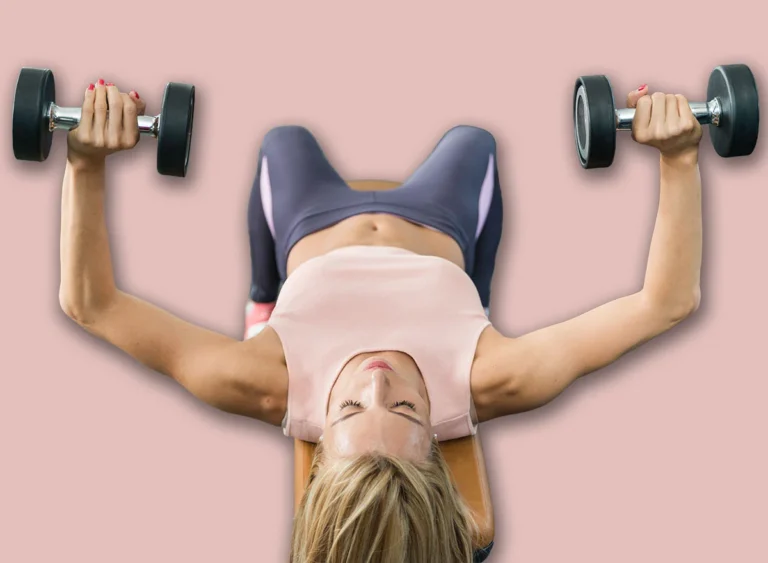
- Execution: Lie flat on your back on the bed, with your knees bent and feet flat on the surface for stability. Your head should be comfortably supported. Extend both arms straight up towards the ceiling, perpendicular to your body, palms facing each other or slightly inward. Ensure a slight bend in your elbows to prevent hyperextension. This is your starting position. Keeping your upper arms stationary and pointed towards the ceiling, slowly bend your elbows, lowering your hands towards your head until your fingertips are just above your temples or forehead. Feel the stretch in your triceps. Pause briefly, then contract your triceps to extend your arms back to the starting position with control. Avoid letting your elbows flare out excessively.
- Muscles Targeted: Specifically isolates all three heads of the triceps brachii.
- Recommendations: Aim for 2-3 sets of 12-18 repetitions. If bodyweight alone feels too easy, small handheld weights (like water bottles or light dumbbells) can be incorporated for progressive overload, ensuring they are held securely.
3. Reverse Arm Pulses (Prone)
This subtle yet effective exercise targets the triceps and posterior shoulder muscles, emphasizing endurance and isometric strength.

- Execution: Lie prone (face down) on your stomach on the bed, with your forehead resting comfortably. Your arms should be extended straight back along your sides, palms facing inward or down towards the bed. Ensure your neck is in a neutral position. Gently lift your arms a few inches off the bed surface, keeping them straight and squeezing your shoulder blades together. From this slightly elevated position, perform small, controlled pulsing movements upwards, focusing on contracting the muscles at the back of your arms and shoulders. The movement range is small, perhaps only an inch or two, but the focus is on constant tension. Avoid using momentum; the movement should be driven by muscle contraction.
- Muscles Targeted: Primarily the triceps and rhomboids, with activation of the rear deltoids.
- Recommendations: Complete 2-3 sets, performing pulses for 30-60 seconds each. The key here is consistency and maintaining tension throughout the duration rather than high repetitions.
4. Incline Bed Pushups
An incline pushup using the bed provides a modified, less strenuous version of a traditional pushup, making it an excellent option for building upper body strength, particularly in the triceps and chest, for individuals who may find floor pushups challenging.
- Execution: Stand facing your bed. Place your hands shoulder-width apart on the edge of the bed, ensuring your fingers are pointing forward. Your body should form a straight line from your head to your heels. Step your feet back until your arms are fully extended and your body is at an incline, supported by your hands on the bed and your toes on the floor. The higher the incline (closer to standing), the easier the exercise. Engage your core to keep your body rigid. Inhale as you slowly bend your elbows, lowering your chest towards the bed’s edge. Keep your elbows tucked in relatively close to your body to emphasize triceps activation. Ensure your back remains straight, avoiding any sagging or arching. Exhale as you powerfully push away from the bed, straightening your arms to return to the starting position.
- Muscles Targeted: Primarily the chest (pectorals), triceps, and shoulders (anterior deltoids). Core muscles are engaged for stability.
- Recommendations: Perform 2-3 sets of 8-15 repetitions. As strength improves, you can increase the challenge by moving your feet further away from the bed or using a lower incline surface.
Integrating these exercises into a regular routine can significantly contribute to improved upper arm tone and functional strength. However, it is crucial to remember that a holistic approach to wellness yields the most comprehensive results. Alongside consistent exercise, adequate protein intake supports muscle repair and growth, while proper hydration maintains skin health and overall bodily function. Furthermore, addressing sleep quality and stress management can positively impact hormonal balance and recovery. Prior to embarking on any new exercise regimen, particularly after age fifty, consulting with a healthcare professional or a certified fitness expert is always advisable to ensure the chosen activities are appropriate for individual health conditions and fitness levels. By embracing these accessible, bed-based triceps workouts and integrating them within a broader commitment to well-being, individuals can effectively counteract the effects of aging on their upper arms, fostering both enhanced appearance and functional strength.
About the Author