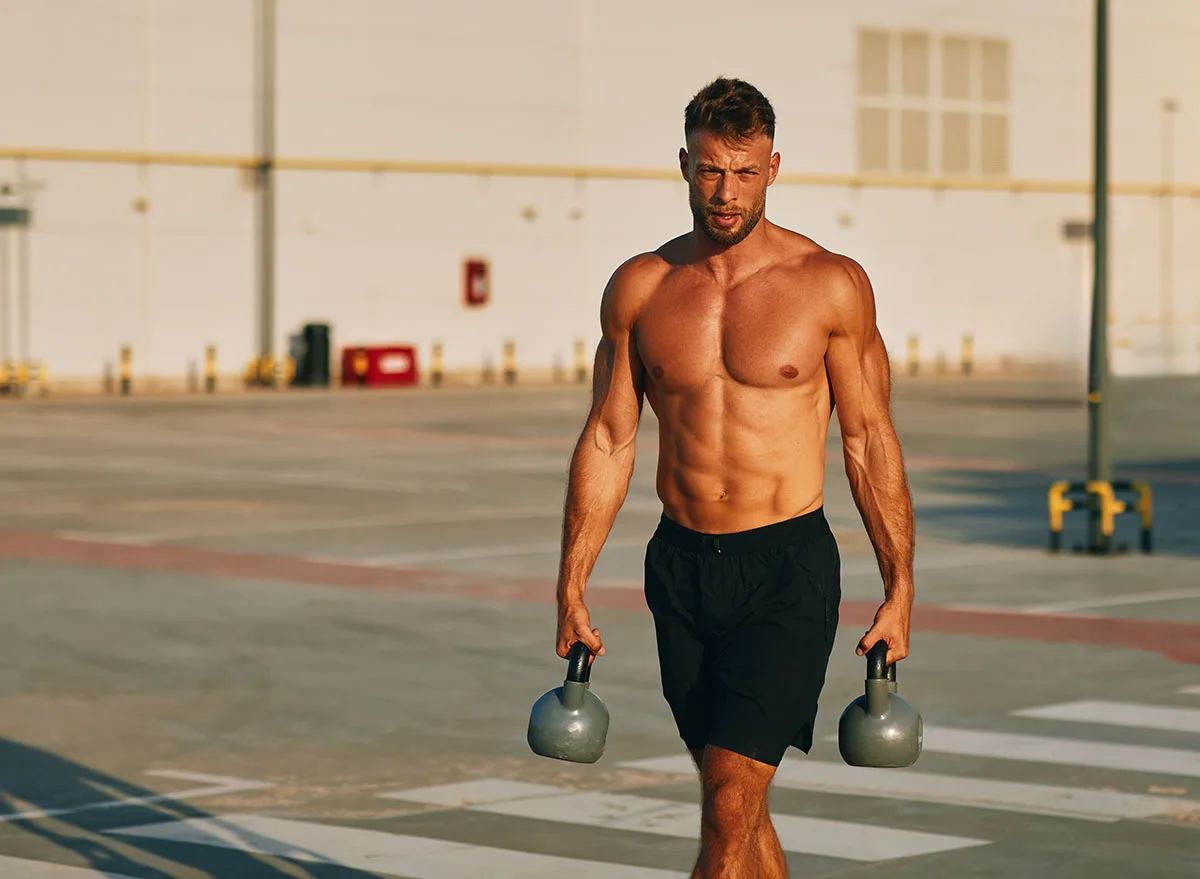
As individuals navigate the journey of aging, the preservation of functional strength emerges as a critical determinant of independence, vitality, and overall quality of life. Among the myriad exercises available, the loaded carry, often recognized as the farmer’s carry, stands out as a singularly effective, full-body movement that transcends mere muscle building to cultivate resilience for everyday demands. This exercise, rooted in the pragmatic tasks of agricultural life, involves holding substantial weight in each hand while walking, thereby engaging an intricate network of muscles and systems simultaneously. Far from a simple feat of grip strength, the loaded carry is a dynamic assessment and training tool that comprehensively challenges an individual’s balance, core stability, posture, and muscular endurance, making it particularly relevant for maintaining physical prowess well into one’s later decades.
The genesis of the farmer’s carry lies in the historical necessities of manual labor. Farmers, for centuries, have routinely transported heavy loads such as buckets of water, sacks of feed, or bales of hay across varying distances. This constant engagement with cumbersome objects naturally developed immense practical strength, leading fitness experts to adapt these real-world movements into structured exercise routines. In a modern gym setting, this translates to carrying heavy dumbbells or kettlebells, replicating the demands of its namesake. This functional approach contrasts sharply with many isolated exercises that target individual muscles, offering a more holistic stimulus that prepares the body for complex, multi-joint movements encountered in daily living.
According to Rob Moal, a seasoned Certified Personal Trainer based in Vancouver, BC, with over two decades of experience guiding clients through strength building, fat loss, and pain-free movement, the farmer’s carry is best conceptualized as a "moving plank under load." This vivid description underscores the exercise’s profound demand on the body’s entire kinetic chain. Unlike a static plank, which primarily tests isometric core strength, the loaded carry introduces locomotion, requiring continuous, coordinated engagement from multiple physiological systems. This includes the unwavering strength of the grip and forearms, the intricate anti-rotational stability of the core, and the precise control needed for shoulder and hip stability, all while navigating a single-leg stance with each stride. Moal emphasizes that in this exercise, "nothing is isolated, and nothing gets to rest," highlighting its relentless and comprehensive nature.
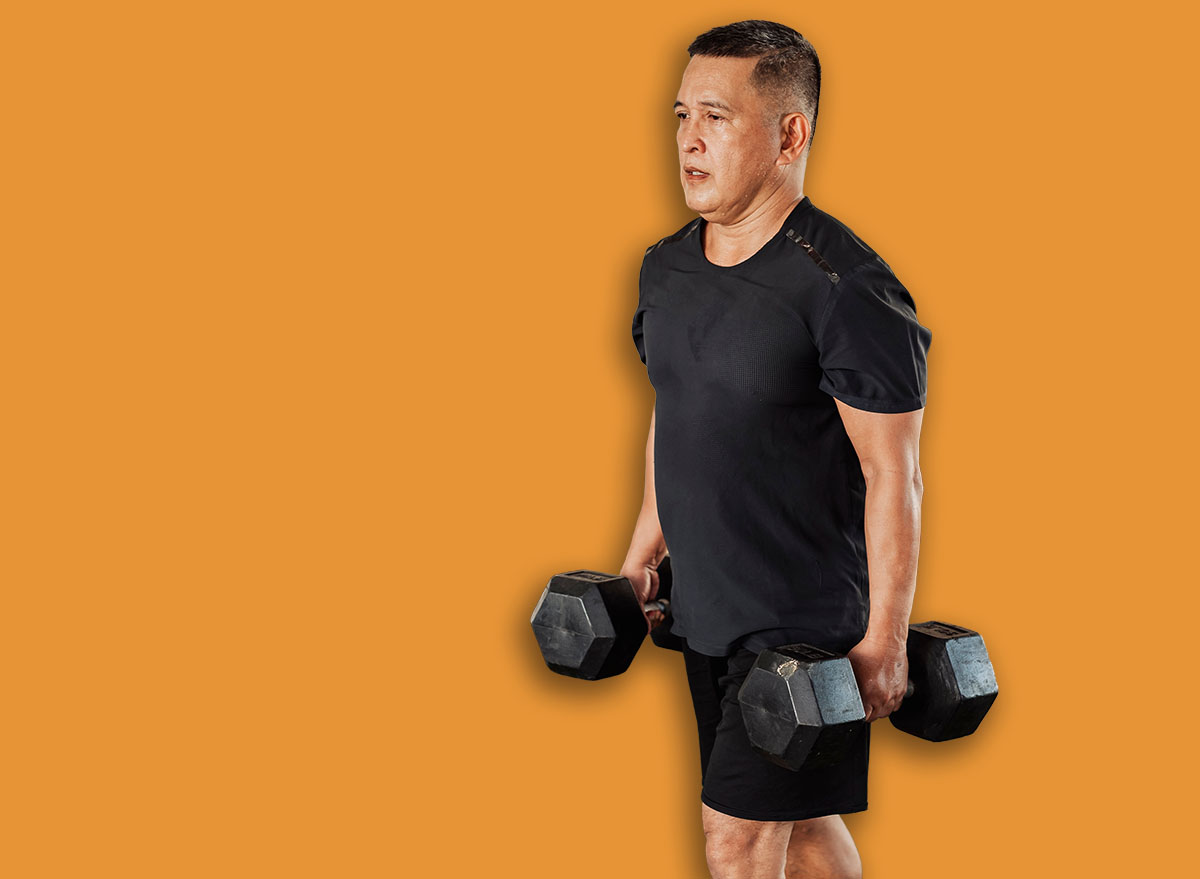
Karina Wait, a Personal Trainer at Life Time Edina, further articulates the foundational importance of the loaded carry, noting that it compels the body to function as a unified, solid unit throughout the motion. The sheer act of resisting the downward pull of heavy weights challenges the body’s intrinsic stabilizers. While the hands and forearms are unequivocally engaged in maintaining a secure hold, the upper back and shoulder girdle act as crucial anchors, preventing the arms from being dislodged or pulled out of their optimal position. Simultaneously, the abdominal muscles and obliques form a natural corset around the spine, creating a robust shield against any side-to-side swaying induced by the uneven distribution of weight or the act of walking. Below the waist, the hips and glutes work tirelessly to establish a stable foundation with every step, ensuring proper gait mechanics and preventing imbalance. Wait succinctly explains that if any of these interconnected components falter, the integrity of the entire movement collapses, which precisely illustrates why it serves as such an exemplary builder of "functional" strength—strength directly applicable to real-world scenarios, from lifting groceries to handling luggage.
For individuals over the age of 60, where the natural physiological process of sarcopenia—age-related muscle loss—begins to accelerate, incorporating exercises like the loaded carry becomes critically important. Sarcopenia can lead to diminished strength, reduced mobility, and an increased risk of falls, significantly impacting independence. The loaded carry directly counteracts these effects by stimulating muscle growth across major groups, improving neuromuscular coordination, and enhancing bone density through its weight-bearing nature. It’s not just about lifting heavy; it’s about maintaining the capacity to perform daily tasks with ease and confidence.
In terms of quantifiable performance for those beyond 60, Moal suggests that a commendable starting point involves comfortably carrying weights equivalent to 50% of one’s body weight. Achieving "top-tier" status, based on his extensive clinical observations with clients in this age demographic, means being able to transport more than 50% of body weight over a distance of approximately 98 to 131 feet while meticulously maintaining impeccable posture. For instance, a person weighing 180 pounds would aim to carry 90 pounds or more in total. However, Moal strongly underscores that numerical achievements are secondary to the quality of the movement. A truly exceptional performance is characterized by the absence of grip failure preceding a breakdown in posture, the avoidance of any forward lean, the execution of smooth and controlled steps, and the ability to consistently repeat these sets. This specific combination of strength, control, and endurance is, in Moal’s experience, genuinely rare among individuals over 60.
A robust performance in the loaded carry serves as a powerful indicator of solid functional strength and overall physical integrity. Moal elucidates that the exercise’s demand for the core to resist lateral pulling forces under load directly mimics the protective mechanisms that prevent falls when one trips or stumbles. Each stride taken during a loaded carry inherently becomes a single-leg stability event, meaning that successful execution strongly implies that the hips and balance systems are operating optimally. Consequently, this exercise offers a more accurate gauge of "real-world strength" than many traditional gym-based strength tests that often isolate muscle groups. Wait further affirms that successfully completing a heavy farmer’s carry signifies that one’s body is "built to last." The sustained engagement required ensures that posture remains upright and the upper back muscles are robust enough to counteract the persistent gravitational pull of the weights, preventing the common tendency to slouch. The core, encompassing everything from the abdominal wall to the muscles surrounding the spine, must remain rigidly engaged to maintain a steady and upright torso. Crucially, the loaded carry functions as a practical masterclass in balance; as one foot lifts off the ground, the hips and midsection work in concert, much like a car’s stabilizer bar, to keep the body level and prevent the load from tipping it over. This pervasive total-body tension also trains muscles to "clamp down" and provide structural support, thereby offloading jarring pressures from the joints and channeling the effort into the muscular system where it belongs.
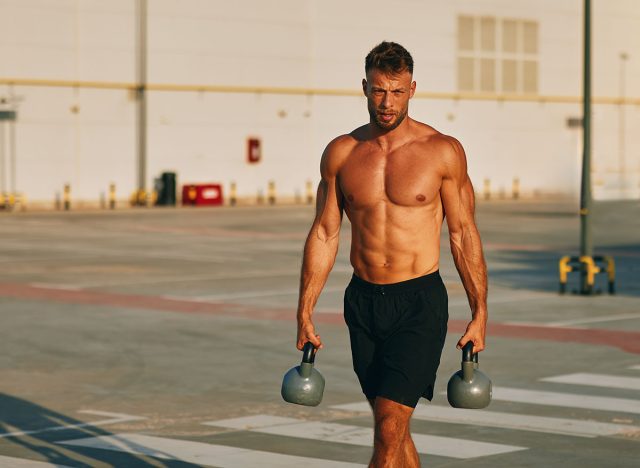
For those looking to enhance their loaded carry performance and progressively build this essential functional strength, a structured approach is paramount. Wait advises that mastering stillness is a prerequisite before introducing movement. She recommends initiating the training regimen with static suitcase holds. This involves standing tall, holding a single dumbbell or kettlebell in one hand for 3 to 4 sets, with each hold lasting 30 seconds per side. The progression criterion here is crucial: only advance to the next stage once all sets can be completed without any discernible leaning or slippage of the grip.
Upon mastering the single-arm static hold, the next step involves transitioning to the double-arm hold. With the load now balanced symmetrically, the body is capable of handling significantly more weight. Wait suggests starting with the same weight that was mastered in the single-arm suitcase hold (e.g., if a 30-pound suitcase hold was mastered, begin with 30 pounds in each hand for the double-arm hold) and then aiming to increase the total load by 25% to 50% (e.g., if 30 pounds was mastered, aim for 40-45 pounds in each hand, totaling 80-90 pounds). Maintain this level until the ability to stand tall for 3 to 4 sets of 60 seconds is achieved. This "static capacity test" is vital, as it confirms that the body’s postural muscles and core are adequately prepared to manage the weight before the additional instability of walking is introduced.
Finally, when transitioning to the dynamic farmer’s carry, begin with the same heavy weight that was mastered in the double-arm static hold, carrying it for a duration of 30 seconds. As this becomes more manageable, gradually extend the carrying time to 60 seconds. Only after achieving consistent 60-second carries should the weight be increased by a modest increment of 5 to 10 pounds, at which point the timed progression restarts from 30 seconds. This methodical approach ensures that the grip and joints are as robust and prepared for heavier loads as the primary muscle groups.
In conclusion, the loaded carry is more than just an exercise; it is a fundamental pillar of functional fitness, particularly for sustaining vigor and independence in the later stages of life. Its unique ability to simultaneously challenge grip strength, core stability, balance, and postural control makes it an unparalleled tool for building and assessing real-world strength. By embracing a structured progression and prioritizing quality of movement over sheer quantity, individuals can unlock the profound benefits of the farmer’s carry, ensuring a stronger, more stable, and more independent future. As with any new exercise regimen, consulting with a qualified fitness professional is always recommended to ensure proper form and to tailor the program to individual needs and health considerations.
About the Author