As global populations age, the discourse surrounding healthy longevity increasingly emphasizes proactive measures to maintain physical vitality and functional autonomy. While cardiovascular exercise rightly earns praise for its myriad benefits to heart health and endurance, a comprehensive approach to wellness in later life necessitates a strong focus on resistance training. Beyond the cardiovascular system, the musculoskeletal framework often bears the brunt of the aging process, manifesting as reduced muscle mass, decreased bone density, and compromised balance. Addressing these physiological shifts through targeted strength interventions can significantly enhance an individual’s capacity to navigate daily activities with confidence and maintain an active lifestyle well into their senior years. This article explores four fundamental strength movements, each acting as a pillar for preserving and enhancing physical capabilities, offering a robust defense against age-related decline.
The physiological phenomenon known as sarcopenia, the gradual and progressive loss of muscle mass, strength, and function that typically begins in one’s thirties and accelerates after the age of 60, represents a critical challenge for older adults. This decline isn’t merely aesthetic; it profoundly impacts metabolic health, increasing the risk of type 2 diabetes and obesity, and significantly compromises mobility, leading to a higher incidence of falls and fractures. Simultaneously, osteopenia and osteoporosis, characterized by diminishing bone mineral density, render bones more fragile and susceptible to breaks. Engaging in regular, progressive resistance training directly counters these processes. Mechanical stress on muscles during exercise stimulates protein synthesis, rebuilding and strengthening muscle fibers. This same mechanical loading also signals osteoblasts, the bone-forming cells, to increase bone density, thereby fortifying the skeletal structure. Furthermore, robust muscles provide better joint support, enhance proprioception (the body’s sense of its position in space), and improve overall balance, collectively mitigating the risk of debilitating falls.
Unlike specialized athletic drills, the chosen exercises are rooted in universal human movement patterns: squatting, pushing, hinging, and pulling. These aren’t just gym activities; they are direct analogues to actions performed countless times throughout an ordinary day. Mastering these foundational movements translates directly to improved performance in everyday tasks, such as rising from a chair, lifting groceries, reaching for objects, or maintaining upright posture. For many individuals over 60, the tangible progress felt from consistently performing these movements—easier movements, greater stability, and increased endurance—serves as a powerful motivator, fostering greater self-efficacy and adherence to an exercise regimen. This feedback loop is essential for building sustainable habits that contribute to long-term health and independence. Incorporating these fundamental exercises two to four times weekly, with an emphasis on precise form and gradual increases in challenge, forms the bedrock of a resilient body.
1. The Bodyweight Squat: Foundation of Lower Body Power
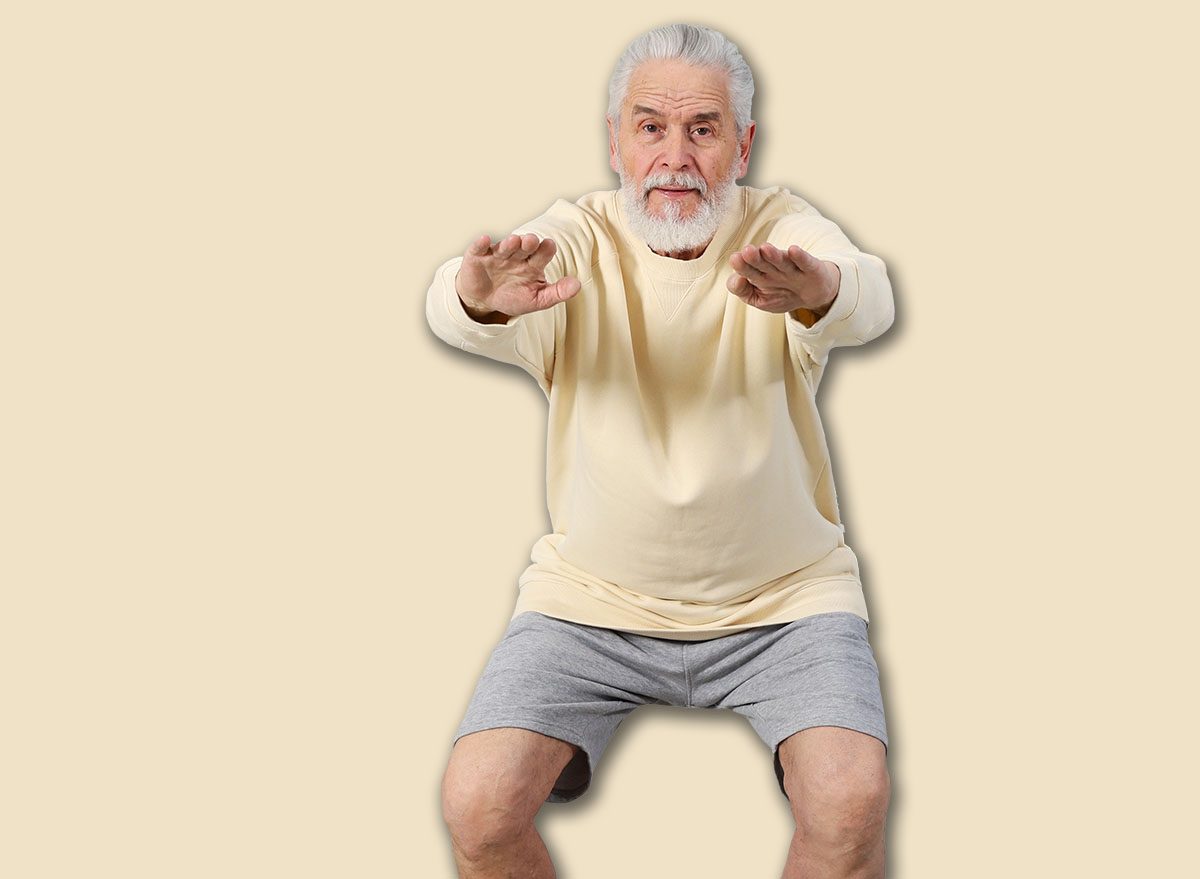
The squat stands as one of humanity’s most primal and functional movements, underpinning a vast array of daily activities. From simply sitting down and standing up, to retrieving an item from a low shelf, or ascending and descending stairs, the ability to execute a controlled squat is paramount for lower body strength and mobility. This exercise efficiently engages a synergistic group of muscles: the quadriceps at the front of the thighs, responsible for knee extension; the gluteal muscles in the buttocks, powerful hip extensors; the hamstrings at the back of the thighs, which assist in both hip extension and knee flexion; and the core musculature, crucial for maintaining trunk stability throughout the movement.
For older adults, the bodyweight squat is an invaluable tool for maintaining independence. It enhances leg drive, improves balance by strengthening stabilizer muscles around the ankles and hips, and cultivates the coordination necessary for confident movement. Beginning with a comfortable range of motion, such as squatting to a chair or a low box, allows individuals to build strength and control before progressing to deeper squats. The focus should always remain on maintaining an upright posture, initiating the movement by pushing the hips back, and ensuring the knees track in line with the toes. Recommended execution involves three sets of 8 to 12 repetitions, with a rest period of 45 to 60 seconds between sets. Adaptations like chair squats, box squats, or employing a slower tempo can further tailor the exercise to individual capabilities, gradually building depth and resilience in the lower body.
2. The Incline Push-Up: Cultivating Upper Body Strength and Stability
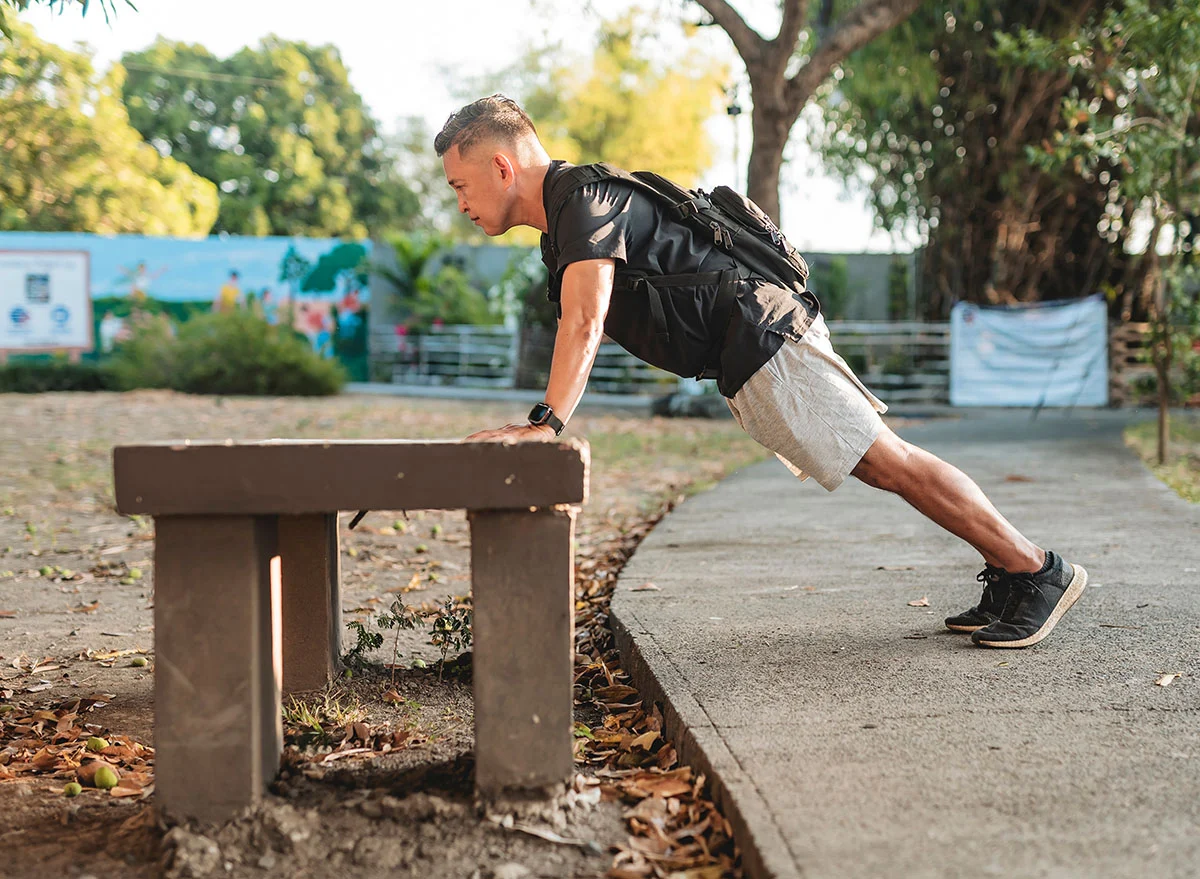
Upper body pushing strength is critical for numerous tasks, from opening a heavy door to pushing oneself up from a seated or fallen position. The incline push-up offers an accessible and highly adaptable method to develop this strength without requiring immediate mastery of a floor push-up. By adjusting the angle of the body relative to the ground—for instance, pressing against a wall, a kitchen counter, or a sturdy bench—the resistance can be scaled to suit varying strength levels. This makes it an ideal starting point for rebuilding or enhancing pressing capabilities.
This exercise primarily targets the pectoralis major (chest muscles), the anterior deltoids (front of the shoulders), and the triceps brachii (muscles at the back of the upper arm). Additionally, the core muscles engage powerfully to maintain a rigid, straight line from head to heels, preventing the hips from sagging and thereby contributing to overall trunk stability. The functional benefits extend to improved posture, increased power for pushing objects, and enhanced ability to brace oneself. As strength progresses, the incline can be gradually lowered, transitioning from a vertical wall push to a countertop, then to a progressively lower surface like a sturdy table or bench, thereby increasing the challenge. Performing three sets of 8 to 15 repetitions, with 45 to 60 seconds of rest between sets, allows for adequate muscle stimulation and recovery. Key form cues include keeping the body aligned, engaging the abdominal muscles, and controlling the descent before pressing back to the starting position.
3. The Kettlebell Deadlift: Mastering the Hip Hinge and Posterior Chain
The deadlift, often hailed as the "king of all exercises," is fundamentally a sophisticated hip hinge movement, teaching the body to safely and powerfully lift objects from the ground. For older adults, mastering the hip hinge through variations like the kettlebell deadlift is transformative for spinal health, preventing lower back injuries, and building robust strength in the posterior chain—the muscles along the back of the body. This includes the powerful gluteal muscles and hamstrings, which are central to activities like bending over, gardening, or picking up a grandchild without strain. The kettlebell, positioned conveniently between the feet, often makes the setup feel more intuitive and manageable than a barbell for those new to the movement.
This exercise predominantly activates the glutes and hamstrings as primary movers, responsible for extending the hips to bring the body upright. The erector spinae muscles in the lower back work isometrically to maintain a neutral spine, while the upper back and grip muscles engage to stabilize the weight. The functional implications are profound: enhanced ability to lift, carry, and move heavy objects, improved posture, and a significantly reduced risk of back pain or injury associated with improper lifting mechanics. Starting with a lighter weight that allows for perfect form is crucial, emphasizing the feeling of the hips driving the movement rather than the back rounding. Three sets of 8 to 12 repetitions, with a 60-second rest interval, are recommended. Beginners can start with bodyweight hip hinges or elevate the kettlebell on blocks to reduce the range of motion, ensuring the focus remains on the correct movement pattern.
4. The Standing Band Row: Reclaiming Posture and Pulling Power
In an era dominated by sedentary lifestyles and forward-leaning postures, often exacerbated by extended periods of sitting, driving, or screen use, strengthening the muscles of the upper back is more critical than ever. The standing band row directly addresses this by building essential pulling strength, which is vital for maintaining good posture, promoting shoulder health, and performing everyday actions like opening stubborn doors or pulling objects closer. The elastic resistance band offers a consistent and adaptable challenge, making it an excellent tool for individuals of all strength levels.
This movement primarily engages the latissimus dorsi (lats), the large muscles of the back; the rhomboids and trapezius in the upper back, which retract and depress the shoulder blades; the posterior deltoids (rear shoulders); and the biceps, which assist in flexing the elbow. Beyond muscle development, the standing position itself demands core engagement to stabilize the torso against the pulling force, further contributing to overall trunk strength and balance. Functionally, strong back muscles counteract the tendency to slouch, improve spinal alignment, alleviate neck and shoulder tension, and enhance the capacity for pulling tasks. Pausing briefly at the peak of the contraction, squeezing the shoulder blades together, maximizes the engagement of the upper back musculature. Three sets of 10 to 15 repetitions, with a shorter rest period of 30 to 45 seconds, are effective for stimulating muscle endurance and strength. Variations include adjusting band thickness, performing single-arm rows, or modifying the tempo to increase time under tension.
Integrating these four foundational exercises into a regular routine can be done effectively as a full-body circuit. After a brief warm-up, perform one set of each exercise in the prescribed order, resting for 60 to 90 seconds after completing all four movements. Repeat this circuit for two to three total rounds. Prioritizing perfect form over excessive weight or speed is paramount, especially when starting. As strength and confidence grow, the challenge can be gradually increased by adding repetitions, sets, or by progressing to more advanced variations of each exercise. Consulting with a healthcare professional before embarking on any new exercise regimen, and working with a certified personal trainer, particularly one experienced in training older adults, can provide invaluable guidance and ensure exercises are performed safely and effectively.
In conclusion, while cardiovascular fitness remains a cornerstone of overall health, the profound and distinct benefits of resistance training, especially for individuals over sixty, cannot be overstated. By consistently engaging in these four foundational movements—the bodyweight squat, incline push-up, kettlebell deadlift, and standing band row—older adults can proactively combat sarcopenia and osteoporosis, enhance functional mobility, improve balance, and cultivate the physical resilience necessary for a vibrant, independent, and fulfilling life. Age should never be a barrier to building strength; rather, it provides a compelling reason to embrace it.
About the Author