As individuals navigate the landscape of later life, maintaining functional independence and a robust quality of life becomes paramount. A critical, yet frequently underestimated, cornerstone of this pursuit is core strength. Far transcending aesthetic appeal, a strong and stable core forms the central pillar for virtually every movement the body undertakes, directly influencing balance, posture, mobility, and the ability to perform daily activities without assistance. For those over the age of sixty, the integrity of the core musculature takes on heightened significance, acting as a primary defense against the debilitating consequences of falls and a key determinant of sustained autonomy.
The aging process inherently brings about physiological shifts that can challenge physical capabilities. Sarcopenia, the age-related loss of muscle mass and strength, coupled with potential declines in bone density and neuromuscular coordination, can compromise stability and increase vulnerability. A robust core system, encompassing the abdominal muscles, obliques, lower back extensors, and hip stabilizers, acts as a dynamic brace, providing the stability required to counteract these changes. It empowers individuals to rise from a chair, reach for objects, maintain equilibrium on uneven surfaces, and even recover from an unexpected stumble, tasks that become increasingly vital with each passing year. The Centers for Disease Control and Prevention (CDC) consistently highlights core and lower body strength as pivotal elements in mitigating fall risks among older adults, underscoring the public health implications of this often-overlooked fitness component.
However, traditional methods for evaluating core strength, such as demanding full sit-ups or planks executed on a rigid floor, often present considerable barriers for older adults. Concerns regarding joint discomfort—particularly in the hips and knees—aversion to the potential difficulty of getting down and back up from the floor, or existing mobility limitations can deter many from attempting these beneficial assessments. This common challenge has prompted experts to devise more accessible, joint-friendly alternatives that allow individuals to gauge their core capabilities within the comfort and safety of their own homes.
One such innovative approach leverages an everyday item: the mattress. By utilizing the inherent cushioning and forgiving nature of a bed surface, these modified exercises offer a significantly lower impact environment, reducing strain on sensitive joints while still effectively engaging the core musculature. This method not only democratizes access to core assessment but also integrates fitness into the familiar surroundings of one’s personal space, fostering greater comfort and adherence. James Bickerstaff, a Certified Personal Trainer at OriGym, has championed this bed-based methodology, outlining specific holds designed to reveal the true strength and endurance of an individual’s core system without the need for specialized equipment or a trip to the gym. These exercises are meticulously crafted to mirror the muscle activation patterns of their floor-based counterparts, ensuring a comprehensive evaluation of the trunk’s stability and power.
Understanding the anatomy and function of the core is crucial to appreciating the value of these assessments. The core is not merely the "six-pack" muscles, but a complex network of deep and superficial muscles that encircle the entire midsection. The rectus abdominis provides frontal flexion, the obliques enable rotation and lateral flexion, the transverse abdominis acts as a natural corset for deep stabilization, and the multifidus and erector spinae support the spine from the back. These muscle groups work in concert, creating a stable platform from which the limbs can move efficiently and powerfully, protecting the spine from undue stress and facilitating balanced movement. When this integrated system is strong, the body moves with greater control, confidence, and resilience.
Bickerstaff proposes three distinct bed-based holds that collectively offer a comprehensive insight into core functionality:
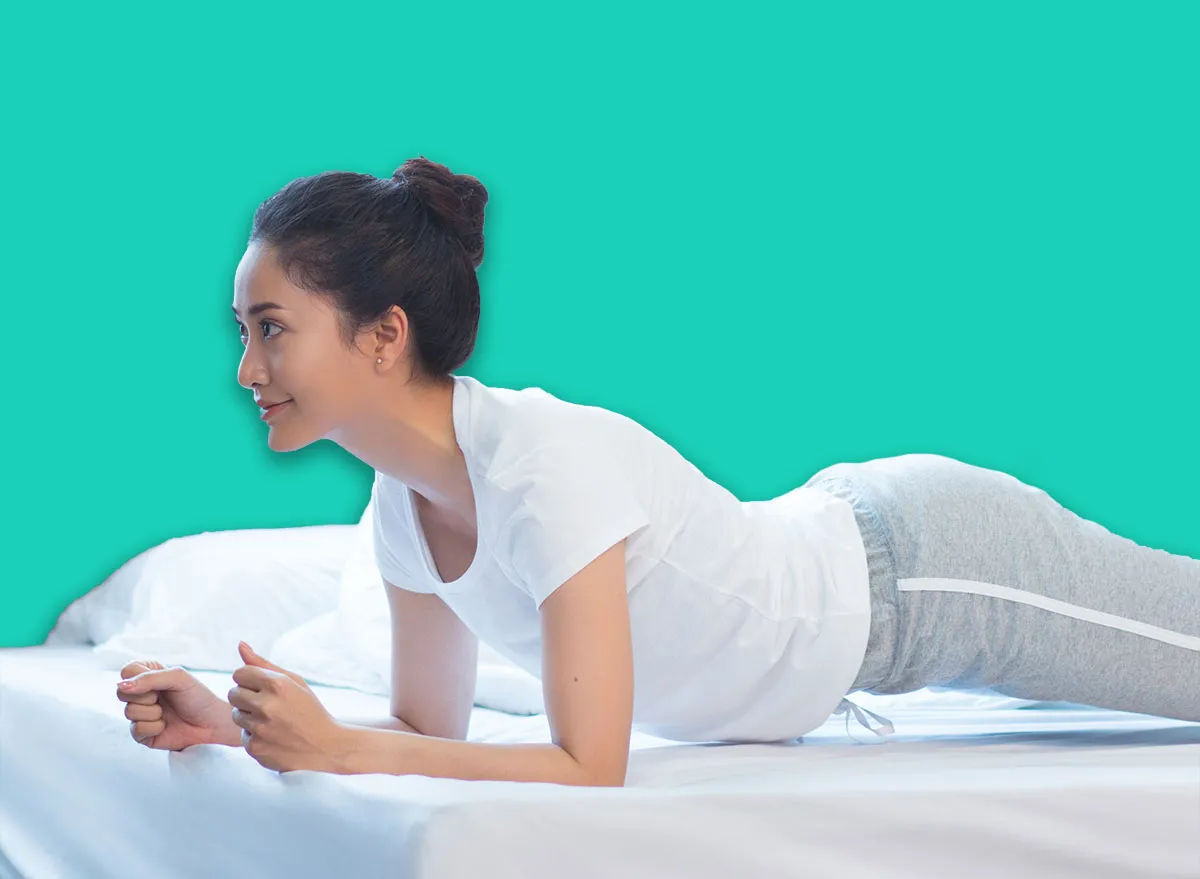
1. The Forearm Plank (Modified for Mattress)
Often regarded as a foundational exercise for assessing overall trunk strength, the forearm plank effectively engages a wide array of core muscles. On a mattress, this exercise requires individuals to support their body weight on their forearms and toes (or knees, for a further modification), maintaining a straight line from head to heels. The softer surface intensifies the recruitment of stabilizing muscles as the body works harder to maintain equilibrium against the subtle give of the mattress.
According to Bickerstaff, this position is a quintessential test because it simultaneously challenges the abdominals, the muscles of the lower back, the shoulder stabilizers, and the glutes. The objective is to resist gravity’s pull, preventing the hips from sagging towards the bed or arching excessively upwards. A sustained, stable hold in this position indicates excellent trunk stability and muscular endurance—qualities essential for maintaining upright posture during prolonged standing, carrying objects, and preventing strain on the lower back during everyday movements. Successfully holding this modified plank for a respectable duration signifies a well-integrated and resilient core.
2. The Side Plank (Mattress-Assisted Variation)
While the traditional plank primarily targets the front and back of the core, the side plank shifts its focus to the often-neglected lateral muscles, specifically the obliques and the crucial hip stabilizers. These muscle groups are indispensable for lateral stability, preventing swaying and improving balance during walking and dynamic movements. Executed on the mattress, the individual supports their body on one forearm and the side of one foot (or knee), lifting the hips off the bed to form a straight line from head to feet.
Bickerstaff emphasizes the unique value of the side plank in targeting these specific muscles. The obliques are vital for rotational control and resisting forces that would push the body sideways, while the hip abductors (like the gluteus medius) are critical for stabilizing the pelvis during gait, preventing the hip from dropping when one leg is lifted. A strong side plank capability directly translates to improved balance and a significantly reduced risk of falls, particularly those resulting from a loss of lateral equilibrium. The ability to maintain this position without significant tremor or hip collapse is a powerful indicator of robust unilateral core strength, crucial for navigating uneven terrain or performing single-leg dominant tasks.
3. The Dead Bug Hold (Coordinated Core Control)
The third exercise, the dead bug hold, introduces an element of neuromuscular coordination, making it a highly functional assessment that closely mimics the demands of daily life. Performed lying on the back on the mattress, the individual starts with knees bent and feet flat, then lifts arms straight towards the ceiling and knees directly over hips, shins parallel to the floor. The core challenge involves slowly extending one arm and the opposite leg towards the bed, without allowing the lower back to arch or lift off the mattress, then returning to the start and alternating sides. For a static "hold," the goal is to maintain the extended limb position for a period without compromising spinal stability.
Bickerstaff explains that this exercise fundamentally teaches the core to stabilize the trunk while the limbs are in motion—a scenario that frequently occurs during everyday activities. Think about walking, where the core must stabilize the torso as arms and legs swing, or climbing stairs, or even carrying groceries. The dead bug hold specifically trains the core’s ability to resist extension (preventing the lower back from arching) and rotation, fostering dynamic stability and control. Successfully executing this hold demonstrates not only strength but also fine motor control and inter-limb coordination, which are essential for reactive balance and preventing falls in complex environments.
Interpreting Results and Charting a Path Forward
Upon attempting these three bed-based core holds, the insights gained can be invaluable. If an individual can execute all three positions with proper form—meaning no excessive shaking, hips remaining stable and aligned, and the lower back maintaining its natural curve without arching—for a sustained period (e.g., 20-30 seconds each, increasing with fitness level), it serves as a strong indication of an excellently conditioned core for their age. This level of core proficiency contributes significantly to maintaining independence and reducing fall risk.
Conversely, if an individual struggles with these holds, exhibiting significant shaking, inability to maintain proper spinal alignment, or premature fatigue, this information is equally, if not more, useful. It signals areas where improvement is needed and provides a clear starting point for a targeted exercise regimen. The beauty of these bed-based exercises is their adaptability; they can be incorporated into a routine two to three times per week. Beginners can start with shorter hold durations, perhaps 10-15 seconds, and gradually build up by adding 5 seconds to each hold every week or two, as strength improves. Modifications, such as performing planks on the knees or reducing the range of motion in the dead bug hold, can make them accessible to nearly everyone.
While the softer surface of a mattress provides a gentler experience for the joints, the fundamental strength, stability, and neuromuscular control developed through these exercises are directly transferable to real-life movements. By consistently challenging and strengthening the core, individuals can foster greater confidence in their physical capabilities, enhance their overall balance, and significantly reduce their vulnerability to falls, thereby enriching their journey through healthy aging. However, it is always advisable to consult with a healthcare professional or a certified physical therapist before starting any new exercise program, especially if there are pre-existing health conditions or concerns. A proactive approach to core health is an investment in a more active, independent, and resilient future.
About the Author