
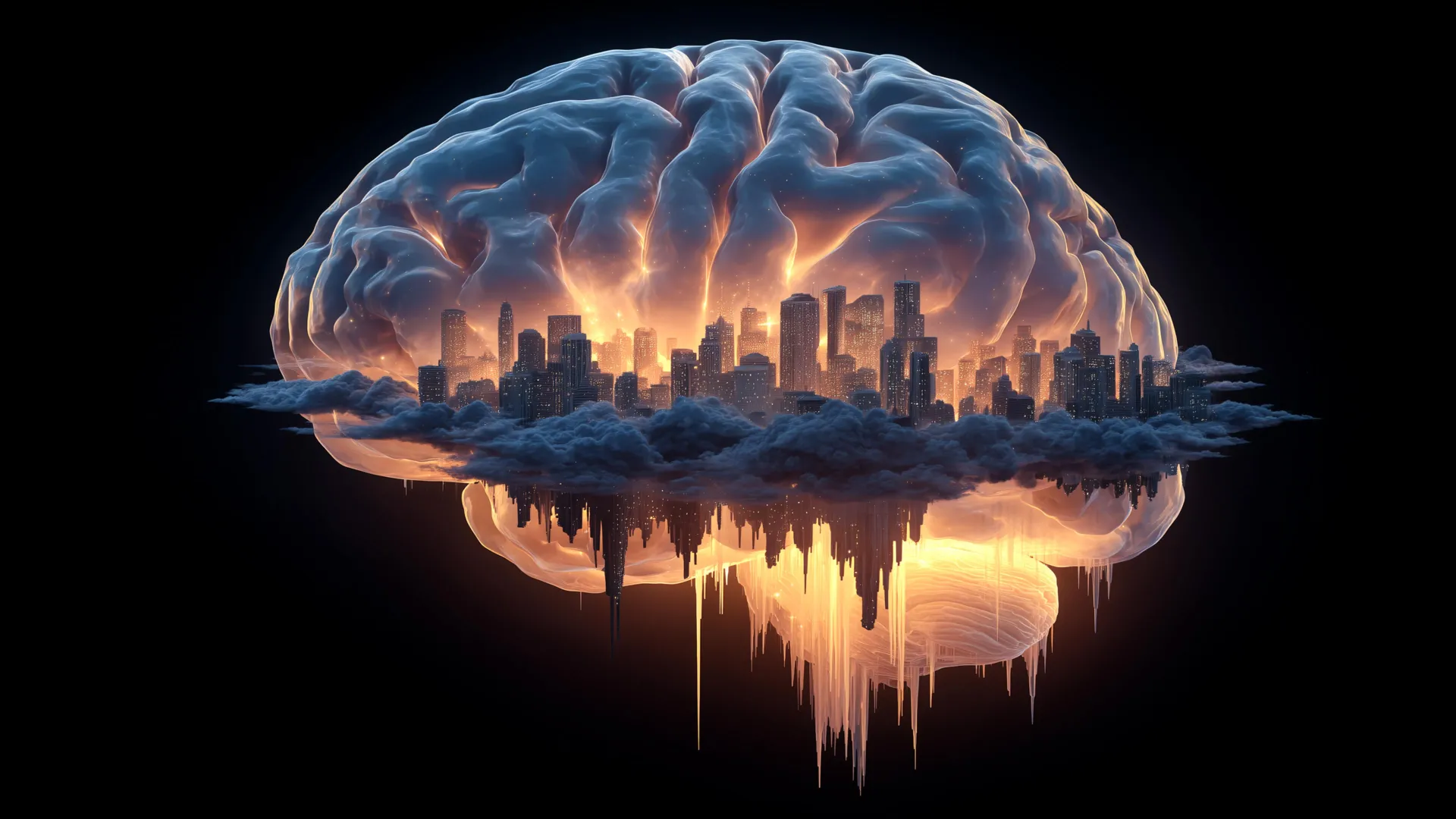
The ephemeral nature of dreams, often perceived as fleeting, disjointed fragments or intensely vivid experiences, has long captivated human curiosity, prompting inquiries into their origins and significance. Emerging scientific inquiry suggests that the character and content of our nightly visions are not arbitrary occurrences but rather intricate constructions, meticulously woven from the threads of individual psychology, the quality of our restorative sleep, ingrained cognitive patterns, and the indelible imprint of significant worldly events. This groundbreaking research challenges the notion of dreams as mere random mental static, proposing instead a sophisticated architecture influenced by both personal disposition and collective human experience, even in the face of profound societal upheaval, such as the global health crisis of the COVID-19 pandemic.
A comprehensive investigation spearheaded by scholars at the IMT School for Advanced Studies Lucca has concluded that dreams are far from being unorganized jumbles of imagery and thought. Instead, their findings, published in the esteemed journal Communications Psychology, indicate a discernible architecture, shaped by the unique contours of individual lives and the shared tapestry of human existence. The study meticulously analyzed an extensive corpus of over 3,700 detailed dream accounts and concurrent waking experiences, gathered from a diverse cohort of 287 participants spanning an age range from 18 to 70 years. Over a fortnight, these individuals diligently documented their nocturnal journeys and daily activities. Crucially, the research team also compiled extensive data pertaining to each participant’s sleep hygiene, personality profiles, cognitive aptitudes, and psychological makeup. This multifaceted data collection enabled a detailed comparison between conscious daily interactions and the narratives, environments, and emotional landscapes that manifested within their dreams.
The sheer volume of qualitative data necessitated the application of sophisticated analytical tools, leading the researchers to harness the power of natural language processing (NLP), a sophisticated branch of artificial intelligence designed to decipher patterns, interconnections, and inherent meanings within human language. This technological approach moved beyond the limitations of manual interpretation, allowing the research team to quantify the semantic architecture of the dream reports. Semantic structure, in this context, refers to the intricate web of connections between ideas, words, and concepts as they are expressed. The subsequent analysis revealed a profound truth: dream content is neither entirely haphazard nor inherently chaotic. Rather, it represents a sophisticated amalgamation of personal characteristics, including a propensity for spontaneous ideation or "mind-wandering," an individual’s level of engagement with their dream life, and the overall quality of their sleep. Furthermore, the prevailing global circumstances demonstrably exerted an influence on the thematic material of participants’ dreams.
Contrary to the simplistic hypothesis that dreams merely serve as a direct replay of daily events, the comparative analysis of waking life descriptions and dream reports yielded a more nuanced understanding. The sleeping brain, it appears, does not engage in a literal transcription of diurnal experiences. Instead, elements of familiarity undergo a remarkable transformation. While an everyday setting such as a workplace, a medical facility, or an academic institution might appear in a dream, it is frequently juxtaposed with disparate locations, experienced from shifting perspectives, or situated within entirely novel surroundings. The study suggests that distinct facets of an individual’s life can coalesce into a singular, potent dream sequence. This challenges the notion of dreams as mere archival recall, positing instead a dynamic process where the sleeping mind actively reorganizes elements of lived reality, blending mnemonic traces with imaginative conjecture, anticipatory feelings, and even speculative future scenarios. The resultant dreamscapes can thus possess an immersive quality, evoke profound emotional resonance, or manifest as profoundly surreal encounters.
The degree and manner of this transformative process within dreams exhibit significant inter-individual variability, appearing to be influenced by personality traits. Participants who demonstrated a higher tendency towards mind-wandering during their waking hours were observed to report dreams characterized by rapid transitions and a more fragmented quality, with scenes and ideas frequently shifting with considerable alacrity. Conversely, individuals who assigned greater subjective value to their dreams and perceived them as possessing personal significance tended to articulate richer and more deeply immersive dream experiences. Their accounts were often replete with enhanced perceptual details, lending a more vivid and lifelike texture to the dream scenarios. While these findings do not definitively establish a causal link between valuing dreams and experiencing greater vividness, they underscore a robust correlation between an individual’s metacognitive awareness of dreaming and the subjective quality of their remembered dream experiences.
The profound impact of the COVID-19 pandemic on collective human consciousness and, consequently, on nocturnal narratives, was also a significant focus of the research. Dream reports collected during the stringent lockdown periods, originally documented by researchers at Sapienza University of Rome, were meticulously compared with data gathered by the IMT School team in subsequent months and years. During the period of confinement, dreams were notably characterized by heightened emotional intensity and a prevalence of themes related to restriction, physical barriers, confinement, and other forms of limitation, directly mirroring the lived realities of the participants. As time progressed and societal conditions evolved, these thematic patterns gradually diminished in prominence. This temporal shift suggests a dynamic interplay between the evolution of dreams and the process of psychological adaptation, particularly in response to periods of significant stress and disruption. In essence, the study posits that dreams may offer valuable insights into the human mind’s adaptive mechanisms when confronted with transformative events.
Valentina Elce, a lead author of the paper and researcher at the IMT School, eloquently summarized the study’s implications: "Our findings demonstrate that dreams are not merely passive reflections of past events, but rather a dynamic process actively shaped by our individual identities and the circumstances we navigate." She further elaborated on the methodological advancement, stating, "By integrating large-scale data analysis with computational methodologies, we have succeeded in identifying subtle patterns within dream content that were previously elusive to traditional investigative approaches."
This research also heralds a new era for the scientific exploration of the sleeping mind, showcasing the transformative potential of artificial intelligence. The NLP models employed in the study demonstrated a remarkable capacity to discern meaning and structure within dream reports, achieving an accuracy comparable to that of human experts. This suggests that computational tools hold the promise of enabling scientists to analyze vastly larger datasets of dream content with a high degree of consistency and reproducibility. Such advancements could unlock unprecedented avenues for investigating fundamental aspects of human cognition, including consciousness, memory consolidation, emotional processing, and mental well-being. Given the inherently subjective and often ineffable nature of dreams, their large-scale empirical study has historically presented considerable challenges. However, AI-driven linguistic analysis now offers a powerful means to uncover patterns and insights that might otherwise remain concealed within the intricate tapestry of our nocturnal lives. The research was made possible through the generous support of a grant from the BIAL Foundation (#091/2020) and the TweakDreams ERC Starting Grant (#948891), and was conducted in collaboration with researchers from Sapienza University of Rome and the University of Camerino.
About the Author












