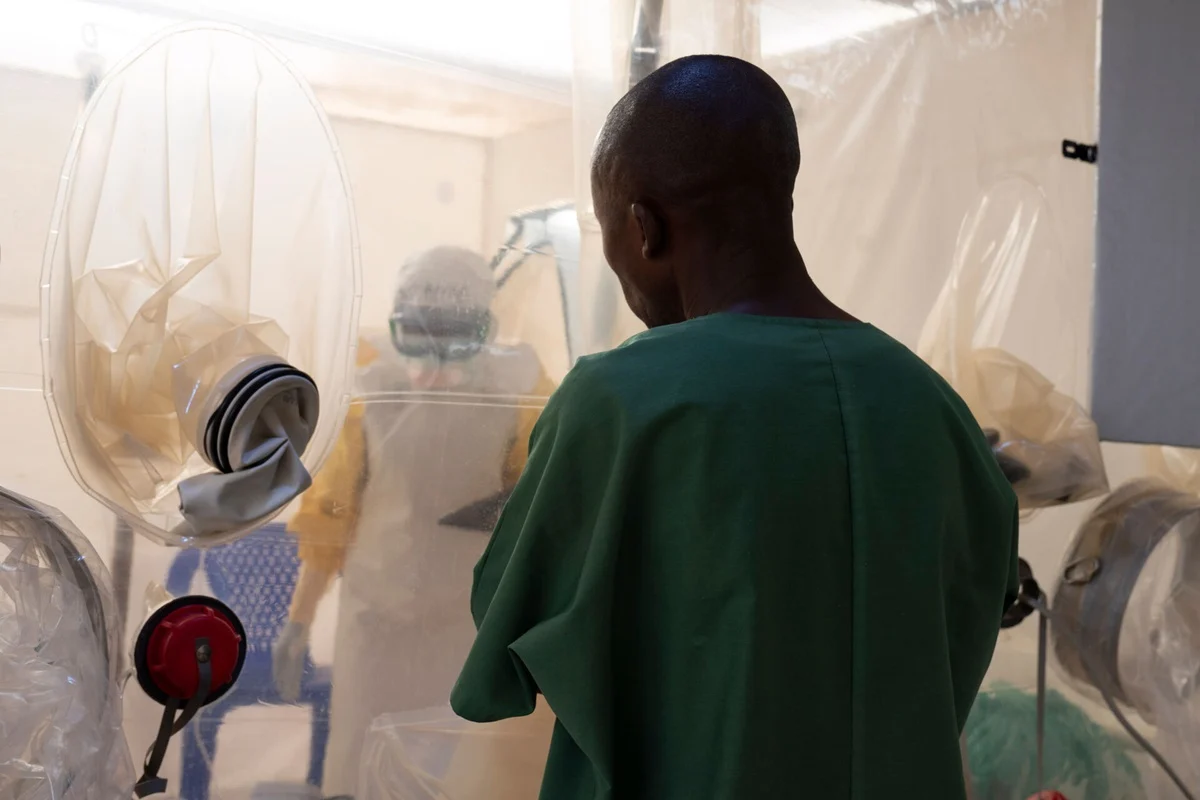
A critical global scientific endeavor has recently commenced in the Democratic Republic of the Congo, marking a significant step towards identifying the first dedicated therapeutic interventions for Bundibugyo virus disease (BVD). The PARTNERS (Platform Adaptive Randomised Trial for New and Repurposed Filovirus TreatmentS) clinical study has initiated patient recruitment, aiming to rigorously assess the efficacy and safety of two distinct antiviral agents, a monoclonal antibody designated MBP134 and the broad-spectrum antiviral remdesivir. This comprehensive investigation will also explore whether a synergistic combination of these two promising treatments can yield superior survival rates among individuals diagnosed with BVD. The launch of this trial addresses a crucial unmet medical need, as despite the existence of effective treatments for other forms of Ebola virus disease, no specific, approved therapies currently exist for the Bundibugyo strain.
The Bundibugyo virus, one of several species within the Ebolavirus genus, is a highly pathogenic agent responsible for severe hemorrhagic fever in humans. Like its more widely known relative, Zaire ebolavirus, Bundibugyo virus causes a disease characterized by sudden onset of fever, fatigue, muscle pain, headache, and sore throat, followed by vomiting, diarrhea, rash, impaired kidney and liver function, and in some cases, both internal and external bleeding. The fatality rate associated with BVD can be substantial, underscoring the urgent necessity for targeted therapeutic strategies. While the Zaire strain of Ebola has seen breakthroughs in treatment, particularly with the development of monoclonal antibody therapies that significantly improve patient outcomes, these advancements do not universally translate to other Ebolavirus species, including Bundibugyo. Each species presents unique biological characteristics that necessitate specific research and development efforts.
The PARTNERS trial represents a beacon of hope for communities frequently affected by such outbreaks. Historically, the Democratic Republic of the Congo has borne a disproportionate burden of filovirus epidemics, including those caused by the Bundibugyo virus. Since the beginning of the most recent outbreak, statistics reveal a sobering reality: over 1,400 individuals have been confirmed with BVD, with approximately 210 recovering from the illness and nearly 440 succumbing to the disease within the DRC. These figures highlight the severe impact of BVD and the profound need for medical tools that can reduce mortality and improve recovery rates.
The selection of MBP134 and remdesivir for evaluation in the PARTNERS trial was the culmination of a rigorous, evidence-based process undertaken by the World Health Organization’s (WHO) Technical Advisory Group. This expert panel meticulously reviewed a vast body of scientific data, including extensive preclinical research, detailed safety profiles from prior investigations, and insights gleaned from responses to previous viral outbreaks. Monoclonal antibodies, such as MBP134, function by targeting specific viral proteins, neutralizing the virus and preventing it from infecting new cells or clearing infected ones. Remdesivir, an antiviral nucleoside analog, works by interfering with viral RNA replication, thereby inhibiting the virus’s ability to multiply within the host. Both classes of drugs have shown promise against various viral pathogens, including other filoviruses, justifying their inclusion in this critical study.
This landmark clinical trial is a testament to the power of international collaboration and coordinated scientific action. Spearheaded by the World Health Organization as its sponsor, the PARTNERS initiative benefits from a robust consortium of leading research and health institutions. Key coordinating entities include the Institut National de Recherche Biomédicale (INRB) in the Democratic Republic of the Congo, renowned for its extensive experience in identifying, treating, and preventing diseases in the region; the Institute of Tropical Medicine in Belgium, a global leader in tropical medicine research; and the University of Oxford in the United Kingdom, through its Pandemic Sciences Institute, which is at the forefront of global health emergency research. This core group works in close collaboration with a broad network of international research organizations, clinical practitioners, humanitarian aid agencies, and receives crucial support from the Africa Centres for Disease Control and Prevention (Africa CDC), reinforcing the pan-African commitment to health security.
A distinguishing feature of the PARTNERS trial is its innovative "platform adaptive randomized" design. This architectural flexibility is particularly well-suited for outbreak settings, allowing for the seamless incorporation of additional investigational treatments as they emerge and are deemed promising by the WHO Technical Advisory Group. This adaptive methodology means that the trial can remain operational and responsive throughout the course of an epidemic, continuously seeking the most effective interventions without needing to initiate entirely new studies. Such a design accelerates the pace of evidence generation, ensuring that critical data can inform patient care in a matter of months rather than the years typically required for traditional clinical trials.
The sentiment among global health leaders underscores the urgency and potential impact of this undertaking. Dr. Tedros Adhanom Ghebreyesus, the Director-General of the WHO, emphasized the trial’s significance, stating, "Even without approved therapeutics, people are recovering from this disease, but of course, we could save many more lives with safe and effective therapeutics in our toolkit." He further highlighted the unprecedented speed with which the PARTNERS trial was established, attributing it to the strong collaboration with national authorities and scientific partners, offering "real hope that we can deliver concrete results for – and with – the communities at the heart of the outbreak." This reflects a paradigm shift towards integrating research directly into outbreak response efforts, rather than conducting it retrospectively.
Professor Amanda Rojek, who serves as the PARTNERS Trial Operations Lead and an Associate Professor of Health Emergencies at the Pandemic Sciences Institute, University of Oxford, reiterated this critical need for concurrent research. "We urgently need treatments that can help people affected by Bundibugyo virus disease," she stated. "One of the key lessons from recent outbreaks is that research needs to happen alongside the response, not after it. The PARTNERS trial gives us an opportunity to evaluate potential treatments during the outbreak itself, so that the evidence generated can help inform patient care when it is needed most – in months rather than years." This proactive approach is crucial for translating scientific discovery into immediate public health benefits during rapidly evolving crises.
The integration of the trial within existing healthcare frameworks is also a vital component of its design. Professor Jean-Jacques Muyembe-Tamfum, the Director-General of the Institut National de Recherche Biomédicale (INRB), underscored this synergy: "By integrating this trial into clinical care, we are giving patients access to promising investigational treatments while generating the evidence needed to improve care for current and future outbreaks." This dual objective ensures that patients receive the best available care while simultaneously contributing to the advancement of medical science for the benefit of future generations.
Patients enrolled in the PARTNERS trial, who must have confirmed BVD and can be of any age, will receive comprehensive and early supportive care. This includes essential medical interventions such as oral or intravenous fluid administration, electrolyte replacement to correct imbalances, oxygen support when necessary, meticulous blood pressure management, and effective pain control, all delivered in strict adherence to WHO treatment guidelines. Beyond the initial treatment phase, all participants will receive close follow-up and monitoring for a minimum of 28 days post-enrollment, ensuring their well-being and enabling thorough data collection. An independent data and safety monitoring board will regularly review study data, upholding the highest ethical standards and ensuring patient safety throughout the trial’s duration.
The commitment of the Democratic Republic of the Congo to advancing scientific knowledge in the face of recurrent health threats was acknowledged by Dr. Samuel Roger Kamba, the Minister of Health of the DRC. He affirmed, "In responding to Bundibugyo virus disease, the Democratic Republic of the Congo is demonstrating its strong commitment to science and research." Dr. Kamba expressed profound optimism regarding the trial’s potential, stating, "The launch of the PARTNERS clinical trial represents a significant step forward, offering renewed hope to patients, their families, and affected communities. Findings from this study could contribute to identifying more effective therapeutic options, helping to save lives during the current outbreak while strengthening global preparedness for future Ebola epidemics."
This ambitious endeavor is being executed through a deeply embedded partnership with the Ministry of Public Health of the Democratic Republic of the Congo, ALIMA (The Alliance for International Medical Action), and outbreak response teams from Médecins Sans Frontières (MSF). These collaborations ensure that the trial operations are seamlessly integrated into the ongoing public health response, leveraging local expertise and existing infrastructure. The ultimate aim of the PARTNERS trial is to conclusively determine whether monoclonal antibodies and antiviral therapies can substantially improve outcomes for BVD patients, leading to a tangible reduction in mortality within affected populations. Designed for sustainability and adaptability, this research platform is intended to operate across multiple outbreaks, creating a lasting mechanism to generate vital evidence on safe and effective treatments for not only Ebola but also Marburg diseases, thereby fortifying global health security against future filovirus threats.
About the Author