The World Health Organization (WHO) has taken a pivotal step in strengthening global health security by granting its Emergency Use Listing (EUL) to the inaugural molecular diagnostic test designed to identify the Bundibugyo virus (BDBV). This landmark approval signifies a crucial advancement in the ongoing battle against Ebola disease caused by this particular strain, providing a rapid and precise method for detecting the pathogen’s genetic footprint within blood samples, thereby confirming infections with unprecedented efficiency.
This endorsement arrives amidst a severe and expanding outbreak of BDBV in Central Africa, primarily impacting the Democratic Republic of the Congo (DRC) and neighboring Uganda. The current surge represents the most extensive recorded incidence of Bundibugyo Ebola, underscoring the urgent need for robust diagnostic capabilities. As of recent reports, the DRC alone has documented 1,406 laboratory-confirmed cases and 438 fatalities, highlighting the pathogen’s significant threat to public health and the critical importance of early intervention.
The EUL procedure is a specialized mechanism employed by the WHO to expedite the availability of essential health products during public health emergencies. It involves a rigorous assessment process that evaluates the quality, safety, and performance of medical devices and therapeutics based on all available scientific evidence. A key tenet of the EUL is its commitment to ensuring that these vital tools not only meet stringent international benchmarks but are also specifically tailored to address the unique requirements and infrastructure limitations prevalent in low- and middle-income nations. This strategic focus aims to dismantle barriers to access, fostering equity in global health preparedness and response.
Dr. Yukiko Nakatani, the WHO Assistant Director-General for Health Systems, Access, and Data, emphasized the dual imperatives of speed and reliability in crisis situations. She articulated that effective management of public health emergencies necessitates not only swift action but also unwavering confidence in the efficacy and safety of deployed health interventions. Dr. Nakatani highlighted that during rapidly evolving outbreaks, prompt access to diagnostics that meet assured quality standards can dramatically alter the trajectory of transmission, enabling more effective containment strategies. Through this Emergency Use Listing, the WHO facilitates countries’ ability to secure trustworthy diagnostic instruments more quickly, empowering them to mount more robust responses.
The origins of this accelerated diagnostic development trace back to a critical juncture in global health. On May 17, 2026, Dr. Tedros Adhanom Ghebreyesus, the WHO Director-General, officially declared the BDBV outbreak a Public Health Emergency of International Concern (PHEIC). This declaration, reserved for events posing a significant risk to other countries through international spread and potentially requiring a coordinated international response, underscored the gravity of the situation. Less than two weeks following this pronouncement, the WHO proactively issued a global appeal to manufacturers of in vitro diagnostics (IVDs) for Bundibugyo virus, inviting them to submit Expressions of Interest for the Emergency Use Listing. This rapid solicitation demonstrates the organization’s commitment to swiftly mobilizing innovative solutions in the face of escalating health crises.
The nature of Bundibugyo virus disease, a severe and frequently life-threatening illness, demands such rapid response. Caused by BDBV, it is one of three Ebola virus species known to trigger large-scale human epidemics. The virus’s transmission pathway is multifaceted, typically initiating with a zoonotic spillover event from infected animals to humans. Subsequently, human-to-human transmission occurs through direct contact with an infected individual, whether alive or deceased, or their bodily fluids. Furthermore, contact with surfaces or objects contaminated by these infectious fluids can also facilitate spread, underscoring the critical need for robust infection control measures and rapid identification of cases.
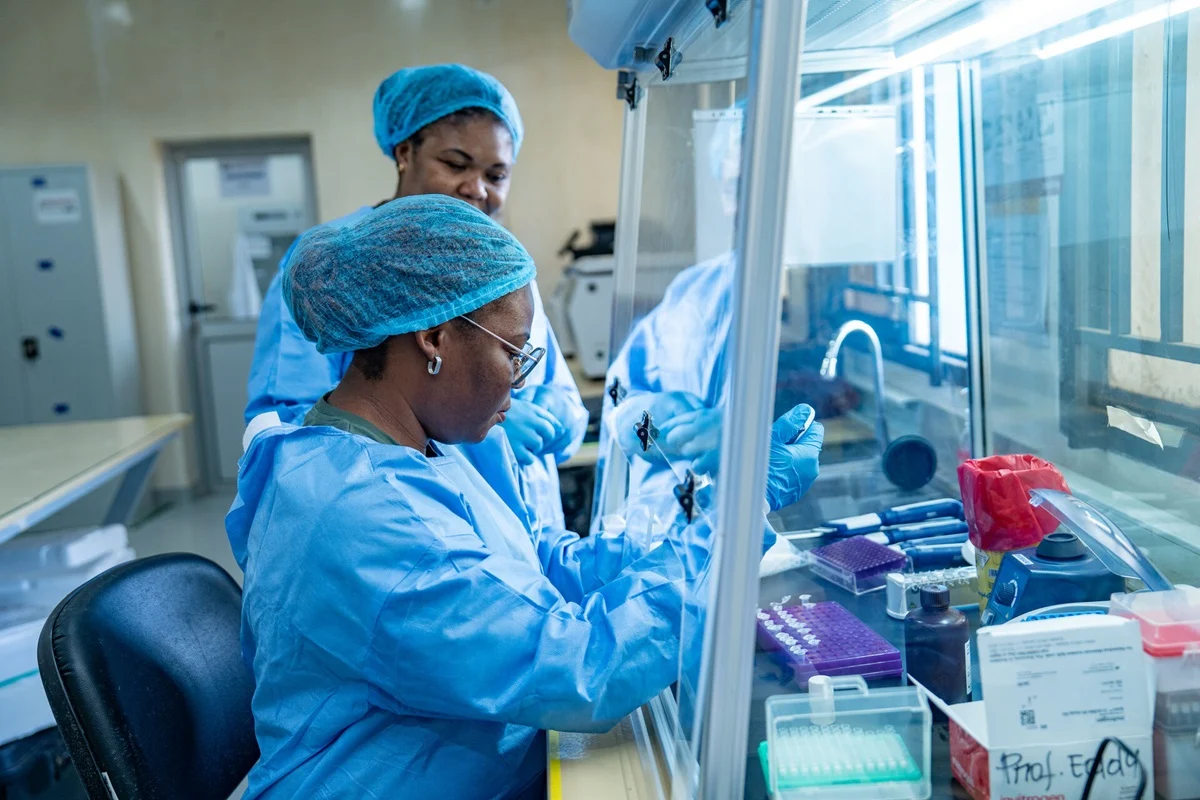
Before the recent enhancements, laboratory testing capabilities for BDBV were considerably constrained. Initial diagnostic efforts were largely centralized in a limited number of facilities, notably the Institut National de Recherche Biomédicale (INRB) in Kinshasa and Goma. These key institutions collectively possessed an estimated daily testing capacity ranging from approximately 200 to 400 samples. However, with substantial collaborative support from the WHO and the Africa Centres for Disease Control and Prevention (Africa CDC), a concerted effort has been made to decentralize and expand this critical infrastructure. This strategic expansion has resulted in the establishment of a broader network, now encompassing ten laboratories strategically located across the affected provinces. This concerted push has dramatically augmented the region’s diagnostic throughput, with a reported capacity now exceeding 2,000 tests per day. This significant scaling up of testing capacity is indispensable for enabling early case identification, guiding timely patient management, effectively interrupting transmission chains, and ultimately bringing outbreaks under control.
The introduction of this WHO-listed molecular test is expected to further catalyze these efforts. By offering a validated and quality-assured diagnostic, it streamlines procurement processes for United Nations agencies and national governments, enabling them to make informed decisions regarding the acquisition and deployment of these essential tools. This, in turn, facilitates more efficient allocation of resources and strengthens the overall capacity of public health systems to respond to outbreaks.
Beyond this initial listing, the WHO continues to actively engage with manufacturers, global partners, and affected countries to broaden the availability and accessibility of all life-saving health products that meet stringent safety, efficacy, and quality standards. Several additional applications for BDBV IVDs submitted through the EUL procedure are currently undergoing review, indicating a sustained effort to diversify and fortify the diagnostic arsenal against this formidable pathogen.
In a parallel and complementary initiative, the WHO and Africa CDC have partnered with several prominent organizations, including PATH, FIND, and CHAI, with financial backing from Unitaid. Together, they are establishing a joint validation platform dedicated to the swift evaluation of various diagnostic products. This platform’s mandate encompasses a diverse range of testing modalities, including sophisticated laboratory-based molecular tests, more accessible near-point-of-care molecular tests, and rapid antigen diagnostic tests. The primary objective of this collaborative endeavor is to generate vital clinical evidence on how these products perform in real-world outbreak environments, which is crucial for optimizing their deployment and impact. This proactive approach ensures that the global health community is continuously equipped with the most effective and context-appropriate diagnostic solutions.
The WHO, as the United Nations’ specialized agency for health, remains steadfast in its overarching mission: to promote, provide, and protect health for all people, everywhere. Guided by scientific principles and a commitment to equity, the organization leads and champions global efforts to ensure that everyone has an equal opportunity for a safe and healthy life. Its work spans a vast network of over 150 locations, coordinating international responses to health emergencies, working to prevent disease, addressing the fundamental causes of health disparities, and striving to expand access to essential medicines and healthcare services. The listing of this new BDBV diagnostic test exemplifies the WHO’s practical application of its mandate, translating scientific advancement into tangible tools that enhance global health security and resilience against emerging infectious threats.
About the Author