Globally, debilitating conditions such as age-related macular degeneration (AMD) and retinitis pigmentosa (RP) collectively impact an estimated 200 million individuals, representing leading causes of profound visual impairment and total blindness. The societal implications extend far beyond personal well-being, imposing an annual global economic burden exceeding US$400 billion. This staggering figure encompasses substantial healthcare expenditures, lost productivity, and the significant costs associated with providing care for those whose independence is compromised by vision loss. At the heart of these widespread disorders lies the gradual deterioration and ultimate demise of the retina’s photoreceptor cells, the specialized neurons responsible for converting light into electrical signals the brain can interpret.
Despite the loss of these crucial light-sensing cells, a significant portion of the intricate neural network deeper within the retina often remains structurally intact and functionally viable. The fundamental challenge, however, is that without the photoreceptors to initiate the visual cascade, these surviving retinal neurons are deprived of the essential light input required to transmit visual information upstream to the brain. This presents a unique therapeutic opportunity: if these dormant circuits could be reactivated, even partially, a pathway to restoring light perception might emerge.
For over a decade, scientific endeavors have focused on leveraging this preserved retinal circuitry to reinstate light sensitivity. Traditional experimental approaches have included gene therapies, which offer promise but are narrowly applicable, often limited to a small subset of patients possessing specific genetic mutations. Electronic retinal prostheses represent another avenue, yet they typically involve invasive surgical implantation, incur high costs, and necessitate extensive patient training to interpret the artificial visual signals. More recently, optogenetic techniques and light-responsive pharmacological agents have advanced into clinical trials. While initial results for some light-responsive drugs have demonstrated encouraging safety profiles, achieving high-quality, functional vision under everyday ambient light conditions has remained a significant hurdle.
A major breakthrough in this challenging field has now been reported by a collaborative research consortium spearheaded by the Institute for Bioengineering of Catalonia (IBEC). This team has successfully engineered and characterized an entirely novel class of photoswitchable small-molecule compounds, specifically designed to restore critical visual functions in various animal models of blindness. These groundbreaking findings were recently detailed in the esteemed Journal of the American Chemical Society (JACS), marking a significant advancement in the pursuit of accessible vision restoration therapies.
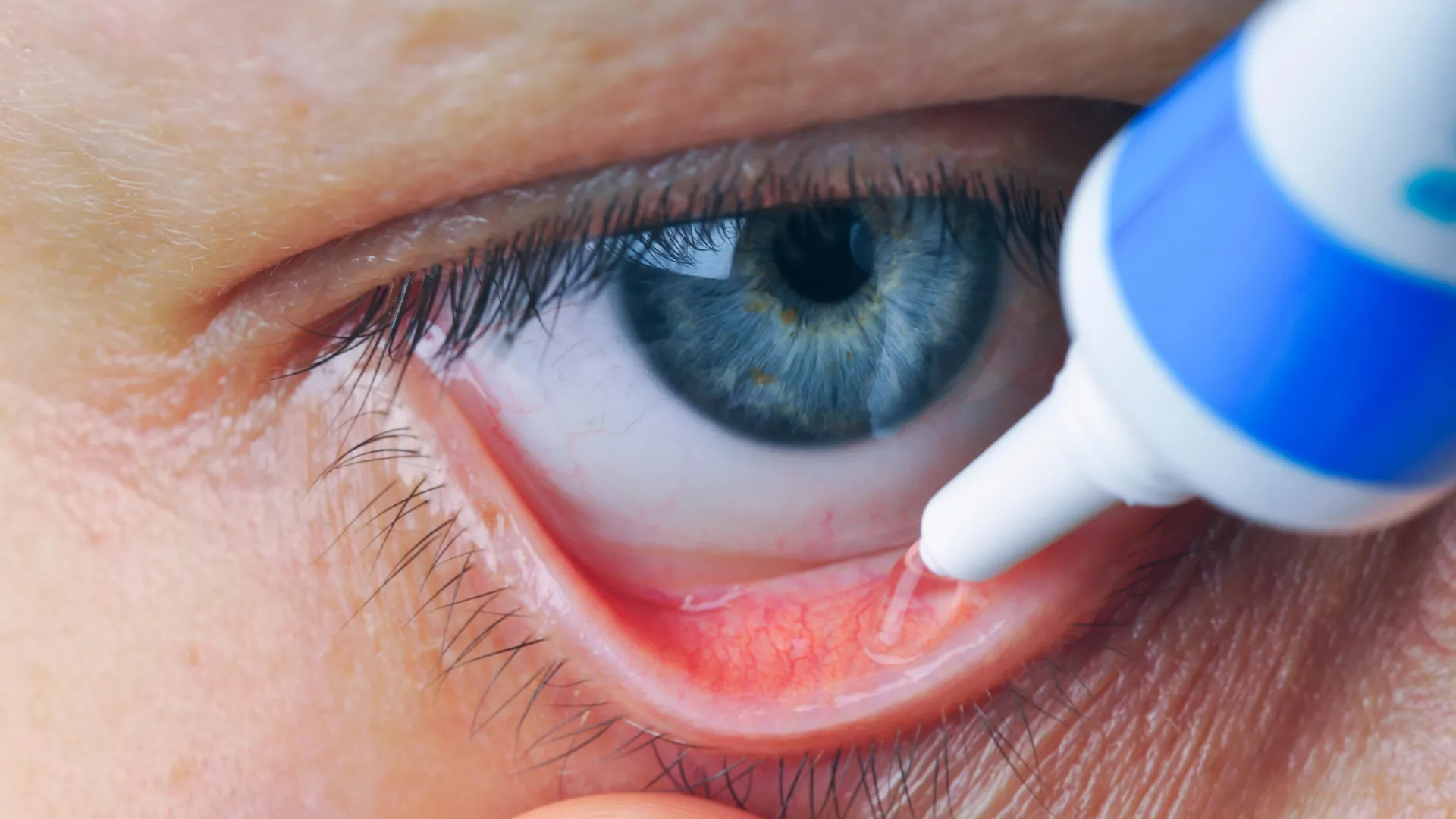
The innovative compounds are engineered to functionally substitute for the initial light-detection role typically performed by healthy photoreceptors. Crucially, these molecules offer remarkable versatility in their administration: they can be introduced via an intraocular injection, a common procedure for many existing ophthalmic medications, or even delivered non-invasively as simple eye drops. This eliminates the need for complex genetic modifications or the surgical implantation of medical devices, simplifying the therapeutic process considerably. Furthermore, preclinical assessments have indicated a favorable safety profile for these compounds, positioning them as compelling candidates for future clinical development aimed at restoring sight.
Dr. Pau Gorostiza, an ICREA Research Professor at IBEC, who leads the Nanoprobes and Nanoswitches group and co-led this extensive study, emphasizes the pragmatic yet profound impact of this research. "These molecules do not address the underlying cause of photoreceptor degeneration, and therefore do not ‘cure’ blindness in that sense," he explains. "However, their efficacy in restoring rudimentary sight is remarkable, and they achieve this through an exceptionally straightforward and potentially patient-friendly delivery mechanism."
The overarching objective of the research was to emulate the natural visual process as closely as possible, according to Rosalba Sortino, a former PhD student at the University of Barcelona and current postdoctoral researcher in Dr. Gorostiza’s group, who also served as co-first author of the study. "Our aim was not to bypass the retina’s inherent processing capabilities but rather to reactivate them precisely at the same circuit level where the lost photoreceptor cells once functioned," Sortino elaborated. This strategic targeting ensures that the restored signals integrate seamlessly into the existing neural pathways.
This pioneering work represents the culmination of more than a decade of dedicated research, involving a broad interdisciplinary collaboration. Key contributions came from the team led by Dr. Pedro de la Villa at the University of Alcalá (UAH), alongside researchers from the Institute of Advanced Chemistry of Catalonia (IQAC-CSIC), the University of Barcelona (UB), the Ramón y Cajal Institute of Health Research (IRYCIS), the Autonomous University of Barcelona (UAB), and the Eduard Soler Foundation.
The core principle underpinning this technology is photopharmacology, an elegant scientific strategy that enables the activity of a pharmaceutical agent to be precisely and reversibly controlled by exposure to light. Researchers achieve this by meticulously incorporating a light-sensitive molecular switch into the chemical architecture of a drug. Upon interaction with specific wavelengths of light, this molecular switch undergoes a conformational change, thereby altering or initiating the drug’s biological activity.
Utilizing this sophisticated strategy, the research team developed a series of compounds collectively designated prosthe6. These molecules specifically target ON-bipolar neurons within the retina. In preclinical trials, treatment with prosthe6 successfully restored saccadic eye movements, a measure of visual acuity known as the optokinetic reflex, in blinded zebrafish larvae – a widely accepted animal model for investigating visual function.
Beyond zebrafish, the researchers extended their investigations to mammalian models, demonstrating that the treatment could reinstate innate light-avoidance behaviors in mouse models mimicking both age-related macular degeneration and retinitis pigmentosa. Healthy mice naturally exhibit scotophilia, an instinctive preference for dark environments, actively shunning brightly illuminated spaces. This fundamental behavior is entirely contingent upon a fully operational visual system. Conversely, mice suffering from advanced blindness lose this innate preference, as they are incapable of discerning differences in light intensity.
Remarkably, after receiving treatment with prosthe6, the previously blind mice spontaneously resumed their preference for dark areas. This observed behavioral shift provided compelling evidence that the animals had regained the capacity to detect light and effectively utilize this visual information to guide their actions, all without any prior training or conditioning. Furthermore, this restoration of light perception occurred at illumination levels analogous to those encountered in typical indoor settings or on an overcast day outdoors. This crucial finding suggests that the treatment restored functional light perception with sufficient robustness to elicit natural, visually guided behaviors in everyday conditions.
Among the family of prosthe6 compounds, two specific agents, prosthe6-12 and prosthe6-15, yielded particularly encouraging outcomes. The restoration of visually guided behaviors was observed not only after intraocular injection but also following topical administration as eye drops, underscoring the potential for a truly non-invasive therapeutic route.
The therapeutic mechanism of prosthe6 hinges on its ability to interact with ON bipolar cells. These retinal neurons typically receive input directly from photoreceptors and play a pivotal role in relaying information about the presence of light further along the visual circuit. Dr. de la Villa, who co-led the study, highlights this critical aspect: "In the context of degenerative eye diseases, while photoreceptors are lost, a significant portion of the underlying retinal circuitry, including ON bipolar cells, remains intact but inactive. This represents a substantial therapeutic window."
The compounds exert their effect by specifically binding to a protein known as mGlu6, located within this surviving retinal circuitry. By engaging mGlu6, prosthe6 effectively mimics some of the crucial functions normally performed by the absent photoreceptors. When light strikes the eye, these molecular "light switches" undergo a conformational change, initiating a signaling cascade within the retina that closely mirrors the normal physiological process of vision. The researchers aptly describe these compounds as "molecular prostheses," emphasizing their capacity to re-enable the retina’s responsiveness to light without recourse to implanted hardware or genetic manipulation.
Another significant advantage of this approach is its functionality under ambient light conditions. Unlike some optogenetic methods that necessitate specialized light sources or devices to amplify light signals, these small, water-soluble molecules are responsive to common visible or white light, including standard indoor illumination and natural daylight. This obviates the need for unusually intense or custom-designed light sources, further enhancing the practicality and accessibility of the potential therapy.
This groundbreaking research emerges shortly after the publication of results from the inaugural clinical trial of a photopharmacological agent for vision restoration, albeit one targeting a different protein. This recent milestone signifies a broader trend: photopharmacology is transitioning from the realm of experimental laboratory research toward tangible clinical applications.
The innovative prosthe6 technology is currently protected by patent, and the research team is actively engaged in further investigations into its safety profile and optimal formulation. A key objective of these studies is to prolong the duration of the restored visual function, enhancing its therapeutic utility. Concurrently, the team is collaborating with Eyelumina, a nascent spin-off company, to secure essential investments that will facilitate translational development and pave the way for future human clinical trials.
"Translating this research into a viable therapy is an inherently arduous and protracted endeavor," acknowledges Dr. Gorostiza. "However, these preclinical results strongly suggest a realistic prospect of restoring high-quality vision using a drug-based, non-invasive, and reversible approach. Crucially, this mechanism operates independently of the specific retinal disorder or underlying genetic mutation, offering the potential to benefit a vast majority of patients." Should this innovative strategy ultimately prove successful in human subjects, it could deliver a widely accessible and economically viable alternative to current vision-restoration technologies. Its impact would be particularly profound for individuals suffering from advanced retinal degeneration, for whom effective treatment options are currently scarce or nonexistent.
The initial stages of this project received crucial financial backing from various sources, including the patients’ foundation Fundaluce (2016), CaixaHealth (Drug4sight, 100010434), the Government of Catalonia (Innovadors, Producte, and Peris programs), and CIBER-BBN (valorization program). Furthermore, this extensive body of work formed the basis of Rosalba Sortino’s doctoral thesis, for which she was awarded the Extraordinary Doctoral Prize for the 2023-24 academic year by the University of Barcelona, presented at the Faculty of Pharmacy and Food Sciences.
About the Author