As individuals progress beyond their fifth decade, many observe a noticeable shift in their physical composition, particularly concerning muscle definition and skin elasticity in the upper arms. This phenomenon, often colloquially referred to as "arm flab," is a common consequence of age-related physiological changes, including sarcopenia – the gradual loss of muscle mass and strength – alongside reductions in collagen and elastin production that affect skin firmness. While these changes are a natural part of aging, contemporary fitness research and expert insights confirm that proactive, targeted interventions can significantly mitigate their effects, fostering improved musculature and a more toned appearance. Contrary to popular belief that achieving substantial results necessitates lengthy gym sessions or heavy lifting, a concise and accessible standing routine, requiring minimal equipment, demonstrates remarkable efficacy in enhancing upper body strength and definition for those over 50.
The strategic advantage of incorporating standing exercises into a fitness regimen for arm conditioning is multifaceted. Firstly, it inherently promotes functional strength, mirroring the movements and demands of daily life more closely than exercises performed while seated or lying down. This holistic approach means that while the arms are actively working, the core musculature, encompassing the abdominal and back muscles, is simultaneously engaged to maintain stability and balance. This integrated tension across the entire kinetic chain not only amplifies the effectiveness of each repetition but also cultivates superior postural alignment, which is critical for overall spinal health and how the upper body presents itself. By leveraging the body’s natural support systems, individuals can achieve meaningful muscle engagement without placing undue stress on joints, making such routines particularly beneficial for older adults who may be navigating existing joint sensitivities or seeking to prevent future issues. The emphasis on bodyweight and resistance bands further contributes to this joint-friendly methodology, offering accommodating resistance that adapts to the user’s strength curve, thereby minimizing peak stress points often associated with free weights.
Understanding the specific muscle groups that contribute to upper arm firmness is key to designing an effective training program. The triceps brachii, located on the posterior aspect of the upper arm, constitutes approximately two-thirds of the arm’s muscle mass. Often, a lack of development in this area is a primary contributor to the perception of "flabby" arms. Strengthening the triceps is paramount for enhancing definition and reducing laxity. Complementing this, the deltoid muscles of the shoulders provide contour and width to the upper body, contributing significantly to an overall toned appearance. Furthermore, robust development of the upper back muscles, including the rhomboids and trapezius, is crucial. These muscles are not only vital for maintaining good posture but also work synergistically with the shoulders and arms, creating a balanced and supported upper body structure. An imbalance, where pressing muscles (chest, front deltoids) are overdeveloped relative to pulling muscles (upper back, rear deltoids), can lead to rounded shoulders and an anterior pelvic tilt, detracting from both aesthetics and functional capacity. Therefore, a comprehensive routine must address all these components for optimal outcomes.
A carefully constructed protocol focusing on these key areas can yield impressive results in a remarkably short timeframe. The following six-minute standing routine, designed by fitness professionals, harnesses the power of resistance bands and bodyweight to target the triceps, shoulders, and upper back efficiently. It requires only a light resistance band, a sturdy wall, and a small area for movement, making it highly adaptable for home environments or while traveling. The overarching principle is consistency over intensity; regular, focused engagement with these exercises builds cumulative strength and endurance, leading to visible improvements over time. Each movement is performed with deliberate control, ensuring proper form and maximizing muscle activation, while brief rest periods maintain an elevated heart rate and workout density.
The Core Components of the Standing Arm-Toning Protocol
1. Band Overhead Press
This exercise serves as an excellent primer for the shoulder and triceps muscles, facilitating smooth, controlled movement through a full range of motion. Utilizing a resistance band provides a unique advantage known as accommodating resistance, meaning the tension increases as the band stretches. Many individuals find this progressive resistance more comfortable on their joints compared to the static load of traditional dumbbells, particularly during the initial phase of muscle re-engagement. The overhead press specifically cultivates the strength necessary for everyday tasks that involve reaching or lifting, while also contributing to the firm, sculpted appearance of the shoulders and the back of the arms. To execute, stand with one end of a light resistance band secured under your feet, holding the other end in both hands at shoulder height, palms facing forward. Engage your core, keeping your rib cage gently pulled down to prevent excessive arching of the lower back. Press your hands directly overhead until arms are fully extended, then slowly return to the starting position. This controlled descent is as important as the upward press for muscle development.
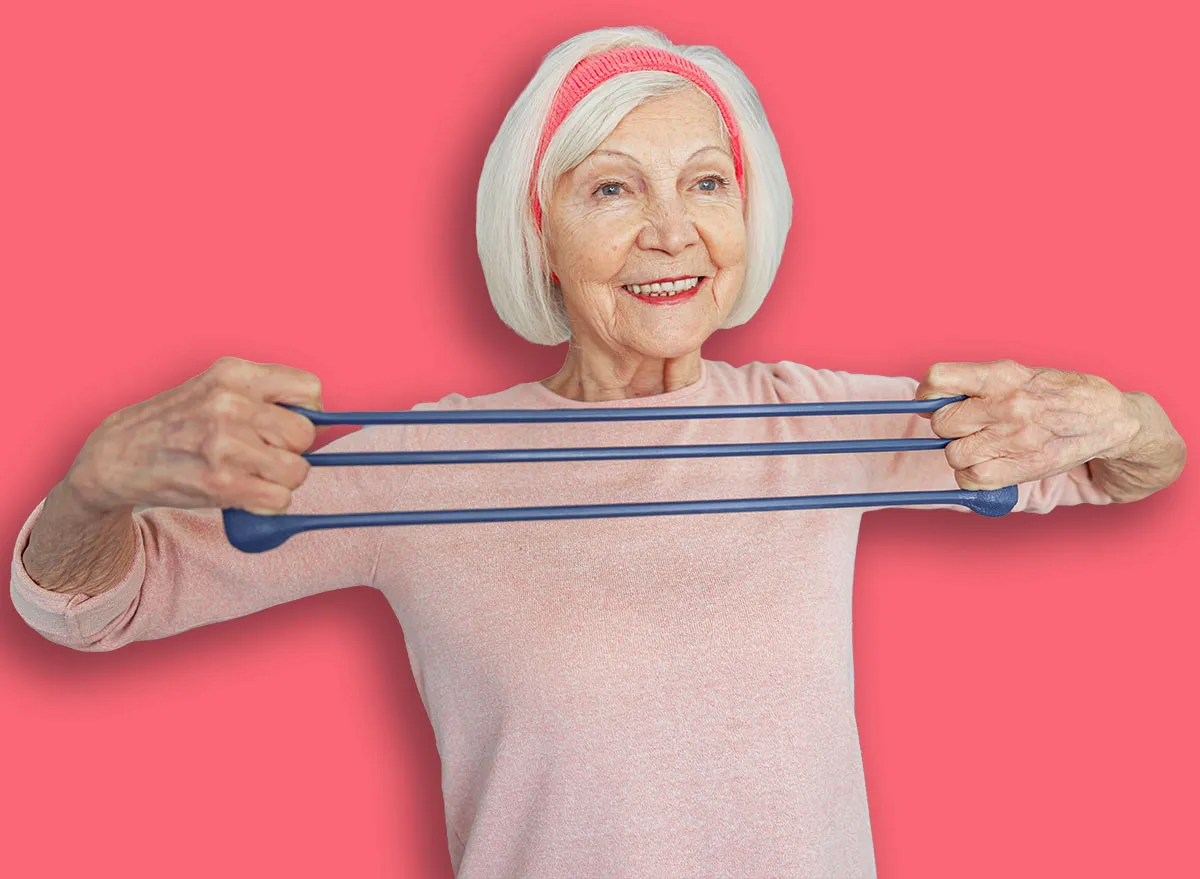
- Muscles Engaged: Anterior and medial deltoids (shoulders), triceps brachii, upper pectorals.
- Recommendation: Perform two sets of 10 to 12 repetitions, allowing for a 30-second recovery period between sets.
- Form Focus: Maintain a neutral spine and resist shrugging your shoulders towards your ears.
2. Wall Push-Ups
Wall push-ups are an incredibly versatile and joint-friendly exercise for building foundational pressing strength across the chest, shoulders, and triceps. Their scalability makes them suitable for nearly all fitness levels, allowing individuals to adjust the intensity by simply altering their distance from the wall. This movement effectively reinforces proper body alignment and core engagement while performing a fundamental pushing action. Consistent practice of wall push-ups contributes significantly to the development of robust triceps and pectoral muscles, which are crucial for achieving a tighter, more defined look in the upper arms and chest area. To perform, stand facing a wall, approximately an arm’s length away, with feet shoulder-width apart. Place your hands flat on the wall, slightly wider than shoulder-width and at chest height. Keeping your body in a straight line from head to heels, bend your elbows and lower your chest towards the wall. Maintain a slight tuck in your elbows, avoiding a wide flare. Push back to the starting position, focusing on pressing through your palms and engaging your chest and triceps.
- Muscles Engaged: Pectoralis major (chest), triceps brachii, anterior deltoids, core stabilizers.
- Recommendation: Complete two sets of 12 to 15 repetitions, resting for 30 seconds between sets.
- Form Focus: Keep your body rigid like a plank; avoid letting your hips sag or pike upwards.
3. Band Pull-Aparts
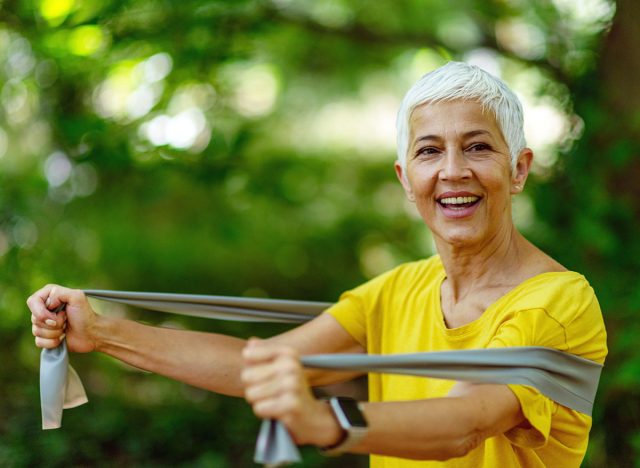
Often overlooked in upper body routines, band pull-aparts are indispensable for strengthening the posterior chain of the upper body, specifically targeting the rear deltoids and the rhomboids of the upper back. Many training programs overemphasize anterior muscles, leading to muscular imbalances that can compromise posture and shoulder health. This exercise directly counters such imbalances, promoting improved posture, shoulder stability, and a more balanced, aesthetically pleasing arm development. The sustained tension provided by the resistance band during this movement effectively builds endurance and tone in these crucial supporting muscles. To execute, hold a light resistance band with both hands, palms facing down, hands shoulder-width apart, arms extended straight out in front of your chest. Keeping your arms straight but not locked, pull the band apart by squeezing your shoulder blades together. Imagine trying to touch your shoulder blades in the middle of your back. Slowly return to the starting position, controlling the band’s recoil.
- Muscles Engaged: Posterior deltoids, rhomboids, trapezius (mid and lower).
- Recommendation: Perform two sets of 12 to 15 repetitions, with a 30-second rest interval between sets.
- Form Focus: Initiate the movement by retracting your shoulder blades, rather than just pulling with your arms.
4. Standing Triceps Kickbacks (Bodyweight Pattern)
This bodyweight variation of the triceps kickback is an exceptional isolateral exercise that specifically targets the triceps brachii, the primary muscle responsible for upper arm firmness. It allows for concentrated tension along the back of the arms without requiring external weights, making it accessible and safe. By isolating the elbow extension movement, this exercise directly addresses the area most adults seek to firm. Consistent execution helps to build stronger, more responsive triceps, contributing significantly to improved arm definition. To perform, stand with a slight bend in your knees and hinge forward at your hips, keeping your back straight and core engaged. Let your arms hang naturally, then bend your elbows to 90 degrees, pinning your upper arms tightly against your sides. Keeping your upper arms stationary, extend your forearms backward until your arms are fully straightened, squeezing your triceps at the top of the movement. Slowly return your forearms to the bent position.
- Muscles Engaged: Triceps brachii, with secondary engagement of shoulder and upper back stabilizers.
- Recommendation: Complete two sets of 12 to 15 repetitions, followed by a 30-second rest.
- Form Focus: The key is to keep your upper arms completely still and only move from the elbow joint.
Beyond the Routine: Cultivating Supportive Daily Habits
While the six-minute standing protocol offers a powerful direct intervention, maximizing and sustaining results in arm tone and overall upper body strength after 50 is intricately linked to a broader commitment to supportive daily habits. Muscular adaptation and aesthetic improvements are most pronounced when targeted training is synergistically combined with consistent nutritional support, adequate rest, and a generally active lifestyle.
1. Prioritize Protein Intake: Muscle repair and growth, a process known as muscle protein synthesis, demand sufficient protein. As we age, the body’s efficiency in utilizing protein can decrease, making it even more crucial for individuals over 50 to ensure adequate intake. Incorporating lean protein sources such as chicken, fish, eggs, legumes, and dairy into every meal provides the essential amino acids necessary for rebuilding and strengthening muscle tissue.
2. Ensure Ample Hydration: Water plays a fundamental role in nearly all bodily functions, including nutrient transport, joint lubrication, and maintaining cellular health. Proper hydration supports metabolic processes vital for muscle performance and recovery, contributing to overall physical well-being and the elasticity of the skin. Aim for consistent water intake throughout the day.
3. Optimize Sleep and Recovery: Muscle growth doesn’t happen during the workout itself; it occurs during periods of rest, particularly during deep sleep. Adequate sleep allows the body to release growth hormones and repair micro-tears in muscle fibers. Chronic sleep deprivation can impair recovery, increase cortisol levels (which can promote muscle breakdown), and hinder progress. Similarly, managing stress through mindfulness, meditation, or hobbies can significantly impact hormonal balance and recovery capabilities.
4. Embrace Consistent Movement: While this specific routine is targeted, integrating general physical activity into daily life complements its effects. Whether it’s brisk walking, gardening, swimming, or cycling, maintaining an active lifestyle improves circulation, boosts energy levels, and contributes to overall body composition improvements, which in turn enhances the appearance of toned arms.
5. Practice Progressive Overload (Adaptively): To continually challenge muscles and stimulate growth, it’s essential to gradually increase the demands placed upon them. For bodyweight and band exercises, this doesn’t necessarily mean heavier weights. Instead, consider increasing repetitions, performing movements with a slower tempo (time under tension), decreasing rest periods, or utilizing a band with greater resistance. For wall push-ups, moving your feet further from the wall or performing them on an incline (e.g., against a countertop) can increase difficulty.
By consistently adhering to this efficient standing routine and integrating these foundational lifestyle habits, adults over 50 can anticipate not only firmer, more defined arms but also a notable enhancement in functional strength, improved posture, and a greater sense of physical confidence. Progress is a journey of small, consistent steps, and the cumulative effect of these focused efforts can lead to profound and empowering transformations.
About the Author